

Diesel and gasoline both power internal combustion engines, but they operate in fundamentally different ways. Those differences affect engine design, fuel efficiency, safety, durability, and the types of equipment each fuel is best suited for.
Understanding these differences is useful for anyone managing fleets, operating heavy equipment, or coordinating fuel supply for job sites and generators. At Anytime Fuel Pros, we regularly provide diesel fuel delivery and on-site fuel delivery for equipment that depends on diesel power, so we see these differences play out in real-world operations every day.
How Diesel and Gasoline Engines Work
The biggest difference between diesel and gasoline comes down to how the fuel ignites inside the engine.
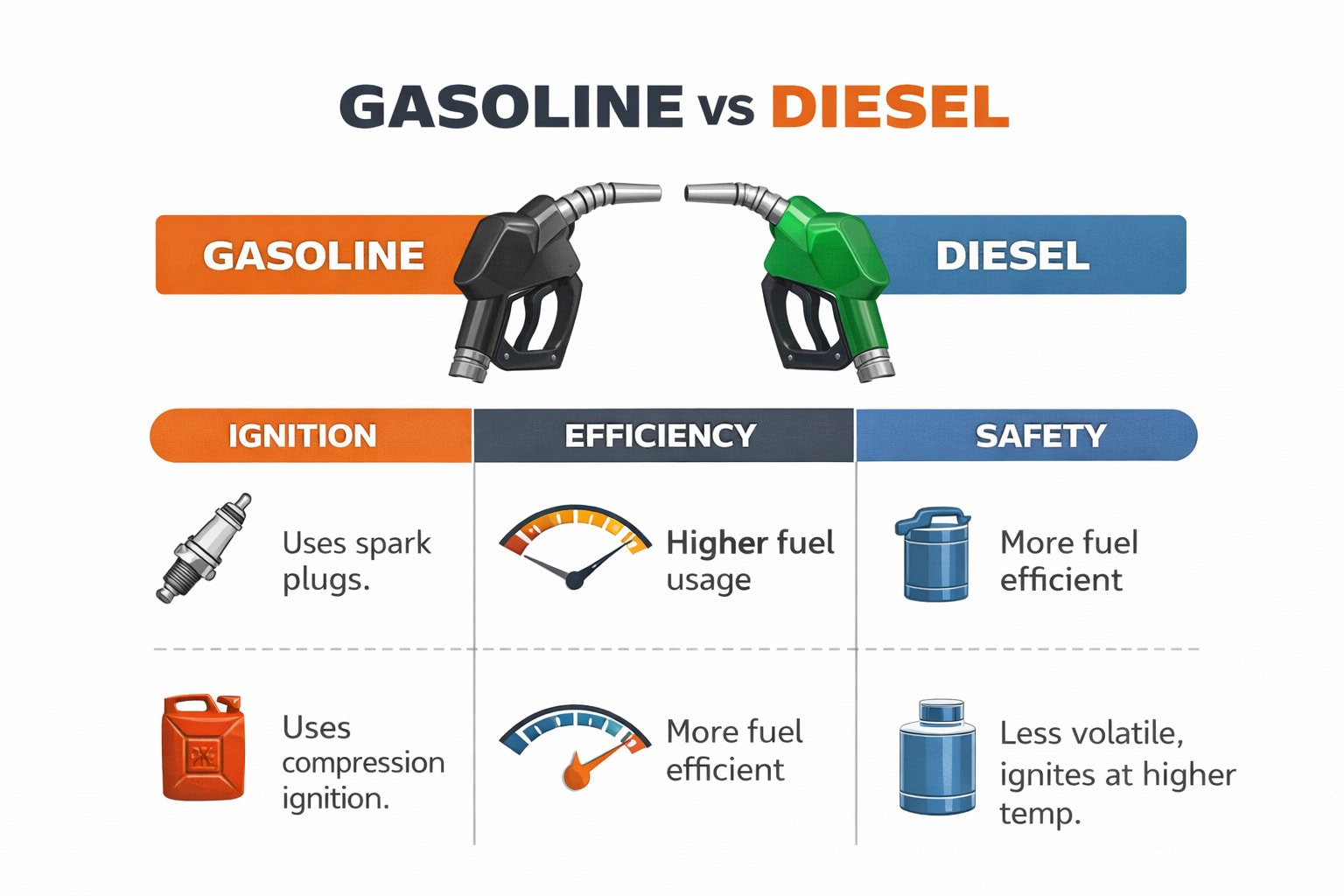
Gasoline engines use spark plugs to ignite a mixture of fuel and air. The engine compresses the mixture, a spark plug fires, and the resulting combustion pushes the piston downward to create power. This system works well for passenger vehicles, light trucks, and smaller engines that operate at higher RPM.
Diesel engines operate differently. Instead of using spark plugs, diesel engines rely on compression ignition. Air is compressed inside the cylinder until it becomes extremely hot, and then diesel fuel is injected directly into the compressed air. The heat from compression ignites the fuel automatically.
Because of this process, diesel engines run at much higher compression ratios. This makes them more efficient and better suited for heavy-duty work. That is why diesel engines are used in construction equipment, generators, commercial trucks, agricultural machinery, and large fleets that rely on consistent power throughout the day.
Many of the machines fueled through job-site diesel delivery depend on this high-compression engine design to handle demanding workloads.
Efficiency, Power, and Durability
Diesel engines are generally more fuel efficient than gasoline engines. Diesel fuel contains more energy per gallon, and diesel engines are designed to convert more of that energy into usable mechanical power.
Another major difference is how the engines produce power. Diesel engines generate strong torque at low engine speeds. This makes them ideal for pulling heavy loads, powering hydraulic systems, and running equipment for long periods of time. Gasoline engines typically produce higher RPM and horsepower but less torque, which is better suited for lighter vehicles and equipment.
Diesel engines are also built heavier and stronger because they must withstand higher compression forces. As a result, they tend to last longer and perform well under continuous workloads. Many commercial engines run for thousands of hours before requiring major service.
For industries that depend on uptime—such as construction, logistics, and power generation—diesel’s efficiency and durability are major advantages. This is why reliable diesel fuel delivery and on-site fuel delivery services are critical for keeping equipment running without interruption.
Fuel Storage, Containment, & Emissions
Diesel and gasoline also differ in how they behave during storage and handling.
Gasoline is more volatile and has a lower flash point, meaning it can ignite at relatively low temperatures. Gasoline vapors are highly flammable, which requires stricter precautions during storage and transportation.
Diesel fuel is less volatile and generally safer to handle. It requires much higher temperatures to ignite, which is one reason diesel is commonly stored in job-site tanks and fuel cubes. Many construction projects rely on scheduled diesel fuel delivery to refill these tanks and keep equipment operating throughout the project.
Modern diesel engines also include emissions systems that require Diesel Exhaust Fluid (DEF). DEF works with the engine’s selective catalytic reduction system to reduce nitrogen oxide emissions by converting them into nitrogen and water vapor.
Because of this, many companies require both diesel fuel delivery and DEF delivery to keep their fleets and equipment compliant and running efficiently.
Why Diesel Powers Most Heavy Equipment
While gasoline engines remain common in passenger vehicles and small engines, diesel dominates industries that require reliability, efficiency, and continuous power.
Construction equipment, commercial trucking fleets, generators, agricultural machinery, and industrial equipment all depend heavily on diesel engines. These machines are designed to run for long hours, move heavy loads, and operate in demanding environments where efficiency and durability matter most.
Reliable job-site diesel supply ensures that projects stay productive without downtime caused by fuel shortages. With professional on-site fuel delivery, companies can keep equipment running while eliminating trips to fuel stations and reducing interruptions to the workday.
Final Thoughts
Diesel and gasoline engines may appear similar on the surface, but the differences in how they ignite fuel, generate power, and handle heavy workloads make them suited for very different roles.
Diesel engines provide higher efficiency, stronger torque, longer engine life, and safer storage characteristics. Gasoline engines provide higher RPM performance and are better suited for lighter vehicles and smaller equipment.
For businesses that rely on heavy machinery, generators, and commercial fleets, diesel remains the backbone of daily operations. Consistent diesel fuel delivery and on-site fuel delivery help ensure that equipment stays fueled, productive, and ready for the next job.
At Anytime Fuel Pros, we specialize in diesel fuel delivery, job-site diesel supply, and DEF delivery for fleets, construction projects, and generators that depend on reliable fuel supply.
Anytime Fuel Pros delivers efficiency, cost savings, and reliable service—right to your job site.
📞 Call us today to schedule your first delivery or request a custom quote.
Recent Comments