
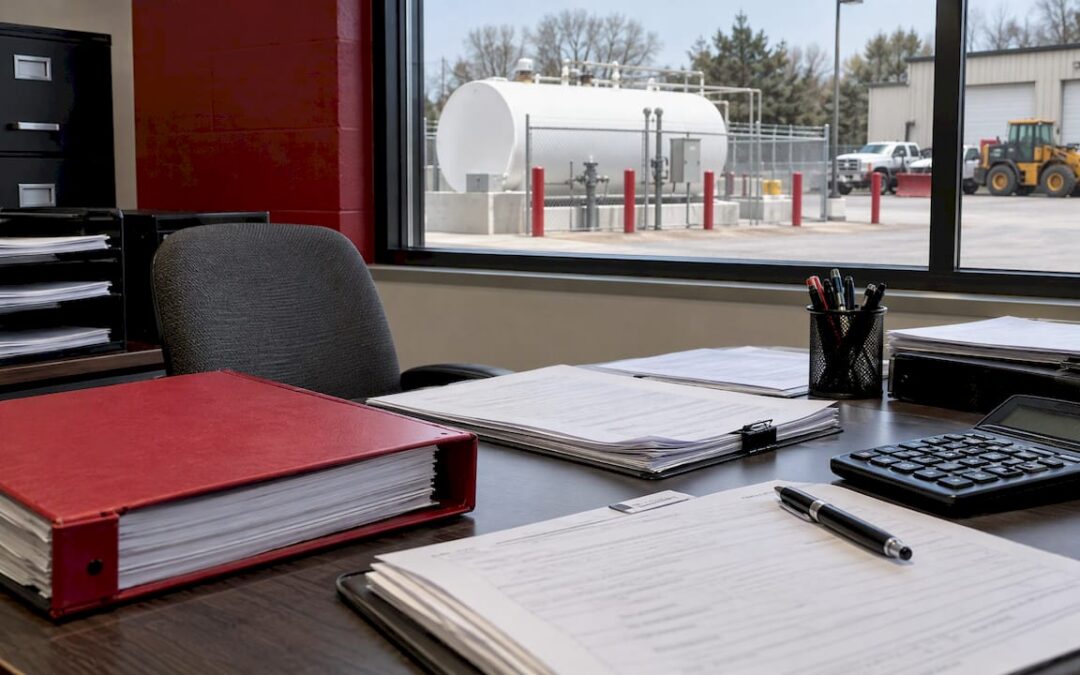
Cooperative purchasing for fuel means two or more organizations pool their demand so each buys at pre-negotiated rates instead of bidding alone. It settles the price and the contract terms. It does not, by itself, put fuel in the tank on a remote site at 2 a.m. The strongest fuel programs pair a cooperative or contract price structure with a delivery partner that handles scheduling, dispatch, emergency response and invoicing, and that is the arrangement this guide helps you build.
TL;DR
- A cooperative purchasing program aggregates demand and gives members access to pre-negotiated contracts, which they then buy from through purchase orders or their own contracts.
- Pricing is usually an index (such as OPIS) plus a fixed markup, or a fixed price for a term. The difference decides whether you get budget certainty or market exposure.
- The terms that cost operations money are delivery windows, emergency response, minimum loads, split-load charges and invoice detail. Check them before you sign.
- Public agencies must document that the cooperative route met federal, state and local procurement rules, especially when federal disaster funds are involved.
- Anytime Fuel Pros delivers diesel, gasoline and DEF on site with 24/7 service and itemized invoicing, so the contract price becomes fuel actually at your equipment.
Table of Contents
- What cooperative fuel purchasing means
- Who can buy through a fuel cooperative
- How cooperative fuel prices are set
- Contract terms that decide whether fuel shows up
- Compliance for public agencies
- Where on-site delivery fits
- How to decide if a cooperative arrangement fits your operation
- FAQ
- Sources
What cooperative fuel purchasing means
FEMA describes a cooperative purchasing program as an arrangement that aggregates the demand of two or more entities to get a more economical purchase. The steps are simple. An entity signs a cooperative purchasing agreement, gets access to a list of contracts with pre-negotiated rates, then negotiates with participating vendors and places purchase orders or enters its own contract based on those listed prices.
For fuel, that means the heavy lifting of writing specifications and running a competitive solicitation is done once, by the cooperative, on behalf of many buyers. A county road department, a school district and a small city can all draw on one award.
Two things are worth separating:
- The buying vehicle. This is the contract, the price formula and the eligibility rules.
- The delivery operation. This is the truck, the driver, the delivery window, the hose, the gauge reading and the invoice.
A cooperative handles the first. Your uptime depends on the second. Most disputes over fuel contracts come from treating them as one thing.
Who can buy through a fuel cooperative
Eligibility depends on the program. The published examples show how much it varies:
- Oregon’s bulk fuel price agreements are open to state agencies and members of its cooperative procurement programs, covering gasoline, diesel, heating oil, kerosene, biodiesel and winterization additives delivered to an authorized purchaser’s tank.
- The TASB Energy Cooperative requires fuel participants to sign an interlocal participation agreement and to have fuel tanks. A contract with an awarded provider is needed only for fixed pricing, while rack and OPIS pricing can be bought spot by purchase order.
- A national cooperative’s 2025 bulk fuel solicitation targets governmental entities, educational institutions and non-profits across the country, with master agreements for operational, emergency, transportation and heating fuel.
The pattern is clear. Cooperative fuel programs are built mainly for public and institutional buyers, and many assume you own a tank. If you are a private operator such as a data center, a mining company, a contractor or an events producer, you will usually reach the same result through a direct supply and delivery agreement sized to your volume. If you are a public agency, the cooperative is a vehicle for price, and you still need a supplier that can reach every site you run.
How cooperative fuel prices are set
Most commercial fuel pricing, cooperative or not, is built from the same parts: a published wholesale reference, a markup, delivery and taxes.
Oregon’s guide shows the standard formula. The contract price is the applicable 6:00 a.m. Eastern OPIS Average Daily Index Price plus the contractor’s markup, multiplied by the units bought. Taxes are added, and no other fees may be added to the transaction price. Our own explainer on diesel pricing indexes walks through how those references move and why the markup is the part you can actually negotiate.
Fixed price or index price
TASB spells out the trade-off. A fixed-price contract locks one price per product for the term, which gives budget certainty for the contracted volume whatever the market does. A rack or OPIS-plus contract applies a coefficient to the market price and stays exposed to volatility. TASB also offers a combination of the two.
For a budget owner, the question is how much volatility your operation can absorb. A county with a fixed annual appropriation tends to value certainty. A contractor who bills fuel through to clients may prefer the index. Our piece on when a fixed price wins for U.S. buyers goes through the math for large volumes.
A worked example
The numbers below are hypothetical, to show the mechanics.
- Index price on the delivery date: $3.00 per gallon
- Contract markup: $0.12 per gallon
- Volume: 5,000 gallons
Price per gallon is $3.12, so the pre-tax invoice is $15,600. If the index moves 20 cents the same day, the invoice moves $1,000, while the markup stays put. That is why the markup, and what it includes, matters more than the headline index. A “low” markup that excludes delivery, split loads or after-hours service is not low.
Fees inside the cooperative
Cooperatives are funded somehow. The 791 cooperative’s solicitation requires awarded vendors to pay an administrative fee of $0.01 per gallon based on actual sales, and it asks for transparent fixed and index-based pricing options. Always ask whether the administrative fee is built into the markup or shown separately.
Contract terms that decide whether fuel shows up
Public bid documents are a free education in what a serious fuel buyer specifies. These are the terms that recur, with the source of each.
| Term | What public buyers specify | Why it matters on site |
|---|---|---|
| Routine delivery window | Oregon: within 3 calendar days, working hours | Three days is fine for a storage tank, not for a job site running down |
| Emergency delivery | Oregon: within 24 hours, flat charge capped at $100 per delivery, shown separately on the invoice | Define “emergency” and the charge in writing |
| Load size | Oregon: tank wagons usually under 5,000 gallons, truck-and-trailer over 5,000 | Small sites need small-load capability |
| Split loads | Tarrant County bars split-load charges | A split-load fee can erase a low markup |
| Price basis | Tarrant County: plus or minus a differential from the Dallas OPIS rack average | Know which index and which time stamp |
| Continuity | Tarrant County requires a contingency plan for shortages and natural disasters | Ask every supplier for theirs |
| Obligation | SACOG: no minimum purchase for participating agencies | Minimums drive cost for small or seasonal users |
Sources: the Oregon buyer’s guide, the Tarrant County annual fuel bid and the SACOG cooperative solicitation.
A North Texas water district’s bid adds two more details worth copying. It asks for a firm all-inclusive markup that cannot change during the term, and it requires proof of the daily wholesale price to accompany every invoice. That is what invoice transparency looks like when a buyer writes it down.
The gap most contracts leave
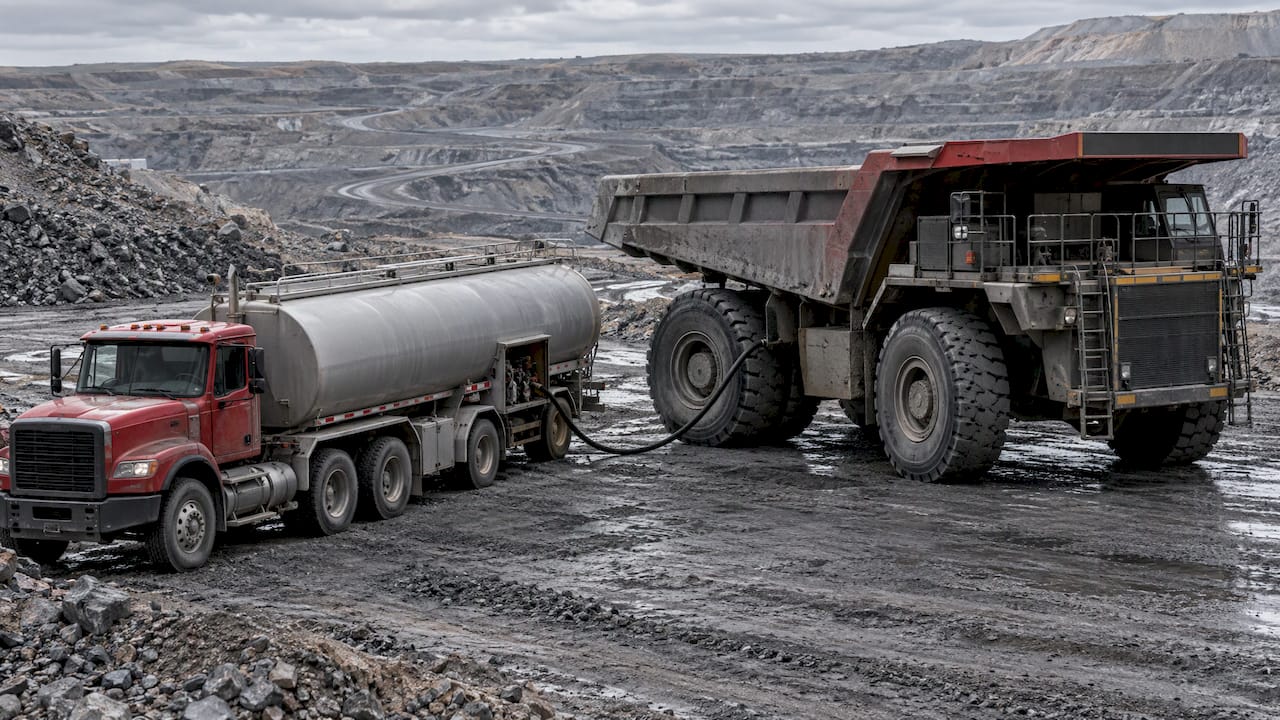
Look again at the table. Routine delivery in 3 days and emergency delivery in 24 hours are reasonable for a government maintenance yard. They do not fit a data center with generators on a fuel-level alarm, a mine with haul trucks burning through a tank every shift, or a film set with a generator that cannot stop mid-take. Operations like these need a faster, always-on layer on top of the price agreement.
Compliance for public agencies
If you buy for a city, county, district or agency, the cooperative route does not remove your obligations. FEMA requires applicants to document how cooperative purchasing complied with federal procurement standards and with applicable state, tribal and local rules. Depending on the method, that can include publicizing solicitations, soliciting bids from an adequate number of known suppliers and awarding to a responsible, responsive firm on price or on the most advantageous proposal.
State law adds its own limits. A March 2026 Tennessee GFOA presentation notes that Tennessee’s statute restricts out-of-state cooperatives’ purchases of fuel, fuel products and lubricating oils. The same presentation lists the commonly cited advantages of cooperatives: economies of scale, shorter procurement time, no need to write complex specifications and price data you can use to confirm reasonableness.
Before you use any cooperative fuel contract, confirm these with your procurement counsel or purchasing officer:
- Your entity is eligible and has signed the cooperative’s participation agreement.
- Your state’s law allows purchase through that particular cooperative, including an out-of-state one.
- The original solicitation was competed in a way your rules accept, particularly if you are piggybacking on another agency’s award.
- You can show the paper trail if federal reimbursement is possible after a disaster.
- Your own written policies for fleets, including vehicles and drivers that move people rather than fuel, are aligned with the contract; a ground transportation policy guide is a useful model for how to structure fleet rules for eligibility and compliance.
For dyed diesel, keep the reporting side in view too. Off-road red diesel and on-road clear diesel are different products with different tax treatment, and the delivery record needs to show which one went where. We deliver both red dye diesel and clear diesel, so one supplier can cover a mixed on-road and off-road fleet.
Where on-site delivery fits
Putting the pieces together, a cooperative or a contract price formula answers “what do we pay per gallon?” A delivery partner answers “will the fuel be there when the equipment needs it, and can we prove what we got?”
That is what Anytime Fuel Pros does. We deliver diesel (dyed and clear), gasoline and DEF straight to job sites, equipment yards, generators, data centers, mining operations and events. Service is 24/7, and in covered areas our emergency response target is 3 hours. Invoices are itemized, and orders and dispatch run through our technology platform so you can see what was delivered. For scheduled needs we run recurring deliveries, and for multi-state operations our national partner network gives you a single point of contact anywhere in the continental United States.
Our primary markets are San Antonio, Austin, Dallas-Fort Worth and Salt Lake City. Our bulk fuel delivery service covers tank fills, and mobile fleet fueling covers wet hosing of vehicles and equipment in your yard. For outages, storms and peak demand, see emergency fuel delivery.
If you want a quote built around your volumes, sites and response needs, start at our fuel services page or place an order.
How to decide if a cooperative arrangement fits your operation
Use this sequence. It works for a public agency comparing a cooperative award with its own bid, and equally for a private operator comparing supply agreements.
1. Map your sites and fuel types
List every location, the fuel each one uses (clear diesel, red diesel, gasoline, DEF), the tank size and how the fuel is used: fleet, generators, heavy equipment or events. Cooperative awards often assume a fixed tank at a known address. Moving job sites and remote locations need a supplier that fuels equipment directly.
2. Measure volume and variability
Pull twelve months of fuel usage by site. Steady, predictable volume suits a fixed-price or scheduled contract. Seasonal or project-based demand, such as harvest, festival season or a six-month excavation, is better served by on-demand ordering with no minimum. Our guide to types of remote fueling service agreements lays out the options.
3. Price your downtime
Multiply idle crew and equipment hours by their hourly cost. A few hours of a stopped excavator, loader and crew will typically outweigh a few cents of per-gallon savings. This is the quiet profit killer in fuel decisions: the price is visible on the invoice, the downtime is not.
4. Compare on total delivered cost
For each option, write down the index, markup, delivery charge, after-hours or emergency charge, split-load or minimum fees and the administrative fee. Compare the all-in price per gallon delivered to the tank, not the headline markup.
5. Test the response terms
Ask for written delivery windows, an after-hours process, and a continuity plan for shortages and disasters, the same things Tarrant County requires of its vendors. Our on-site diesel delivery setup guide shows what a well-run setup looks like on the ground.
6. Check the invoice and the data
You want itemized invoices with gallons, product, price basis, location and delivery confirmation. For public work, you also want records that stand up to an audit. For multi-site operations, one consolidated invoice beats reconciling several regional vendors.
7. Plan for the worst day
Write down who calls whom when a storm, an outage or a failed delivery hits. Data centers, hospitals and utilities should treat contracted delivery as part of their resilience plan, as we explain in why utilities need contracted diesel delivery.
FAQ
Is cooperative fuel purchasing the same as a fuel buying group?
They are close relatives. Both pool demand to get better terms. Cooperatives serving public agencies usually run a competitive solicitation and let members buy from the resulting contracts. Buying groups for private businesses vary in structure and fees, so read the membership terms for dues, rebates and obligations.
Do I have to buy a minimum volume through a cooperative?
Not necessarily. SACOG’s cooperative solicitation states that participating agencies have no minimum purchase obligation, and TASB allows spot purchases by purchase order. Check each program, because vendors may still set their own delivery minimums or load sizes.
Can a cooperative price cover emergency fuel?
Some do. The 791 cooperative’s solicitation lists emergency fuel among its needs, and Oregon’s guide sets a 24-hour emergency delivery standard with a capped charge. If your operation cannot wait that long, add a delivery agreement with a 24/7 response target. Ours is 3 hours in covered areas.
Does a cooperative contract satisfy FEMA requirements automatically?
No. FEMA expects you to document how your cooperative purchase met federal procurement standards and your state and local rules. Keep the solicitation, the award, your eligibility paperwork and the delivery records together, and confirm the details with your procurement officer.
Can Anytime Fuel Pros serve several states under one agreement?
Yes. We serve Texas and Utah directly and reach anywhere in the continental United States through our national partner network, with a single point of contact for multi-site, multi-state fueling.
Sources
- Cooperative Purchasing Programs, FEMA
- Buyer’s Guide Bulk Fuel Delivery, State of Oregon
- TASB Energy Cooperative Fuel Program
- RFP 791202505002 Bulk Fuel Services, 791 Purchasing Cooperative
- Request for Bid for Annual Contract for Fuel, Tarrant County
- SACOG cooperative fuel RFP, procurement portal
- North Texas water district fuel bid, procurement portal
- Purchasing Cooperatives and State Contracts, Tennessee GFOA, March 2026
Recent Comments