
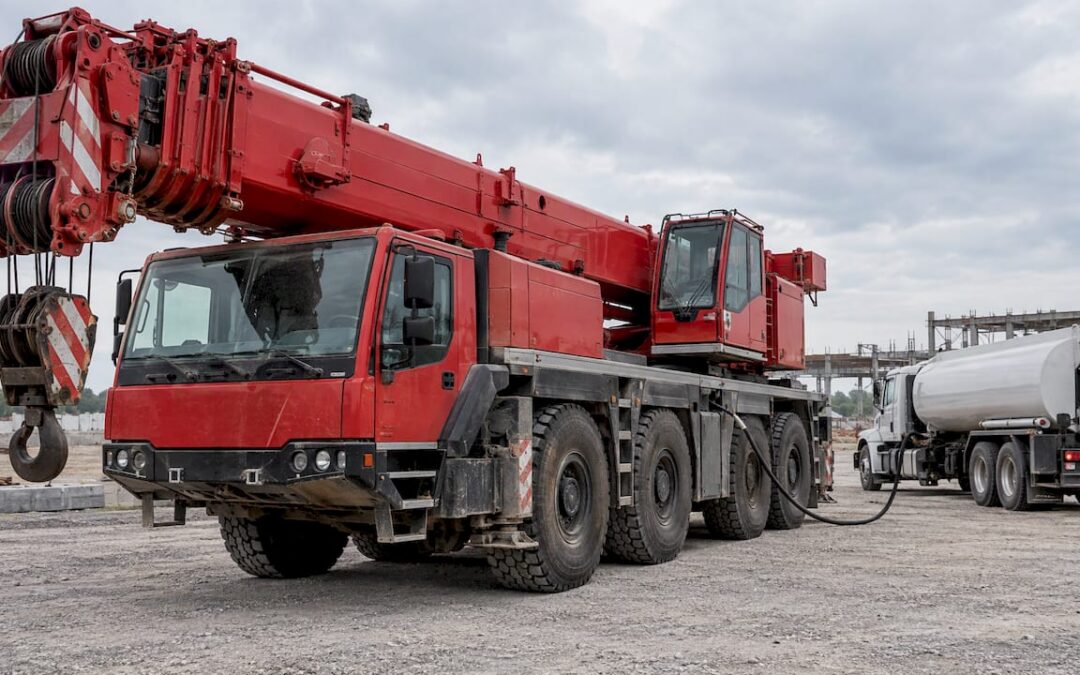
A safe crane fueling procedure comes down to five things: the crane is shut down and its load is grounded, the fuel is verified, static and ignition sources are controlled, one trained person controls the nozzle, and spills are cleaned up before the engine restarts. Get those right and refueling is a short, routine task. Get them wrong and you risk a fire, a spill, or a crane that sits idle because it ran dry mid-shift. This guide walks site superintendents, fleet managers and operations directors through the procedure, the rules behind it, and how to schedule fueling so a crane never has to stop for it. When you want the whole task taken off your crew’s plate, our mobile fleet fueling brings diesel to the crane where it stands.
TL;DR
- Shut the crane down, land or secure the load, and rest the boom or attachment before any fuel moves. Federal rules prohibit refueling a crane with the engine running.
- Verify the fuel type, check hoses and couplings, locate the fuel shut-offs, and keep a rated fire extinguisher at the fueling point.
- Bond and ground the truck and the crane, keep the metal nozzle in contact with the fill opening, and keep phones, flames and smoking away.
- Never overfill, clean spills immediately, and never let a crane run dry: air in the fuel system means bleeding it before restart.
- Scheduled on-site delivery turns fueling from a daily crew chore into a planned, documented event.
Table of Contents
- Why crane fueling needs its own procedure
- The rules that apply in the United States
- Before the fuel arrives: the preparation checklist
- Step-by-step: refueling a crane from a fuel truck
- Static electricity: the hazard people underestimate
- Fire and spill control at the crane
- Tower cranes and other special cases
- Never let the crane run dry
- Who should do the fueling
- How Anytime Fuel Pros fits into your crane fueling plan
- A one-page crane fueling procedure you can post
- FAQ
- Sources
Why crane fueling needs its own procedure
A crane is not a pickup. It has a high filler neck, a suspended load or boom that may be in the way, and an operator in a cab who has to coordinate with a person on the ground. Fueling happens in the same space as riggers, signal persons and other trades. Add diesel vapor, a hot engine and static electricity, and a casual approach becomes a real hazard.
There is also an operational cost. When a crew sends a truck to a retail station or waits for a fuel can to be topped off, the crane’s productive hours shrink and the lift sequence slips. Fueling is a planned task, and it belongs in the same plan as the lifts.
The rules that apply in the United States
The core federal text for crawler, locomotive and truck cranes is OSHA’s 29 CFR 1910.180. It makes three points that matter at the fill point:
- Machines must not be refueled with the engine running.
- When fuel comes from small portable containers, they must be approved safety-type cans with an automatic closing cap and a flame arrester.
- A carbon dioxide, dry chemical or equivalent fire extinguisher must be kept in the cab or close to the crane, and operating and maintenance personnel must be familiar with its use and care.
The Army Corps of Engineers safety manual (EM 385-1-1) is the reference on many federal and public projects. Its crane and hoisting section requires mechanized equipment to be shut down before and during fueling. It permits closed systems with automatic shut-off to fuel diesel equipment left running, and it calls for at least one 10B:C-rated dry chemical or CO2 extinguisher in the cab or at the machinery housing. If your contract references EM 385-1-1, check which of those provisions your project adopts. For a broader view of what inspectors expect around fuel on job sites, see our overview of OSHA fuel handling requirements.
The crane maker’s manual is the third layer. It sets filler location, fuel grade and any model-specific steps, and operators are expected to apply it. A refinery contractor procedure, for example, lists the crane operator’s duties as ensuring the engine is shut down before refueling and understanding and applying the manufacturer’s operating manual, along with a daily inspection before lifts. Where the owner’s rule, the contract, OSHA and the manual differ, follow the strictest.
Before the fuel arrives: the preparation checklist
Most fueling incidents are set up before the nozzle comes out. Run this list while the crane is still working, so shutdown time is short.
- Choose the fueling position. Level ground, outdoors or in a well-ventilated area, clear of the swing radius, overhead lines and traffic. The JAXPORT safety manual instructs operators to fill on a level surface, and the Tadano mobile crane manual allows refueling only when the engine is off and in outdoor or well-ventilated areas.
- Verify the fuel. Confirm the grade against the tank placard or the manual, and use the correct diesel grade for the season. An equipment SOP in Australia, for example, colors its placards by fuel, but US sites should rely on the crane’s own labeling and the delivery ticket. Red dyed diesel is for off-road use only, so confirm the crane’s use matches the fuel on the ticket.
- Inspect the equipment. Look at hoses, nozzles, connections and couplings for leaks, and identify the ON/OFF switches and emergency fuel cut-off valves before you start.
- Stage the extinguisher and spill kit. A rated extinguisher goes within reach of the fill point. A Northwest Territories (Canada) safe work practice also calls for a spill kit on the fuel truck and on mobile equipment, a sensible standard anywhere.
- Name the fueling person. One designated, trained person handles the nozzle. The same practice calls for a designated fuel person and bars leaving fuel pumping unattended.
- Wear the PPE. Gloves and safety glasses at a minimum, with hearing and head protection per the site plan.
- Clear the area. No smoking, open flames, welding or hot work in the fueling zone.
Step-by-step: refueling a crane from a fuel truck
The sequence below follows the Northwest Territories safe work practice for fueling equipment, cross-checked against the OSHA and manufacturer requirements above. Adapt it to your crane model.
- Get the signal. The fuel truck approaches only after the swamper (the ground helper) and the operator signal it in. The driver brings the truck close and shuts it off if the pump does not need to run.
- Shut the crane down. The operator lands or secures any load, rests the boom or attachment, and shuts down the engine. A Manitowoc telescopic crane manual lists the same preconditions for manual fueling: loads on the ground, boom lowered and drive engine off.
- Ground the equipment. Make sure the truck and the crane are grounded and bonded before any fuel flows. More on static below.
- Start the pump and take the nozzle. The fueling person controls the nozzle at all times.
- Get to the filler safely. Climb with a helper, or use a rope to raise the nozzle to you, so you never climb carrying a live hose. Use the crane’s walkways and three points of contact.
- Remove the cap, insert the nozzle and fill. Keep the metal nozzle in contact with the tank lip, which prevents static buildup. Keep dirt and debris out of the opening.
- Stop before full. Do not fill to capacity. Leave room for fuel expansion, as the TimberPro operator manual directs.
- Finish. Lower the nozzle, climb down, shut off the pump and store the nozzle. Tighten the fuel cap securely, replacing it only with an original or approved equivalent.
- Clean and release. Wipe any spill, dispose of the cleanup materials properly, and have the operator confirm the area is clear before restarting.
Can fueling for small cranes and auxiliary engines
When fuel is carried in a portable container, use an approved safety can with an automatic closing cap and a flame arrester, as 1910.180 requires. Fill slowly, let the nozzle drain, and replace the cap. Cleaning a machine with diesel is never acceptable, and the TimberPro manual says so directly.
Static electricity: the hazard people underestimate
Modern diesel is cleaner but not static-proof. The Caterpillar excavator manual warns that ultra low sulfur diesel carries a greater static ignition hazard than older higher-sulfur fuel. It tells operators to stop the engine, fill outdoors, avoid phones and electronic devices, and make sure the fuel delivery system meets standards for grounding and bonding.
A U.S. government publication on static bonding and grounding adds practical habits:
- Ground and bond containers before opening and dispensing.
- Touch the outside of the container and the fill nozzle to bleed off charge.
- Turn off all engines except those used in the transfer.
- Wear cotton rather than synthetic clothing, and avoid Velcro near dispensing equipment.
- Keep radio transmitters away from the refueling area.
The practical rule for a crew: no phones in the fill zone, no radios keyed up at the nozzle, and grounding confirmed by the fueling person before the pump starts.
Fire and spill control at the crane
The fire triangle is simple: fuel vapor, an ignition source and oxygen. Your procedure removes the ignition sources. The Tadano mobile crane manual adds two points that often get missed: spilled fuel or oil must be wiped up immediately, and fuel-soaked insulation mats near hot surfaces must be replaced because they are a serious fire risk. It also forbids flammable solvents for cleanup. A Tadano crawler crane manual likewise tells operators to clear leaves, trash, oil and other flammables from around the engine.
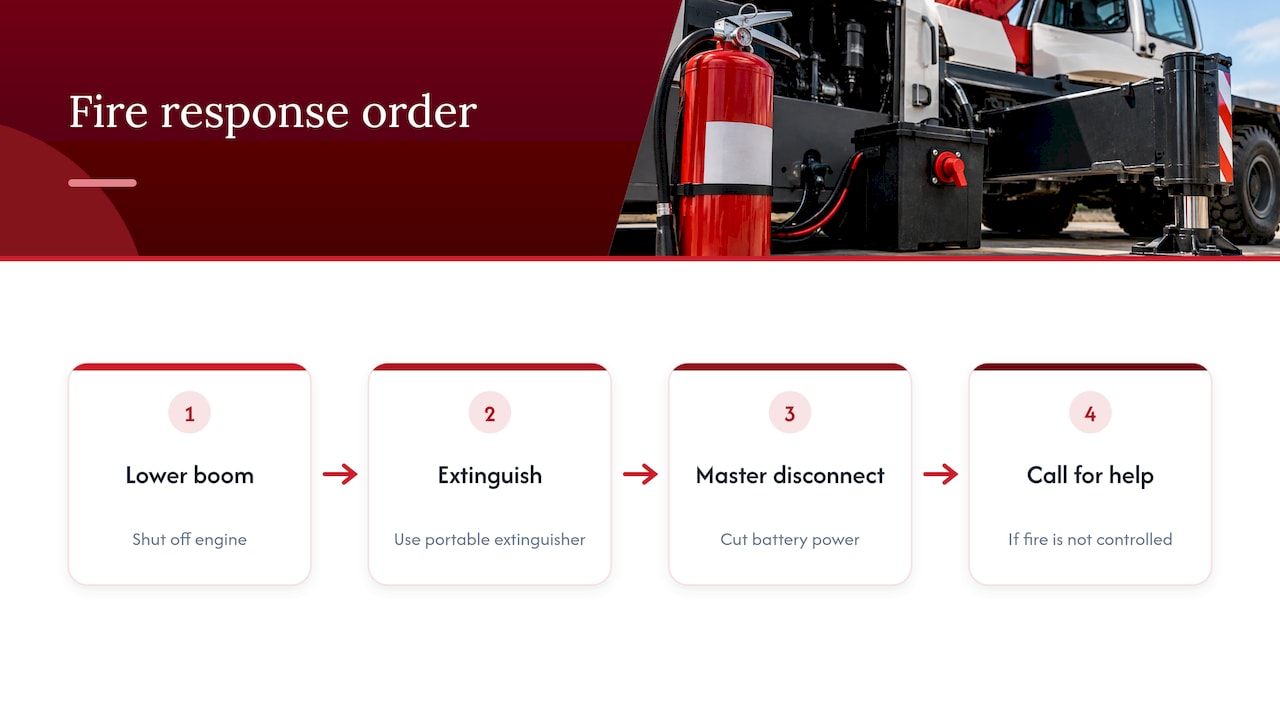
If a fire starts, a timber harvester manual gives a sequence that applies to any boomed machine: place the boom on the ground and shut off the engine, use the portable extinguisher, turn off the master disconnect to cut battery power, and call for help if the fire is not controlled. Brief your crew on that order before the first fueling of a project, and note where the extinguisher and the emergency cut-off sit.
Tower cranes and other special cases
Tower cranes are fueled differently, and the risk is the hose. WorkSafe Victoria in Australia warns that large volumes of fuel can escape if a hose fails or disconnects during tower crane refueling. Its guidance is that an operator controls the crane while the fuel tank is attached to the hook, that a non-operator manages the fuel delivery point at all times, and that hoses are handled and maintained for safety. The jurisdiction is Australian, but the logic carries to any site: two people, two jobs, one clear line of communication, and a hose inspected before it goes up.
Other variables to put in the written plan:
- Crane type. Truck cranes, crawlers, rough-terrain and all-terrain units each have different filler heights and access routes. Use the manual’s procedure for each unit on site.
- Closed fueling systems. EM 385-1-1 allows closed systems with automatic shut-off to fuel diesel equipment left running, but only where that provision applies to your contract and the crane manufacturer permits it. Otherwise, shut down.
- Remote sites. Long supply lines make a run-dry event more likely and more expensive. Plan fuel for the full lift schedule, not the next shift.
- Multiple units. On sites with cranes plus generators, loaders and light towers, group the stops so fuel is delivered in one pass. Our generator refueling safety protocol covers the generator side of the same routine.
Never let the crane run dry
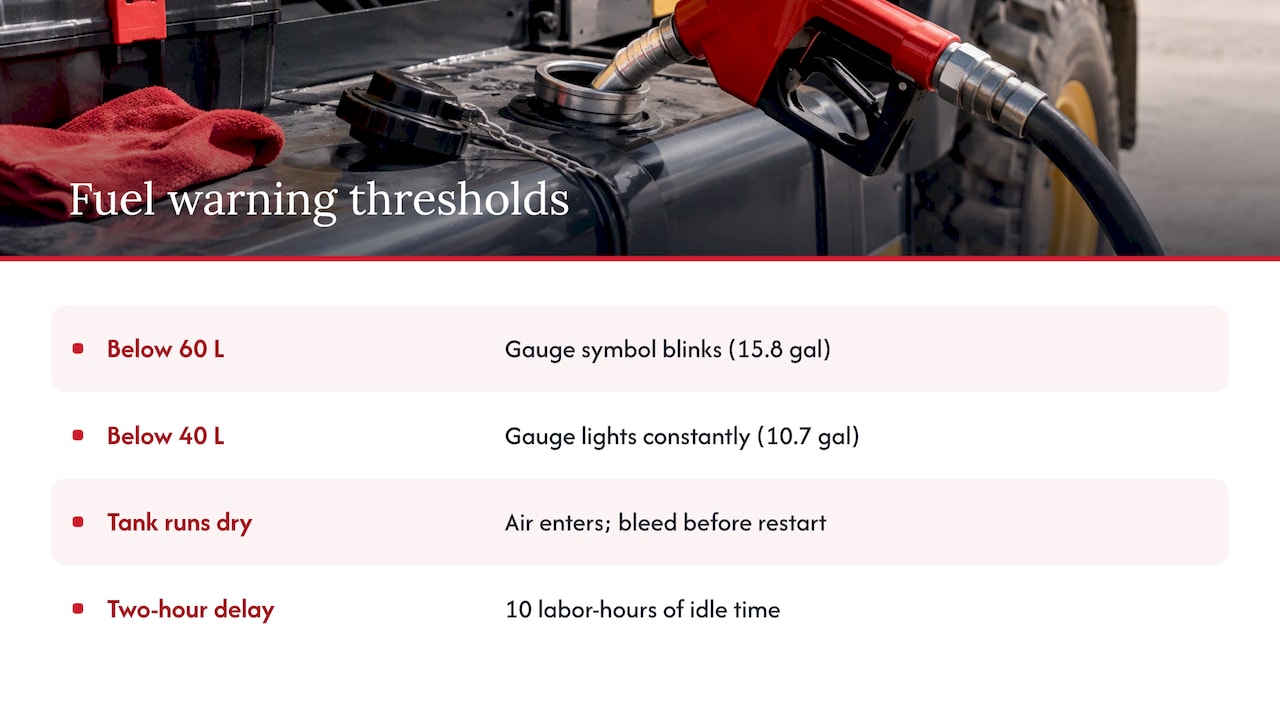
Running out of fuel is the avoidable failure. The Tadano mobile crane manual notes its fuel gauge symbol blinks when the superstructure tank falls below 60 L (15.8 gal) and lights constantly below 40 L (10.7 gal). It also says that if the tank runs dry, air enters the fuel system and the engine cannot be started until the system is bled.
On a lift day, that is a stalled crane, a suspended or parked load, a crew waiting, and a technician called to bleed the system. A simple worked example shows the stakes. If a crane, a four-person rigging crew and two trades waiting on the pick lose two hours, that is ten labor-hours of idle time before counting the equipment’s own hourly cost or the knock-on to sequencing. The fix is not a bigger fuel can. It is a fueling schedule tied to the lift plan, with the tank topped off at the end of the day so that the first lift starts full. Our guide to heavy equipment fueling schedule best practices shows how to build one, and the construction site fueling workflow article covers where fueling fits into daily sequencing.
Who should do the fueling
The procedure above has a lot of moving parts: a designated fuel person, a spotter, grounding, correct fuel, spill control and a record of what was delivered. Each is one more thing for a busy site team to get right every day, and each one pulls crew time away from production. Using trained delivery operators is the more reliable way to hold the procedure steady. We cover why in why fuel delivery requires trained operators, and the broader on-site fuel delivery safety protocols lay out what a safe delivery looks like from arrival to departure.
How Anytime Fuel Pros fits into your crane fueling plan
Anytime Fuel Pros delivers diesel, gasoline and DEF on site to job sites, equipment yards and heavy equipment fleets, in Texas, Utah and nationwide through our partner network. For cranes, the relevant services are on-site diesel in both clear and red dyed grades, mobile fleet fueling and wet hosing for fleets, scheduled recurring deliveries, and bulk deliveries and fuel tank rentals for sites that want fuel staged on location. Our model is built around less downtime and fewer trips to retail stations.
When a crane or generator runs low unexpectedly, our emergency fuel delivery service runs 24/7, with a 3-hour response in covered areas. Invoicing is itemized, so your project controls team can match each delivery to the equipment it fueled. Multi-site contractors can keep one vendor contact across states.

To set up recurring crane fueling or a one-time delivery, place an order or review the full list of fuel services. For site-wide planning, our construction fueling plan is a good template for the written plan your safety manager and general contractor will want to see.
A one-page crane fueling procedure you can post
Use this as the basis for a site-specific sheet, then adjust it to the crane manuals and the owner’s requirements.
| Stage | What happens | Who owns it |
|---|---|---|
| Plan | Fuel quantity set against the lift schedule; fueling window added to the daily plan | Superintendent |
| Prepare | Fuel verified, hoses and cut-offs checked, extinguisher and spill kit staged | Fueling person |
| Shut down | Load landed or secured, boom or attachment rested, engine off | Crane operator |
| Bond and ground | Truck and crane grounded, no phones or flames in the zone | Fueling person |
| Fill | Nozzle in contact with the filler, controlled flow, stop with room to expand | Fueling person |
| Close out | Cap secured, spills cleaned, area clear, delivery ticket recorded | Fueling person and operator |
| Restart | Operator confirms area clear and starts the engine | Crane operator |
The ticket matters for more than tidiness. On public contracts and dyed diesel use, a clear record of what was delivered, to which unit and when, saves time in an audit.
FAQ
Can you refuel a crane with the engine running?
No, for crawler, locomotive and truck cranes OSHA’s 1910.180 states machines must not be refueled with the engine running. EM 385-1-1 allows an exception only for diesel equipment fueled through a closed system with automatic shut-off, and only where that standard applies to your contract. Unless your crane maker and contract both allow it, shut down.
What fire extinguisher do I need at a crane fueling point?
OSHA requires a carbon dioxide, dry chemical or equivalent extinguisher in the cab or in the vicinity of the crane. EM 385-1-1 sets a minimum of one dry chemical or CO2 extinguisher rated 10B:C in the cab or at the machinery housing. Operating and maintenance personnel need to know how to use it.
Why does static electricity matter when fueling a crane?
Static discharge can ignite fuel vapor. Ultra low sulfur diesel carries a greater static ignition hazard than older diesel, according to a Caterpillar manual. Bond and ground the truck and the crane, keep the metal nozzle in contact with the fill opening, and keep phones and radios away from the fill point.
What happens if a crane runs out of fuel?
Air can enter the fuel system, and the engine may not start until the system is bled. That means a stalled crane, idle crew and a service call. Topping off at the end of each shift or scheduling deliveries around the lift plan prevents it.
Who should be at the fueling point?
At minimum, a designated fueling person controls the nozzle and the operator confirms shutdown. On tower cranes, one person controls the crane while a second manages the fuel delivery point at all times.
Sources
- OSHA 29 CFR 1910.180, crawler, locomotive and truck cranes (eCFR)
- EM 385-1-1 Section 16, Cranes and Hoisting Equipment
- Crane operations and rigging procedure, refinery contractor documents
- JAXPORT safety manual, 2019
- Tadano ATF130G-5 operator’s manual
- Tadano GTC-1600 operation manual (US)
- Caterpillar 336E operation manual
- Safe work practice, fueling equipment (Northwest Territories)
- Static bonding and grounding when handling flammable liquids (GovInfo)
- TimberPro 830B operator manual, Section 2.1
- WorkSafe Victoria, refuelling tower cranes
- Equipment hire refuelling SOP (Australia)
- Manitowoc 140.5.204 manual, manual fueling
Recent Comments