
Diesel exhaust fluid stays stable between 12°F and 86°F, with quality holding longest at the cooler end of that band. Below 12°F, DEF freezes solid, though a sealed container thaws back to full strength without damage. Held at or below 77°F, DEF typically lasts over a year; push storage to a steady 86°F and the shelf life will decrease accordingly. Anything above 95°F for extended stretches means you should test the fluid before you trust it in a tank.
TL;DR:
- DEF frozen at 12°F thaws without degradation, but overfilling tanks or lines during freezing can cause damage due to expansion.
- High temperatures above 95°F significantly shorten DEF shelf life and increase the risk of concentration issues, requiring testing before use.
- Storage in shaded, ventilated areas, with sealed containers and proper pressure relief, prolongs DEF quality and prevents evaporation or contamination.
- Using tank heaters, insulation, and proper thawing methods ensures operational continuity during cold weather, especially in freezing climates.
- Overstocking DEF in hot climates or during summer increases degradation risk, so ordering based on actual consumption minimizes quality loss.
Table of Contents
- Why DEF Storage Temperature Determines Shelf Life
- What Actually Happens to DEF at the Wrong Temperature
- How to Store DEF Correctly on Site
- Winterizing DEF Storage for Cold-Weather Operations
- Matching Storage Rules to Your Container Type
- Testing DEF Quality Before You Trust It
- How Anytime Fuel Pros Keeps Your DEF Supply Temperature-Safe
- Sources
- FAQ
Why DEF Storage Temperature Determines Shelf Life
The ISO 22241 standard sets 12°F to 86°F as the recommended storage window and backs it with a shelf-life table built around constant ambient conditions.
| Constant ambient temperature | Approximate minimum shelf life |
|---|---|
| 12°F to 77°F | Around 3 years |
| 77°F or below | Over a year |
| 86°F | about a year |
| 95°F or above | significantly shorter, test before use |
That table assumes a fixed temperature around the clock, which almost never happens on a real job site. A yard that hits 100°F in the afternoon sun but cools to 70°F overnight won’t degrade DEF as fast as a table built for constant 95°F conditions. Industry white paper research on heating and cooling effects points out that day/night swings tend to moderate the damage compared to the conservative single-temperature estimate, so actual shelf life often runs longer than the worst-case number suggests.
Don’t lean on that cushion too hard, though. If your storage area regularly hits a high daily peak, even for a few hours, plan around the higher end of the table rather than the average. A tote sitting against a south-facing wall in Texas summer heat is not living in “average” conditions. It’s living in the peak, every single day, and that’s the number that should drive your rotation schedule.

What Actually Happens to DEF at the Wrong Temperature
Two separate failure modes are at work here, and fleet managers who understand both make far better calls on the ground.
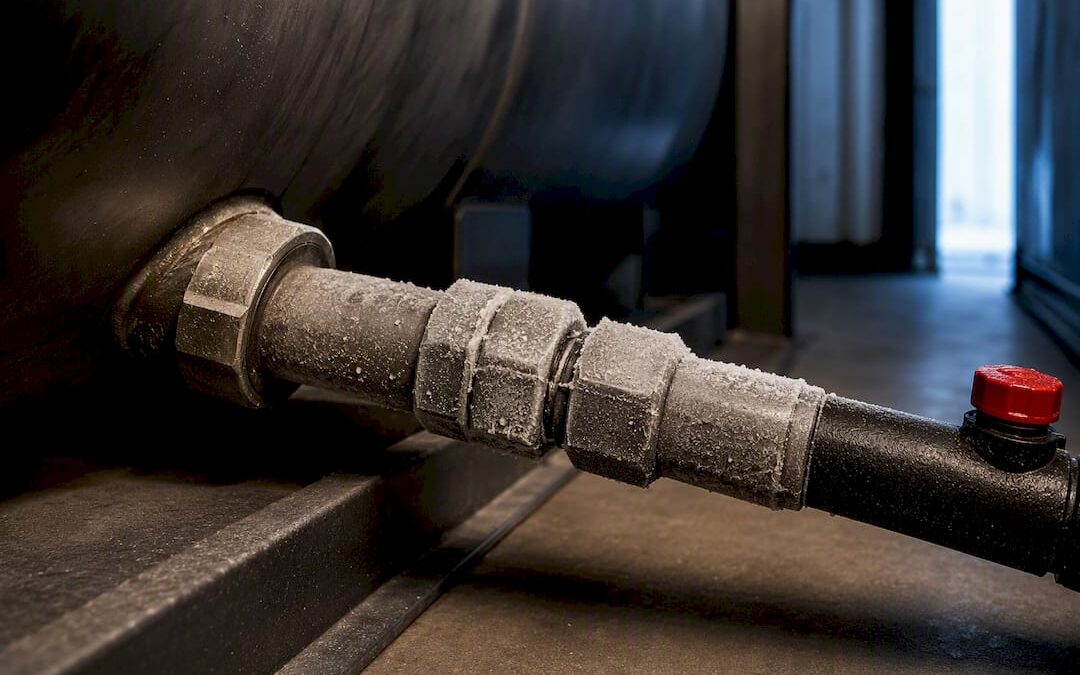
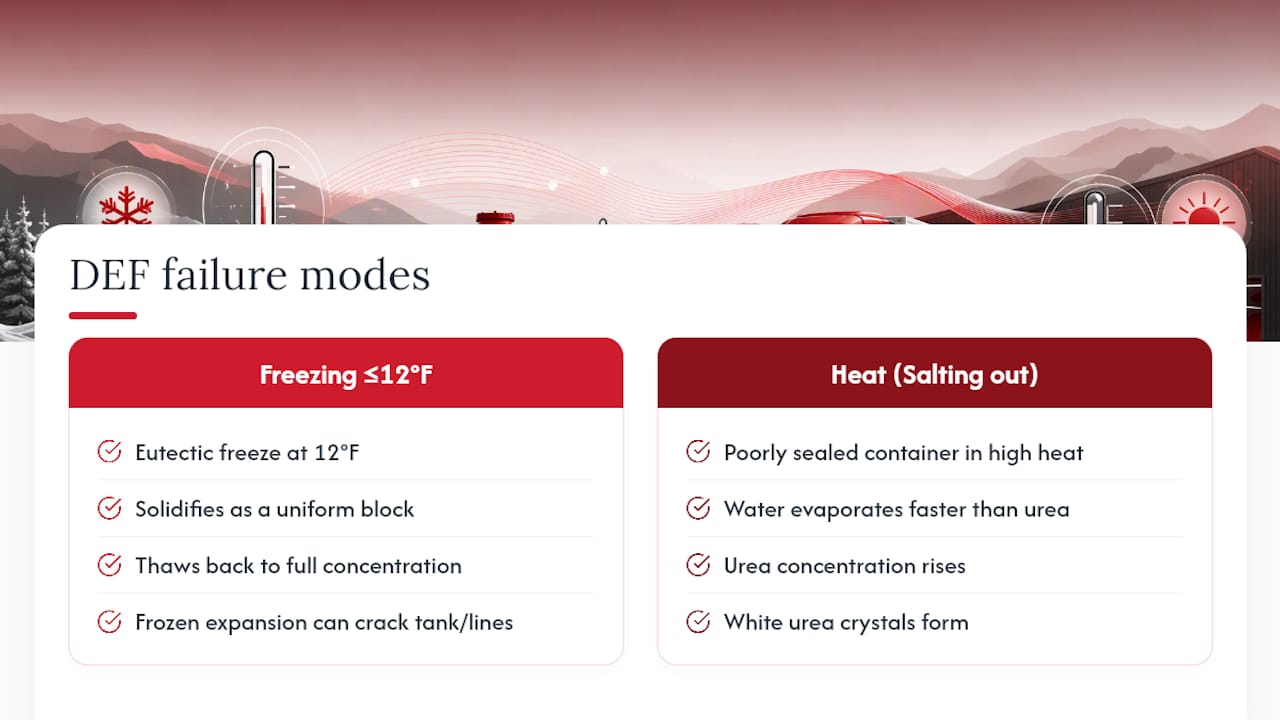
The first is freezing. DEF’s urea and water mixture reaches its eutectic point at exactly 12°F, meaning it freezes as a single uniform block rather than separating into layers. That uniformity is a feature, not a flaw. A frozen tank of DEF thaws back to full concentration and full performance in a sealed system, with no chemical degradation. The real risk during a freeze isn’t the fluid, it’s the container and the plumbing. Frozen DEF expands, and an overfilled tank or a dispensing line that wasn’t purged can crack or split under that pressure.
The second failure mode runs the opposite direction: heat-driven evaporation, often called salting out. When DEF sits in a poorly sealed container in high heat, water evaporates faster than urea, and the remaining fluid gets more concentrated. Push that far enough and you get visible white urea crystals forming in the container. That’s not a cosmetic problem. Out-of-spec concentration can trigger fault codes in a selective catalytic reduction system, and prolonged heat exposure separately accelerates the chemical breakdown that shortens shelf life across the board.
How to Store DEF Correctly on Site
Getting DEF storage right is less about equipment and more about discipline. A handful of habits, applied consistently, prevent almost every quality problem operators run into.
- Store containers and bulk tanks in a shaded, ventilated area, away from direct sunlight and away from equipment that radiates heat, like generators or compressors.
- Keep every container sealed, and check vacuum or pressure relief vents on bulk systems so evaporation stays minimal without over-pressurizing the tank.
- Inspect packaging and seals the moment a delivery arrives. A compromised seal in transit is a problem you want to catch before it goes into your tank.
- Rotate stock on a strict first-in, first-out basis, and confirm the API certification mark and expiration date on every batch you receive.
- Buy to match actual turnover instead of stockpiling. Extra inventory sitting in a hot yard for six months costs you more in degraded fluid than it saves in bulk pricing.
- Keep dispensing systems closed between uses, purge lines after fueling, and train crews never to mix DEF with fuel or leave containers open to the air.
API’s own consumer guidance echoes nearly every point above: cool, dry, sealed, rotated, certified. It’s not complicated guidance, but it’s the kind that gets skipped when a site is busy, which is exactly when problems start.
Winterizing DEF Storage for Cold-Weather Operations
Cold weather doesn’t ruin DEF chemically, but it can shut down your operation if you’re not ready for it. A frozen dispensing line at 6 a.m. on a job site is a lost morning, not a chemistry problem.
- Install tank heaters or heat-traced dispensing lines on bulk systems that see regular sub-12°F conditions, and wrap exposed tanks with insulated blankets rather than relying on ambient warmth alone.
- For equipment going into long-term storage over winter, either drain the DEF tank completely or fill it fully. A partially filled tank gives frozen fluid room to expand and stress the tank walls.
- For active fleet vehicles running daily, partial fills are fine since onboard heaters near the tank and lines typically bring DEF back to a usable state shortly after startup.
- Thaw frozen DEF using the vehicle’s built in tank and line heaters, or move stored containers to a warm indoor space. Never add antifreeze, salt, or any other chemical to speed up thawing.
Pro Tip: Don’t wait for a cold snap to test your heated lines. Run a startup check in late fall while temperatures are still mild, so a failed heater element becomes a maintenance ticket instead of a stalled truck at 5 a.m.
Recommendations for heated lines and insulated storage consistently point to the same conclusion: managing evaporation and freeze expansion matters more for long-term bulk stock than for tanks that turn over daily.
Matching Storage Rules to Your Container Type
The temperature range doesn’t change based on what’s holding the DEF, but the practical steps to hit it do.
- Bottles and drums: Keep them shaded and off direct pavement heat, caps fully sealed, and rotate older stock to the front. Inspect for bulging or cracked plastic before each use, since a compromised drum is often your first sign of temperature stress.
- Totes and mini-bulk IBCs: Use proper venting to manage pressure changes, keep totes elevated off the ground rather than sitting in standing heat or water, and add shelter or basic temperature control if the stock will sit for more than a season.
- Bulk aboveground tanks: Install vents sized to PEI RP1100 recommendations, add insulation in colder climates, and consider a shaded enclosure or dedicated HVAC where summer heat is severe.
- Onboard vehicle tanks: Position heaters near the engine side of the tank, leave an air gap rather than filling to capacity in freeze-prone climates, and confirm the line purge system actually functions before winter, not after the first hard freeze.
Testing DEF Quality Before You Trust It
A visual check catches most problems before they become a rejected batch. Crystals, cloudiness, or an off-color tint in an otherwise sealed container almost always point to evaporation or contamination.
- Run a visual inspection weekly on high-turnover tanks and monthly on slower-moving stock, checking seals, container integrity, and any sign of crystallization at the fill point.
- After any extended heat exposure or suspected evaporation, check concentration with a refractometer on site, or send a sample to a lab if the reading is borderline.
- If crystals show up and concentration reads outside the 32.5% specification, either dilute carefully with deionized water following equipment manufacturer guidance, or flush the system and refill with fresh, certified DEF. Label and set aside any rejected batch so it doesn’t get mixed back into usable stock.
Pro Tip: Keep a $30 refractometer in the shop. Testing a suspect batch takes two minutes and costs nothing compared to running a rejected batch through an SCR system and triggering a fault code on a truck that’s supposed to be on the road.
How Anytime Fuel Pros Keeps Your DEF Supply Temperature-Safe
Getting DEF storage right is a lot easier when you’re not stockpiling six months of inventory just to avoid running out. Anytimefuelpros delivers DEF on-site alongside your regular diesel orders, scheduled around what your fleet actually burns, so fluid spends less time sitting in a hot yard exposed to the exact conditions that shorten its life.
Overstocking is one of the quiet ways fleets lose money on DEF. Buy in bulk to save a few cents per gallon, then watch half of it sit through a Texas summer past the point where you’d trust it in an SCR system, and the math stops working. Scheduled deliveries from Anytimefuelpros solve that by matching supply to consumption instead of to a purchasing minimum. For sites managing generators, mining equipment, or mixed fleets, that same on-site model covers diesel exhaust fluid delivery alongside bulk fuel delivery for larger tank systems, plus emergency and after-hours response when a cold snap catches a site off guard.
If your current rotation depends on guessing how much DEF you’ll need before it degrades, check fuel delivery scheduling options and get a plan built around your actual usage instead of a warehouse full of inventory aging in the heat.
Sources
For the technical specifics behind every recommendation here, three sources cover the full picture: ISO 22241 sets the temperature range and shelf-life table, API’s consumer guidance covers day-to-day handling rules, and PEI RP1100 governs tank venting and installation. Fleet managers evaluating broader cost controls can also review fleet cost-saving strategies for context on how inventory discipline fits into the bigger budget picture.
- How to store and handle diesel exhaust fluid effectively
- Handle DEF properly to maintain quality
- PEI Recommended Practices RP1100 (table of contents)
FAQ
Can I Store DEF in My Garage?
Yes, a garage works well as long as it stays within the 12°F to 86°F range and the container stays sealed and out of direct sunlight through a window or open door.
At What Temperature Does DEF Go Bad?
DEF doesn’t instantly “go bad” at any single temperature, but sustained exposure above 95°F accelerates degradation enough that testing before use is recommended, while temperatures at or below 77°F preserve quality for a longer time.
Is It Okay to Store DEF Outside?
Outdoor storage is workable only with shade, ventilation, and a sealed container or tank. Direct sun exposure pushes fluid temperature well past the 86°F ceiling even on a mild day, so an uncovered tote in full sun is a real risk.
How Long Does DEF Last When Stored?
Under constant conditions at or below 77°F, DEF typically lasts over a year; at a steady 86°F that duration decreases, and stock exposed to 95°F or higher for extended periods should be tested before use.
Recent Comments