
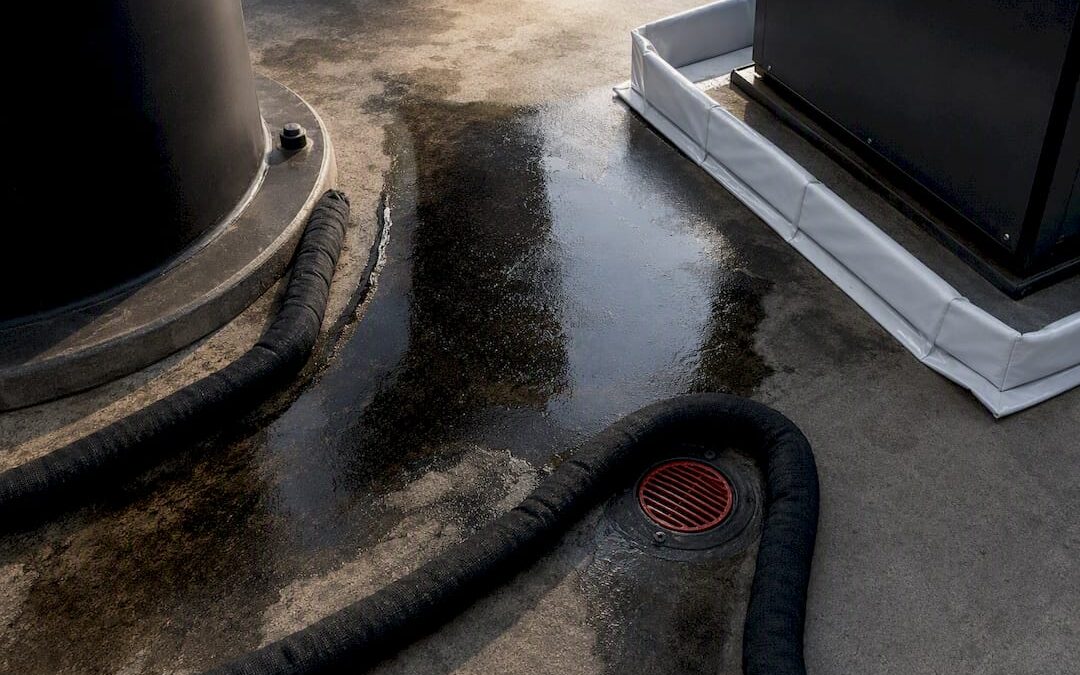
The fastest way to stop diesel-related downtime is to get an emergency on-site diesel delivery moving right now, not after you have diagnosed every cause. Call a provider or your contracted supplier, confirm your tank needs diesel meeting the 10ppm sulfur standard most generators require, and let dispatch start routing a truck while you run the safety checklist below. The rest of this page gives you the exact words to say and the checks to run while that truck is on the way.
TL;DR:
- Having a laminated card with site details and account information at the fuel point can significantly speed up emergency responses.
- Clear site access instructions, accurate tank gauges, and well-defined fuel grades prevent delays caused by miscommunication or site confusion during refills.
- Implementing tank telemetry and scheduled top-offs reduces the frequency of emergency fuel calls by providing proactive inventory management.
- Ensuring compliance with environmental and safety regulations, including proper fuel separation and documentation, remains critical during emergency fueling.
- Choosing a single, nationwide fuel provider with standing contracts and reliable dispatch improves response times during regional demand spikes or severe weather events.
Table of Contents
- Diesel Spill Response Starts With These Immediate Actions
- What to Tell Dispatch When You Call
- Safety and Fuel-Compatibility Checks Before Pumping
- Turning Emergency Calls Into Scheduled Coverage
- Why Emergency Diesel Orders Get Delayed
- Compliance Rules to Follow During Emergency Fueling
- How Anytime Fuel Pros Handles Emergency Fuel Delivery
- Sources
- FAQ
Diesel Spill Response Starts With These Immediate Actions
Every minute a generator, excavator, or reefer unit sits empty costs you more than fuel. It costs schedule, payroll, and in a data center, potentially your uptime contract. The period after you spot a low tank is critical to preventing bigger incidents.
Here is the sequence that gets a truck moving fastest:
- Call your emergency fuel line first, not your account manager’s cell phone or a general dispatch email. Emergency response lines are staffed to move faster than standard order desks.
- Confirm your exact site address, gate code, and tank location before you hang up. Dispatchers can’t route a driver to “the yard behind the main building.”
- State your tank type and rough fuel level so the driver arrives with the right hose length and pump setup already staged.
- Get a firm ETA and a callback number for the driver, not just a general delivery window.
- Assign one onsite point of contact who stays reachable by phone until the truck rolls in. This single step, according to Business Findly’s breakdown of emergency diesel delivery, often shortens arrival and transfer time because the driver never has to wait while staff hunt down fill points or sign-off authority.
While you wait, clear the path:
- Open gates, move parked vehicles, and flag the fill point with a cone or high-visibility marker.
- Pull PPE (gloves, eye protection) and hoses out where the driver can see them.
- Locate your purchase order number or account ID, or confirm someone onsite can approve emergency billing on the spot.
- Brief whoever is on shift about where the truck will stage and who is allowed near the transfer.
If your ETA slips past what dispatch quoted, call back immediately rather than waiting it out. A five minute check-in call almost always beats guessing.
Pro Tip: Keep a laminated card at the generator or fuel island with your account number, tank capacity, and gate code. Handing that card to whoever answers the phone cuts call time by more than you’d expect.
When the truck arrives, supervise the connection, verify the fuel grade against what you ordered, watch the meter run, and keep the delivery ticket. That paper trail matters more than most site managers realize until they need it for a budget review or an insurance question.
What to Tell Dispatch When You Call
Dispatch teams move fast when callers hand them clean information. Emergency diesel delivery starts with a call that confirms fuel needs, site access, and equipment requirements, and dispatch coordinates drivers, routes, and pumping gear before the truck even leaves the yard. Have this ready before you dial:
- Site address and a working phone number, plus any gate codes or check-in procedures the driver needs to get past security.
- Tank type: generator day tank, bulk storage tank, or vehicle fleet tank, along with a current gauge reading if you have one.
- Requested gallons, even a rough estimate. Dispatchers plan truck size and routing around this number.
- Fuel grade: clear diesel for backup generators and on-road fleet vehicles, dyed diesel for off-road equipment. If your generator requires diesel meeting the 10ppm sulfur standard, say so upfront.
- Fill point location and hose length needed, including whether the truck has clear space to position and back out safely.
- Access restrictions, permits, or site-specific environmental rules the driver has to follow before pumping starts.
- Billing details: a PO number, account number, or the name of whoever can approve an emergency charge if you don’t have a standing account.
Providing complete information quickly helps dispatch operate more efficiently.
Safety and Fuel-Compatibility Checks Before Pumping
Before any hose touches your tank, a few checks protect both your equipment and the crew doing the transfer. Confirm the fuel grade matches what your generator or engine actually needs. Mixing dyed off-road diesel into a tank meant for clear, 10ppm diesel doesn’t just violate fuel tax rules. It can foul emissions systems on newer equipment.
Site conditions matter just as much as fuel grade:
- Make sure the delivery area has solid, level ground for the truck and clear routing for hoses, away from foot traffic.
- Use grounding straps and spill-prevention pads during transfer, standard practice on any professional delivery.
- Confirm someone onsite knows where shutoff valves are in case of an unexpected issue.
- Require PPE for anyone standing near the connection point during pumping.
- Keep the delivery ticket and metered transfer record; these documents help site managers estimate future fuel requirements and create an audit trail for billing.
Delivery crews verify fuel compatibility and run safety checks before starting the transfer, then meter the volume and hand over a ticket for your records. A driver should refuse or delay a transfer if site access is unsafe, the tank’s condition is unknown, or contamination is suspected. That refusal isn’t a delay tactic. It is the correct call, and pushing back on it usually costs you more than the wait. Fuel contamination in particular can quietly wreck equipment long before anyone notices a performance drop, which is exactly why a driver checking tank condition before pumping is worth the extra five minutes.
Turning Emergency Calls Into Scheduled Coverage
An emergency call solves today’s problem. It doesn’t solve the pattern behind it. If your site keeps ending up in low-fuel scrambles, the fix usually isn’t a faster phone call, it’s removing the need to make one.
Three moves change that pattern:
- Set up scheduled top-offs with a minimum-reserve trigger. Instead of waiting for a gauge to hit empty, your supplier refills at a set threshold, on a set cadence, before it becomes urgent. A reliable emergency power plan accounts for consumption rate, storage capacity, and a minimum reserve precisely because normal supply chains can get disrupted during regional events.
- Add tank telemetry. Tank monitoring turns refills from reactive scrambles into scheduled maintenance, giving you visibility into usage and inventory and triggering automatic reorders before a gauge ever hits critical.
- Negotiate contract terms that matter during a crunch, not just price per gallon: guaranteed response windows, reserved capacity during regional demand spikes, consolidated billing across multiple sites, and invoicing that doesn’t require a decoder ring.
That third point matters more than most facilities teams realize until a storm or grid event hits an entire region at once. Suppliers triage during those events, and accounts with pre-established relationships and known site details get served ahead of new callers. Telemetry and standing agreements change your position in that line.
Pro Tip: If you manage sites across multiple states, ask any prospective fuel partner whether they operate through a nationwide network or only their own trucks. A single point of contact for multi-site accounts saves your team from juggling five regional vendors during the next weather event.
For fleets tracking incidents and driver activity across multiple sites, a monitoring platform like FleetVakt can pair well with fuel telemetry to keep both fuel status and vehicle documentation in one place. Reliable dispatch also depends on accurate contact records; guidance on managing driver contact numbers for fleets is worth a look if your emergency contact list hasn’t been updated in a while.
Why Emergency Diesel Orders Get Delayed
Most delays trace back to a handful of predictable causes, and nearly all of them are avoidable with a little prep work.
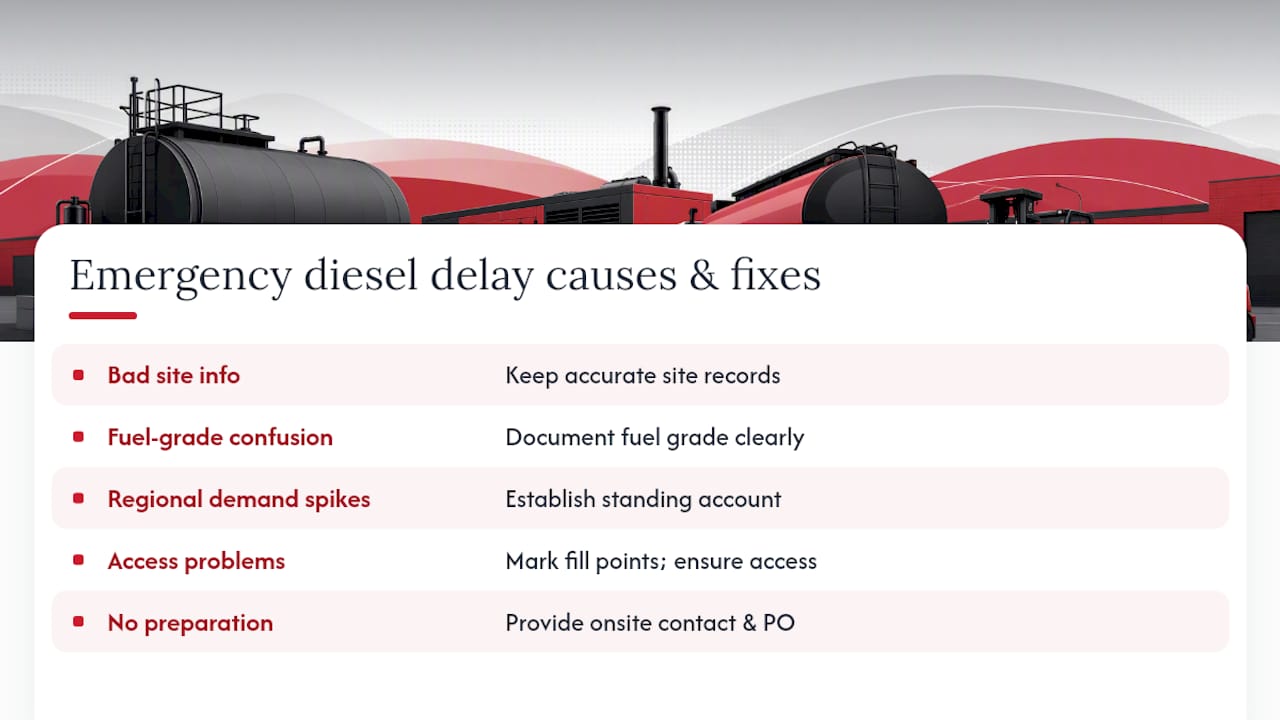
Bad or incomplete site information tops the list. A gate code that’s changed, a tank location that’s “somewhere near the loading dock,” or a phone number nobody answers all add real minutes, sometimes hours, to a driver’s arrival.
Fuel grade confusion causes a different kind of delay. If your PO says clear diesel but your site actually runs on dyed fuel for off-road equipment, dispatch has to stop and confirm before loading the truck, or worse, before pumping starts on arrival.
Regional demand spikes are the delay you can’t fully control but can prepare for. When a storm, grid failure, or major event pulls fuel demand across an entire region at once, suppliers prioritize existing accounts with known requirements. New or infrequent callers end up further back in the queue.
Access problems on arrival stop deliveries cold. A locked gate with nobody around to open it, a truck that can’t physically reach the fill point, or an unmarked tank all send drivers back to dispatch for instructions instead of pumping fuel.
The fix for nearly every one of these is preparation done before the emergency, not during it: accurate site records, a known onsite contact, clear fuel-grade documentation, and, where it makes sense, a standing account that puts you ahead of the queue when demand spikes hit.
Compliance Rules to Follow During Emergency Fueling
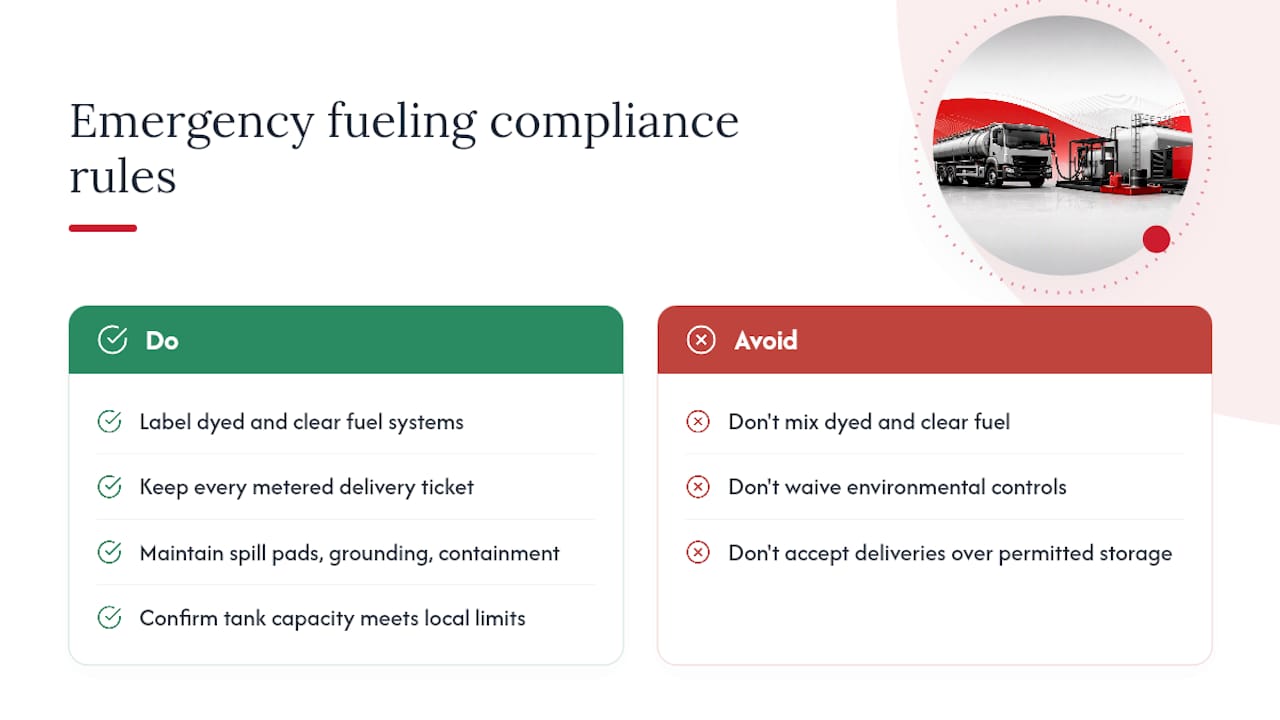
Emergency refueling doesn’t suspend the rules that apply to normal deliveries. Dyed diesel intended for off-road equipment can’t legally be used in on-road vehicles, and mixing it into a tank meant for clear diesel creates a compliance problem that outlasts the emergency itself. Keep dyed and clear fuel systems clearly separated and labeled so a rushed delivery doesn’t create a paperwork headache later.
Documentation matters here too. A metered delivery ticket isn’t just a courtesy from your supplier. It is your record that the correct volume and grade of fuel were delivered, which matters for internal audits, insurance claims, and any regulatory reporting your facility is subject to. Keep every ticket, even for small emergency top-offs.
Site-specific environmental controls also apply during emergency response the same way they do during scheduled deliveries. Spill-prevention pads, grounding procedures, and secondary containment requirements around fuel tanks don’t get waived because the delivery is urgent. If your facility operates under specific environmental permits, brief the delivery driver on any site rules before the truck arrives, not after it’s already staged.
Finally, if your site sits in a jurisdiction with local fire codes or storage limits on diesel tanks, confirm your current tank capacity complies before you request a large emergency fill. A supplier can deliver fuel quickly, but exceeding a permitted storage limit is a problem you don’t want discovered during an inspection.
How Anytime Fuel Pros Handles Emergency Fuel Delivery
Anytime Fuel Pros exists for exactly the scenario this article walks through: a generator running low, a job site with idle equipment, or a data center facing a fuel gap it can’t afford. AFP offers 24/7 emergency response alongside clear and dyed diesel delivery, DEF, bulk fuel, and generator fueling, backed by a nationwide partner network that gives multi-site operators one point of contact instead of five regional vendors.
The process runs the way this article describes it should. You call, dispatch confirms your site details and fuel grade, a driver gets routed with the right equipment, and the transfer gets metered and documented on arrival. That same call flow also works for setting up scheduled deliveries and tank monitoring so future refills stop being emergencies at all. If you’re managing a data center, event site, or fleet yard and need fuel moving now, start with the emergency fuel delivery page to see coverage and request dispatch, or check the full fuel services lineup if you’re ready to talk about a standing contract instead of another one-off call.
Sources
- How Emergency Diesel Delivery Works: From Call to Refuelling | Business Findly
- 6 Smart Generator Fueling Strategies for Reliable Backup Power
- Fuel Considerations for Backup and Emergency Power Systems
FAQ
How fast can emergency diesel delivery arrive onsite?
Response time depends on your location, current demand, and whether you have a standing account, but providers with dedicated emergency lines prioritize dispatch specifically to shorten that window.
What information does a dispatcher need for emergency fuel delivery?
Dispatch needs your site address, tank type and gauge reading, requested gallons, fuel grade (clear or dyed diesel), fill point access, and billing or account details to route a driver efficiently.
Can dyed and clear diesel be mixed in an emergency?
No. Dyed diesel is reserved for off-road equipment under fuel tax rules, and mixing it with clear diesel meant for on-road vehicles or generators creates both a compliance issue and a potential equipment problem.
Does tank monitoring actually reduce emergency calls?
Tank telemetry with automated reorder triggers converts refills from reactive emergencies into scheduled maintenance, which is a core reason facilities move toward monitored accounts after their first urgent scramble.
What should I keep after an emergency fuel delivery?
Keep the metered delivery ticket every time. It documents the fuel grade and volume received, supports billing and future planning, and creates the audit trail you’ll want if compliance questions come up later.
Recent Comments