
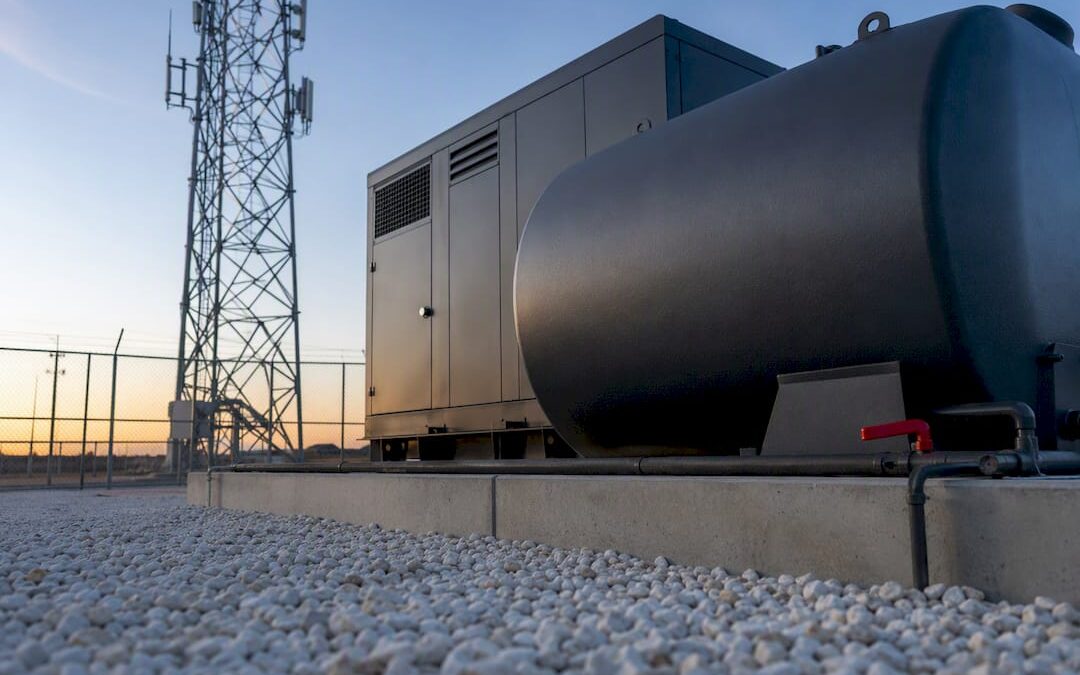
Reliable telecom site fueling means triggering deliveries from monitored fuel thresholds, not a calendar, and backing that with an SPCC/UST compliance check and a delivery plan matched to your site’s access limits. Get those three pieces right, the way U.S. EPA SPCC rules, Westell’s generator-management guidance, and fuel vendors like Anytime Fuel Pros all recommend, and run-outs become rare rather than routine. The checklists below turn that rule into something you can hand to a site manager on Monday morning.
TL;DR:
- Proper site fueling requires monitoring fuel levels, maintaining compliance documentation, and verifying deliveries to prevent run-outs and meet EPA and NFPA regulations.
- Remote sensors like ultrasonic, pressure transducers, or floats must be properly calibrated and paired with alarm logic tailored to each site’s consumption profile for reliable alerts.
- Fuel storage thresholds trigger regulatory plans: above 1,320 gallons aboveground may necessitate SPCC compliance, including inspections and spill prevention measures.
- Remote and hard-to-reach sites benefit from tailored access solutions, tank sizing, and pre-planned logistics, especially before storms or outages, to ensure continuous supply.
- Using telemetry-driven refueling and a dedicated fuel vendor like Anytime Fuel Pros can optimize delivery schedules, verify each fill, and support emergency response across multiple locations.
Table of Contents
- What Belongs in a Core Telecom Site Fueling Checklist?
- How Does Remote Monitoring Make Refueling More Reliable?
- What Do EPA and NFPA Rules Require for Generator Tanks?
- How Do You Get Fuel to Remote and Hard-to-Reach Towers?
- How Should Telecom Operators Prepare for Storms and Outages?
- Anytime Fuel Pros: A Direct Line for Scheduled and Emergency Site Fueling
- Sources
- FAQ
What Belongs in a Core Telecom Site Fueling Checklist?
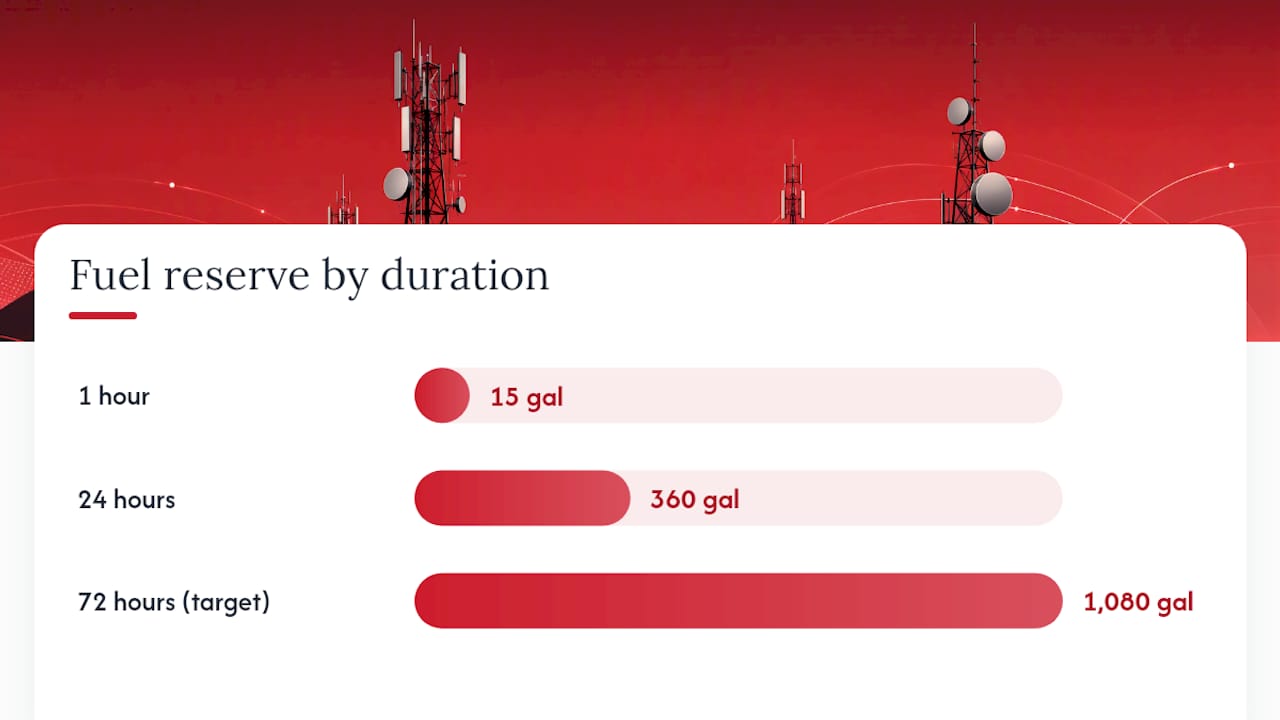
Start with the number that actually matters: run-time. If a generator burns 15 gallons an hour and your target is 72 hours of backup, you need at least 1,080 gallons in reserve before you even think about a delivery schedule. Everything else in a fueling program flows from that math.
Scheduled recurring deliveries work fine for predictable, high-traffic sites with stable load profiles. Monitoring-driven deliveries work better everywhere else, especially remote towers where a fixed weekly run either wastes a truck roll or, worse, misses a spike in run time during a grid event. Most mature telecom fueling programs run a hybrid: scheduled top-offs for easy-access urban sites, event-driven dispatch for rural and storm-exposed towers.
A workable policy tiers sites by criticality and sets clear refill triggers:
- Routine sites: refuel at 60% capacity under normal grid conditions
- Storm-path sites: top off to roughly 90% ahead of forecast severe weather
- High-priority hubs: shorter refill intervals regardless of season, given their traffic load
Documentation is what separates a program from a habit. Every site file should include:
- A current site diagram showing tank location, generator, and access route
- Tank capacity and fill history records
- A written SOP covering delivery, transfer, and spill response
- An inspection log with photo or telemetry verification of each fill
Delivery verification matters as much as the delivery itself. A driver log, a timestamped photo of the gauge, or a telemetry confirmation closes the loop and gives you an audit trail if a regulator or an insurer ever asks.
How Does Remote Monitoring Make Refueling More Reliable?
Sensor choice drives everything downstream. Ultrasonic sensors read fuel level without touching the fuel, which makes them low-maintenance but sensitive to tank shape and foam. Pressure transducers are rugged and cheap but need periodic recalibration as the sensor ages. Float sensors are the simplest and least expensive option, though they’re also the most prone to mechanical failure in tanks that see frequent fills.
Whatever sensor you choose, the alarm logic matters more than the hardware. A solid setup includes:
- A low-fuel alert tied to your minimum reserve threshold
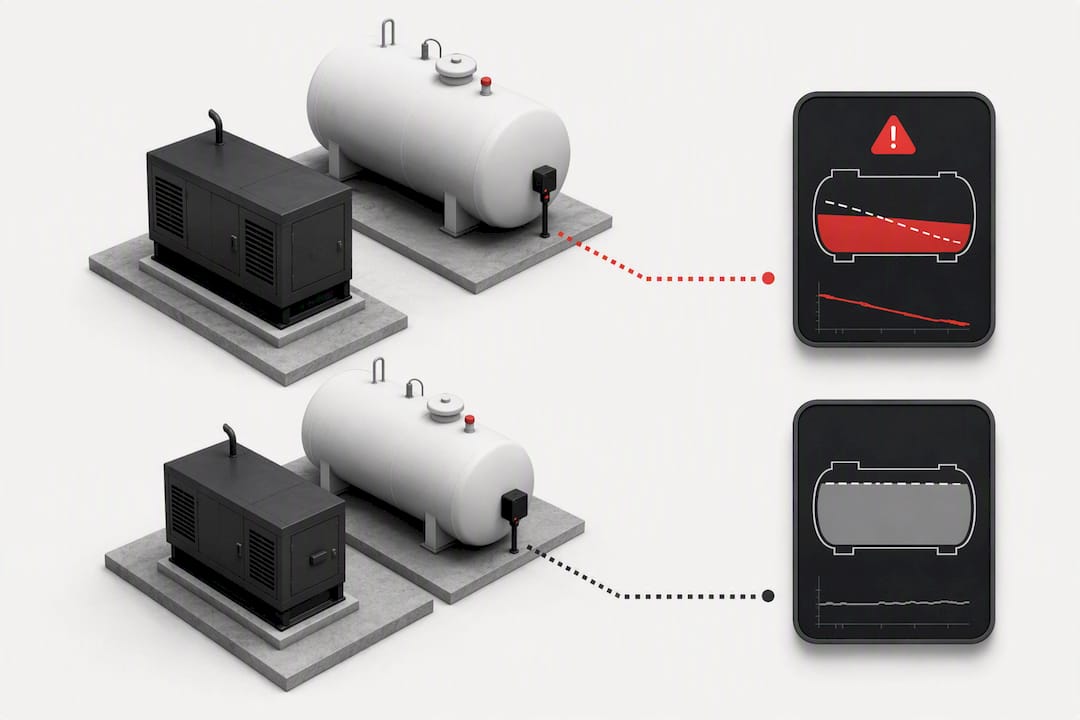
- A rate-of-loss alarm that flags abnormal drops, a common early sign of fuel theft
- Time-under-load reporting so you know exactly how long a generator has been carrying the site
A typical data flow looks like this: sensor reads the tank, a remote terminal unit (RTU) packages the reading, and an alarm fires by email, SNMP trap, or pager when levels cross a threshold, triggering dispatch to your fuel vendor. DPS Telecom’s work with U.S. Cellular using a NetGuardian RTU paired with a Rochester Propane Sensor is a good real-world example of this exact chain. That deployment cut unnecessary truck rolls by giving dispatchers accurate remote visibility instead of guesswork.
Once telemetry is in place, prioritize deliveries by predicted time-to-empty rather than a date on a calendar.
Pro Tip: Don’t copy a network-wide threshold across every site. Tune each alarm to that site’s actual consumption profile. A generator that ran three outages last winter has a very different burn signature than one that’s sat idle for a year, and a one-size-fits-all threshold will trigger either late deliveries or false emergencies on one side of that gap.
What Do EPA and NFPA Rules Require for Generator Tanks?
Regulatory exposure catches more telecom operators off guard than any mechanical failure. The EPA’s SPCC rule generally applies once your aggregate aboveground oil storage exceeds 1,320 gallons, or completely buried storage exceeds 42,000 gallons, and there’s a reasonable expectation that a discharge could reach navigable waters. A cluster of tower sites each sitting just under that number can still add up fast when a company totals its regional storage.
By the numbers: SPCC coverage kicks in at 1,320 gallons aboveground, a threshold plenty of multi-tank telecom compounds cross without anyone running the math.
If SPCC applies, here’s the minimum a compliant plan needs:
- Professional engineer (PE) certification of the plan
- A facility diagram showing every tank, generator, and drainage path
- Regular inspections with documented results
- Secondary containment sized to hold the largest tank’s full volume
- Written transfer procedures for every delivery
Separately, federal UST and EPG guidance covers underground tanks feeding emergency generators, with specific rules on overfill prevention, release detection, and operator training. Spill-prevention hardware needs periodic testing, and EPA guidance recommends checking spill buckets for liquid-tightness roughly every three years or using double-walled buckets with continuous monitoring.
NFPA 110 and PEI RP1400 add operational texture on top of the federal floor: automatic shutoff devices, audible and visual high-level alarms, and properly sized spill buckets at every fill point. During a delivery, someone should physically verify the overfill device is functioning, watch the fill from start to finish, and log the result. Our SPCC checklist for fuel tanks walks through the full facility-level requirements in more depth.
How Do You Get Fuel to Remote and Hard-to-Reach Towers?
Access planning starts before the first delivery, not after a truck gets stuck on a washed-out road. Survey each site for road condition, seasonal access limits, and turnaround space, then match equipment accordingly.
- Bobtail trucks work for most sites with drivable access and moderate tank capacity
- Totes handle smaller volumes and tighter footprints where a full-size truck can’t maneuver
- Pump-in transfer systems solve sites where the tank sits behind a locked compound or restricted approach
Tank sizing should reflect both expected run time and realistic resupply intervals. A site with a 5-day resupply window in bad weather needs more onsite capacity than one accessible year-round. When a tank truck operates exclusively on a single facility as a stationary or semi-permanent container, SPCC treats it as part of that facility’s storage rather than as DOT-regulated transportation, a distinction that changes compliance obligations for operators running dedicated onsite bobtails.
For gated or remote compounds, pre-authorized access codes, documented escort procedures, and a short driver safety briefing prevent delays that turn a routine top-off into an emergency. After every delivery, a quick filter inspection and a water-in-fuel sample check catch contamination before it reaches the generator. Our generator fuel delivery page details how delivery verification works in practice.
How Should Telecom Operators Prepare for Storms and Outages?
Pre-storm fueling is where the 60/90 rule earns its keep. American Tower’s approach tops storm-path generators to roughly 90% capacity ahead of forecast severe weather, while routine sites stay at the standard 60% trigger. Identifying which sites sit in a storm path means cross-referencing forecast tracks against your site map days, not hours, before landfall or a major front moves through.
- Confirm storm-path sites and issue top-off orders 48 to 72 hours ahead of impact
- Stage tanker trucks and confirm mutual-aid or contract-fuel clauses with your vendor
- Triage delivery priority by service criticality and predicted time-under-load, not by request order
- Coordinate access permits and local-authority liaison for restricted-zone sites
- After the event, inspect for contamination, polish fuel where needed, and replenish reserves
Pro Tip: Lock in a permanent fueling partnership before hurricane season starts, not during it. Every storm-prepared operator we’ve seen treats vendor relationships the same way they treat generator maintenance: something you can’t improvise under pressure.
A short after-action report, capturing which sites ran low, which alarms fired late, and which deliveries got delayed, feeds directly back into next season’s threshold tuning. Our emergency fuel services resource covers coordinated response planning for mission-critical sites in more detail.
Anytime Fuel Pros: A Direct Line for Scheduled and Emergency Site Fueling
Building a compliant, monitoring-driven fueling program is only half the job. The other half is having a vendor who shows up when the telemetry says to. Anytime Fuel Pros delivers on-site diesel for backup generators, runs scheduled recurring fills for sites on a routine cadence, and provides DEF delivery alongside 24/7 emergency response when a threshold alarm fires outside business hours.
Coverage includes multiple primary markets, with a nationwide partner network extending service to multi-state telecom programs that need one point of contact instead of a dozen regional vendors. That matters for operators managing towers across several states: one invoice format, one dispatch process, one relationship to maintain instead of juggling local suppliers site by site.
The company works well with telemetry-driven programs, coordinating dispatch off fuel-level alerts rather than forcing sites onto a fixed calendar, and every delivery comes with verification and transparent, itemized invoicing so your compliance records stay clean.
If your current fueling setup still runs on guesswork or a rotating schedule, start with a look at Anytime Fuel Pros’ generator fuel delivery services and request a quote for your site portfolio.
Sources
- Who is regulated by the SPCC rule? | U.S. EPA
- Generator Management | Westell
- Backup power: getting ahead of weather-related outages | American Tower
- U.S. Cellular: Remote generator management and propane monitoring | DPS Telecom
FAQ
What triggers an SPCC plan requirement for a telecom site?
SPCC generally applies once a facility’s aggregate aboveground oil storage exceeds 1,320 gallons, or buried storage exceeds 42,000 gallons, combined with a reasonable expectation of discharge to navigable waters. Many telecom compounds cross this threshold once you total multiple tanks on one property, so it’s worth auditing storage across an entire site cluster.
How often should generator fuel tanks be inspected?
Inspection cadence depends on tank type and equipment, but EPA guidance recommends testing spill-prevention devices like spill buckets for liquid-tightness roughly every three years, or using double-walled buckets with continuous monitoring instead. Visual inspections tied to each delivery, paired with photo or telemetry verification, catch most issues well before a formal test cycle.
What fuel level should trigger a delivery request?
Industry practice from operators like American Tower sets a 60% threshold for routine refueling and raises that to about 90% for storm-path sites ahead of severe weather. Monitoring-driven programs refine this further by tying the trigger to predicted time-to-empty rather than a flat percentage alone.
Does Anytime Fuel Pros handle emergency fueling for telecom sites?
Yes. Anytime Fuel Pros provides 24/7 emergency fuel delivery alongside scheduled recurring service, with coverage through primary Texas and Utah markets plus a nationwide partner network for multi-state telecom programs. Current pricing and service details are available directly on the Anytime Fuel Pros site.
What’s the difference between a fixed schedule and monitoring-based fueling?
A fixed schedule refuels sites at set calendar intervals regardless of actual consumption, which often wastes truck rolls or misses spikes in run time. Monitoring-based fueling uses remote sensors and configurable thresholds to trigger deliveries based on real fuel status, cutting unnecessary trips while reducing run-out risk.
Recent Comments