

Loader equipment fuel management is the systematic process of monitoring, controlling, and accounting for every gallon of diesel that flows into your heavy loaders, combining hardware at the dispenser with software that tracks consumption by machine, operator, and shift. The industry term for the broader category is a fuel management system (FMS), and on active construction and mining sites, it does three things that matter most: it stops theft before it compounds, it gives you real data to cut waste, and it creates the audit trail you need for tax credits and regulatory compliance. Here is what the system actually covers:
- Tracking fuel dispensed per loader and per operator in real time
- Triggering alerts when consumption patterns fall outside normal ranges
- Integrating with telematics to separate inefficient operation from mechanical problems
- Generating transaction reports for cost allocation and compliance filings
- Controlling access to fuel dispensers through PIN, key fob, or card authentication
What does a loader fuel management system actually include?
A professional fuel management system combines hardware and software into a single, 24/7 monitoring loop. Neither half works without the other.
Hardware components:
- Access control terminals (PIN pads, RFID readers, or key fobs) that restrict dispenser use to authorized operators
- Automatic tank gauging (ATG) units that track inventory levels continuously and flag discrepancies
- Flow meters installed inline on dispensing lines to measure every gallon dispensed
- Controlled-access fuel dispensers that only release fuel after a valid credential is presented
- Sensors for leak detection and overfill prevention on above-ground storage tanks
Software features:
- Real-time dashboards showing fuel levels, transaction history, and consumption by asset or crew
- Automated alerts for irregular draws, after-hours fueling, or inventory drops that exceed expected burn
- Scheduled reporting for cost-center allocation, fleet billing, and fuel tax credit documentation
- Integration APIs that push transaction data directly into fleet management or ERP platforms
Pro Tip: Set alert thresholds at 10% above each loader’s average burn rate per shift. That single rule catches most unauthorized draws without generating false alarms that crews start ignoring.
The integration layer is where the system earns its keep on larger sites. When FMS data feeds into a telematics platform, managers gain automated hour and mileage tracking alongside fuel burn rates, making it possible to distinguish between an operator running the engine inefficiently and a loader with a failing injector.

How does a fuel management system benefit loader operations?
Theft prevention is the benefit most managers cite first, and the mechanism is direct. A system that tracks every gallon dispensed by operator and loader, with a full audit trail, removes the anonymity that makes fuel theft easy. Alerts on irregularities close the window further.
Beyond theft, the operational gains are just as real:
- Cost reduction: Knowing exactly which loaders burn the most fuel per productive hour lets you target maintenance or retraining before waste compounds.
- Maintenance scheduling: Telematics-linked FMS platforms like Bobcat’s system deliver real-time consumption and idle-time reports that trigger service alerts before a minor issue becomes a breakdown.
- Fuel tax credits: Accurate transaction records support off-road diesel tax credit claims under IRS Form 4136, which requires documented proof of non-highway use.
- Environmental compliance: Precise inventory data supports spill prevention and countermeasure (SPCC) plans required by the EPA for sites storing fuel above threshold quantities.
Tracking job site fuel usage also gives fleet managers the data to negotiate better fuel contracts, since volume projections backed by real consumption history carry weight with suppliers.
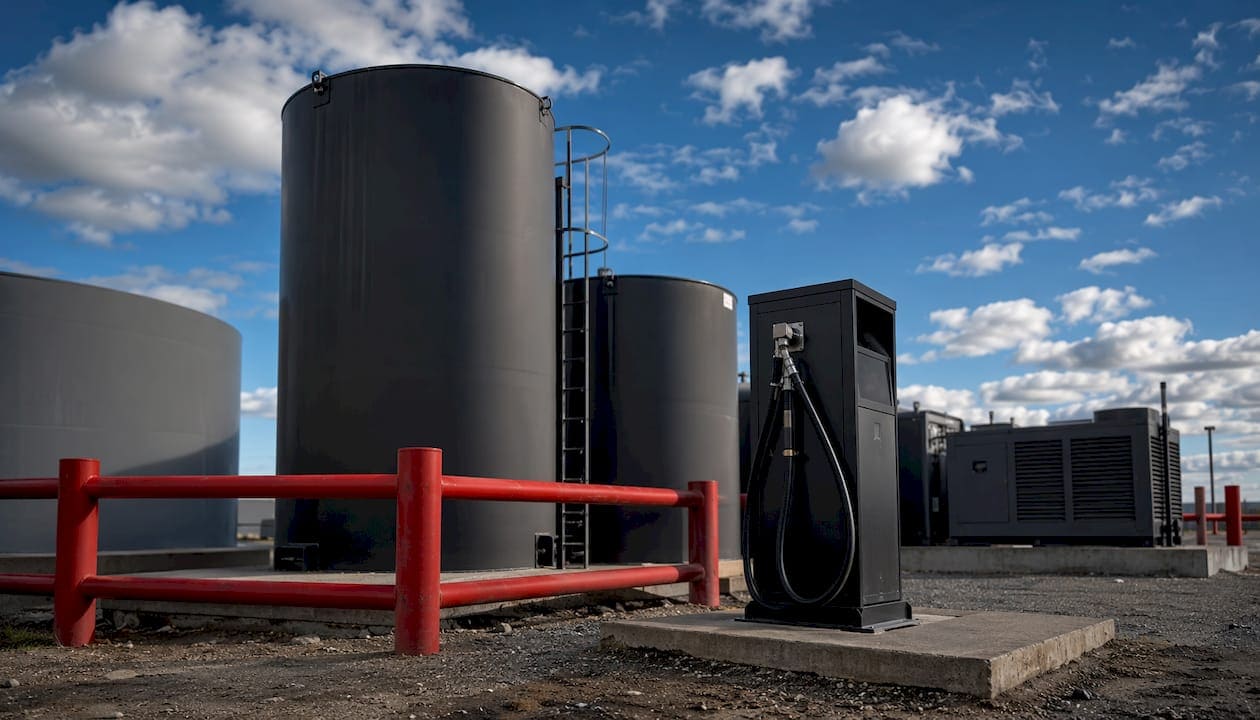
How fuel gets delivered, stored, and dispensed on loader job sites
Getting fuel to the machine without losing it to contamination, spillage, or theft requires discipline at every stage of the chain.
Delivery:
- Bulk diesel arrives by tanker truck and transfers into above-ground storage tanks (ASTs) sized to the site’s daily burn rate, typically 500 to 10,000 gallons for mid-sized construction fleets.
- Bulk fuel delivery schedules should align with projected consumption to avoid both runouts and extended storage that degrades fuel quality.
Storage:
- Refuel loaders at the end of each shift rather than the start. Filling a warm tank prevents overnight condensation from introducing water into the fuel supply, a practice recommended for skid steer and compact loaders and equally applicable to wheel loaders.
- ATG systems on storage tanks provide continuous inventory data and leak detection, supporting SPCC compliance.
- Use manufacturer-approved fuel filters on storage tank outlets to prevent particulate contamination from reaching loader fuel systems.
Dispensing:
- Controlled-access dispensers connected to the FMS require operator authentication before releasing fuel, creating a transaction record for every fill.
- Flow meters on dispenser lines verify that the volume dispensed matches what the ATG records as drawn from the tank, catching discrepancies in real time.
Strategies that actually move the needle on loader fuel efficiency
Loader fuel efficiency comes down to three levers: machine design, operator behavior, and maintenance discipline. The design is fixed once you buy the machine, but the other two are entirely within your control.

Operator training is the highest-return investment on this list. Poorly trained operators who ride the brakes, spin tires under load, or run engines at maximum speed unnecessarily can negate every hardware advantage a modern loader offers. Operator skill and training remain the most critical variables in real-world fuel economy, regardless of machine spec.
Idle time reduction delivers immediate savings with zero capital outlay. Shutting down engines during breaks and between tasks is one of the most actionable management levers available to any site manager, applicable across all loader sizes.
Maintenance with genuine parts protects the gains. Aftermarket fuel and air filters can degrade engine performance, increasing fuel consumption and wear in ways that show up slowly and get misattributed to operator behavior.
Additional strategies worth implementing:
- Use load-sensing hydraulics and lock-up torque converter transmissions where available; these design features cut fuel costs while maintaining productivity.
- Enable auto-idle and auto-shutdown features on loaders that have them.
- Monitor tire pressure weekly. Low-pressure tires increase rolling resistance and raise fuel burn on every cycle.
- Review telematics idle-time reports weekly and address outliers with individual operators rather than site-wide memos.
Pro Tip: Track tons moved per gallon rather than gallons consumed per hour. That ratio accounts for production output and gives you a fair comparison across operators and shifts.
Types of fuel management systems used for loader equipment
Not every site needs the same system. The right choice depends on fleet size, site permanence, and how tightly you need to control access.
Standalone dispensing control systems are the entry point. These pair a controlled-access dispenser with a basic data logger, recording who fueled what and when. They work well for smaller fleets where the priority is access control rather than deep analytics.
Networked FMS platforms connect multiple dispensing points across a site or across multiple sites to a central software dashboard. Transaction data flows in real time, alerts fire automatically, and reports export directly to accounting or fleet management software. Banlaw ResTrack is one example of a networked platform built specifically for heavy equipment fleets, offering RFID-based access control, tank gauging integration, and consumption reporting by asset.
Telematics-integrated systems go a step further by linking FMS transaction data with machine hours, GPS position, and operator behavior metrics from the loader’s onboard computer. This combination lets managers correlate fuel draws with productive work versus idle time, a distinction that standalone systems cannot make.
Hybrid loader energy management systems (EMS) represent the leading edge for sites running newer hybrid wheel loaders. These systems use rule-based or optimization-based strategies to balance engine and electric motor output in real time, minimizing fuel consumption under varying load conditions without operator input.
Common challenges in loader fuel management and how to fix them
Data gaps from manual entry are the most common failure point. When operators record fuel draws on paper and someone transcribes them later, errors and omissions accumulate. The fix is automating the transaction record at the dispenser, not downstream.
Sensor drift on flow meters causes cumulative discrepancy between dispensed volume and inventory records. Calibrate flow meters on a scheduled basis, typically every six months on high-throughput sites, and reconcile ATG readings against delivery receipts monthly.
Connectivity issues on remote sites can interrupt real-time data transmission from networked FMS platforms. Systems that store transactions locally and sync when connectivity resumes prevent data loss, but managers need to verify that local storage capacity matches the site’s fueling frequency.
Fuel contamination is a silent efficiency killer. Water intrusion from condensation or a compromised tank seal degrades diesel quality and increases injector wear, showing up as rising fuel consumption before any mechanical fault code appears. Fuel contamination often goes undetected until equipment damage is already done.
Operator resistance to access control slows adoption on sites where crews are used to open dispensers. Framing the system as a maintenance and cost-tracking tool rather than a surveillance measure tends to reduce friction during rollout.
Regulatory compliance and environmental requirements for US construction and mining sites
US construction and mining sites face overlapping federal and state requirements that a well-configured FMS helps satisfy.
EPA Tier 4 emissions standards apply to non-road diesel engines, including wheel loaders, and require compliant engine designs for equipment sold in the US. Fuel management records support compliance documentation if an agency questions equipment operation.
SPCC regulations under 40 CFR Part 112 require sites storing oil above certain thresholds to maintain a Spill Prevention, Control, and Countermeasure plan. ATG systems and leak detection sensors built into a fuel management setup directly support SPCC plan requirements.
Dyed diesel rules under IRS and EPA regulations restrict off-road dyed diesel to non-highway use. FMS transaction records provide the documentation needed to demonstrate compliant use and support Form 4136 fuel tax credit claims.
MSHA regulations at mining sites add requirements for fuel storage, handling, and spill response that overlap with SPCC. Accurate inventory records and controlled dispensing logs are central to both.
State-level air quality rules in regions like California’s San Joaquin Valley impose additional idling restrictions on non-road equipment. Telematics-linked FMS platforms that log idle time by machine and operator give site managers the data to demonstrate compliance.
Anytimefuelpros delivers the fuel your loaders need, on your schedule
Running a fuel management system is only half the equation; understanding its impact is crucial, as explained in Why Diesel Engine Availability Matters in Logistics. The other half is making sure clean, on-spec diesel arrives at your site before your loaders run dry.
Anytimefuelpros delivers bulk diesel directly to construction sites, mining operations, and equipment yards across Texas, Utah, and the continental US through its national partner network. Scheduled deliveries align with your consumption data, so your storage tanks stay at the right level without your crew making a single trip to a fuel station. Emergency and after-hours response means a supply disruption does not become a production stoppage. Transparent invoicing gives you the cost records your FMS needs to close the loop on per-machine fuel accounting. See the full range of on-site fueling services or review the benefits of professional fuel delivery to find the right setup for your fleet.
Key Takeaways
Loader equipment fuel management combines hardware access controls, tank gauging, and flow meters with software reporting to eliminate theft, cut waste, and satisfy US regulatory requirements at construction and mining sites.
| Point | Details |
|---|---|
| System definition | An FMS pairs hardware (ATG, flow meters, access terminals) with software dashboards to monitor every gallon dispensed by loader and operator. |
| Top theft prevention tool | Tracking each dispense with an audit trail and automatic alerts removes the anonymity that makes fuel theft possible. |
| Highest-return efficiency lever | Idle time reduction delivers immediate fuel savings across all loader sizes with no capital investment required. |
| Compliance documentation | FMS transaction records support EPA SPCC plans, IRS Form 4136 off-road fuel tax credits, and Tier 4 engine compliance documentation. |
| Anytimefuelpros role | Scheduled bulk diesel delivery and 24/7 emergency response keep storage tanks at the right level so your FMS data reflects actual consumption, not supply gaps. |
Recent Comments