
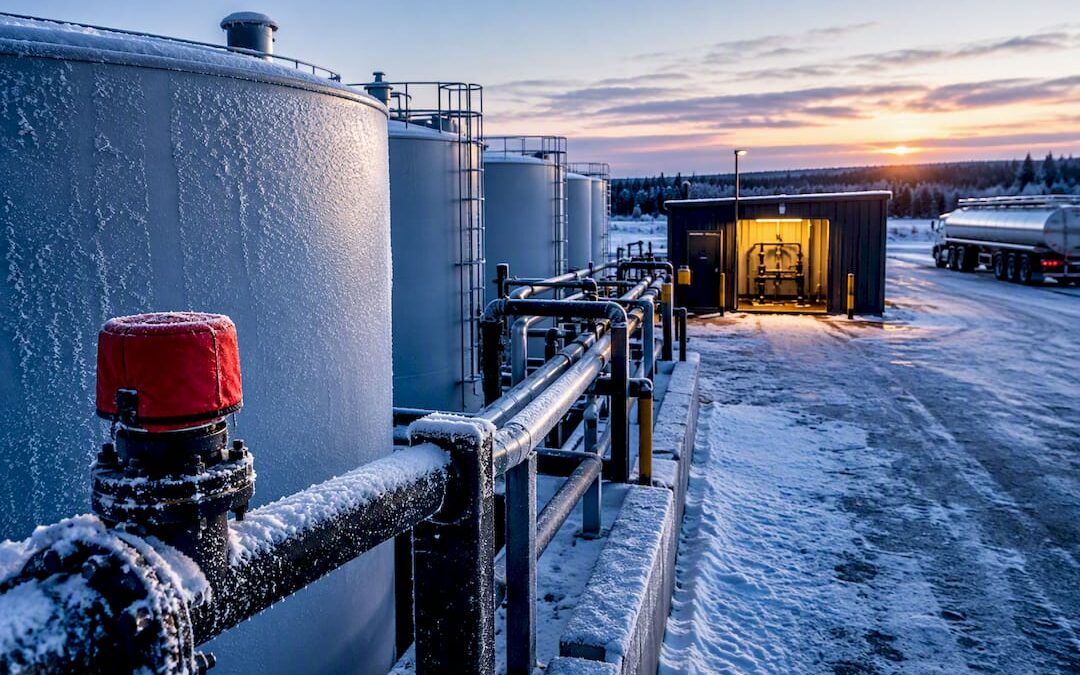
Prioritize winterized diesel, additive treatment ahead of the first hard freeze, and prioritized delivery scheduling built on real tank data. Confirm your CFPP target with your supplier, put tank monitors on your critical sites, and lock in an emergency response contract with a vendor like Anytime Fuel Pros before temperatures drop. Waiting until the first cold snap to make these calls is how runouts happen.
TL;DR:
- Ordering a winter diesel blend with an appropriate CFPP target well before the first freeze prevents filter clogging and equipment downtime during cold snaps.
- Using cold-flow improvers, anti-gel treatments, and water deicers tailored to your diesel blend helps maintain pumpability and prevents water-related failures in storage tanks.
- Implementing tank monitors and applying degree-day scheduling enables automatic, proactive fuel delivery, reducing emergency calls and preventing runouts during peak winter demand.
- Regular pre-season tank and equipment maintenance, including filter changes and heater tests, is crucial, as neglecting these steps is a common cause of winter diesel failures.
- Establishing clear emergency response contracts, with pre-negotiated access details, ensures swift, prioritized service when gelation or runouts occur in severe weather conditions.
Table of Contents
- Why Winter Diesel Fails: CFPP, Gelling, and Water Contamination
- What Winter Fuel Blends and Additives Should You Order?
- How Should You Schedule and Route Winter Diesel Deliveries?
- Tank and Equipment Winter Prep That Actually Prevents Failures
- What to Do When Fuel Gels or a Tank Runs Dry
- Fall-to-Winter Checklist: What to Do Each Month
- How Anytime Fuel Pros Fits Into Your Winter Readiness Plan
- Sources
- FAQ
Why Winter Diesel Fails: CFPP, Gelling, and Water Contamination
Diesel fuel starts forming wax crystals as temperatures fall, and that process has a name: the Cold Filter Plugging Point (CFPP), sometimes written as CFP. It marks the temperature where wax particles get thick enough to clog fuel filters and starve an engine or generator of fuel. Depending on the blend, that threshold can sit anywhere from the low 20s down to well below zero Fahrenheit, which is exactly why “diesel” is not one fuel but several, seasonally adjusted.
Three failure modes account for most winter breakdowns:
- Waxing — paraffin crystallizes and clumps inside fuel lines and filters.
- Filter plugging — even mild wax formation is enough to choke a fuel filter and stall equipment.
- Water contamination — condensation in tanks freezes into ice crystals that behave like wax, blocking flow at the worst possible moment.
The operational fallout is immediate: generator downtime at a data center, stalled equipment on a job site, and a spike in emergency calls that strains every supplier’s truck capacity at once. Cold weather events routinely tighten delivery lead times and push emergency rates higher exactly when demand peaks, which is the core argument for planning fuel specs and delivery windows before the first freeze rather than during it.
What Winter Fuel Blends and Additives Should You Order?
Procurement conversations go faster when you use the supplier’s own vocabulary. Ask specifically for a winter blend, not generic “diesel,” and specify the CFPP target you need for your region and equipment. A blend of No. 2 and No. 1 diesel lowers the CFPP but also lowers energy density slightly, so it is a tradeoff, not a free upgrade.
Three additive categories matter here, and they are not interchangeable:
- Cold-flow improvers modify wax crystal structure so fuel stays pumpable at lower temperatures.
- Anti-gel treatments prevent the fuel from solidifying once wax has already started forming.
- Deicers target water in the fuel system directly, which cold-flow improvers do not address.
Modern cold-flow improvers let fuel stay pumpable at low temperatures without heated storage, while older additive chemistries often still require heated transfer lines to move fuel safely. That distinction changes your equipment budget, not just your fuel order. DEF also freezes, at 12°F, so store it where it will not sit in an unheated trailer overnight, and keep in mind that a frozen DEF tank does not damage the fluid itself once it thaws.
A half-empty tank has more headspace for condensation, and condensation is where your water contamination problem starts.*
How Should You Schedule and Route Winter Diesel Deliveries?
Winter scheduling runs on data, not guesswork, and the fleets that avoid runouts are the ones that stopped relying on will-call requests months before the first freeze. Tank monitors and telemetry convert reactive orders into automatic fill triggers, so a site calls for fuel before it runs dry, not after.
- Install tank monitoring on every critical site. Real-time level data lets dispatch schedule a top-off automatically rather than waiting on a phone call that might come in too late.
- Apply degree-day or K-factor scheduling. This method predicts fuel consumption based on accumulated cold, correcting for how many “degree-days” below a baseline temperature a site has experienced since its last fill. Degree-day logic, paired with tank monitors, helps dispatchers predict fills and cut emergency calls during the heaviest weeks of the heating season.
- Reserve manual will-call for low-priority, predictable accounts. Automated triggers should cover anything mission-critical: generators, data centers, and 24/7 operations.
- Build dynamic or hybrid routing into dispatch. Continuously updated routes based on live demand and truck availability let a fleet reprioritize deliveries in real time instead of running a fixed route that ignores a site about to go dry.
- Track KPIs weekly through the season. Watch runout incidents, the ratio of emergency trips to scheduled trips, gallons delivered per route, and how consistently your emergency SLA gets met.
Delivery software that layers degree-day alerts, tank monitor data, and route optimization into one dispatch view protects margins while keeping winter capacity available for the accounts that actually need it. If your fleet already runs telemetry for vehicle tracking, a resource like EnerlyticsAI’s fleet analytics tools can show you how that same data model applies to fuel-level monitoring. For a deeper breakdown of building a route schedule around these triggers, see this fuel delivery route scheduling guide.
Tank and Equipment Winter Prep That Actually Prevents Failures
Storage tanks and equipment need attention before the first freeze, not during it. Water sampling and fuel polishing should happen on a routine schedule, and every sump point deserves a drain and a test before cold weather arrives, since managing water and particulate contamination directly improves winter operability.
Equipment prep follows the same logic: catch problems while they are still cheap to fix.
- Replace fuel filters before the season starts, and keep spares on-site for every generator and vehicle.
- Test block heaters and grid heaters now, since a heater that fails in October will fail again in January.
- Check batteries under load. Cold weather punishes weak batteries faster than any other component.
- Top off tanks before forecasted storms, insulate exposed vents, and circulate or polish fuel if it has been sitting in storage for months.
Most winter diesel failures trace back to skipping one of these steps, according to a winter diesel maintenance checklist from technicians who service fleets in Salt Lake City, where sustained cold makes these gaps show up fast.
Pro Tip: Run your generator warm-up procedure as a drill, not just a manual step. Crews that practice the sequence once in October do not fumble it during an actual outage in January.
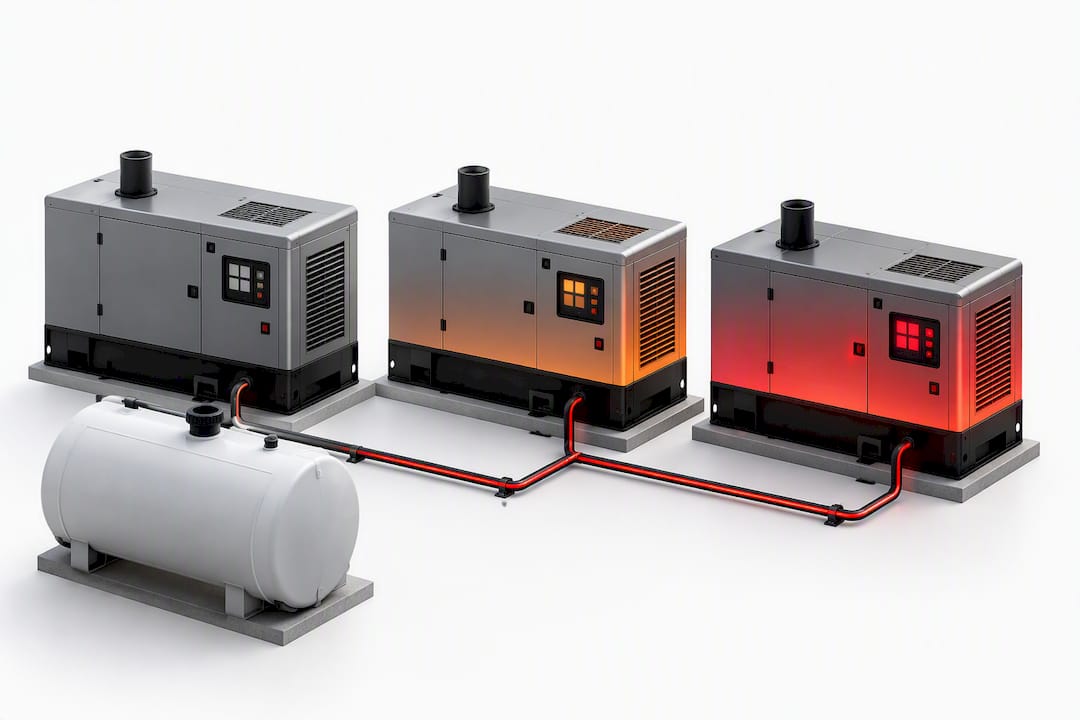
What to Do When Fuel Gels or a Tank Runs Dry
A gelled system or a surprise runout demands a fast, specific response, not a phone call and a wait.
- Warm the affected lines safely. Never apply open heat directly to fuel lines; use approved warming methods and get the vehicle or generator to a heated space if possible.
- Replace the fuel filter immediately. A clogged filter is usually the first thing gelling damages, and a fresh filter often restores flow once the fuel itself is treated.
- Apply anti-gel treatment at the tank, not just the filter housing, so the whole fuel volume gets treated rather than just the section closest to the engine.
- Triage by criticality. Data centers, hospitals, and standby generators go first; everything else waits.
- Hand your emergency vendor exact information up front: tank location, fuel type, site access instructions, and hours of operation. Vague directions cost minutes that matter during a storm.
Negotiate these details into your vendor contract before winter starts, not during the emergency, to ensure timely and prioritized service. Pre-specifying access details and criticality levels ahead of time cuts arrival-to-drop time once a truck is actually rolling toward you.
Fall-to-Winter Checklist: What to Do Each Month
Winter readiness works best as a calendar, not a scramble. Here is how the season should break down.
- October: Test block heaters and batteries, replace filters fleet-wide, lock in winter-blend fuel contracts, and confirm every critical tank has a working monitor.
- November: Start winter-treated fills across all sites, finalize emergency vendor SLAs in writing, and train dispatch on degree-day trigger logic.
- December: Pre-fill every critical tank ahead of forecasted storms, add driver capacity for the surge, and send customers a clear notice of what to expect if severe weather hits.
| Month | Primary Focus | Key Action |
|---|---|---|
| October | Equipment readiness | Test heaters, batteries, and change filters |
| November | Fuel and contracts | Begin winter-treated fills, finalize SLAs |
| December | Storm response | Pre-fill critical tanks, add driver capacity |
Build a short dispatcher script for storm weeks, keep an on-call roster visible to the whole team, and send customers a standing notice about expected delivery windows during severe weather. Proactive fall fills paired with telemetry cut emergency call volume dramatically once winter actually arrives, which protects both your margins and the relationships you depend on when things get tight.
How Anytime Fuel Pros Fits Into Your Winter Readiness Plan
Most fleet managers do not need a new fuel strategy every winter. They need a supplier who shows up with the right blend, on the schedule they set, without a phone tag emergency in February. Anytime Fuel Pros builds winter readiness around exactly that: scheduled winter-blend delivery, 24/7 emergency response, tank monitoring integration, bulk fuel delivery, and fuel polishing for tanks that have been sitting through a long cold spell.
This fuel delivery company runs primary markets in several major metropolitan areas and reaches the rest of the country through a nationwide partner network, so a multi-site operation can get one point of contact instead of juggling regional vendors every time weather moves through a new region. Whether you need a clear diesel contract for on-road fleets or mobile fleet fueling for equipment yards that cannot afford downtime, the same 24/7 response and transparent invoicing apply.
If your winter plan still has gaps, whether that is a missing emergency SLA, no tank monitoring on your critical sites, or a fuel contract that has not been reviewed since last year, request a winter readiness quote through the AFP fuel services page and get your priority response tier set before the first cold front rolls in.
Sources
- Dynamic Route Planning Builds Stability into Bulk Gas Distribution | SupplyChainBrain
- Keeping fuel delivery reliable through winter — SBZ Corporation
- Cargas Energy Winter Survival Guide | 2025
- Diesel truck winter guide from the pros in SLC — T3 Speed Shop
FAQ
Will There Be a Diesel Shortage in the US This Winter?
Regional tightness happens most winters when cold snaps spike heating oil and diesel demand at once, straining delivery lead times and emergency capacity rather than causing a nationwide shortage. Fleets that schedule winter deliveries early avoid competing for trucks during the worst of it.
What Gas Stations Have Winterized Diesel?
Winterization is not tied to a specific retail chain. Fuel terminals and suppliers switch their diesel blend seasonally based on regional temperature forecasts, which is why commercial operations should confirm the CFPP target directly with a supplier like Anytime Fuel Pros rather than assuming any station carries the right blend.
Will Gelled Diesel Return to Normal?
Yes, in most cases. Warming the fuel and lines and treating the tank with an anti-gel additive typically restores flow once the wax redissolves, though a badly clogged filter usually needs replacing before the engine runs cleanly again.
What Temperature Is Too Cold for Diesel?
It depends entirely on the blend. Standard No. 2 diesel can start gelling in the low 20s Fahrenheit, while a proper winter blend treated with cold-flow improvers can stay pumpable well below zero, which is exactly why matching your CFPP target to your region’s forecast matters more than any single temperature rule.
Recent Comments