
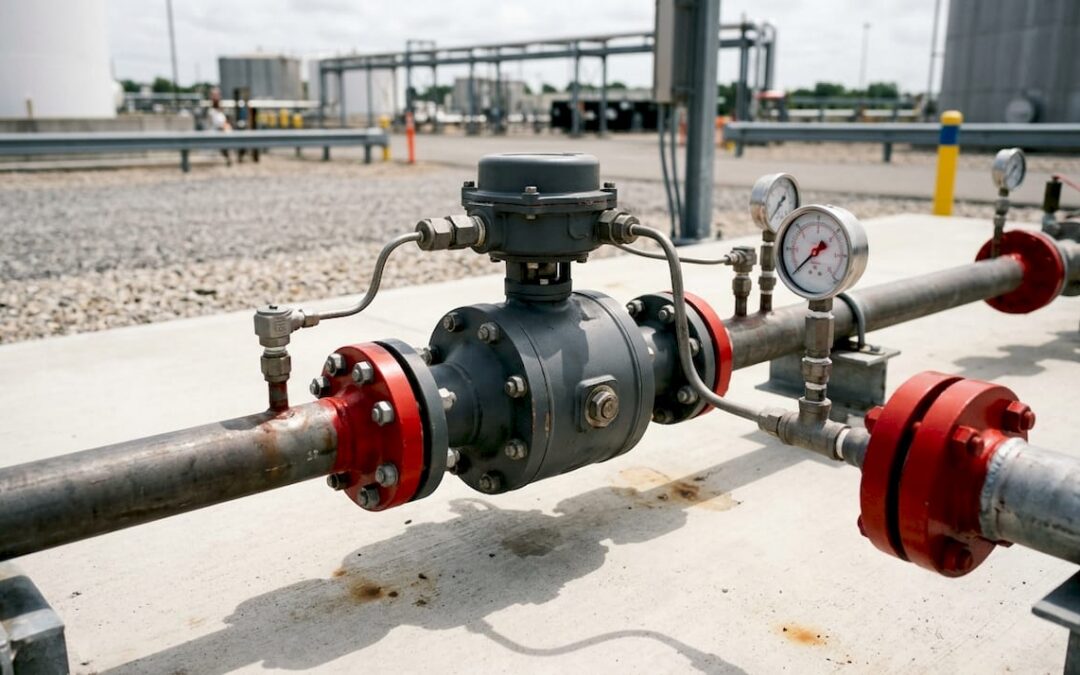
Fuel delivery verification is the process of confirming that the volume, quality, and type of fuel received matches what was ordered and invoiced. For facilities and operations managers running data centers, construction fleets, mining operations, or municipal equipment, inaccurate deliveries create billing disputes, compliance failures, and unplanned downtime. The fuel delivery verification best practices covered here center on one core principle: automated measurement combined with real-time digital reporting produces the most defensible, accurate results. Manual gauging and paper records leave too much room for error, and the consequences compound fast when fuel is the lifeblood of your operation.
1. What is a closed-loop verified delivery system?
A closed-loop verified delivery system is the gold standard for fuel supply chain verification. It syncs a tanker’s onboard meter data directly to a digital client portal in real time, eliminating the manual transcription step where most errors occur. Every delivery generates a timestamped, GPS-located record that neither the driver nor the dispatcher can alter after the fact.
The core components of a closed-loop system work together to produce a complete delivery record:
- Onboard flow meters measure the exact volume discharged from the tanker at the point of transfer.
- GPS tracking confirms the delivery location and arrival time, preventing false delivery claims.
- Timestamping creates an immutable sequence of events from departure to completion.
- Temperature compensation adjusts volume readings to the 60°F standard reference temperature, so billing reflects actual energy content rather than thermally expanded or contracted fuel.
- Digital client portal sync pushes all data to the customer’s account within minutes of delivery completion.
This approach eliminates manual errors by providing precise, timestamped, GPS-located, temperature-compensated volume data. The operational benefit extends beyond accuracy. Invoicing cycles shorten because the delivery record is already digital and verified before the truck leaves your site.
Pro Tip: Ask your fuel provider whether their onboard meters sync automatically to a client portal or whether drivers manually enter data after the fact. The difference between those two workflows is the difference between a verified delivery and a trusted guess.

2. How to ensure accurate volume measurement
Manual tank gauging is the most common measurement method at smaller sites, and it is also the least reliable. Tank calibration charts become inaccurate as underground tanks settle and deform over time. Many facilities managers overlook foundation settling effects entirely, which means volume discrepancies build up unnoticed across dozens of deliveries before anyone flags a problem.
In-line flow meters installed on the tanker’s discharge line solve this problem directly. They measure volume independently of the receiving tank’s condition, making them the only tool that provides a reliable custody transfer reading regardless of tank age or ground movement.
Temperature compensation is non-negotiable for accurate billing. Fuel volumes must be adjusted to the 60°F standard reference temperature using a Volume Correction Factor (VCF), as required by API MPMS Chapter 11. Without VCF adjustment, a hot-weather delivery can appear to contain more gallons than were actually transferred, and a cold-weather delivery can appear short.
| Measurement method | Reliability | Best use case |
|---|---|---|
| Manual tank gauging | Low for settled tanks | Small tanks, spot checks only |
| Tank calibration charts | Moderate when current | New tanks with verified baselines |
| In-line flow meters with VCF | High | Custody transfer, audits, billing |
| Automated tank gauging (ATG) | High | Tanks over 2,000 gallons, EPA compliance |
Automated tank gauging systems detect fuel levels at 0.1mm resolution, which is the threshold required for tanks over 2,000 gallons under EPA standards. For operations running large storage tanks, ATG is not optional. It is the baseline for regulatory compliance.
Pro Tip: Pair your in-line flow meter with an integrated temperature sensor so VCF correction happens automatically at the point of measurement. Manually applying correction factors after the fact introduces calculation errors and creates audit vulnerabilities.
3. What documentation and quality control steps support best practices for verification?
Documentation is the difference between a defensible delivery record and a disputed invoice. The most common audit failures trace back to two problems: incomplete chain-of-custody records and reused sampling equipment that contaminates fuel samples. Both are preventable with a standardized process.
A complete delivery record includes the following mandatory elements:
- Bill of Lading (BOL) with product type, volume, origin terminal, and driver signature.
- Delivery receipt signed by the receiving site contact, with timestamp and meter reading.
- Fuel sample labels that are tamper-evident, uniquely numbered, and cross-referenced to the BOL.
- Chain-of-custody form tracking every person who handled the sample from collection through lab submission.
- Temperature and density readings taken at the time of delivery for VCF calculation.
Proper sealing, labeling, and cross-referencing of samples on Bills of Lading is critical for audit defensibility. A sample that cannot be traced back to a specific delivery on a specific date is worthless in a dispute. Retain physical samples according to your regulatory jurisdiction’s requirements. For most commercial operations, a minimum 30-day retention period covers the window for routine billing disputes.
Linking quantity and quality verification data creates a connected fuel lifecycle record rather than a collection of isolated data points. This approach catches discrepancies early and gives you a complete picture if a compliance inspection or billing dispute arises months later.
4. How to detect and resolve common fuel delivery discrepancies
Discrepancies in fuel delivery fall into three categories: transportation losses, measurement errors, and documentation gaps. Each requires a different response, but all three are caught earliest through routine reconciliation.
-
Run a daily tank inventory check. Compare the previous day’s closing level, add confirmed deliveries, subtract metered consumption, and compare the result to the current physical reading. Any gap signals a problem worth investigating.
-
Flag discrepancies above 0.5%. Discrepancies greater than 0.5% require formal investigation and documentation for compliance. This threshold is the industry standard trigger for escalation.
-
Check for measurement error first. Before assuming theft or short delivery, verify that the in-line meter was calibrated recently and that VCF was applied correctly. Measurement error accounts for a large share of apparent discrepancies.
-
Compare meter readings against the delivery slip. A level difference exceeding 5mm between the hand-measured tank level and the delivery slip value triggers immediate escalation under standard unloading procedures. Use this as your on-site threshold.
-
Document every discrepancy formally. Create a written record of the finding, the investigation steps taken, and the resolution. This record protects you in regulatory inspections and vendor disputes.
-
Escalate unresolved discrepancies to your fuel provider in writing. A phone call is not a record. Email or a formal ticket through your provider’s portal creates a timestamped paper trail that supports any subsequent claim.
-
Conduct a quarterly calibration audit. Have your in-line meters and ATG systems independently verified at least four times per year. Calibration drift is slow and invisible until it produces a significant billing error.
5. What technologies are improving fuel delivery verification today?
Digital integration between enterprise resource planning (ERP) systems, transportation management systems (TMS), and onsite meter data has changed what is possible in effective fuel monitoring practices. The old model required manual data entry at multiple points. The current model pushes data automatically from the tanker to the back office without human intervention.
The technologies making the biggest operational difference right now include:
- ERP and TMS integration that connects delivery records directly to purchase orders and accounts payable, cutting invoice processing time and eliminating manual reconciliation steps. Such integrations reduce paperwork, errors, and speed up invoicing cycles.
- GPS geofencing that triggers automatic delivery confirmation when a tanker enters and exits a designated site boundary, creating an independent location record that supplements meter data.
- Real-time proof of delivery (POD) pushed to the client portal the moment the driver closes the delivery, giving operations managers instant confirmation without waiting for end-of-day reports.
- Automated exception alerts that notify your team when a delivery volume falls outside the expected range, so you can investigate before the truck leaves the site.
- Mobile driver apps that capture signatures, photos, and meter readings at the point of delivery and sync them to the central platform immediately.
The practical result of these tools is fewer billing disputes and faster resolution when disputes do occur. When every data point from GPS location to meter reading to driver signature is captured automatically and stored in a single system, the facts of any delivery are not a matter of interpretation. They are a matter of record.
Pro Tip: When evaluating fuel delivery providers, ask specifically whether their delivery tracking technology integrates with your existing ERP or fleet management platform. A provider whose data lives in a separate silo still requires manual reconciliation on your end.
Key takeaways
Closed-loop verification combining in-line flow meters, VCF temperature correction, and real-time digital reporting is the most reliable method for ensuring accurate fuel deliveries and maintaining audit-ready records.
| Point | Details |
|---|---|
| Use closed-loop systems | Sync onboard meter data to a digital portal to eliminate manual entry errors. |
| Apply VCF temperature correction | Adjust all volumes to 60°F per API MPMS Chapter 11 to prevent billing inaccuracies. |
| Maintain chain-of-custody records | Label and cross-reference fuel samples to the Bill of Lading for audit defensibility. |
| Reconcile daily and investigate at 0.5% | Flag discrepancies above 0.5% immediately and document the investigation formally. |
| Integrate ERP and TMS data | Connect delivery records to back-office systems to cut reconciliation time and disputes. |
Anytimefuelpros delivers verified, accurate fuel every time
Accurate fuel delivery is not just a billing issue. It is an operational one. When your data center, job site, or fleet depends on fuel arriving on time and in the right volume, you need a provider whose verification process holds up under scrutiny.
Anytimefuelpros operates with transparent invoicing, real-time delivery tracking, and 24/7 emergency response across Texas, Utah, and nationwide through a trusted partner network. Whether you need on-site diesel delivery for a construction fleet or scheduled bulk fuel delivery for a data center generator program, Anytimefuelpros provides the documentation and delivery accuracy that operations managers require. Contact Anytimefuelpros to discuss a delivery program built around your site’s verification requirements.
FAQ
What is fuel delivery verification?
Fuel delivery verification is the process of confirming that the volume, type, and quality of fuel received matches what was ordered and invoiced. It relies on in-line flow meters, temperature-compensated volume calculations, and digital delivery records to produce an auditable result.
Why is manual tank gauging unreliable for verifying deliveries?
Manual gauging becomes inaccurate as underground tanks settle and deform, making calibration charts outdated. In-line flow meters on the tanker discharge line provide a more reliable custody transfer measurement independent of tank condition.
What is VCF and why does it matter for fuel billing?
VCF stands for Volume Correction Factor, the calculation used to normalize fuel volume to the 60°F standard reference temperature required by API MPMS Chapter 11. Without VCF adjustment, temperature-driven expansion or contraction produces billing errors that favor one party over the other.
What triggers a formal discrepancy investigation?
A volume discrepancy greater than 0.5% between metered delivery volume and tank inventory requires formal investigation and documentation under standard compliance thresholds. On-site, a level difference of more than 5mm between the hand-measured tank reading and the delivery slip is the trigger for immediate escalation.
How long should fuel delivery samples be retained?
Retain physical fuel samples for a minimum of 30 days to cover the standard window for billing disputes. High-stakes operations or government contracts may require longer retention periods. All samples must be tamper-evident, uniquely labeled, and cross-referenced to the corresponding Bill of Lading.
Recent Comments