
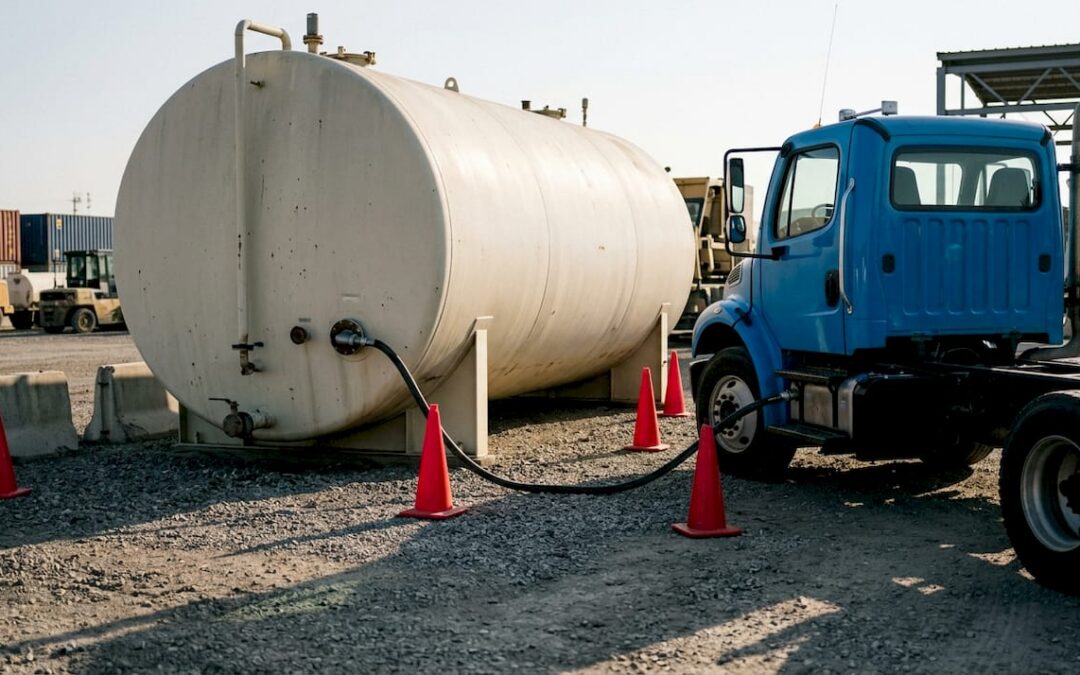
A bulk fuel tank fill is the controlled delivery and transfer of large fuel volumes into on-site storage tanks at business facilities, job sites, or equipment yards. The industry term for this process is a bulk fuel delivery or bulk tank fill, and it serves as the backbone of fuel logistics for construction crews, fleet operators, mining sites, data centers, and municipal agencies. Understanding how this process works, what equipment it involves, and what regulations govern it gives operations managers the control they need to keep equipment running and costs predictable.
What is a bulk fuel tank fill and why does it matter?
A bulk fuel tank fill is defined as the scheduled or on-demand transfer of diesel or gasoline from a tanker truck directly into a fixed on-site storage tank. This is distinct from retail fueling, where individual vehicles pull up to a pump. In a bulk fill, the tanker connects to a dedicated fill port on the storage tank and transfers hundreds or thousands of gallons in a single delivery.
The operational benefit is significant. Bulk deliveries reduce fill-up trips, cut labor costs tied to sending crews off-site, and give operations managers direct control over fuel inventory. For a construction site running excavators, dozers, and generators simultaneously, a single bulk fill can cover days of continuous operation without interruption.
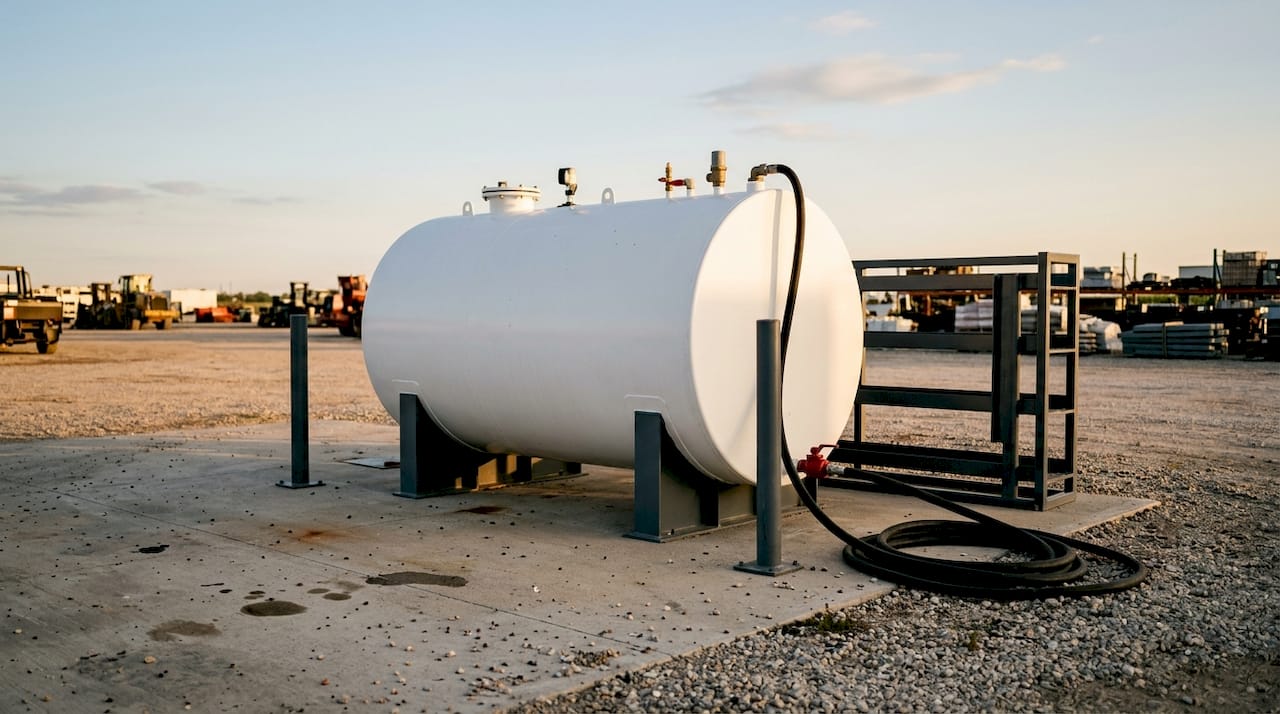
The EPA classifies fuel storage tanks holding oil as bulk storage containers under SPCC regulation 40 CFR Part 112 when aggregate storage capacity exceeds defined thresholds. That classification means bulk fills are not just a logistics decision. They carry environmental compliance obligations that operations managers must plan for from day one.
What are bulk fuel storage tanks and how do they work?
Bulk fuel storage tanks are the physical infrastructure that receives and holds fuel between deliveries. Tank materials include carbon steel, stainless steel, and fiberglass, each chosen based on the fuel type, site conditions, and regulatory requirements. Steel tanks dominate heavy industrial and construction applications. Fiberglass tanks are common in underground installations where corrosion resistance is critical.
Tank capacity and configuration
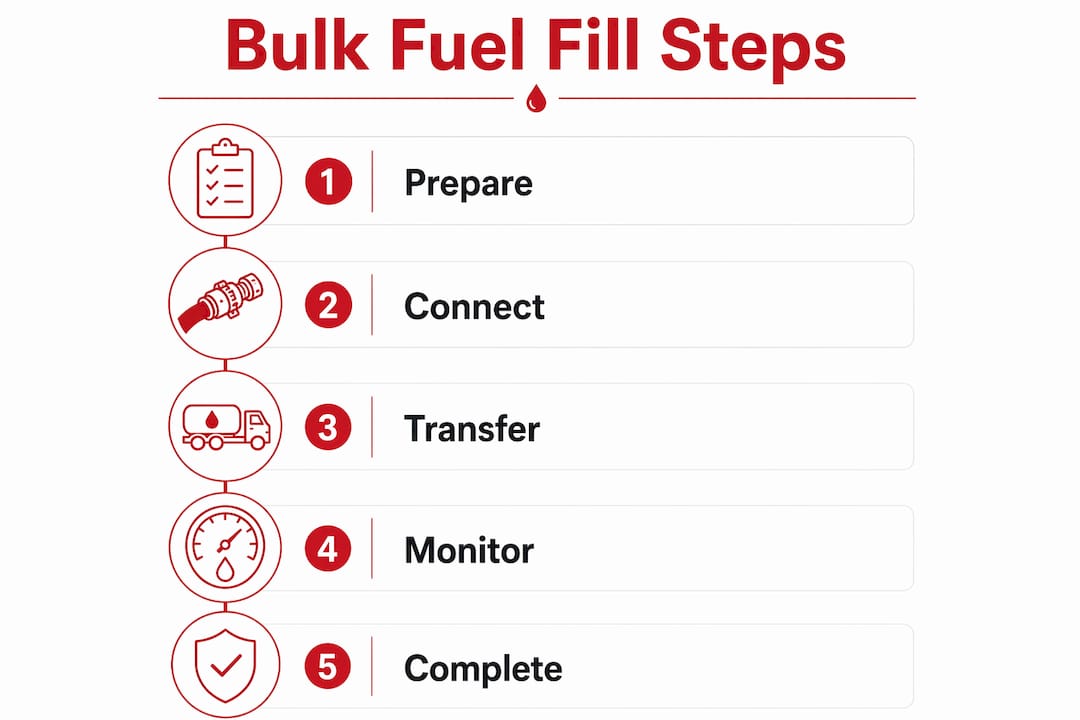
Bulk fuel tanks range from approximately 560 to 50,000 gallons, with custom sizes available for large-scale operations. That range covers everything from a single-generator job site to a mining operation running dozens of pieces of heavy equipment. Tanks conforming to UL 2085 meet the safety and durability standards required for most commercial and industrial applications.
Tank configurations fall into two main categories:
- Single-wall tanks: Lower upfront cost, simpler construction, but require external secondary containment such as a berm or containment pad to meet spill regulations.
- Bunded (double-wall) tanks: Feature an outer containment wall with an interstitial space monitored for leaks. These simplify regulatory compliance and are the preferred choice for sites where spill risk is high.
Aboveground versus underground tanks
The placement of a tank directly affects how a bulk fill is performed. Aboveground tanks offer easier hose connections and faster refill access, making them the standard choice for most job sites and equipment yards. Underground tanks require vapor recovery systems and stricter safety protocols during filling, which adds time and equipment requirements to every delivery.
Every tank, regardless of placement, includes key components that make bulk fills possible: a fill port where the tanker hose connects, a vent to release displaced air and vapor during filling, and an overfill prevention device to stop flow when the tank reaches capacity. Operations managers who understand these components can coordinate deliveries more effectively and catch maintenance issues before they cause downtime.
How is a bulk fuel tank fill performed safely and efficiently?
A bulk fill follows a defined sequence. Skipping steps creates spill risk, regulatory exposure, and potential equipment damage. The process works as follows:
- Pre-delivery inspection. The driver inspects the tank for visible damage, checks the fill port condition, and confirms the tank has adequate capacity for the incoming volume.
- Hose connection. The tanker connects to the fill port using a compatible coupling. The direct fill method uses specialized fill ports and vapor recovery to control emissions and prevent spills during transfer.
- Grounding and bonding. The tanker and tank are electrically bonded to prevent static discharge, which is a required safety step for flammable fuel transfers.
- Transfer and monitoring. Fuel flows from the tanker into the storage tank. The driver monitors flow rate and watches for signs of overfill or leakage throughout the transfer.
- Overfill shutoff. An automatic overfill prevention valve stops flow when the tank reaches its safe fill level, typically 95% of capacity.
- Disconnect and site check. The driver disconnects the hose, caps the fill port, and inspects the containment area for any spills before leaving the site.
Secondary containment is non-negotiable for EPA SPCC compliance. Bunded tanks provide built-in containment, while aboveground single-wall tanks require a containment berm or pad that can hold at least 110% of the tank’s volume.
Pro Tip: Schedule bulk fills when tank levels reach 25–30% of capacity. Waiting until the tank is nearly empty risks drawing sediment from the bottom into equipment fuel lines, which causes injector damage and costly repairs.
Automated tank gauges give operations managers real-time fuel level data, removing the guesswork from fill scheduling. They also create a digital record of inventory levels, which supports compliance reporting and helps identify consumption anomalies that may signal equipment issues or fuel theft.
What terminology should businesses understand about bulk fuel?
Operations managers often use “bulk fuel” and “on-site tanks” interchangeably, but the two terms describe different things. Bulk fuel refers to the procurement and delivery method. On-site tanks refer to the physical storage infrastructure. Effective fuel logistics require managing both as a connected system, not as separate decisions.
Here is how the main fuel supply options compare:
- Bulk fuel delivery: Fuel purchased in large volumes via contract or on-demand delivery, transferred directly into on-site storage. Best for operations with consistent, high-volume fuel demand.
- Fuel cards: Credit-based accounts tied to retail fuel networks. Convenient for dispersed fleets but offer no inventory control and expose the business to retail price volatility.
- Mobile fueling (wet hosing): A tanker comes to the site and fuels individual vehicles or equipment directly, without a fixed storage tank. Useful for fleets that move frequently or sites without permanent tank infrastructure.
The terminology distinction matters for logistics planning. A site superintendent who treats bulk fuel delivery and on-site tank management as one decision will make better choices about tank sizing, delivery frequency, and supplier contracts. A site that orders bulk fuel without matching delivery volume to tank capacity risks overfill events or emergency shortfalls. Understanding how fuel logistics connect to job site operations prevents both problems.
Delivery schedules should align with actual consumption rates, not calendar intervals. A mining site running three shifts burns fuel at a different rate than a construction site that shuts down on weekends. Matching delivery frequency to real demand keeps inventory stable and avoids the cost of emergency fills.
What are best practices for managing bulk fuel fills at job sites?
Bulk fuel delivery is a risk management process as much as a logistics one. Operations managers who treat it that way avoid the most common and costly mistakes.
- Use automated tank gauges. Real-time monitoring prevents run-dry events and sediment-related equipment damage. It also creates an audit trail for compliance and internal reporting.
- Inspect tanks and fill equipment regularly. Check fill ports, vents, overfill valves, and containment areas on a set schedule. A failed overfill valve discovered during a delivery is far less expensive than a spill cleanup.
- Maintain spill response kits on site. Absorbent materials, containment booms, and a documented spill response plan are required under EPA SPCC rules for facilities above the storage threshold.
- Choose bunded tanks for high-risk sites. Double-wall tanks with interstitial monitoring reduce environmental liability and simplify compliance documentation.
- Work with a supplier who provides delivery confirmation. Transparent invoicing tied to metered delivery volumes eliminates billing disputes and supports accurate cost accounting.
Pro Tip: Negotiate a standing delivery contract with a defined price structure rather than relying on spot orders. Contract pricing protects against short-term fuel price spikes and gives your supplier the lead time to plan efficient delivery routes, which often translates to faster service.
Choosing the right tank capacity for your project is the foundational decision. Undersized tanks force frequent deliveries and increase per-gallon logistics costs. Oversized tanks tie up capital in stored fuel and can create fuel quality issues if diesel sits for extended periods without additives. The right size matches peak consumption demand with a reasonable safety buffer.
Anytimefuelpros: bulk fuel delivery built for operations managers
Anytimefuelpros delivers bulk diesel and gasoline directly to job sites, equipment yards, data centers, mining operations, and fleet facilities across Texas, Utah, and nationwide through a trusted partner network.
Whether you need a scheduled tank fill for a construction fleet in San Antonio or an emergency refill for a data center generator in Dallas, Anytimefuelpros handles the logistics from tanker dispatch to metered delivery confirmation. The operation runs 24/7, with transparent invoicing and no surprise fees. Operations managers who want to understand their bulk fuel delivery options or get answers to specific fueling questions can visit the fuel delivery FAQ for detailed guidance on scheduling, compliance, and service coverage.
FAQ
What is a bulk fuel tank fill?
A bulk fuel tank fill is the transfer of large fuel volumes from a tanker truck into a fixed on-site storage tank at a business facility or job site. It is the standard fueling method for construction sites, mining operations, fleet yards, and data centers.
How large are bulk fuel storage tanks?
Bulk fuel storage tanks typically range from 560 to 50,000 gallons, with custom sizes available for large industrial operations. Tank selection depends on daily fuel consumption, available space, and regulatory requirements.
What regulations apply to bulk fuel tank fills?
The EPA regulates bulk fuel storage under SPCC rules in 40 CFR Part 112 for facilities exceeding aggregate oil storage thresholds. Compliance requires secondary containment, spill prevention controls, and documented response plans.
What is the difference between bulk fuel and on-site tanks?
Bulk fuel describes the procurement and delivery method, while on-site tanks describe the physical storage infrastructure. Effective fuel management treats both as a unified logistics system.
How often should a bulk fuel tank be filled?
Fill frequency should match actual consumption rates, not fixed calendar intervals. Automated tank gauges provide real-time level data that allows operations managers to schedule fills at 25–30% capacity to avoid sediment intake and equipment damage.
Key takeaways
A bulk fuel tank fill is the most cost-effective and operationally reliable method for businesses with consistent, high-volume fuel demand at fixed or semi-permanent sites.
| Point | Details |
|---|---|
| Bulk fill definition | A bulk fuel tank fill transfers large fuel volumes from a tanker directly into a fixed on-site storage tank. |
| Tank size range | Bulk storage tanks range from 560 to 50,000 gallons; match capacity to peak daily consumption plus a safety buffer. |
| EPA compliance | Facilities exceeding storage thresholds must follow SPCC rules, including secondary containment and spill response plans. |
| Scheduling best practice | Use automated tank gauges and schedule fills at 25–30% capacity to prevent sediment damage and avoid emergency shortfalls. |
| Terminology clarity | Bulk fuel is a procurement method; on-site tanks are storage infrastructure. Managing both together is what defines effective fuel logistics. |
Recent Comments