
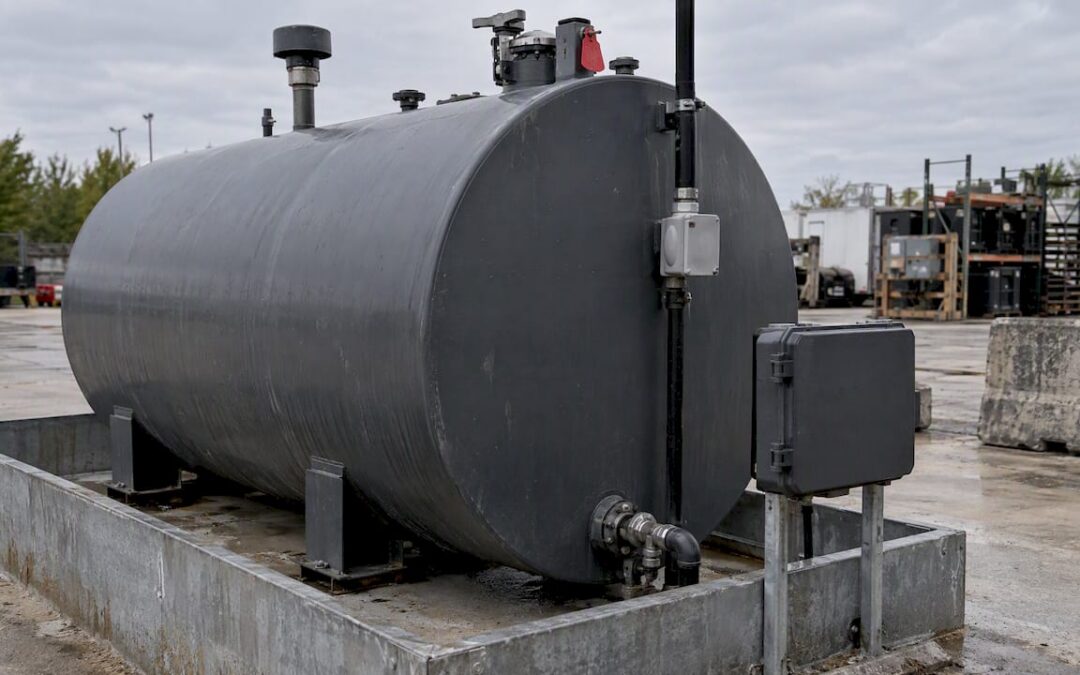
In Utah, dyed diesel is reserved for off-highway use, and operating a vehicle on public highways with dyed diesel in the tank is illegal. Dyed diesel is exempt from the special fuel tax but generally subject to sales and use tax. Every gallon must have documented exempt use and proper Tax Commission paperwork supporting it.
TL;DR:
- Operating a vehicle on public highways with dyed diesel in Utah is illegal except for specific off-highway agricultural and mobile equipment, which requires careful documentation.
- Most legitimate off-highway uses include construction equipment, stationary generators, certain agricultural machinery, PTO-driven devices, and separate engines on reefer units or cranes.
- Proper recordkeeping involves invoices, exemption certificates, proof of export or government purchase, and logs linking fuel use to equipment, which must be maintained beyond the audit period.
- Violations can result in back taxes, penalties, and increased enforcement, with organized records and controlled fueling practices reducing audit risk.
- Dyed diesel is exempt from federal fuel tax and cannot be legally used in on-road trucks, and removing dye is a federal and state violation.
Table of Contents
- Statutory prohibition on highway use
- How Utah taxes dyed diesel
- Which off-highway uses typically qualify
- Recordkeeping and forms that survive an audit
- Reporting violations and understanding penalties
- Practical controls that cut audit risk
- Compliant red-dye delivery for Utah operations
- FAQ
- Sources
Statutory prohibition on highway use
Utah Code §59-13-320.5 makes it unlawful to operate a motor vehicle on a highway when its fuel supply tank contains dyed diesel fuel. The rule applies to nearly any vehicle built to travel public roads, regardless of who owns it or what it hauls.
“Highway” covers any public road, street or right-of-way, not just interstates and state routes. That broad definition catches everything from city streets to rural county roads used to move equipment between sites.
The statute carves out narrow exceptions, mainly for certain agricultural operations and qualifying special mobile equipment that only incidentally touches a highway while performing off-road work. Those exceptions are specific and limited, not a general pass for farm trucks or contractor pickups. Operators who are unsure whether their equipment qualifies should read the statutory language directly rather than assume an exception applies.
How Utah taxes dyed diesel
Dyed diesel skips the special fuel tax, but that does not mean it is tax-free. Utah generally applies sales and use tax to dyed diesel purchases, which shifts the compliance burden from fuel-tax reporting to standard sales tax processes, according to Tax Commission guidance.
Suppliers and purchasers each carry obligations under this tax-shift model:
- Suppliers must hold an active sales and use tax account and follow notice requirements when selling dyed diesel.
- Purchasers claiming exempt off-highway use should complete an exemption certificate, such as a TC-721 variant, and give it to the seller.
- Without a valid certificate on file, the seller is expected to charge sales tax on the transaction by default.
- Missing or incomplete paperwork puts the exemption at risk during a later review, even when the actual fuel use was legitimate.
Pub 66 lays out these supplier and purchaser duties in more detail, and it is the starting reference point for any fleet setting up a new dyed diesel account.
Which off-highway uses typically qualify
Dyed diesel exists for equipment and machinery that never needs to touch a public road for its core job. Several categories make up most of the legitimate exempt use we see across Utah operations:
- Construction equipment such as excavators, loaders and dozers running entirely within a job site.
- Stationary and portable generators powering tools, lighting or temporary site power.
- Agricultural equipment used for farm and ranch work, with limited incidental highway travel permitted in specific circumstances.
- PTO-driven machinery, including pumps and augers powered off a vehicle’s power take-off unit.
- Separately fueled engines on reefer units, cranes or auxiliary systems that run independently of the vehicle’s propulsion engine.
Border cases deserve extra attention. Agricultural equipment moving briefly between fields on a county road, exported fuel leaving the state, and certain government purchases each carry their own documentation requirements rather than a blanket exemption.
Picture a remote job site running a dyed diesel generator for lighting and power tools: that use is squarely exempt as long as the generator never leaves the site. An excavator fleet fueled on-site for grading work falls into the same category. A farm truck that dips briefly onto a public road to move between two fields may qualify under the agricultural exception, but the same truck making a supply run to town does not.
Recordkeeping and forms that survive an audit
Good recordkeeping is the difference between a clean exemption and a surprise assessment. The Utah State Tax Commission expects a traceable paper trail connecting every dyed diesel gallon from purchase to end use, as described in Pub 66.
Build your internal log around these elements:
- Buyer and seller information on every invoice or delivery ticket.
- Purchase and delivery dates, gallons delivered, and the specific equipment or tank fueled.
- A signed exemption certificate (TC-721 or the applicable variant) on file for each exempt purchaser.
- Proof of export or government purchase status where those exemptions apply.
- Hour meters, mileage logs or site work orders that tie fuel use back to a qualifying job.
File through the Tax Commission’s Taxpayer Access Point (TAP) where possible, and keep records well beyond the filing year since audits can reach back several periods. A simple spreadsheet log tracking delivery date, gallons, equipment ID and certificate status gives your team a fast answer when a question comes up.
Reporting violations and understanding penalties
Suspected illegal use of dyed diesel on public highways can be reported to the Utah State Tax Commission, and federal violations fall under IRS jurisdiction as well. Both agencies have an interest in catching highway use of untaxed fuel, since it represents lost tax revenue.
Penalties for highway use of dyed diesel can include back taxes, interest and civil penalties, and repeated or willful violations raise the risk of more serious enforcement action. Missing documentation on an otherwise legitimate exempt purchase can trigger its own assessment, even without any highway use involved, because the burden of proof sits with the taxpayer.
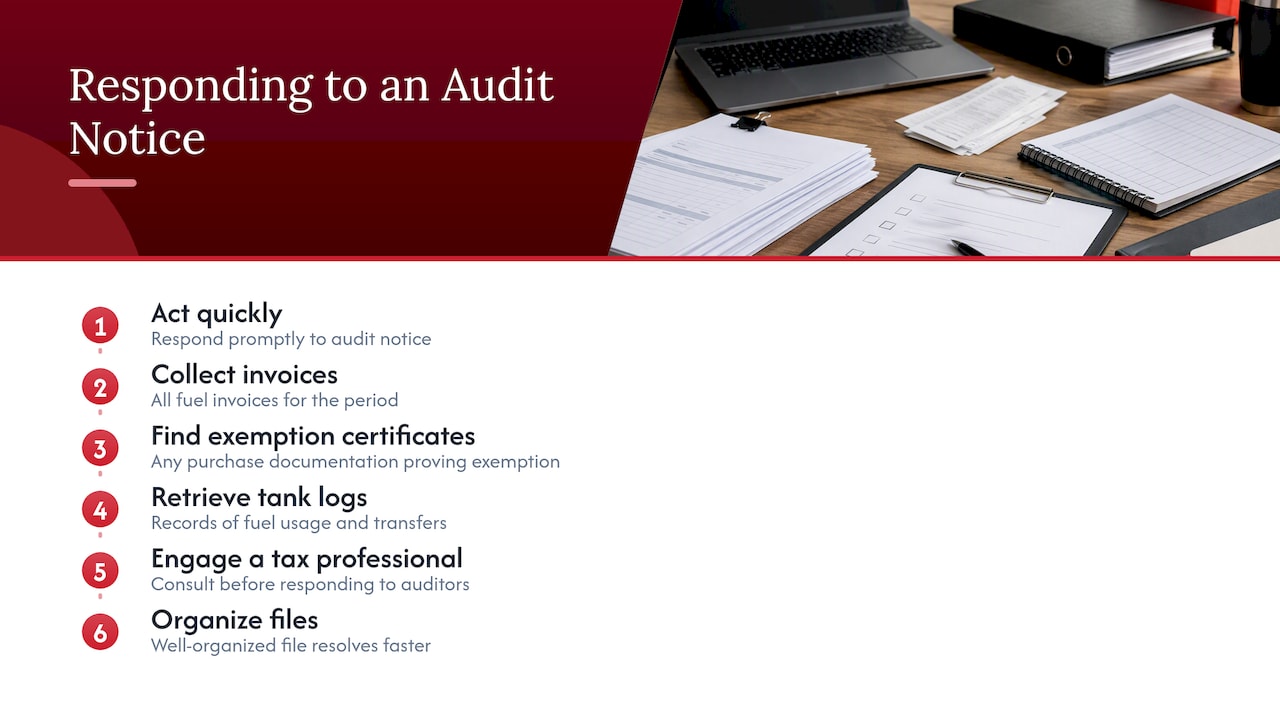
If an audit notice arrives, move quickly: pull every invoice, exemption certificate and tank log tied to the period in question, and get a tax professional involved before responding. A well-organized file often resolves the matter faster than a scramble to reconstruct records after the fact.
Practical controls that cut audit risk
Most dyed diesel problems trace back to weak operational habits rather than bad intent. A few straightforward controls close most of the gap.
Dedicated red-dye tanks, lockable fill ports and clearly labeled dispensers prevent cross-contamination and give an auditor an easy visual confirmation that dyed fuel stays where it belongs. Pair that with a standard procurement policy so every site orders dyed diesel the same way, with the same paperwork, every time.
On the documentation side, collect exemption certificates once and keep them current, timestamp every fuel ticket, and consolidate invoices into a single record per site rather than scattering them across departments. We build our delivery tickets to capture date, gallons, site and equipment ID automatically, so fleet managers working with us get audit-ready records without extra paperwork on their end.
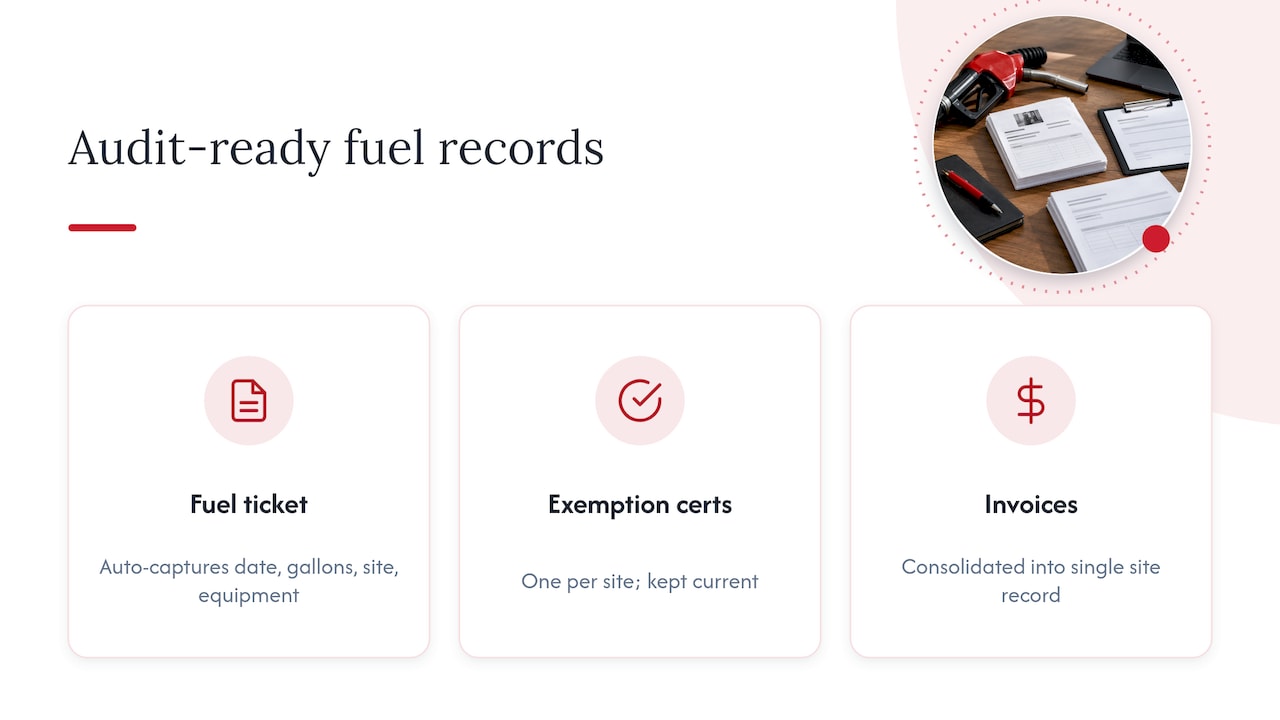
Pro Tip: Keep one master folder per job site with every exemption certificate and fuel ticket in date order; it turns a multi-day audit request into a one-hour pull.
Compliant red-dye delivery for Utah operations
We deliver red-dye diesel directly to job sites, equipment yards and generators in the area, with every delivery backed by itemized, audit-ready invoicing. Scheduled recurring deliveries help keep tanks filled without a trip to a retail pump, and every ticket records the date, gallons and site needed to support your exemption file.
We also handle clear diesel, DEF and bulk fuel delivery, offering a single point of contact for multiple fuel needs. Check availability and get a quote through our red dye diesel delivery service page today.
FAQ
Can I run dyed diesel in my truck?
No. Operating a vehicle on a public highway with dyed diesel in the fuel tank violates Utah Code §59-13-320.5, with only narrow exceptions for specific agricultural and special mobile equipment scenarios. Dyed diesel is meant for off-highway equipment, generators and machinery that never travel public roads.
Is it illegal to remove the dye from diesel?
Yes. Removing or altering the red dye to disguise diesel as taxable clear fuel is a federal and state violation, separate from the highway-use prohibition itself. Both the IRS and the Utah State Tax Commission treat dye removal as a serious compliance issue tied to fuel tax evasion.
Is dyed diesel eligible for federal tax credit?
Generally no, since dyed diesel is already exempt from the federal excise tax that the credit system is designed to offset. Tax Commission guidance notes that new federal provisions effective December 31, 2025 may allow narrow refund situations when previously taxed clear diesel is later removed from a terminal as dyed diesel for nontaxable use.
What state has the highest diesel fuel tax?
Diesel tax rates vary significantly by state and change over time, so there is no single fixed answer that holds year after year. Utah fleet operators are better served checking current rate comparisons directly through state tax agency publications rather than relying on a fixed ranking.
Recent Comments