
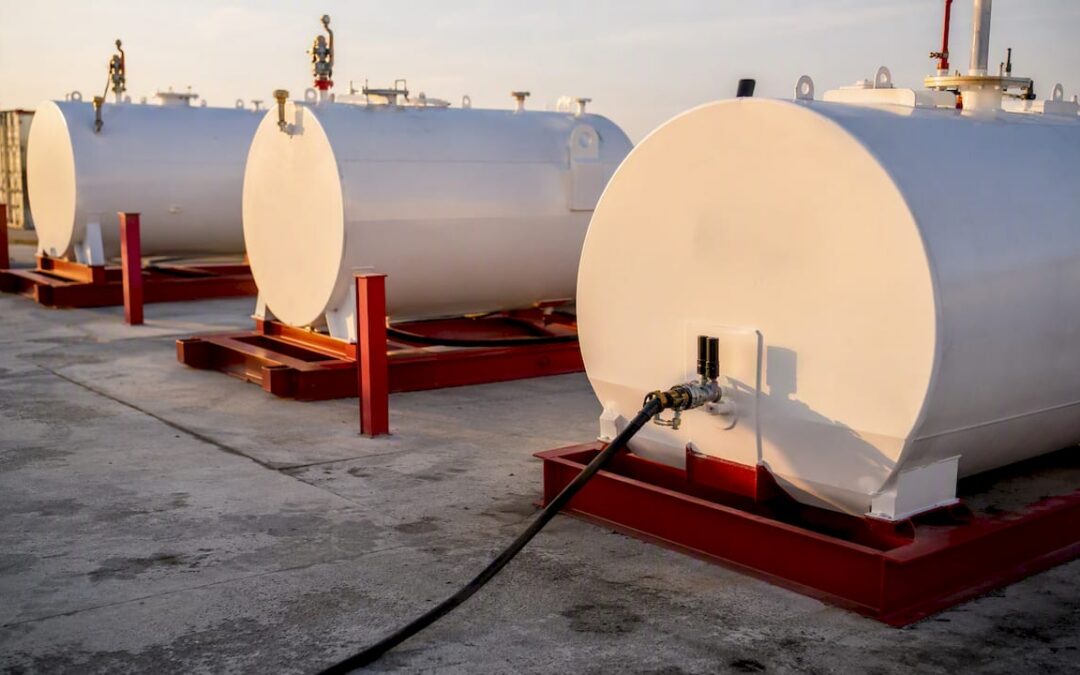
A layered fueling program — combining telemetry-driven scheduled delivery, on-site storage sized to your service-level objectives (SLOs), and contracted 24/7 flow resiliency — is what keeps mission-critical sites and fleets continuously operational when the grid fails and demand spikes.
The Uptime Institute sets a 12-hour minimum fuel-storage baseline for certain data center tiers, but that floor is a starting point, not a target. The U.S. Department of Energy’s integrated resource planning guidance goes further, providing templates that align fuel logistics with broader continuity planning. Anytimefuelpros (AFP) executes these strategies on the ground, delivering scheduled bulk diesel, emergency response, and generator fueling across Texas, Utah, and the continental United States through its partner network.
Run this checklist before you read another section:
- Confirm your current days-of-autonomy calculation against your SLO and recovery time objective (RTO).
- Verify telemetry reorder thresholds are active and triggering test alerts.
- Check that an emergency SLA with a guaranteed response time is signed and current.
- Confirm your fuel polishing or rotation schedule is documented and on-calendar.
- Identify at least one alternate delivery route to each critical site.
- Validate that fueling personnel certifications and spill response plans are up to date.
Table of Contents
- What fueling model fits your site or fleet?
- How do you size storage for the autonomy your SLO demands?
- What telemetry and reporting does your fueling program actually need?
- How do you design emergency redundancy that actually holds under stress?
- What does a fuel quality program look like in practice?
- What U.S. regulations govern on-site fueling programs?
- How do you roll out a fueling program without disrupting operations?
- How do you pilot alternative fuels without putting uptime at risk?
- Flow-based resiliency: what the best operators actually do differently
- Key Takeaways
- Anytimefuelpros delivers the program, not just the fuel
- Authoritative sources and further reading
What fueling model fits your site or fleet?
The right fueling model depends on your consumption pattern, site access, and uptime tolerance. Getting this wrong creates single points of failure that no SLA can fully offset.
Scheduled bulk delivery
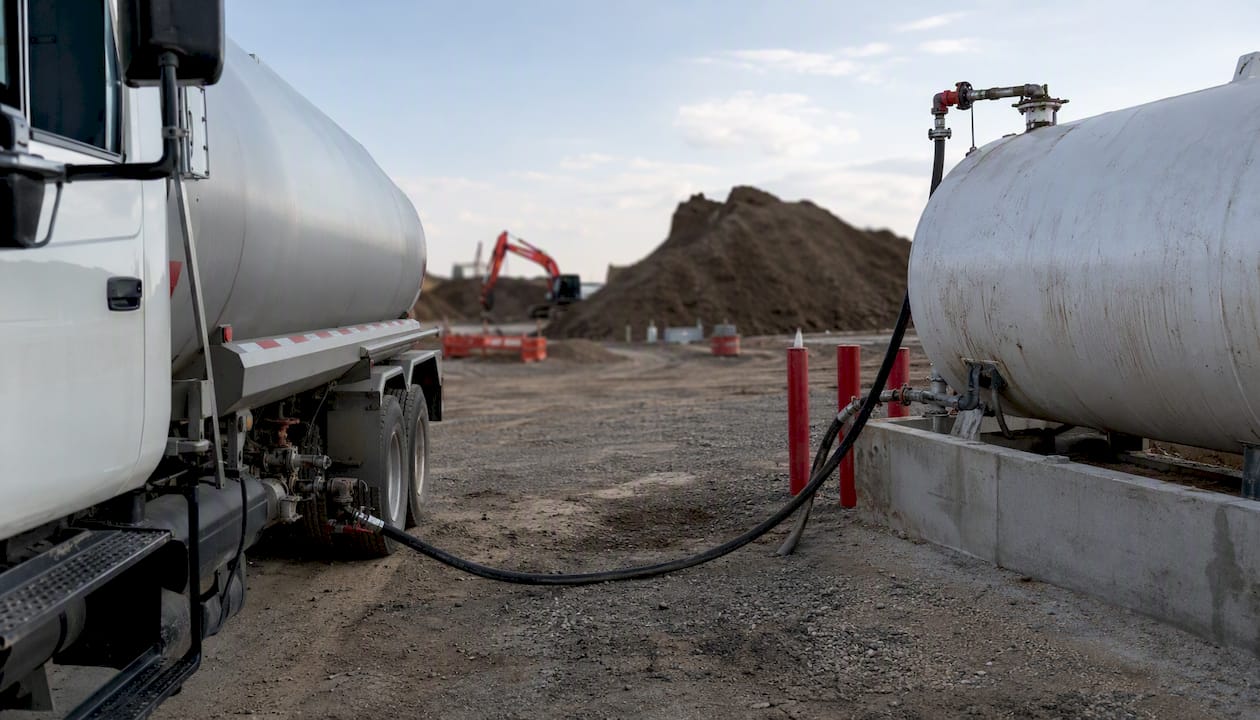
A tanker delivers a fixed volume on a recurring cadence tied to consumption data. This model suits data centers, logistics yards, and any site with a stationary above-ground storage tank. The labor and cost efficiencies from scheduled on-site fueling are significant: crews stay on-task, and fuel never runs short because a driver forgot to call the supplier.
Pros: Predictable cost, lowest per-gallon price at volume, easy to integrate with telemetry reorders.
Cons: Requires adequate on-site storage; delivery windows must align with site access rules.
Mobile on-site fleet fueling (wet hosing)
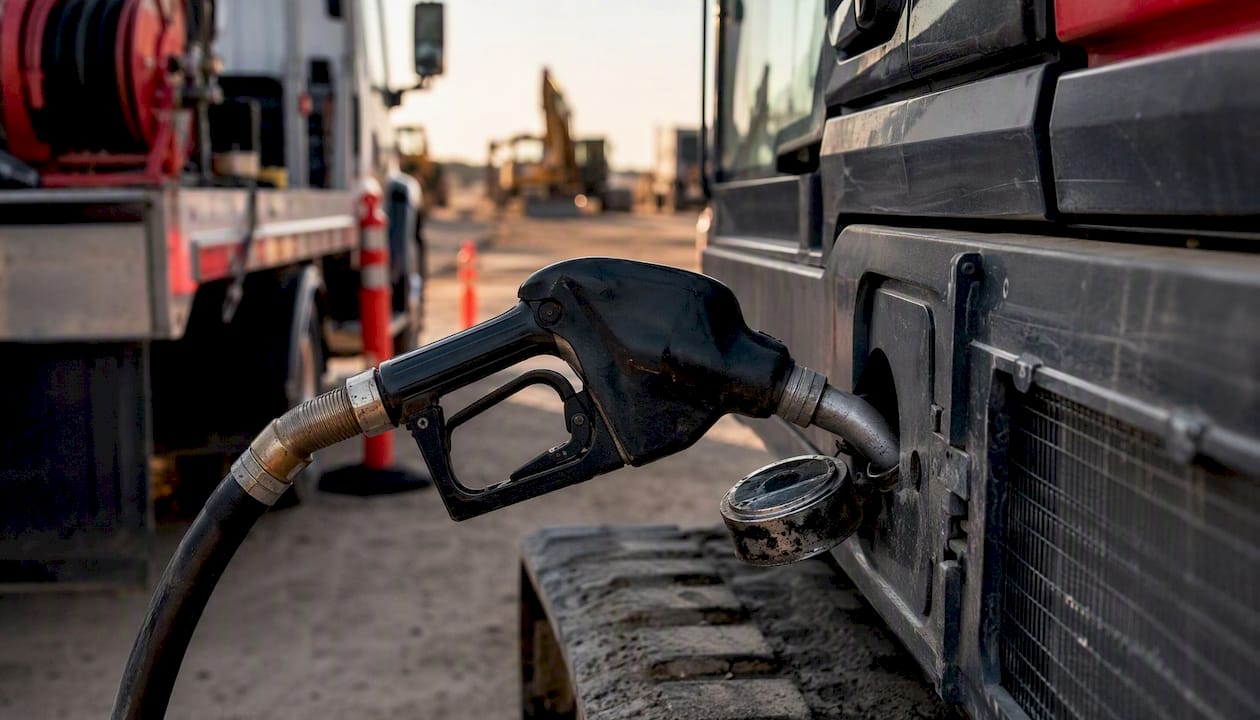
A fuel truck comes to the yard and fills each vehicle or piece of equipment directly. This model fits logistics depots, construction yards, and mining operations where equipment doesn’t move to a pump. Fleet disaster guidance consistently recommends direct-to-truck fueling as a way to cut downtime and eliminate the labor cost of drivers fueling off-site.
Pros: No on-site storage infrastructure needed; eliminates driver time at retail stations.
Cons: Scheduling complexity at large yards; requires access coordination.
Emergency on-demand delivery
A contracted provider dispatches a tanker within a guaranteed response window when an unplanned outage or supply disruption occurs. This is not a substitute for a primary model — it is the backstop. Response time, guaranteed daily volume, and penalty structures must be written into the SLA before you need it.
Cardlock and integrated fuel cards
Drivers fuel at a network of cardlock stations using fleet cards with transaction controls. This model works for over-the-road fleets with predictable routes near cardlock locations. Its uptime risk is real: during a regional disaster, cardlock stations lose power along with everything else.
| Site or fleet type | Best-fit model | Primary uptime risk |
|---|---|---|
| Data center emergency generator | Scheduled bulk + emergency SLA | Delivery delay during regional outage |
| Logistics yard, large fleet | Wet hosing + scheduled bulk | Scheduling gaps, access conflicts |
| Remote well pad or mine site | Scheduled bulk, remote delivery | Road access, lead time |
| Over-the-road fleet | Cardlock + emergency on-demand | Station power loss during disaster |
Decision criteria to apply across every site: consumption volume per day, SLO and RTO requirements, site access constraints (gate hours, weight limits, permits), security and dyed-diesel compliance needs, and whether the cost shape favors capital expenditure (owned tanks) or operating expenditure (rented or vendor-managed storage).
How do you size storage for the autonomy your SLO demands?
Days-of-autonomy is the number of days a site can operate on stored fuel without a delivery. It maps directly to your RTO: if your RTO is 72 hours, your storage must cover at least 72 hours of full-load consumption, plus a safety margin.
The Uptime Institute’s 12-hour baseline is the regulatory floor for some data center tiers. Many operations with genuine uptime commitments target longer storage durations, and some critical infrastructure sites carry extended reserves.
Sizing calculation
- Determine full-load hourly consumption (gallons per hour) for all generators or equipment on the circuit.
- Multiply by required autonomy hours: Gallons needed = hourly consumption × autonomy hours.
- Add a 15–20% safety margin for consumption variability and polishing losses.
- Factor in your polishing schedule: if fuel sits longer than 12 months, plan for a polishing cycle before the next seasonal risk window.
Example: A medium data center runs two 500 kW generators at roughly 35 gallons per hour each under full load. Required autonomy: 96 hours.
- Base need: 70 gal/hr × 96 hr = 6,720 gallons
- Safety margin (15%): 1,008 gallons
- Total tank capacity target: 7,728 gallons
| Site profile | Hourly consumption | Autonomy target | Tank size needed |
|---|---|---|---|
| Small UPS room | 7 gal/hr | 24 hours | — |
| Medium logistics yard | 35 gal/hr | 48 hours | — |
| Large data center (4 × 500 kW gen) | — | 96 hours | — |
Regulatory and permitting factors shape topology before you order a tank. Above-ground storage tanks (ASTs) above 1,320 gallons aggregate capacity trigger EPA Spill Prevention, Control, and Countermeasure (SPCC) plan requirements. Underground storage tanks (USTs) fall under EPA’s UST program with separate registration, leak detection, and financial assurance rules. NFPA 30 governs flammable and combustible liquid storage design, and NFPA 37 covers generator fuel systems specifically. Local fire marshals often impose stricter setback and containment requirements than the federal baseline, so confirm with your authority having jurisdiction (AHJ) before finalizing tank placement.
Pro Tip: Size your tank for your worst-case consumption scenario, not your average. Generators running at partial load in testing consume far less than generators under full emergency load. Use nameplate full-load fuel consumption figures, not test-run averages, when calculating autonomy.
What telemetry and reporting does your fueling program actually need?
Mission-critical design methodology recommends automation-first operations and explicit SLO-to-design mapping. Applied to fueling, that means your telemetry stack must trigger reorders and escalations without human intervention, because the moment you need fuel most is usually the moment your team is managing ten other emergencies.
Metrics to instrument
- Tank level (percentage and absolute gallons), updated at least every 15 minutes
- Flow rate during delivery (to confirm full delivery volume and detect meter discrepancies)
- Fuel temperature (affects volume calculations and flags potential contamination)
- Fuel age and last polishing date (to trigger maintenance workflows)
- Scheduled vs. actual delivery timestamps and volumes (SLA performance tracking)
- Consumption rate trending (to detect abnormal draw that may indicate a leak or theft)
Automation workflow
- Tank level drops to reorder threshold (typically 40–50% of capacity for critical sites).
- Telemetry platform triggers a reorder request to the fuel provider’s dispatch system.
- Confirmation receipt is logged; exception alert fires if confirmation is not received within a defined window.
- Delivery completion triggers a volume reconciliation check against the pre-delivery level.
- If delivered volume deviates from ordered volume by more than a set tolerance, an escalation alert goes to the operations director.
Data flows from tank sensors to a cloud telemetry platform, which feeds both the automated dispatch workflow and a reporting dashboard. That dashboard should surface three views: real-time tank status across all sites, SLA performance by delivery (on-time rate, volume accuracy), and consumption trend by site for budget forecasting.
Integration points worth building: connect your telemetry platform to your Computerized Maintenance Management System (CMMS) for work-order generation on polishing cycles, to your Building Management System (BMS) for generator runtime correlation, and to fleet telematics for mobile asset fuel consumption tracking.
Pro Tip: Set a secondary alert at 25% tank capacity as a hard-escalation trigger that bypasses normal dispatch and goes directly to your emergency SLA provider. The reorder threshold at 40–50% gives you a buffer; the 25% alert means the buffer failed and you need emergency response, not a scheduled delivery.
How do you design emergency redundancy that actually holds under stress?
Having a fuel supplier contract is not the same as having flow resiliency. Industry experts are direct on this point: flow — the ability to move large volumes of fuel reliably during an extended outage — is the differentiator between sites that stay up and sites that go dark.
During a regional disaster, roads are compromised, competing demand spikes, and your supplier’s trucks are serving dozens of sites simultaneously. A contract that guarantees “best effort” delivery is not a resiliency plan.
“True resiliency integrates logistics planning with proactive fuel quality management; having a contract isn’t enough — flow matters.” — Data Center Frontier
SLA elements that protect you
- Guaranteed response time (hours from request to fuel on-site), differentiated by severity level
- Minimum guaranteed daily delivery volume during a declared emergency
- Prioritized routing commitment for your site relative to the provider’s other customers
- Penalty or credit structure for missed response windows
- Named escalation contacts and after-hours dispatch numbers
- Annual SLA review and exercise clause
Operational flow plan
Build this before a storm season, not during one:
- Identify staging zones within 30 miles of each critical site where tankers can pre-position fuel.
- Map two alternate delivery routes to each site and confirm weight limits and bridge clearances on each.
- Establish mutual-aid agreements with your provider’s partner network so a second carrier can cover if the primary is capacity-constrained.
- Define prioritization tiers across your own sites so dispatch knows which location gets the first truck.
- Document communication channels: primary, secondary, and out-of-band (satellite phone or radio) for each site contact.
For AFP’s disaster response capabilities and mutual-aid coordination experience, the partner network structure is specifically designed to maintain delivery capacity when a single regional carrier is overwhelmed.
Pro Tip: Run a tabletop exercise at least once per year and a live flow exercise every two years. Tabletops reveal plan gaps in communication and prioritization; live exercises expose logistics constraints — truck access, pump connection compatibility, site contact availability — that no tabletop will catch.
What does a fuel quality program look like in practice?
Microbial growth and fuel contamination are primary causes of backup power failures. A generator that tests clean in monthly load tests can still fail on day one of a real outage if stored fuel has degraded. Treat fuel as a managed asset with a defined lifecycle: procurement, storage, testing, polishing, and rotation.
Decision flow: polish, rotate, or dispose
- Lab results show microbial contamination below action threshold: increase sampling frequency, add a biocide treatment.
- Microbial count above action threshold or visible sludge: schedule immediate polishing.
- Fuel oxidation stability below ASTM D975 minimum: rotate fuel (use it in non-critical equipment) and replace with fresh stock.
- Tank sump shows significant water accumulation: drain water, treat with biocide, and polish before returning to service.
Sampling hygiene checklist for operations teams:
- Use clean, dedicated sample containers (never reuse containers from a different fuel type).
- Sample from the tank bottom, not the fill point.
- Label samples with site, tank ID, date, and fuel age.
- Store samples at ambient temperature and ship to the lab within 48 hours of collection.
- Log all results in your CMMS against the tank asset record.
For a detailed look at polishing methods and AFP’s approach, the fuel polishing explained resource covers the process and when to schedule it.
What U.S. regulations govern on-site fueling programs?
Compliance is not optional, and the penalty exposure for an unpermitted above-ground tank or a missing SPCC plan is real. The regulatory framework for on-site fueling touches four federal agencies and varies significantly at the state and local level.
Required certifications and recordkeeping
- Fueling technician and delivery driver certifications per DOT and state requirements
- Hazmat endorsement on commercial driver’s licenses for fuel transport
- Written spill response plan with trained personnel and documented annual drills
- Tank inspection records (frequency per SPCC plan and AHJ requirements)
- Fuel delivery receipts and volume logs for dyed diesel compliance (IRS and state tax authorities)
Safety controls
- Secondary containment sized to 110% of the largest tank volume
- Spill kits staged at every fueling point
- Bonding and grounding connections on all transfer equipment to prevent static discharge
- PPE requirements posted and enforced: chemical-resistant gloves, safety glasses, and fire-resistant clothing for fueling operations
- Lockout/tagout procedures for tank maintenance and pump servicing
Local fire marshals and state environmental agencies often layer additional requirements on top of federal minimums. Confirm with your AHJ before finalizing any tank installation or fueling program design.
How do you roll out a fueling program without disrupting operations?
A phased rollout protects uptime during the transition and gives procurement and finance the milestone checkpoints they need to approve budget in stages.
Stakeholder RACI
| Activity | Operations | Procurement | Facilities | Finance | Vendor |
|---|---|---|---|---|---|
| Consumption audit | R | I | A | I | C |
| SLA drafting | A | R | C | I | C |
| Tank permitting | C | I | R | I | I |
| Contract approval | C | R | I | A | I |
| Pilot commissioning | A | I | R | I | R |
| SLA performance review | R | C | C | I | A |
R = Responsible, A = Accountable, C = Consulted, I = Informed
For a practical setup guide, the on-site diesel delivery setup guide walks through the operational steps for commissioning AFP deliveries at a new site.
How do you pilot alternative fuels without putting uptime at risk?
DEF, renewable diesel (R99), biodiesel blends, and electrification are all entering fleet and generator programs at different rates. The risk is real: introducing an incompatible fuel or an immature supply chain into a critical asset can cause the exact failure you built the program to prevent.
The ESIG 2025 Integrated Planning Report recommends aligning fuel logistics with broader energy-system planning, which is directly relevant when evaluating how alternative fuels interact with grid resilience strategies and generator compatibility.
Decision points before introducing any alternative fuel
- Confirm OEM compatibility for every engine or generator on the circuit. Biodiesel blends above B20 void warranties on many generator sets.
- Assess supply chain maturity in your region. Renewable diesel (R99) is widely available in California and parts of the South; availability in rural markets is inconsistent.
- Evaluate fuel quality consistency from available suppliers. Alternative fuels with variable feedstock composition introduce quality management complexity.
- Quantify the storage and handling changes required (different tank coatings, additive programs, or temperature management for cold-weather blends).
Pilot checklist
- Select one non-critical asset or a secondary generator for the initial pilot.
- Define success metrics: fuel consumption rate, engine performance data, maintenance interval changes, and supply reliability over a 90-day window.
- Document a fallback plan: conventional diesel available on-site and a clear trigger for reverting if the pilot asset shows performance degradation.
- Monitor fuel quality at 30-day intervals during the pilot using the same lab testing protocol as your primary fuel program.
- Evaluate supply chain resilience: can your alternative fuel supplier deliver during a regional emergency at the same reliability level as your conventional diesel provider?
For blended fleets or mixed fuel storage, label all tanks and dispensing equipment clearly, use dedicated hoses and nozzles for each fuel type, and maintain a fuel-type log for every fill event to prevent cross-contamination.
Pro Tip: Keep every critical generator and primary backup asset on conventional diesel until an alternative fuel has completed at least one full seasonal cycle in a non-critical pilot application. The failure modes of alternative fuels in cold weather or extended storage are different from conventional diesel, and you want to discover them on a secondary asset, not your primary backup.
Flow-based resiliency: what the best operators actually do differently
The gap between sites that survive a 96-hour outage and sites that go dark is almost never the fuel contract. It is the logistics plan behind it. Practitioners use logistics simulation tools to quantify the trucks and fuel volumes needed per hour to meet multi-day uptime targets, and they use those outputs to justify resilience operating expenditure to finance.
Emergency playbook checklist
- Staging zone locations and contact names for each critical site
- Tanker truck count and capacity required per site per 24-hour period
- Alternate route maps with weight limits and bridge clearances annotated
- Communication channel list: primary, secondary, and out-of-band for each site and each carrier
- Prioritization tier for each site (Tier 1 = first truck, no exceptions)
- After-action review schedule and template
Key Takeaways
Reliable uptime requires a layered fueling program: telemetry-driven scheduled delivery, storage sized to your SLO, contracted flow resiliency, and proactive fuel quality management working together as a single system.
| Point | Details |
|---|---|
| Size storage to your SLO | Use full-load hourly consumption × autonomy hours + 15–20% margin; the Uptime Institute 12-hour baseline is a floor, not a target. |
| Automate reorders at 40–50% capacity | Set a secondary hard-escalation alert at 25% to trigger emergency dispatch without human intervention. |
| Contract for flow, not just supply | SLAs must include guaranteed response time, daily delivery volume, alternate routing, and penalty structures. |
| Treat fuel as a managed asset | Sample every 90 days, polish at 6–12 months, and rotate fuel beyond 18 months of storage regardless of visual appearance. |
| Anytimefuelpros for execution | AFP delivers scheduled bulk, emergency response, generator fueling, and fuel polishing across Texas, Utah, and the continental U.S. |
Immediate 7-point readiness checklist:
- Days-of-autonomy calculation completed and documented for every critical site
- Telemetry reorder thresholds active and tested within the last 30 days
- Emergency SLA signed with response time, volume guarantee, and penalty clause
- Fuel polishing or rotation scheduled before the next seasonal risk window
- Alternate delivery routes mapped and weight limits confirmed
- Fueling personnel certifications and spill response plans current
- Tabletop exercise scheduled within the next 90 days
Budget justification prompts:
- “The cost of one hour of downtime at this site is $X. Our fuel resilience program costs $Y annually.”
- “Logistics simulation shows we need Z trucks pre-positioned to sustain 96-hour uptime. Here is the OpEx required.”
- “Current storage covers N hours. Upgrading to 96-hour autonomy requires a one-time CapEx of $X.”
Anytimefuelpros delivers the program, not just the fuel
Knowing the strategy is one thing. Having a provider who can execute it at 2 AM during a hurricane is another.
Anytimefuelpros is built for exactly this: scheduled bulk diesel delivery on consumption-tied cadences, 24/7 emergency response with contracted SLA terms, generator fueling, fuel polishing, DEF delivery, and mobile fleet fueling — all under one contract, with a single point of contact for multi-site and multi-state operations. AFP’s partner network covers the continental United States, so whether you’re managing a data center in Dallas, a logistics yard in Salt Lake City, or a remote well pad in West Texas, the same dispatch infrastructure and SLA terms apply.
Technology-enabled dispatch, transparent invoicing, and daily competitive pricing mean you are not guessing at costs or chasing down delivery confirmations. AFP’s diesel fuel delivery service includes both clear and dyed diesel, with compliance documentation for government and regulated contracts. Request a site assessment or get a quote at anytimefuelpros.com/fuel-services to start building a fueling program that holds when it counts.
Authoritative sources and further reading
The sources below support the claims in this guide and provide deeper reading for each major topic area.
-
U.S. Department of Energy — Best practices for integrated resource planning: — DOE continuity planning templates and operational recommendations for aligning fuel logistics with broader resilience strategies. Use this for compliance planning and budget justification frameworks.
-
Uptime Institute Journal — Fuel system design and reliability: — The primary reference for data center fuel storage baselines, Tier-defined minimums, and design benchmarks. Use this when sizing storage and writing SLA requirements for data center or colocation sites.
-
Microsoft Learn — Mission-critical design methodology: — Automation-first design principles and SLO-to-design mapping applicable to fueling program telemetry and automation architecture.
-
Automotive Fleet — 7 keys to creating a disaster fuel strategy for your fleet: — Fleet-focused disaster fuel guidance covering reorder thresholds, tank monitoring, and direct-to-truck fueling models.
Recent Comments