
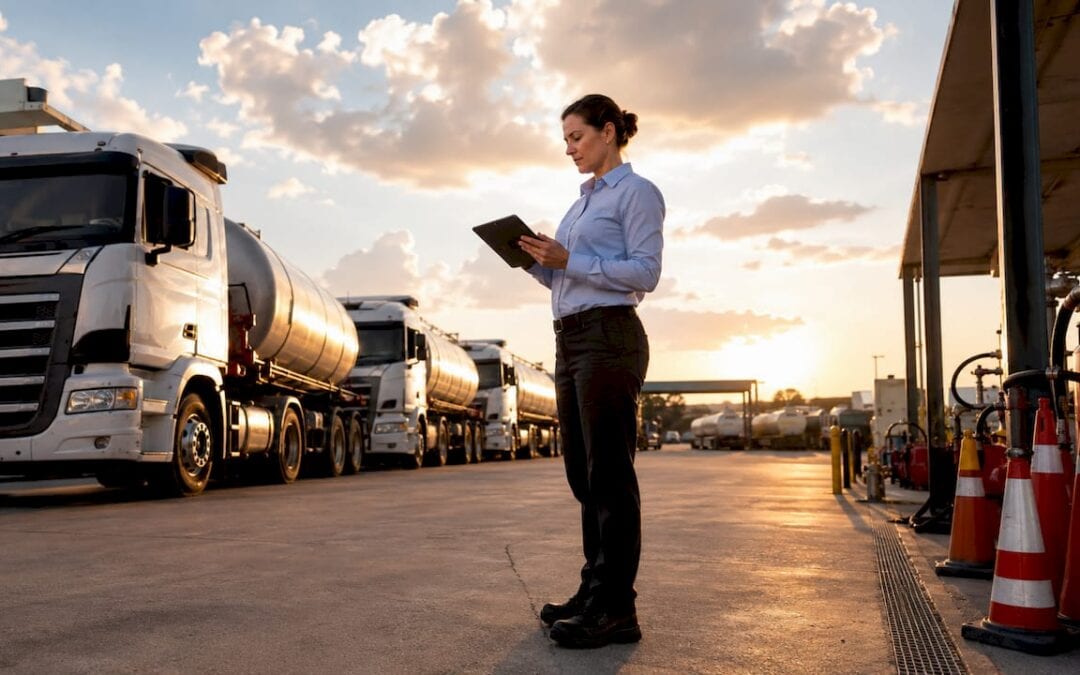
Technology defines the role of fuel delivery operations today, transforming what was once a manual, schedule-driven process into a data-connected system capable of predictive replenishment, real-time tracking, and automated workflows from order to confirmation. For fleet managers, site superintendents, and operations directors, this shift is not theoretical. It directly determines whether equipment keeps running or sits idle waiting for fuel. The core tools driving this change include IoT tank sensors, routing software like OptimoRoute, mobile proof-of-delivery apps, and smart tank lock systems. Together, they move fuel logistics from reactive to proactive, cutting costs and eliminating the unplanned downtime that quietly erodes project margins.
How does the role of technology in fuel delivery prevent run-outs?
IoT-based remote tank monitoring is the foundation of proactive fuel management. Wireless sensors installed on storage tanks transmit real-time level data to cloud platforms, giving operators visibility into consumption rates without a single manual check. Automated tank gauging systems can deliver 0.1mm level resolution along with temperature-compensated volume readings and water detection, which means the data feeding your dispatch decisions is precise, not approximate.
The financial case for this technology is concrete. A single empty-tank event in a remote operation can cost over 50,000 NOK in emergency delivery fees, lost productivity, and equipment restart costs. That figure makes even a fully deployed sensor network look inexpensive by comparison. For a data center running backup generators or a mining site operating heavy excavators around the clock, one unplanned outage can cascade into far larger losses.
The wireless technologies most commonly used for tank telemetry include LTE-M and NB-IoT, both of which are optimized for low-power, low-data-volume transmissions across wide areas. This matters because sensor data reliability is the single biggest variable in predictive delivery effectiveness. When transmissions fail or arrive late, operators revert to conservative ordering schedules that eliminate most of the efficiency gains the system was meant to deliver.
- Real-time tank level alerts trigger delivery orders before critical thresholds are reached
- Temperature-compensated volume data prevents over-ordering and under-ordering
- LTE-M and NB-IoT connectivity supports remote sites with limited infrastructure
- Historical consumption data feeds predictive replenishment models
- Automated alerts notify dispatch teams without requiring manual monitoring
Pro Tip: When evaluating IoT tank monitoring vendors, ask specifically about network uptime guarantees and redundancy protocols. A sensor that goes offline during a peak consumption period defeats the purpose of the entire system.
What impact does automated routing have on fuel delivery efficiency?
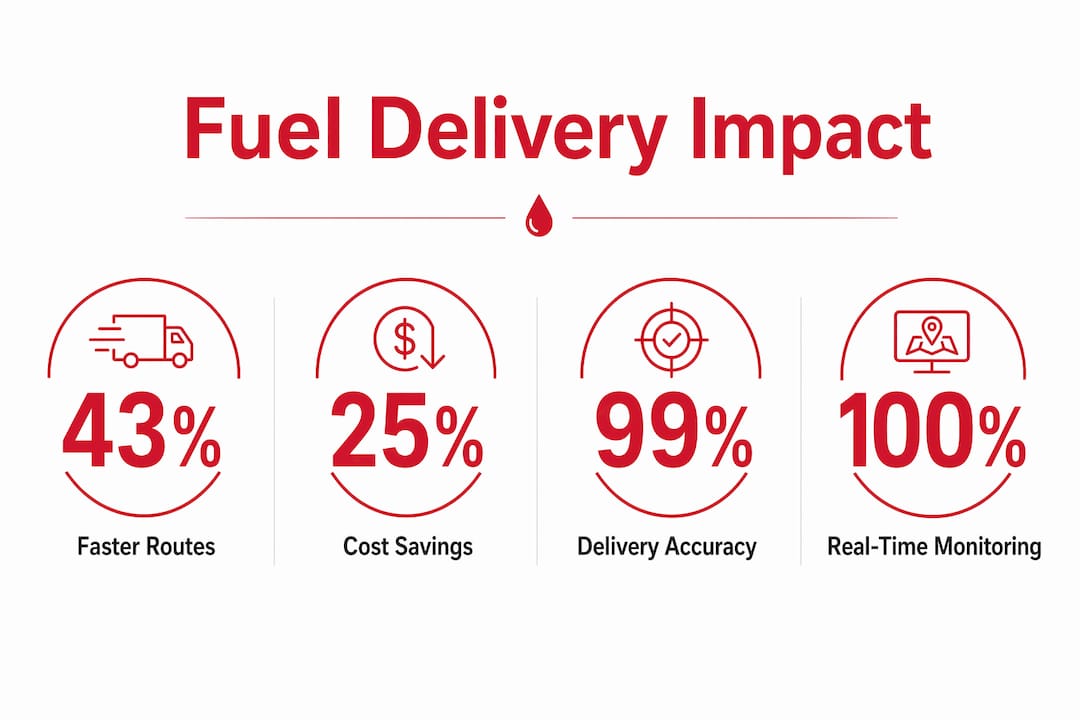
Automated route planning software produces measurable, documented results. Routing optimization tools like OptimoRoute cut delivery time by 43%, reduce operational costs by up to 50%, and improve overall efficiency metrics by a factor of seven compared to manual dispatch. These are not marginal gains. For a fleet manager running 10 or 20 trucks across a metro area, a 43% reduction in delivery time means more stops per shift and lower cost per gallon delivered.
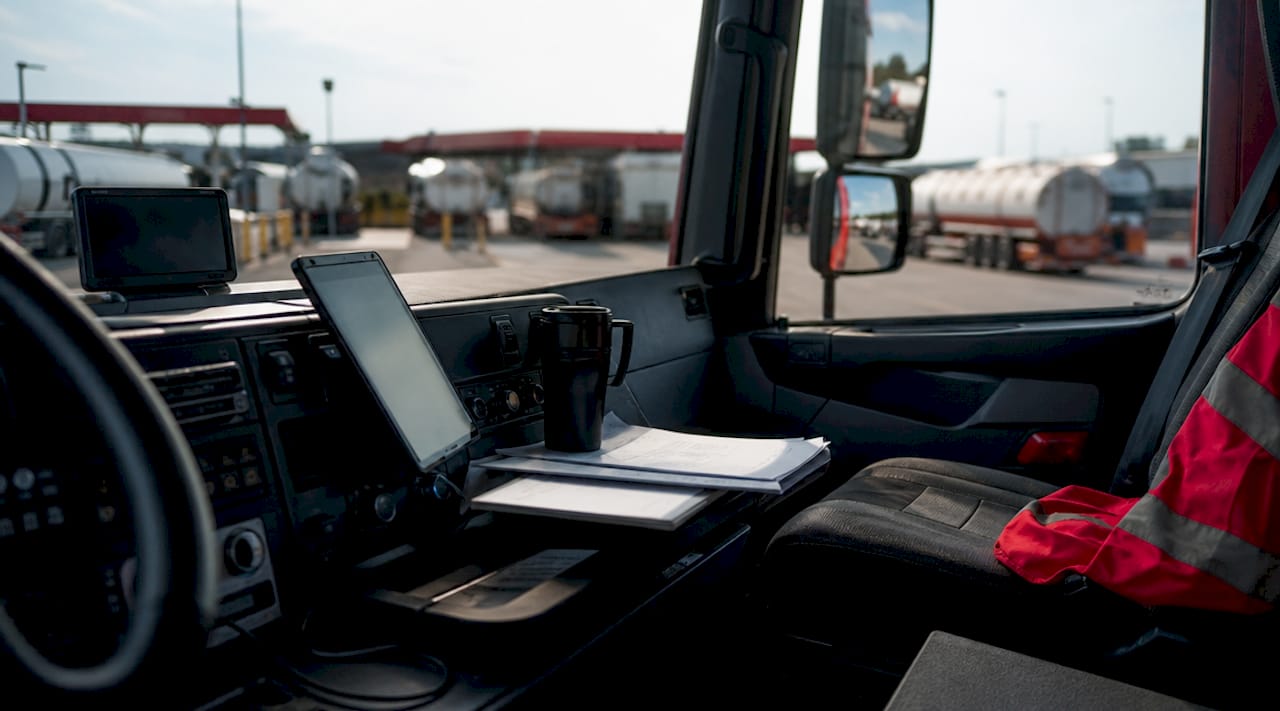
The mechanics behind these results go beyond simple map routing. AI-assisted planning tools factor in truck capacity, fuel type compatibility, driver hours-of-service regulations, customer delivery windows, and real-time traffic data simultaneously. Predictive reorder intelligence works in two phases: first, monitoring tank burn rates to trigger orders at the right time; second, optimizing trip loads and routes based on multiple constraints at once. This two-phase approach means the system is not just finding the shortest path. It is building the most profitable delivery sequence for the entire day.
The table below illustrates the operational difference between manual dispatch and automated routing across key performance metrics:
| Metric | Manual dispatch | Automated routing |
|---|---|---|
| Delivery time per route | Baseline | Up to 43% faster |
| Operational cost per delivery | Baseline | Up to 50% lower |
| Stops completed per shift | Standard | Up to 7x improvement |
| Route adjustment speed | Hours | Real-time dynamic |
| Driver compliance tracking | Manual | Automated and logged |
Mobile driver apps complete the picture. Drivers receive turn-by-turn instructions, delivery confirmations, and customer communication tools directly on a device. Dispatch teams see live truck locations, completed stops, and exceptions without making a single phone call. The result is a digital driver workflow that removes the friction between planning and execution, which is where most manual dispatch systems break down.
How do digital workflows improve service reliability and transparency?
End-to-end digital ordering platforms give customers the ability to place, track, and confirm fuel deliveries without relying on phone calls or paper invoices. This matters operationally because on-demand fuel delivery requires technology stacks that support digital ordering, dispatch automation, dynamic routing, mobile workflows, and automated payment processing working together. Remove any one of those components and the efficiency gains from the others are partially undermined.
Mobile proof-of-delivery is the most undervalued tool in this stack. Digital POD systems capture timestamps, GPS coordinates, and electronic signatures in under two minutes, creating an auditable delivery record that eliminates billing disputes before they start. For municipal fleet managers or procurement officers managing government contracts, this documentation is not optional. It is the difference between a clean audit and a contested invoice.
Customer portals extend this transparency further. Clients can log in to view delivery history, download invoices, and track active orders in real time. This reduces inbound support calls, accelerates payment cycles, and builds the kind of operational trust that turns a vendor relationship into a long-term contract. The benefits of on-site fuel delivery multiply significantly when customers have full visibility into what was delivered, when, and at what price.
- Digital ordering platforms eliminate phone-based dispatch for routine deliveries
- Mobile POD with GPS and e-signature creates dispute-proof delivery records
- Customer portals provide real-time tracking and invoice access
- Automated payment processing reduces accounts receivable lag
- Integrated back-office systems connect delivery data directly to billing and reporting
Pro Tip: Require that any proof-of-delivery system you evaluate supports offline mode. Drivers working remote construction sites or mining locations frequently lose connectivity, and a system that reverts to paper when the signal drops eliminates the entire value of going digital.
How does smart lock technology secure fuel assets?
Fuel theft is a direct cost that rarely appears in operational budgets until it becomes a pattern. Smart tank locks integrated with telemetry platforms address this by shifting security from passive physical barriers to active, connected monitoring. Cloud-synchronized smart locks using LoRa connectivity send real-time tamper alerts, log every opening event with a timestamp, and support remote unlock commands from a central platform. This means a facilities manager in San Antonio can authorize a delivery at a remote Texas site without being physically present.
The operational value extends beyond theft prevention. GPS route history tied to tank access events creates a complete chain of custody for every delivery. If a discrepancy appears between the volume ordered and the volume recorded at the tank, the data trail identifies where the gap occurred. This level of accountability is particularly relevant for bulk fuel delivery operations where large volumes move through multiple hands before reaching the end user.
| Security feature | Reactive approach | Smart lock approach |
|---|---|---|
| Tamper detection | Discovered after the fact | Real-time alert sent instantly |
| Access authorization | Physical key management | Remote command via cloud platform |
| Delivery verification | Manual log or paper record | Timestamped digital event log |
| Incident response | Post-incident investigation | Preventive alert before loss occurs |
Effective fuel tank security requires not just locks but also instant alert forwarding and remote command capabilities. The shift from reactive to preventive incident management is where the real cost savings appear, because a prevented theft costs nothing while a discovered one always costs more than the fuel itself.
What are the main challenges in adopting fuel delivery technology?
The biggest obstacle most logistics operations face is not finding the right technology. It is the mismatch between legacy dispatch systems built for planned route schedules and the on-demand delivery model that customers now expect. Existing planned delivery software often cannot handle customer-initiated same-day orders or dynamic route changes without significant manual intervention. This creates a situation where the technology investment exists but the operational benefit does not fully materialize.
Several practical challenges compound this problem:
- Legacy systems lack APIs for integrating IoT sensor data, mobile apps, and payment platforms
- Driver adoption of mobile workflows requires training investment and change management
- Sensor update latency in remote areas forces conservative delivery scheduling that reduces efficiency gains
- Integrating digital POD systems with existing back-office accounting software requires IT resources most mid-sized operators do not have in-house
- On-demand routing requires real-time data inputs that older dispatch platforms were not designed to process
The most pragmatic path forward is incremental. Smarter use of existing data, including live tracking and remote monitoring, currently delivers more operational value than attempting full automation in a single implementation cycle. Start with tank monitoring and mobile POD, prove the ROI, then layer in automated routing and customer portals. This sequencing reduces integration risk and builds internal confidence in the technology before committing to a full platform overhaul.
Technology in fuel delivery also functions as a competitive differentiator. Reducing emergency runs and improving customer communication through digital tools creates a service quality gap between operators who have modernized and those still running manual dispatch. For your customers, that gap shows up as reliability. For your business, it shows up as contract retention.
Key takeaways
Technology transforms fuel delivery by connecting tank monitoring, route optimization, digital workflows, and asset security into a single operational system that prevents downtime and reduces cost at every stage.
| Point | Details |
|---|---|
| IoT tank monitoring prevents run-outs | Real-time sensor data triggers proactive deliveries before critical tank levels are reached. |
| Automated routing cuts costs significantly | Route optimization tools reduce delivery time by 43% and operational costs by up to 50%. |
| Digital POD eliminates billing disputes | Timestamped, GPS-tagged proof-of-delivery records create auditable documentation in under two minutes. |
| Smart locks shift security from reactive to preventive | Cloud-connected tank locks send real-time tamper alerts and support remote authorization commands. |
| Legacy systems are the primary adoption barrier | Incremental implementation starting with monitoring and mobile workflows reduces integration risk. |
How Anytimefuelpros puts these technologies to work
Anytimefuelpros operates a technology-driven fuel delivery model built specifically for the commercial operations that cannot afford downtime. From data centers in Dallas requiring emergency diesel delivery to construction fleets in Salt Lake City needing scheduled on-site fueling, Anytimefuelpros uses digital ordering, optimized dispatch, and transparent invoicing to keep operations running without interruption.
Whether you are managing a multi-site enterprise contract or a single job site with recurring fuel needs, Anytimefuelpros provides the operational reliability that technology makes possible. Visit the fuel delivery questions page to see how a technology-enabled delivery partner handles everything from routine scheduled fills to 24/7 emergency response across Texas, Utah, and nationwide.
FAQ
What is the role of technology in fuel delivery?
Technology in fuel delivery covers IoT tank monitoring, automated route planning, mobile proof-of-delivery, and smart security systems that together shift operations from reactive scheduling to predictive, data-driven replenishment. The combined effect is fewer emergency deliveries, lower cost per stop, and full documentation of every transaction.
How does IoT tank monitoring reduce fuel delivery costs?
IoT sensors transmit real-time tank levels to dispatch platforms, allowing deliveries to be scheduled before critical thresholds are reached rather than after an emergency call. A single avoided empty-tank event can offset the cost of an entire sensor deployment.
What are automated fuel delivery solutions?
Automated fuel delivery solutions are integrated technology stacks that include digital customer ordering, AI-assisted route optimization, mobile driver workflows, and automated payment processing. These systems handle the full delivery cycle without manual intervention at each step.
What challenges do companies face when adopting fuel delivery technology?
The primary challenge is legacy dispatch software that cannot support on-demand ordering or real-time route changes. Secondary challenges include sensor reliability in remote areas, driver training for mobile workflows, and integrating digital tools with existing back-office accounting systems.
How does digital proof of delivery improve operations?
Digital proof-of-delivery systems capture GPS coordinates, timestamps, and electronic signatures in under two minutes, creating dispute-proof delivery records. For government contracts and enterprise accounts, this documentation is required for compliance and accelerates payment cycles significantly.
Recommended
- Benefits of Fuel Delivery – Anytime Fuel Pros
- Efficient Route Planning and Optimization – Anytime Fuel Pros
- Fuel Delivery at the Heart of Winter Operations: How On-Site Services Keep Businesses Running – Anytime Fuel Pros
- Mobile Fuel Delivery Explained: How This Can Save Your Business Money – Anytime Fuel Pros
Recent Comments