
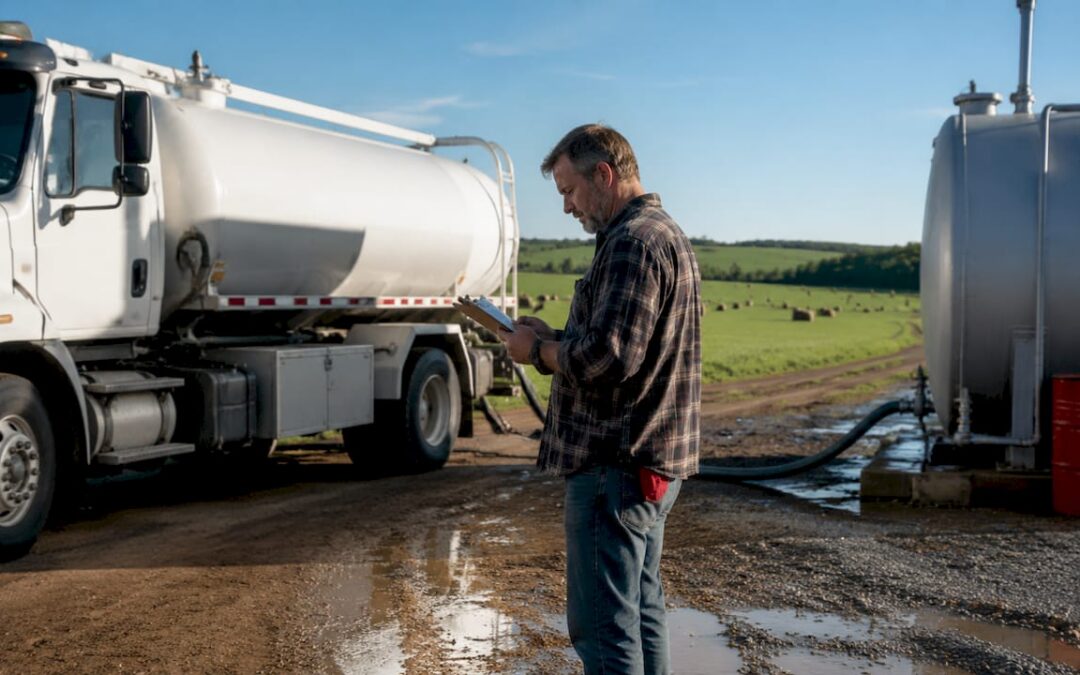
Farm fuel delivery service is the scheduled or on-demand transportation of diesel, gasoline, biodiesel blends, and Diesel Exhaust Fluid (DEF) directly to agricultural operations, eliminating the need to haul fuel from retail stations. The industry term for this practice is on-site fuel delivery, and it exists specifically to keep tractors, combines, irrigation pumps, and other farm equipment running without interrupting field operations. During planting and harvesting seasons, fuel consumption spikes sharply, and a single day of downtime can cost far more than the delivery fee. Understanding how this service works, what fuels it covers, and what infrastructure you need is the first step toward building a more resilient farm operation.
What is farm fuel delivery service and how does it work?
On-site farm fuel delivery is a logistics service where a certified fuel transport truck arrives at your property and pumps fuel directly into your bulk storage tanks or individual pieces of equipment. The driver handles metering, dispensing, and documentation. You do not send a crew to a gas station, and you do not manage the transfer yourself.
The delivery process follows one of two models:
- Scheduled keep-full programs. The provider monitors your usage history and delivers before your tanks drop below a set threshold. Keep-full programs adjust delivery frequency for peak periods and weather conditions, providing predictable service without requiring you to place individual orders.
- On-demand delivery. You call or submit a request when your supply runs low. This model works for operations with irregular fuel needs or farms that are just starting to evaluate delivery services.
- Direct-to-equipment fueling. Some providers offer wet hosing, where the delivery truck pulls alongside your equipment in the field and fuels each machine directly. This removes the need for a fixed storage tank entirely and is especially useful during harvest when equipment rarely returns to a central yard.
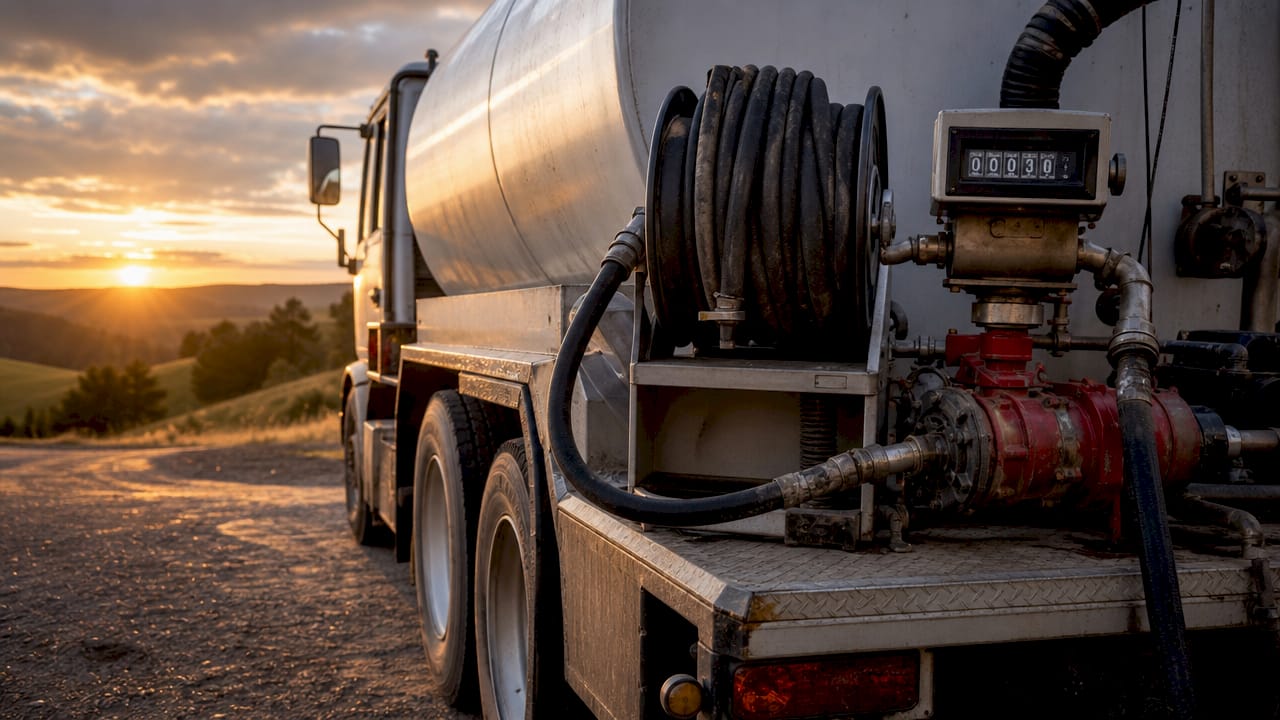
The delivery vehicle is typically a tanker truck equipped with a calibrated meter, a hose reel, and a pump capable of dispensing several hundred gallons per minute. Farms with fixed aboveground storage tanks receive bulk fills. Farms without permanent infrastructure can use portable tanks or request direct equipment fueling instead.
Pro Tip: Before your first delivery, confirm your driveway and access roads can support a loaded tanker truck. Most fuel transport vehicles weigh 80,000 pounds at full capacity. A soft shoulder or low-clearance bridge can delay delivery at exactly the wrong moment.
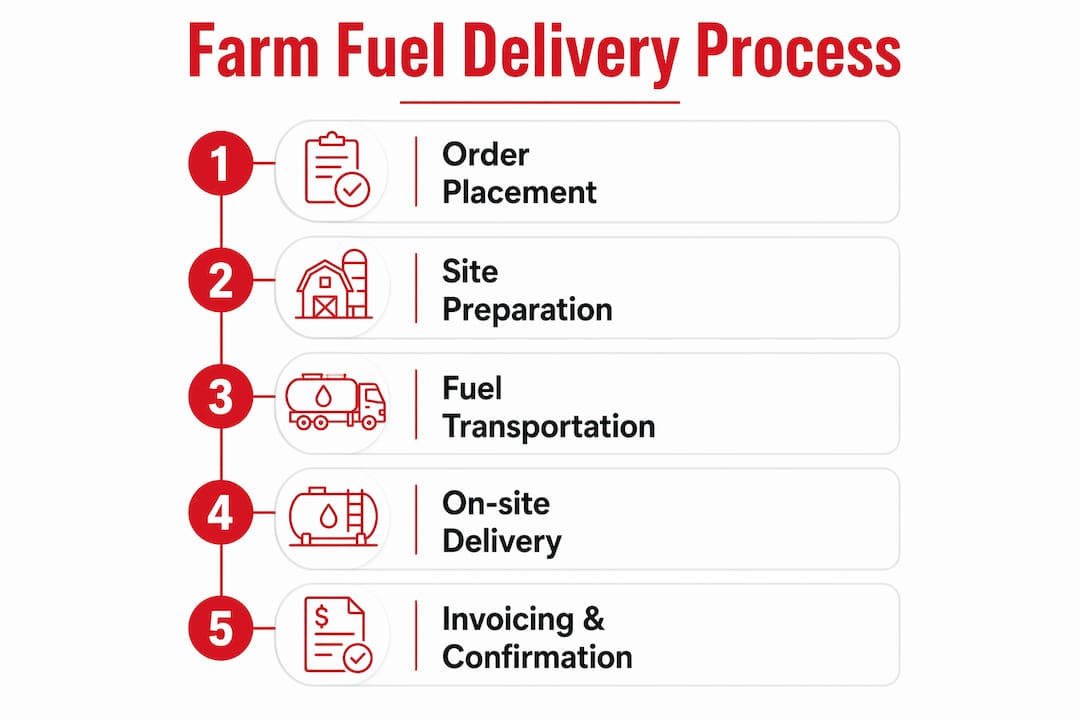
The logistics behind diesel delivery also include route planning, delivery confirmation, and invoicing. Reputable providers send electronic delivery receipts that document the volume dispensed, the fuel grade, and the timestamp. This matters for tax purposes, since dyed diesel used off-road carries a lower tax rate than clear diesel used on public roads.
What types of fuel are delivered to farms?
Farm fuel delivery covers more than just diesel. The specific fuels your operation needs depend on your equipment mix, your state’s emissions requirements, and your environmental goals.
- Clear diesel (on-road). Used in farm trucks and vehicles that travel on public roads. Taxed at the standard highway rate.
- Dyed diesel (off-road). The most common fuel for tractors, combines, irrigation engines, and other non-road equipment. Dyed red to indicate its tax-exempt status for off-road use.
- Biodiesel blends. Products like B5 (5% biodiesel) and B20 (20% biodiesel) are increasingly common on farms. Biodiesel blends reduce emissions and maintain diesel engine health, making them a practical choice for operations facing air quality regulations or sustainability goals.
- Gasoline. Needed for ATVs, utility vehicles, smaller generators, and light-duty farm trucks.
- DEF (Diesel Exhaust Fluid). A urea-water solution required by Tier 4 diesel engines to reduce nitrogen oxide emissions. Running out of DEF causes modern equipment to derate or shut down entirely.
Pro Tip: If your operation runs Tier 4 Final engines, bundle your DEF delivery with your diesel order. Integrated DEF delivery programs allow farms to maintain equipment efficiency without managing a separate supply chain for the fluid.
Fuel quality matters as much as fuel type. Ask your provider whether their diesel meets ASTM D975 specifications and whether they add cold-flow improvers in winter months. In Texas and Utah, where Anytimefuelpros operates, winter fuel issues are less common than in northern states, but late-season harvests in high-elevation areas can still expose equipment to gelled fuel if the supplier does not account for temperature.
How farm fuel delivery reduces downtime during planting and harvest
Fuel consumption on a working farm does not follow a flat curve. It spikes sharply during planting and harvest, when tractors, planters, combines, and grain carts run for 16 or more hours per day. Fuel demand spikes during these windows, and careful forecasting is required to avoid costly downtime. The consequences of running out of fuel mid-harvest are not just inconvenient. They are expensive.
The operational benefits of on-site delivery during these critical windows include:
- Eliminated off-site fuel runs. Sending a pickup truck to a co-op or fuel station takes 45 minutes to two hours, depending on distance. During harvest, that is time a driver is not operating equipment or moving grain.
- Continuous tank availability. On-site delivery keeps storage tanks full, facilitating continuous operation without the risk of a surprise shortage at 2 a.m. when the combine is still running.
- Weather-adjusted scheduling. A good provider monitors your operation and adjusts delivery timing around weather forecasts. If a rain window closes and you have three days of dry weather ahead, your tanks should be full before the equipment rolls.
- Reduced labor burden. Fuel management is one of those tasks that consumes supervisor attention disproportionate to its value. Delegating it to a delivery provider frees your team to focus on field operations.
“The farms that run the tightest harvest windows are the ones that treat fuel like a utility, not a supply they manage reactively. Scheduled delivery is what makes that possible.”
The seasonal scheduling guide published by Anytimefuelpros outlines how to align delivery frequency with planting and harvest calendars, including how to build buffer stock before weather-driven demand spikes.
What infrastructure and regulations affect farm fuel delivery?
Receiving bulk fuel delivery requires the right on-site infrastructure and an understanding of the regulatory environment. This is where many farms encounter unexpected friction.
| Storage Type | Capacity Range | Key Regulatory Considerations |
|---|---|---|
| Aboveground storage tank (AST) | 250 to 10,000+ gallons | Tanks over 550 gallons face more stringent spill containment and inspection requirements |
| Underground storage tank (UST) | 500 to 25,000+ gallons | Subject to EPA UST regulations, leak detection, and periodic testing |
| Portable/skid tank | 100 to 500 gallons | Fewer regulations, but must still meet fire codes and spill prevention standards |
| Tote or intermediate bulk container | 275 to 330 gallons | Minimal regulation below 110 gallons; useful for DEF and gasoline storage |
Aboveground tanks over 550 gallons and all underground tanks carry more stringent regulatory requirements, including secondary containment, overfill protection, and periodic inspections. Smaller tanks under 110 gallons face fewer rules, but all storage must prevent spills and conform to local fire standards.
Compliance responsibilities are shared between the fuel provider and the farm operator. The provider must hold the appropriate transportation and dispensing licenses. The farm must maintain proper spill containment around the tank, keep access roads passable for delivery vehicles, and document tank inspections. Non-compliance on either side can delay deliveries or trigger regulatory action.
Site readiness also affects delivery logistics. The delivery truck needs a turning radius of at least 100 feet in most cases, a firm surface that supports 80,000 pounds, and clear access to the fill port. If your tank is behind a gate, the driver needs the combination or a key. These details sound minor, but they determine whether a delivery takes 20 minutes or two hours.
For a detailed breakdown of storage and infrastructure requirements, the bulk fuel storage guide from Anytimefuelpros covers tank sizing, containment standards, and site preparation steps.
How to choose the right farm fuel delivery option for your operation
Not every farm fuel delivery option fits every operation. The right choice depends on your fuel volume, equipment count, storage infrastructure, and how predictable your usage is.
| Delivery Option | Best For | Key Consideration |
|---|---|---|
| Scheduled bulk delivery to AST | Large farms with consistent weekly usage | Requires fixed tank and site access for tanker trucks |
| On-demand bulk delivery | Mid-size farms with variable usage | Higher per-gallon cost; risk of run-outs if not monitored |
| Direct equipment fueling (wet hosing) | Harvest operations without fixed storage | Convenient but typically higher cost per gallon |
| Keep-full program | Operations that cannot afford any supply interruption | Provider manages scheduling; requires usage data sharing |
Operations using several hundred gallons per week with suitable tanks and site access are the strongest candidates for scheduled bulk delivery. Smaller farms with lower consumption may find that minimum delivery quantities make bulk service impractical. Most providers set minimums between 200 and 500 gallons per delivery.
Bulk delivery services require farm infrastructure like fixed aboveground or portable tanks, and operations with low fuel usage or small fleet sizes may not meet the volume thresholds that make on-site delivery cost-effective. If you are below those thresholds now but expect to grow, installing a properly permitted 500-gallon AST positions you to take advantage of bulk pricing as your operation scales.
Farm fuel delivery pricing is typically quoted per gallon and fluctuates with the wholesale diesel market. Providers like Anytimefuelpros use competitive daily pricing, which means your rate reflects current market conditions rather than a fixed contract price that may work against you when diesel drops. Ask any provider for transparent invoicing that shows the base fuel cost, delivery fee, and any applicable taxes separately.
Pro Tip: When evaluating farm fuel delivery options near you, ask the provider for their average response time for emergency deliveries. A scheduled program is only as reliable as the provider’s ability to respond when an unexpected demand spike or equipment issue pushes your tanks below the minimum.
The best practices guide from Anytimefuelpros covers how to assess your fleet size, storage capacity, and location access to match the right delivery model to your specific operation.
Key takeaways
Farm fuel delivery service works best when volume, infrastructure, and scheduling are aligned with the specific demands of planting and harvest seasons.
| Point | Details |
|---|---|
| Core definition | On-site fuel delivery brings diesel, gasoline, biodiesel blends, and DEF directly to your farm equipment or storage tanks. |
| Peak season priority | Fuel demand spikes during planting and harvest; scheduled delivery prevents run-outs during the highest-cost downtime windows. |
| Infrastructure matters | Aboveground tanks over 550 gallons trigger stricter regulations; site access and containment readiness determine delivery feasibility. |
| Fuel type selection | Dyed diesel, biodiesel blends, and DEF each serve specific equipment needs and compliance requirements on modern farms. |
| Choosing a service | Match delivery model to your weekly volume, storage capacity, and location access before committing to a provider or program. |
Keep your farm running with Anytimefuelpros
Anytimefuelpros delivers dyed and clear diesel, gasoline, biodiesel blends, and DEF directly to farms and ranches across Texas, Utah, and nationwide through a trusted partner network. Whether you need a scheduled keep-full program before planting season or emergency fueling when a tank runs dry mid-harvest, Anytimefuelpros builds delivery programs around your operation, not a one-size-fits-all schedule.
The team at Anytimefuelpros handles compliance documentation, transparent invoicing, and 24/7 emergency response so your focus stays on the field. If you are evaluating your farm fuel delivery options, start with the benefits of on-site delivery to see how scheduled service compares to your current fueling costs and labor hours.
FAQ
What is the difference between dyed and clear diesel for farms?
Dyed diesel is tax-exempt fuel intended for off-road equipment like tractors and combines, while clear diesel is taxed and used in vehicles that travel on public roads. Using dyed diesel in on-road vehicles is a federal violation subject to significant penalties.
How much fuel does a farm need to qualify for bulk delivery?
Most providers require a minimum of 200 to 500 gallons per delivery. Operations using several hundred gallons per week with proper storage infrastructure are the strongest candidates for scheduled on-site delivery programs.
Do I need a storage tank to receive farm fuel delivery?
A fixed aboveground or portable tank is the most common setup, but some providers offer direct equipment fueling where the truck pumps fuel directly into each machine. Farms without permanent storage can still receive delivery through wet hosing or portable tank programs.
What regulations apply to on-farm fuel storage?
Tanks over 550 gallons aboveground and all underground tanks face stricter spill containment, overfill protection, and inspection requirements. Smaller tanks under 110 gallons carry fewer rules but must still meet fire codes and local environmental standards.
How does DEF fit into a farm fuel delivery program?
DEF is required by Tier 4 diesel engines to control nitrogen oxide emissions, and running out causes equipment to derate or shut down. Bundling DEF with diesel deliveries eliminates a separate supply chain and keeps all fluid inventory managed under one delivery schedule.
Recent Comments