
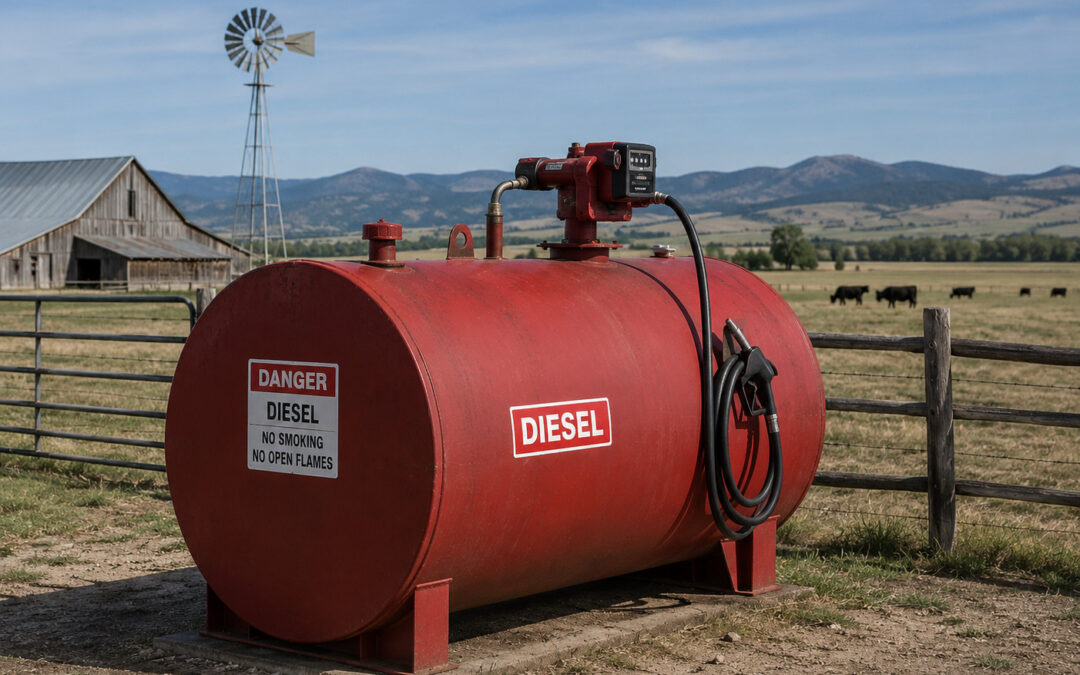
Ranch diesel delivery is the direct on-site supply of diesel fuel to farm tanks and equipment, eliminating the need for ranchers to haul fuel manually from retail stations. Providers like Anytimefuelpros and Nelson’s Oil & Gas transport dyed off-road diesel directly to your storage tanks or machinery through scheduled routes, will-call requests, or emergency dispatch. Understanding how ranch diesel delivery works gives you control over fuel costs, equipment uptime, and operational planning across every season.
How ranch diesel delivery works: the core process
Ranch diesel delivery, known in the industry as bulk fuel delivery or on-site fuel supply, operates on a straightforward model. A licensed fuel carrier loads diesel at a terminal or bulk plant, drives to your property, and pumps fuel directly into your on-site storage tank or equipment. The entire process removes the labor, time, and liability of self-hauling from the equation.
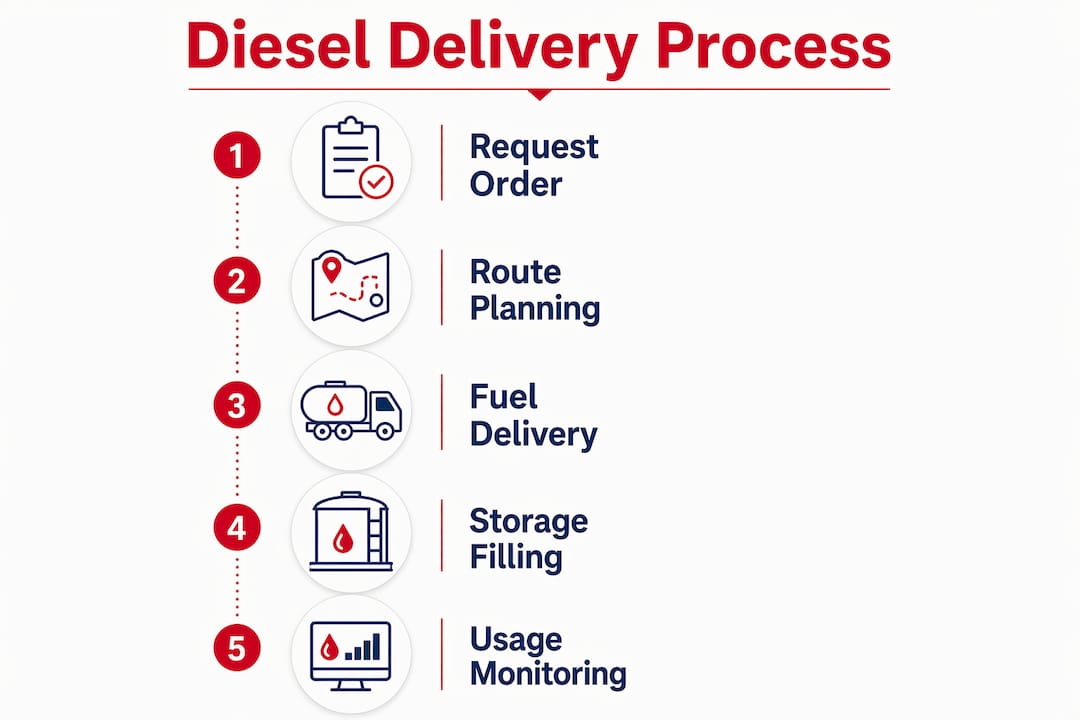
The delivery process begins when you either place a request or your supplier triggers a scheduled drop based on your agreed consumption rate. Delivery modes include scheduled recurring routes, will-call service when you call in a refill, and emergency dispatch for critical situations like power outages or unexpected equipment demand. Each mode serves a different operational need, and most ranchers use a combination of all three across a calendar year.
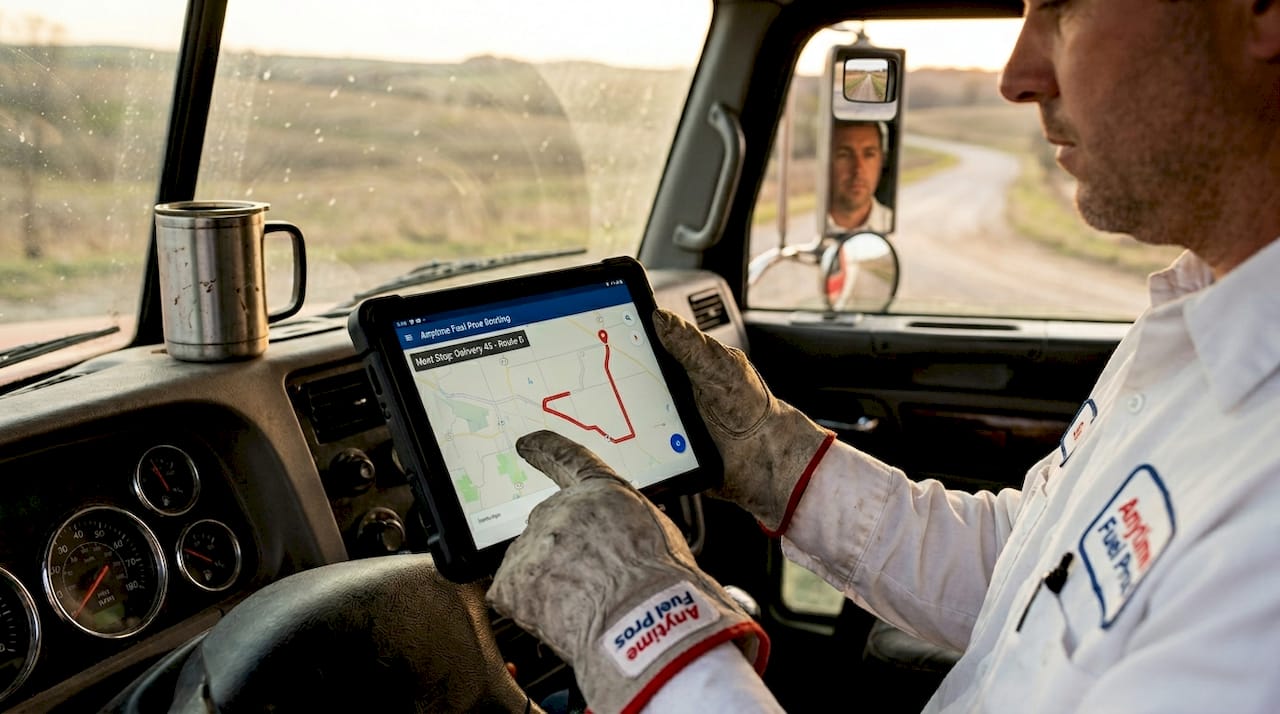
Providers route their tanker trucks using GPS and route optimization software, which matters more than most ranchers realize. Rural ranch roads, low-clearance gates, and unpaved access paths require advance coordination between you and your supplier. Giving your provider accurate site details upfront prevents delivery delays that cost you operating hours.
What types of diesel fuel are delivered to ranches?
Not all diesel is the same, and the distinction matters both legally and financially for ranch operations.
| Fuel Type | Primary Use | Tax Status | Key Feature |
|---|---|---|---|
| Off-road dyed diesel (red) | Tractors, combines, generators, irrigation pumps | Tax exempt | Dyed red per federal guidelines |
| On-road clear diesel | Pickup trucks, semi-trucks on public roads | Taxed | Standard highway fuel |
| Winterized diesel blend | All equipment in cold climates | Varies by type | Prevents fuel gelling below freezing |
Off-road dyed diesel is tax exempt and designated for equipment that never operates on public roads. Using it in a highway vehicle is a federal violation subject to significant fines, so the distinction is not just financial but regulatory. For most ranch equipment including tractors, skid steers, irrigation pumps, and stationary generators, dyed diesel is the correct and cost-effective choice.
On-road clear diesel is taxed at both the federal and state level and is required for any vehicle driven on public highways. Your ranch pickup trucks, grain haulers, and livestock trailers all run on clear diesel. Many ranchers receive both fuel types in a single delivery, with the driver filling separate tanks to keep them properly segregated.
Winterized diesel blends prevent fuel gelling during cold snaps, which is a real operational threat in states like Utah, Wyoming, and the northern plains. Gelled fuel clogs filters and injectors, taking equipment offline at exactly the wrong moment during winter feeding or calving season. Ask your supplier whether they switch to winterized blends automatically or whether you need to request them.
Pro Tip: Request winterized diesel starting in October if you operate in a region where temperatures regularly drop below 20°F. Waiting until a cold snap hits means your supplier may already be managing high demand from other customers.
How does diesel delivery scheduling and logistics work?
Scheduling is where the ranch diesel delivery process gets specific to your operation, and getting it right is the difference between continuous uptime and a tractor sitting idle at 6 a.m. during harvest.
-
Assess your seasonal burn rate. Fuel consumption on a ranch is not linear. Planting and harvest weeks burn significantly more diesel than winter months. Recurring scheduled deliveries built around your agricultural calendar prevent the most common cause of equipment downtime: running out of fuel during peak demand.
-
Choose your delivery model. Scheduled delivery means your supplier arrives on a fixed cadence, typically weekly or biweekly, based on your average consumption. Will-call means you contact your supplier when your tank reaches a set level, usually 30 to 40 percent capacity. Emergency delivery is available when you run critically low without warning, though it typically carries a premium.
-
Coordinate site access in advance. Rural ranch roads present real logistical challenges. Tanker trucks require adequate turning radius, weight-rated surfaces, and clearance under gates and tree lines. Walk your delivery route with your supplier before the first drop and document any seasonal access issues, such as roads that flood in spring or become impassable after heavy rain.
-
Consider tank monitoring technology. Some suppliers offer remote tank monitoring sensors that track your fuel level in real time and automatically trigger a delivery order when you hit a threshold. This removes the guesswork from will-call scheduling and is particularly useful for ranches with multiple storage tanks across large acreage.
-
Build in lead time for peak seasons. Seasonal burn rates and rural site conditions drive delivery scheduling decisions for fuel providers. During planting and harvest, your supplier is managing high demand from multiple agricultural customers simultaneously. Placing your delivery orders two to three weeks ahead of peak periods gives you priority positioning.
Pro Tip: Keep a fuel log tracking your weekly consumption by season. After one full year, you will have accurate data to negotiate a recurring delivery schedule that matches your actual burn rate, which often reduces your per-gallon cost through volume commitments.
What equipment and technology are involved in on-site diesel delivery?
Understanding what arrives on your property helps you prepare for safe, efficient delivery every time.
-
Tanker trucks with calibrated meters. Delivery trucks are equipped with flow meters that measure the exact volume pumped into your tank. You receive a printed or digital ticket showing gallons delivered, fuel type, and price per gallon. This is your primary record for tax purposes, especially for dyed diesel used in tax-exempt equipment.
-
Hoses, nozzles, and safety connectors. Drivers carry hoses long enough to reach tanks positioned away from the road. Dry-break couplings and automatic shutoff nozzles prevent spills during connection and disconnection. These are not optional features. They are standard safety equipment required by EPA and DOT regulations.
-
GPS and route optimization software. Suppliers use GPS-enabled dispatch systems to plan efficient routes across multiple rural delivery stops. This technology also gives you real-time delivery windows so you or a ranch hand can be present when the truck arrives.
-
On-site storage tanks. Most ranches use above-ground steel or polyethylene tanks ranging from 500 to 10,000 gallons. The tank size you maintain directly affects your delivery frequency and your ability to take advantage of volume pricing. Larger tanks mean fewer deliveries and more negotiating leverage.
-
Spill containment equipment. Drivers carry absorbent materials and containment barriers as required by federal spill prevention regulations. Your ranch may also be required to maintain a secondary containment structure around your storage tank depending on its capacity and your state’s environmental regulations.
What are the real benefits of diesel delivery for ranch operations?
The operational case for on-site diesel delivery is stronger than most ranchers initially expect, and the financial case is often underestimated.
-
Eliminated hauling labor. Sending a ranch hand to town to fill portable fuel cans or a nurse tank costs you two to four hours of productive labor per trip, plus fuel for the tow vehicle. Multiply that across a busy season and the labor cost alone justifies a delivery contract.
-
Tax savings on dyed diesel. The federal excise tax on highway diesel is 24.4 cents per gallon. On a ranch consuming 10,000 gallons of off-road diesel annually, that exemption represents over $2,400 in direct savings. State-level exemptions add further savings depending on your location.
-
Reduced equipment downtime. Planned deliveries minimize downtime and eliminate the operational disruption of running dry during critical work windows. A tractor that stops mid-field during planting does not just cost you fuel time. It costs you workflow sequencing across your entire operation.
-
Volume pricing advantages. Suppliers offer better per-gallon pricing to customers who commit to recurring delivery volumes. The more predictable your consumption, the more leverage you have in pricing negotiations.
Pro Tip: Set your will-call trigger point at 35 percent tank capacity, not 10 percent. Calling when you are nearly empty limits your supplier’s scheduling flexibility and can result in a premium emergency delivery charge.
Pitfalls to avoid include neglecting filter maintenance on your storage tank, which allows water and sediment to contaminate fuel and damage injectors. Also avoid accepting delivery when your tank is completely full, since thermal expansion in summer heat can cause overflow and create both a safety hazard and an environmental liability.
Key takeaways
Ranch diesel delivery works best when scheduling, fuel type selection, and site logistics are aligned with your specific seasonal demand and equipment needs.
| Point | Details |
|---|---|
| Know your fuel types | Use tax-exempt dyed diesel for off-road equipment and clear diesel for highway vehicles to stay compliant and reduce costs. |
| Schedule around peak seasons | Build recurring delivery schedules based on planting and harvest burn rates to avoid running dry during critical work windows. |
| Prepare your delivery site | Confirm road access, tank location, and clearance details with your supplier before the first delivery to prevent delays. |
| Use tank monitoring | Remote sensors that trigger automatic orders remove the guesswork from will-call scheduling across large ranch properties. |
| Negotiate volume pricing | Committing to a recurring delivery volume gives you leverage for better per-gallon pricing from your fuel supplier. |
What I have learned after years of watching ranchers manage fuel
Ranch owners tend to underestimate how much of their operational risk lives inside their fuel supply chain. I have seen well-run operations lose entire days during harvest because a tank ran dry on a Saturday morning and the supplier could not get a truck out until Monday. That is not a fuel problem. That is a planning problem.
The ranchers who get this right treat their fuel supplier like a partner, not a vendor. They share their planting and harvest calendars. They call ahead when they know a big push is coming. They ask about winterized blends before October, not after the first freeze. That level of communication costs nothing and pays off every single season.
Technology is changing this faster than most people realize. Tank monitoring sensors and GPS-dispatched delivery systems mean that within the next few years, most well-run ranch fuel programs will be fully automated. Your tank will order its own refill before you even notice the level dropping. The ranchers who set up those systems now, and who build strong supplier relationships while doing it, will have a genuine operational advantage over those who are still calling in will-call orders from memory.
One more thing worth saying directly: review your delivery contract at least once a year. Pricing structures, minimum delivery volumes, and emergency service terms change. A contract that made sense two years ago may be costing you money today. The farm diesel delivery scheduling decisions you make in January set the tone for your entire operating year.
— Justin
Fuel your ranch without leaving the property
Anytimefuelpros delivers on-site diesel directly to ranch tanks and equipment across Texas, Utah, and nationwide through a trusted partner network. Whether you need scheduled bulk delivery for your irrigation pumps and tractors, dyed diesel for tax-exempt equipment, or emergency dispatch when a critical machine runs dry, Anytimefuelpros has the capacity and coverage to keep your operation running. Explore the full benefits of fuel delivery and see how a delivery program built around your seasonal schedule eliminates downtime and reduces your total fuel cost.
FAQ
What is dyed diesel and why do ranches use it?
Dyed diesel is off-road fuel dyed red per federal guidelines to designate its tax-exempt status for non-road equipment. Ranches use it for tractors, generators, and irrigation pumps to avoid paying the federal highway excise tax of 24.4 cents per gallon.
How do I schedule a diesel delivery for my ranch?
Contact a bulk fuel provider like Anytimefuelpros to set up a recurring delivery schedule based on your seasonal consumption, or use will-call service by requesting a delivery when your tank reaches 30 to 40 percent capacity. Emergency delivery is also available for critical situations, though it typically carries an additional charge.
What size fuel tank do I need on my ranch?
Most ranch operations use above-ground storage tanks ranging from 500 to 10,000 gallons depending on equipment count and seasonal burn rate. Larger tanks reduce delivery frequency and improve your volume pricing leverage with your supplier.
Can diesel delivery reach remote ranch locations?
Yes. Providers like Anytimefuelpros specialize in remote site fueling and use GPS-dispatched tanker trucks to reach rural properties. Coordinating road access and site details with your supplier in advance is the key to reliable delivery at off-grid locations.
What is winterized diesel and when should I order it?
Winterized diesel is a blended fuel formulated to prevent gelling in cold temperatures, which can clog filters and shut down equipment. Request it from your supplier starting in October if you operate in a region where temperatures regularly fall below 20°F.
Recent Comments