
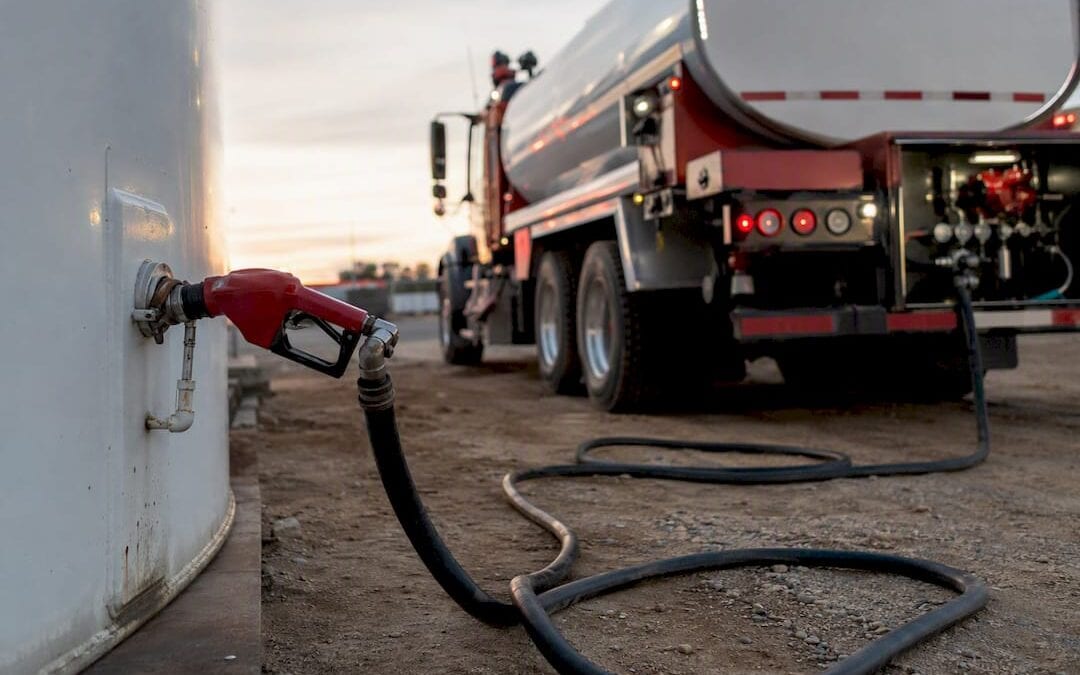
Delivered diesel for U.S. fleets can vary widely in price, with off-road fuel generally lower cost and on-road diesel usually closer to retail pump pricing plus a delivery fee, depending on region and volume. Order size, distance from the terminal, and delivery timing (scheduled versus emergency) drive most of the swing. Worked examples and a full cost breakdown follow so you can budget with real numbers instead of guesswork.
TL;DR:
- Off-road dyed diesel prices vary by region and order size, typically remaining lower than on-road diesel, which includes highway taxes.
- Delivery fees, minimum order requirements, surcharges for remote sites, and seasonal fees significantly impact the total delivered cost.
- Emergency fuel deliveries incur higher premiums based on response time, location, and time of day, which are largely avoidable with proper planning.
- Comparing delivered fuel to retail pumping should account for labor, equipment downtime, and compliance savings, often favoring delivery for larger fleets.
- Negotiating contracts with clear, itemized fees and volume commitments can lead to better pricing and more predictable budgeting.
Table of Contents
- What Drives the Delivered Diesel Delivery Cost
- Pricing Factors: Fees, Minimums, and Surcharges Explained
- Which Delivery Model Fits Your Site?
- How Much Do Emergency Fuel Deliveries Cost?
- Estimating Your Delivered Cost: Three Worked Examples
- Delivered Fuel vs. Retail Pumping: Which Actually Saves More?
- How to Negotiate a Better Diesel Delivery Contract
- What Anytime Fuel Pros Brings to Delivered Fuel Pricing
- Getting a Fast, Accurate Diesel Quote
- Sources
What Drives the Delivered Diesel Delivery Cost
Every delivered gallon starts at the terminal rack price, the wholesale rate refiners and distributors charge before anything gets trucked anywhere. From there, a supplier layers on transportation, margin, taxes, and whatever service fees apply to your account. That stack is why a delivered price almost never matches what you see posted at a retail pump down the street.
The EIA’s pricing FAQ breaks down exactly how distribution costs and taxes separate wholesale from retail pricing, and the gap matters more for fleet budgeting than most procurement teams realize. Retail stations bake in real estate, staffing, and card-processing costs that a direct delivery skips entirely. That’s part of why on-site delivery can compete with, or beat, pump prices once you factor in the labor hours saved from not driving equipment to a station.
Regional variance is real, and it’s not small. The EIA’s daily price tracker shows U.S. average retail diesel running around $5.59 per gallon, while regional spot prices for low-sulfur diesel differ by terminal location, with the Gulf Coast, New York Harbor, and Los Angeles all pricing several cents apart on any given day.
Here’s the rough band fleet managers should expect for delivered pricing:
- Off-road (dyed) diesel: prices vary depending on region and order size
- On-road (clear) diesel: generally tracks closer to local retail pricing plus delivery fees, since it carries full highway tax
- Delivery fee add-on: varies, often presented as a per-gallon equivalent or a flat fee on smaller orders
Quick fact: the EIA’s spot-price data also shows how refinery crack spreads can move terminal prices within days, which is why a quote you got last month may not hold today.
None of these ranges are fixed. Crude prices, refinery maintenance schedules, and even weather events can shift terminal pricing fast, and your delivered quote will move with it.
Pricing Factors: Fees, Minimums, and Surcharges Explained
A delivered fuel invoice is rarely just “gallons times price.” Suppliers build in a handful of line items, and knowing them ahead of time keeps you from getting blindsided on invoice day.
- Minimum-order requirements. Most suppliers set a gallon minimum, often somewhere between 100 and 500 gallons, because sending a truck for a 30-gallon top-off doesn’t pencil out for them. Order below the minimum and you’ll usually pay a higher effective per-gallon rate or a flat trip charge to cover the gap.
- Flat delivery fees and distance surcharges. A base delivery fee covers the truck and driver time. If your site sits outside the supplier’s normal service radius, expect a per-mile surcharge on top of that base fee.
- Waiting or laydown fees. If your crew isn’t ready to receive fuel when the truck arrives, or if the driver needs to run extra hose to reach equipment, that added time often shows up as a separate charge.
- Hazmat, additive, and winterization fees. Cold-weather blends, anti-gel additives, and hazmat handling for certain sites can each add a few cents per gallon, particularly in northern states during winter months.
- Access and handling fees. Remote sites, locked yards, or locations requiring special equipment to reach storage tanks sometimes carry a small handling charge.
- Taxes. This is where dyed and clear diesel diverge sharply. On-road (clear) diesel carries full federal and state highway taxes. Off-road (dyed, red-dye) diesel is exempt from those road-use taxes because it’s restricted to non-highway equipment like generators, excavators, and agricultural machinery. That tax gap is a big reason dyed diesel consistently prices lower than clear diesel for the same base fuel, as Anytime Fuel Pros’ own pricing data on red dye delivery shows.
Pro Tip: Ask every supplier for a written fee schedule before your first delivery, not after. A supplier’s on-site pricing explainer noted that documentation fees, after-hours charges, and winterization costs are among the most common “surprise” line items on invoices, according to Rhino Fuel’s breakdown of on-site pricing.
Mixing up dyed and clear diesel on a job site isn’t just a pricing issue either. It’s a federal compliance issue, since running dyed fuel in an on-road vehicle can trigger IRS penalties regardless of what you paid per gallon.
Which Delivery Model Fits Your Site?
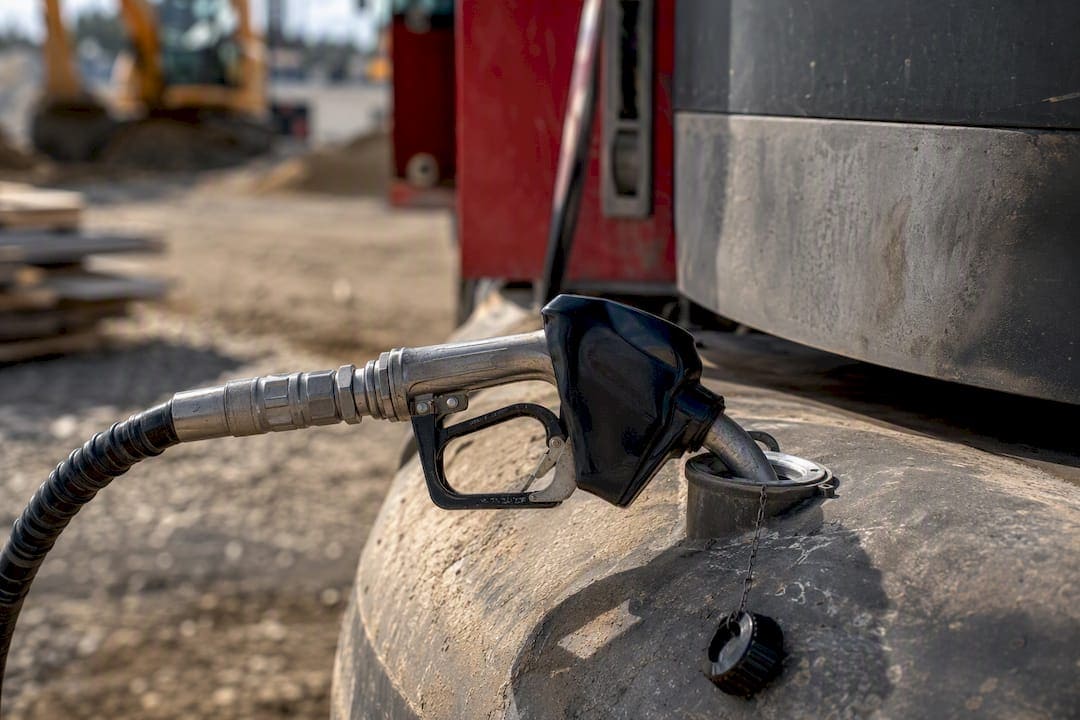
Not every delivery looks the same, and the model you choose changes both your per-gallon rate and how smoothly your operation runs day to day.
- Scheduled recurring delivery. A supplier fills your tanks on a set cadence (weekly, biweekly, monthly), which tends to earn the best per-gallon pricing because it’s predictable revenue for them. This fits sites with steady, forecastable burn rates like data center generator top-offs or municipal fleet yards.
- Single bulk fills. A one-time large order, often 1,000 gallons or more, for a project kickoff or seasonal ramp-up. Per-gallon pricing benefits from volume even without a recurring contract, thanks to basic economies of scale spreading the fixed delivery cost across more gallons.
- Wet-hosing and yard fueling. This means fueling equipment directly, excavators, loaders, generators, on-site rather than filling a static tank. It typically costs a bit more per gallon than a straight tank drop because it takes more driver time and often multiple stops across a job site.
- On-demand and emergency delivery. Fuel dispatched outside your normal schedule, usually same-day or after-hours. This carries the highest per-gallon premium of any model, for reasons the next section covers in detail.
Red dye (off-road) delivery applies across most of these models except when you’re fueling licensed on-road vehicles, and it’s worth confirming with your supplier which fuel type applies to each piece of equipment on your site before the truck shows up.
How Much Do Emergency Fuel Deliveries Cost?
Emergency delivery is where budgets get blown, and it’s almost always avoidable with a little planning. When a generator runs low during a storm or a job site burns through fuel faster than forecast, suppliers dispatch outside their normal routing, and that costs more.
Expect emergency and after-hours premiums to show up as either a flat surcharge on top of the standard delivery fee, or a per-gallon add-on layered onto your base rate. The exact number depends heavily on three things:
- Response time requested. A two-hour emergency window costs more than a “get here by tomorrow morning” request.
- Location. Remote sites, mining operations, rural agricultural land, cost more to reach on short notice than a facility inside a supplier’s core service area.
- Time of day. Nights, weekends, and holidays typically carry the steepest after-hours multipliers, since suppliers are pulling drivers off their scheduled routes or paying overtime.
Pro Tip: If your operation can’t tolerate downtime, like a data center running on backup generators during a grid outage, a standby or retainer-style agreement is usually worth the premium. Anytime Fuel Pros’ emergency response program is built around exactly this: capping your surcharge exposure before an emergency happens instead of negotiating it in the middle of one.
Building a standing relationship with a supplier who already knows your site, access points, and tank locations shaves real time off emergency response, and that familiarity often keeps the surcharge lower than calling an unfamiliar vendor cold.
Estimating Your Delivered Cost: Three Worked Examples
Budgeting gets a lot easier once you break the math into one repeatable formula:
(Gallons × base price per gallon) + delivery fee + distance surcharge (if applicable) + taxes + additive fees = total delivered cost
Here’s how that plays out across three common order sizes, using mid-range figures from the pricing bands covered earlier:
Notice the pattern: the flat delivery fee gets absorbed across more gallons as order size grows, so the effective per-gallon cost drops even though the base price only shifts slightly. That’s economies of scale doing exactly what it’s supposed to do for your budget.
Before you request a quote from any supplier, gather this information so you’re comparing apples to apples:
- Your minimum order requirement and whether your typical fill meets it
- Base price per gallon for the fuel type you need (clear or dyed)
- Flat delivery fee and whether your site falls inside or outside the standard service radius
- Any additive, hazmat, or seasonal winterization fees that might apply
- Payment terms, invoicing format, and whether delivery confirmations are provided automatically
Running your own numbers is faster with a tool built for it. Anytime Fuel Pros’ diesel calculator lets you plug in gallons, location, and service type to get a realistic estimate before you ever pick up the phone.
Delivered Fuel vs. Retail Pumping: Which Actually Saves More?
The honest answer is: it depends on what you’re counting as a cost. If you only compare the per-gallon number on a receipt, retail station pricing or a fleet fuel card program can occasionally edge out delivery, especially for a single light-duty vehicle that’s already driving past a station anyway.
But that comparison misses most of what actually costs a fleet money. Consider what happens when you send a crew member to fuel up equipment at a retail station instead of having it delivered:
- Labor hours lost. A round trip to a station and back, plus wait time at the pump, can eat 30 to 60 minutes of a crew member’s shift, multiplied across every fill.
- Equipment downtime. Heavy equipment that has to leave a job site to refuel isn’t producing. On an excavation site billing by the hour, that idle time adds up fast.
- Fuel theft and shrinkage risk. On-site tanks with delivery tracking reduce the exposure that comes with crews handling fuel cards or cash at public stations.
- Compliance and safety. On-site delivery keeps dyed and clear diesel properly segregated and documented, which matters if you’re ever audited on off-road fuel use.
Once you fold labor hours and downtime into the math, delivered fuel usually wins for any operation running multiple pieces of heavy equipment or a fleet of more than a handful of vehicles. Retail pumping still makes sense for light-duty vehicles already on the road doing other errands, where a stop at a station adds no real detour. The benefits of on-site fuel delivery become clearest at scale, which is exactly where most fleet and facilities budgets live.
How to Negotiate a Better Diesel Delivery Contract
Lowering your delivered cost isn’t about finding a magic cheap supplier. It’s about structuring your account so the supplier’s own economics work in your favor.
- Negotiate minimums and delivery frequency together. A supplier willing to guarantee weekly or biweekly stops for a known volume will often price more aggressively than one filling ad hoc orders.
- Bundle multiple sites under one contract. If you’re running job sites across a metro area, or facilities in multiple states, consolidating under a single national partner network typically earns zone-based pricing you won’t get negotiating site by site.
- Demand transparent, itemized invoicing. Every fee, delivery, distance surcharge, additive charge, should appear as its own line so you can audit spend and catch billing errors before they compound across a year of deliveries.
- Lock in seasonal pricing or set standby terms ahead of peak demand. Winter storms and hurricane season both spike emergency requests region-wide; a standing agreement negotiated in the off-season avoids scrambling at the worst possible time.
Pro Tip: Request delivery confirmations with gallons pumped and timestamps for every drop, not just a monthly summary invoice. That paper trail is what makes an audit fast instead of a multi-day reconciliation project.
What Anytime Fuel Pros Brings to Delivered Fuel Pricing
Justin, who leads commercial fuel delivery operations at Anytime Fuel Pros, has built pricing practices around one principle: fleet managers shouldn’t have to guess what a delivery will cost before the invoice arrives.
Anytime Fuel Pros offers both scheduled recurring delivery and true 24/7 emergency response, along with clear separation between dyed and clear diesel ordering so compliance never becomes a guessing game. Coverage runs through primary markets in Texas and Utah, with nationwide reach through a trusted partner network for multi-site and multi-state accounts.
What that looks like in practice:
- Transparent, itemized invoicing on every delivery, no buried fees
- 24/7 emergency response for mission-critical sites like data centers and disaster recovery zones
- Service across data centers, mining, construction, municipal fleets, events, and oil and gas
- A nationwide partner network giving multi-site operators a single point of contact
Fleet size, certifications, and response-time guarantees vary by market and contract, so the fastest way to get specifics for your operation is to request a quoted estimate directly.
Getting a Fast, Accurate Diesel Quote
Once you know your rough numbers from the worked examples above, getting an actual quote takes just a few details. Anytime Fuel Pros can turn around an accurate delivered-price estimate once you provide your site location, estimated gallons needed, fuel type (clear or dyed), tank or equipment access details, and your preferred timing, whether that’s a one-time fill or a recurring schedule.
That’s the whole advantage of working with a supplier built for scheduled service and rapid emergency response instead of piecing together retail runs and one-off vendors. Anytime Fuel Pros’ nationwide partner network means a facilities director managing sites in three states gets one point of contact and one consistent invoicing format, instead of juggling regional suppliers with different pricing structures. Whether you’re topping off a backup generator at a data center or fueling a fleet yard on a recurring schedule, the same transparent pricing approach applies.
If you’re ready to see real numbers for your site, request a quote through Anytime Fuel Pros’ diesel delivery service page and get a delivered-cost estimate built around your actual gallons, location, and schedule, not a generic average.
Recent Comments