

DEF delivery cost typically runs roughly between eighty cents and three dollars per gallon for bulk orders, $5 to $8 per gallon for retail jugs, and $3 to $5 per gallon at pump islands.
Where you land on that spectrum comes down to three levers: channel, volume, and delivery logistics.
- Pump islands: $3–$5/gal, best for occasional top-offs
- Retail jugs (2.5 gal): $5–$8/gal, convenient but expensive
- Totes and drums: $1.50–$2.50/gal delivered
- Bulk tanker delivery: $0.80–$1.80/gal for high-volume fleets
Fleets with recurring, multi-vehicle demand get the most leverage from a supplier like Anytimefuelpros, which can quote delivered bulk or tote pricing and step in fast when a site runs dry.
TL;DR:
- Bulk tanker delivery can reduce DEF costs to between $0.80 and $1.80 per gallon for high-volume fleets, compared to retail prices of $5 to $8 per gallon.
- Delivery fees of $0.10 to $1.00 per gallon, influenced by distance, order size, and schedule, significantly impact overall costs, especially for small or rural orders.
- Matching storage capacity to actual monthly consumption prevents DEF degradation and unnecessary expenses, with tanks paying for themselves within a year for high-usage fleets.
- Fleets exceeding 10,000 gallons annually can negotiate prices below $1.25 per gallon, benefiting from market trends tied to urea commodity prices.
- Scheduled bulk or tote deliveries from providers like Anytimefuelpros lower effective costs and provide emergency response options to avoid SCR system failures.
Table of Contents
- What Drives DEF Delivery Cost per Gallon?
- How Order Size and Distance Change Your Delivered Price
- Should You Install a Tank or Stick With Totes?
- What Does DEF Actually Cost a Fleet Over a Year?
- How Anytimefuelpros Lowers Your Delivered DEF Cost
- Key Takeaways
- Sources
What Drives DEF Delivery Cost per Gallon?
Every price band above reflects a different cost structure, not just a different markup. Pump island DEF is cheap to produce and dispense because truck stops move enormous volume, which keeps the fluid fresh and the per-gallon price close to $3 to $5. Retail jugs cost more because you’re paying for packaging, retail shelf space, and a supply chain built for convenience rather than volume, pushing the equivalent price to $5 to $8 per gallon.

Bulk delivery flips that math. When Anytimefuelpros or another supplier fills a 275 to 330 gallon tote or a tanker-sized bulk order, you’re paying for fluid plus freight, not fluid plus packaging plus retail overhead. That’s why tote pricing typically lands at $1.50 to $2.50 per gallon delivered, and large-volume tanker orders can fall toward $0.80 to $1.80 per gallon. Fleets buying more than 10,000 gallons a year sometimes negotiate delivered pricing under $1.25 per gallon in competitive markets.
Delivery and handling fees sit on top of the fluid price itself, and this is where budgets often go sideways. These fees commonly add $0.10 to $1.00 or more per gallon equivalent, with the low end applying to standard scheduled routes and the high end kicking in for rural drops, expedited timing, or orders below a supplier’s minimum threshold.
DEF delivery fees typically average a moderate amount per gallon once you factor in distance, order minimums, and standard scheduling. Sites that fall below minimum order quantities or request off-cycle delivery routinely pay the top of that range.
Quality matters here too. DEF that sits too long or gets contaminated during storage or transfer degrades below the 32.5% urea concentration the ISO 22241 standard requires, and a bad batch can trigger a fault code or damage an SCR system. That’s a cost line that never shows up on the invoice but shows up fast on a repair bill.
How Order Size and Distance Change Your Delivered Price
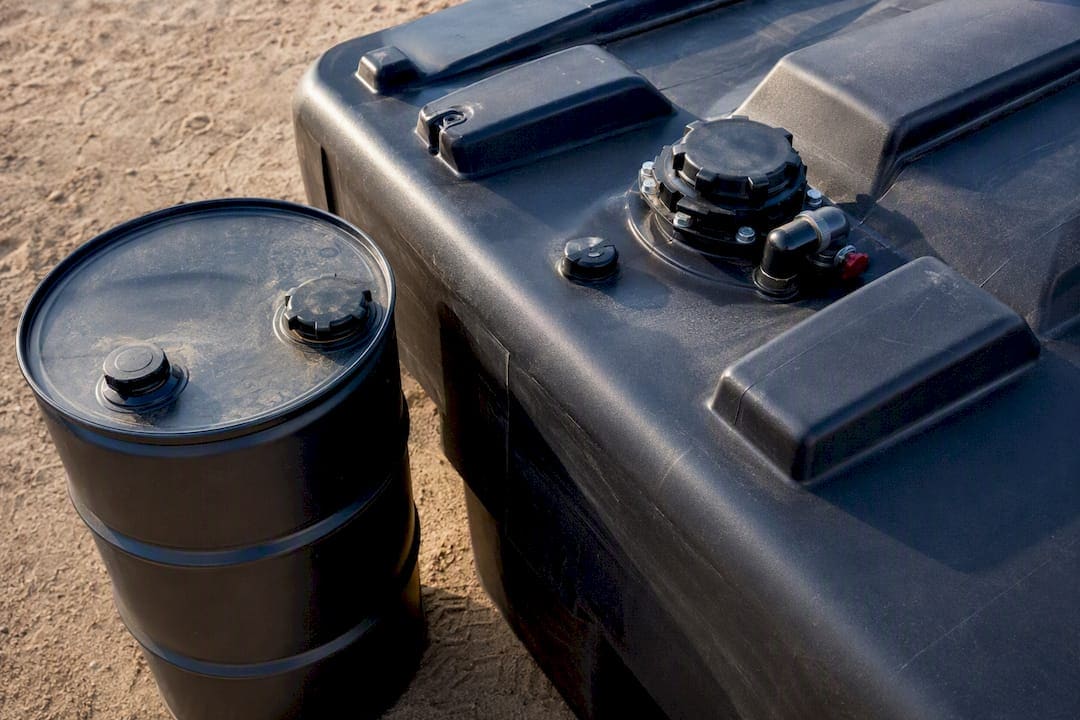
Volume is the single biggest lever you control. Moving from a 55-gallon drum to a 275-gallon tote often drops your per-gallon price by a dollar or more, and stepping up to a full tanker order pushes it lower still. Suppliers price this way because filling one large tank costs them roughly the same labor and fuel as filling a small one, so the fixed costs get spread across more gallons.
Distance and site access work against you in the opposite direction. A remote job site, a mine, or a rural agricultural operation costs more to service than a location on a supplier’s regular route, and that premium shows up as a higher delivery fee rather than a higher fluid price. Order frequency compounds this: calling for an emergency top-off outside your normal schedule almost always costs more than a planned recurring delivery.
A few operational factors worth tracking:
- Order size tiers — totes beat drums, tankers beat totes, on a per-gallon basis
- Route density — sites near a supplier’s existing delivery loop pay less than outliers
- Storage capacity — bigger on-site tanks mean fewer deliveries and lower per-trip cost
- Contract structure — fixed-term pricing protects against short-term spikes tied to urea markets
Because DEF pricing tracks urea commodity markets, bulk contract rates can move with global supply shocks even when pump prices hold steady for months at a time. That gap between volatile bulk contracts and sticky retail pricing is exactly why procurement teams should negotiate terms before signing, not after a price jump.
Pro Tip: Ask any bulk supplier whether their contract includes urea-indexed pricing language or a fixed-term cap. A locked rate for 90 to 180 days can save real money if commodity prices spike mid-contract.
Should You Install a Tank or Stick With Totes?
The break-even math depends entirely on how much DEF your fleet actually burns, and getting this wrong in either direction wastes money. Buy too small and you’re stuck paying higher-priced jug or drum prices indefinitely. Buy too large and DEF sitting past its shelf life begins to degrade before you use it.
Here’s a simple way to think about sizing:
- Under 300 gallons a month: Stick with totes. The delivered price of $1.50 to $2.50 per gallon beats retail without tying up capital in fixed storage.
- 300 to 1,000 gallons a month: A permanent tank starts to pay for itself. A 2,000-gallon above-ground tank with pump and meter typically installs for $3,000 to $6,000, often paying back within a year for a fleet that size.
- Over 1,000 gallons a month: Bulk tanker delivery direct to a large tank captures the lowest per-gallon rate available, and the fixed infrastructure cost becomes a rounding error against annual fuel spend.
| Storage option | Typical delivered price | Best fit |
|---|---|---|
| Drum (55 gal) | $1.50–$2.50/gal | Very low-volume or backup supply |
| Tote (275–330 gal) | $1.50–$2.50/gal | Mid-size fleets, 300+ gal/month |
| Bulk tank (2,000+ gal) | $0.80–$1.80/gal | High-volume fleets, daily consumption |
DEF has a shelf life that shortens with heat exposure, so turnover discipline matters as much as the storage decision itself. Matching your delivery size to actual turnover is the most reliable way to keep effective cost down, since a half-empty tote that sits for a year erases any bulk-pricing advantage. Keep tanks out of direct sun, cycle stock on a first-in-first-out basis, and confirm your supplier tests for ISO 22241 compliance before delivery.
What Does DEF Actually Cost a Fleet Over a Year?
Numbers change fast once you scale from one truck to a full fleet. These examples use the 2 to 3% DEF-to-diesel consumption rule that applies across most modern diesel engines.
- Small fleet (5 pickups): Each truck burns about 830 gallons of diesel a year, translating to 17 to 25 gallons of DEF per vehicle. Buying jugs at $6/gal averages out to roughly $600 to $750 a year across the fleet. Switching to a shared tote at $2/gal cuts that to around $200 to $250.
- Medium fleet (15 vocational trucks): Higher diesel burn pushes DEF use into the hundreds of gallons monthly. A recurring tote delivery program at $2/gal, including the delivery fee, runs a predictable few thousand dollars a year versus a much higher retail-equivalent cost.
- Large fleet (40 Class 8 tractors): Bulk tanker delivery at approximately one dollar twenty cents per gallon, amortizing a few thousand dollars for tank installation, delivers significant annual savings compared to any retail channel.
A $0.50 per gallon swing in delivered price, or an unexpected $200 flat delivery fee on a small order, can shift a mid-size fleet’s annual DEF budget by several hundred dollars, which is exactly the kind of variance a locked bulk contract is built to prevent.
How Anytimefuelpros Lowers Your Delivered DEF Cost
Anytimefuelpros gives fleets a direct path to bulk and tote pricing instead of paying retail markup on every gallon. Rather than sending a driver to a truck stop or stocking jugs at $6 to $8 per gallon, you set up scheduled bulk or tote deliveries sized to your actual consumption, which pulls your effective cost down toward the $1 to $2 per gallon range described above.
That pricing advantage only works if delivery shows up on time and in the right volume, which is where the operational side matters as much as the rate card. Anytimefuelpros builds delivery schedules around your real usage instead of a generic calendar, cuts the guesswork out of minimum order quantities, and keeps invoicing transparent so you can track cost per gallon against your budget instead of reconciling surprise fees after the fact. When a site runs low outside the normal cycle, whether it’s a data center generator, a mining operation, or a construction fleet mid-project, emergency response service means a stalled SCR system doesn’t turn into a stalled job.
If your fleet is still buying DEF by the jug or making unplanned runs to a truck stop, a bulk DEF delivery program is worth pricing out. Request a delivered-price quote or a site assessment from Anytimefuelpros and see what a scheduled bulk or tote program would actually cost against your current spend.
Key Takeaways
DEF delivery cost drops from roughly $5 to $8 per gallon at retail to as low as $0.80 to $1.80 per gallon through scheduled bulk delivery, making channel choice the single biggest lever in your annual budget.
| Point | Details |
|---|---|
| Channel drives price | Retail jugs cost $5–$8/gal while bulk tanker delivery can fall to $0.80–$1.80/gal for high-volume fleets. |
| Delivery fees add up | Handling and distance fees typically add $0.25–$0.75/gal and hit small or rural orders hardest. |
| Size storage to turnover | Match tote or tank capacity to monthly consumption to avoid degraded fluid and wasted spend. |
| Tanks pay back fast | A 2,000-gallon tank installed for $3,000–$6,000 often breaks even within a year for high-use fleets. |
| Anytimefuelpros option | Scheduled bulk and tote delivery from Anytimefuelpros targets lower per-gallon pricing plus emergency response when sites run low. |
Sources
- How Much Does DEF Cost? Price Per Gallon by Channel (2026) – NüDef
- DEF pump prices so far hold steady despite Middle East turmoil – FreightWaves
- Diesel Urea Fluid Cost Guide 2026 – Cost Insider
Recent Comments