
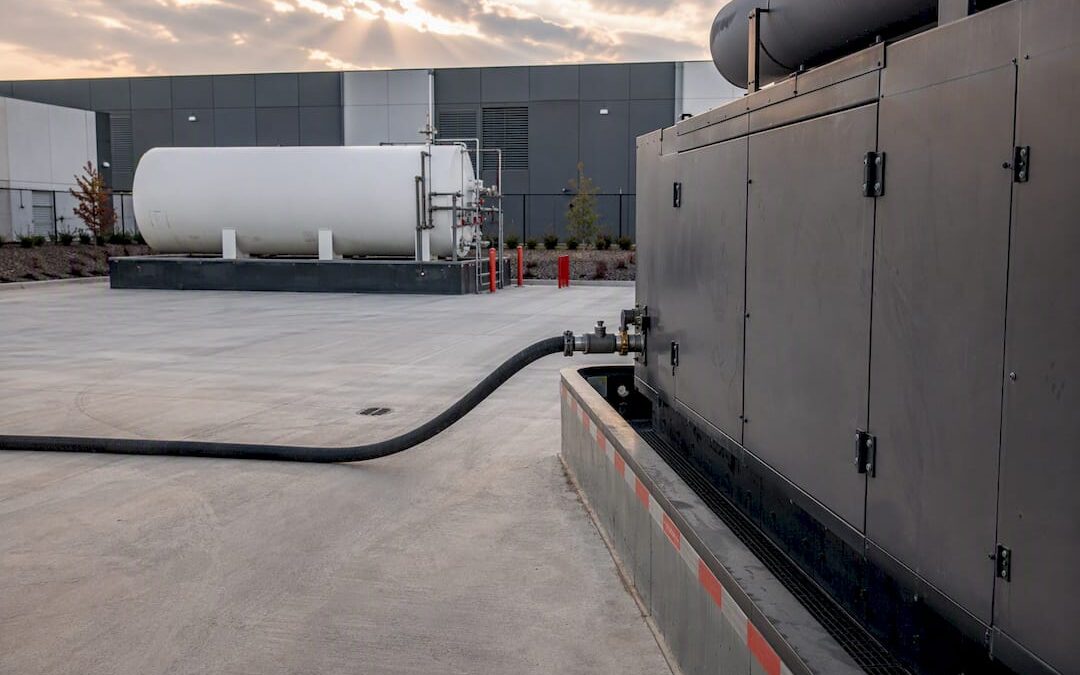
Use ASTM D975 diesel with scheduled top-offs for monthly generator exercises and a contracted emergency delivery partner for load-bank tests and outages. That combination is what satisfies NFPA 110’s testing and documentation requirements without leaving your site exposed during a real event.
Here’s the operational logic behind it:
- Fuel spec: ASTM D975 diesel (clear for on-road transfer, dyed for stationary/off-road tanks), with DEF stocked separately if your generators require it
- Delivery cadence: Small scheduled top-offs after monthly exercises; larger bulk fills scheduled in advance of annual load-bank tests
- Vendor relationship: A commercial partner like Anytime Fuel Pros that documents every delivery and carries a written emergency response commitment
Statistic: NFPA 110 requires monthly operational tests running for a sufficient duration at a moderate fraction of the generator’s nameplate capacity, plus annual load testing, with written records covering every test, fuel delivery, and maintenance event.
Key Takeaways
Meeting NFPA 110 generator-testing requirements depends on ASTM D975 fuel quality, disciplined delivery scheduling, and a contracted emergency partner with documented response commitments.
| Point | Details |
|---|---|
| Match fuel to test type | Use scheduled top-offs for monthly exercises and pre-booked bulk fills for annual load-bank tests. |
| Test on a dual cadence | Run annual comprehensive ASTM testing alongside quarterly ATP microbial checks to catch contamination early. |
| Sample correctly | Pull samples 3 to 6 inches above tank bottom and log chain-of-custody for defensible lab results. |
| Prepare the site for delivery | Pre-authorize gate access, stage containment, and assign one contact to cut truck-to-tank transfer time. |
| Lock in emergency terms before you need them | Negotiate guaranteed response windows and priority access with a partner like Anytime Fuel Pros ahead of outage season. |
Table of Contents
- How Much Diesel Fuel Do Data Center Tests Actually Use?
- What Fuel Quality Tests Does NFPA 110 Compliance Require?
- Why Delivery Logistics Determine Your Testing Schedule
- How Should Facilities Plan for Emergency Fuel Delivery?
- What Belongs in Your Fuel Delivery Procurement Checklist?
- Anytime Fuel Pros: Built for NFPA 110 Testing Cycles
- Sources
How Much Diesel Fuel Do Data Center Tests Actually Use?
A 30 minute monthly exercise at 30% load burns modest fuel relative to your tank capacity, but the annual load-bank test changes the math entirely. Running a generator at or near full nameplate rating for several hours can consume several times what a monthly cycle uses, and that spike is exactly where undersized reorder planning gets exposed.
Here’s how to size your fuel planning around the actual test calendar:
- Calculate monthly exercise burn using your generator’s rated gallons-per-hour at 30% load, multiplied by the 30 minute minimum runtime NFPA 110 specifies.
- Calculate annual load-test burn separately, since a multi-hour test at higher load draws down tank levels far faster than routine exercises.
- Set a reorder trigger at roughly 75% of usable tank capacity rather than waiting until levels run low. This gives your delivery partner lead time and keeps you clear of the “empty tank during a storm” scenario.
- Schedule the top-off within 24 to 48 hours of any monthly test so the tank returns to full reserve before the next unplanned demand.
- Book annual load-bank deliveries weeks ahead, not days. Bulk fills for full-load testing compete with other commercial demand on the same delivery calendar, and terminal supply can tighten seasonally.
A fuel consumption calculator built for generator runtime takes the guesswork out of steps one and two, which matters most for multi-generator sites where burn rates vary by unit age and load profile.
Pro Tip: Stagger your annual load-bank tests across generators instead of running them all in the same week. It smooths your fuel-delivery demand and keeps a single truck visit from becoming a bottleneck for your whole fleet.
What Fuel Quality Tests Does NFPA 110 Compliance Require?
Passing a generator test on paper means nothing if the fuel behind it has degraded. ASTM D975 is the specification your stored diesel needs to meet, and the mission-critical slate that facility labs recommend goes beyond a basic check.
The parameters that matter most for stationary tanks:
- Water and sediment content, since standing water is the single biggest driver of microbial growth
- Cetane index and stability, which determine whether the fuel will actually ignite cleanly under load
- Distillation range (D86) and flash point (D93), confirming the fuel hasn’t degraded chemically in storage
- Corrosivity (D130) and oxidation stability (D2274), flagging fuel headed toward gum and varnish formation
Sampling technique matters as much as the test panel. Pull samples with a Bacon Bomb sampler from 3 to 6 inches above the tank bottom, since that’s where water and sediment settle first and where contamination shows up earliest. Log the sample depth, time, and technician name. That chain-of-custody record is what makes your lab results defensible if an authority having jurisdiction ever questions your compliance file.
Statistic: Practitioner guidance recommends combining annual comprehensive ASTM testing with quarterly ATP microbial monitoring, since annual testing alone misses the early stages of microbial growth between test cycles.
Microbial contamination is the quiet failure mode most facilities underestimate. It builds slowly, doesn’t show up on a visual check, and can knock out a generator exactly when you need it most. ATP testing gives you fast, on-site results every quarter instead of waiting on lab culture turnaround.
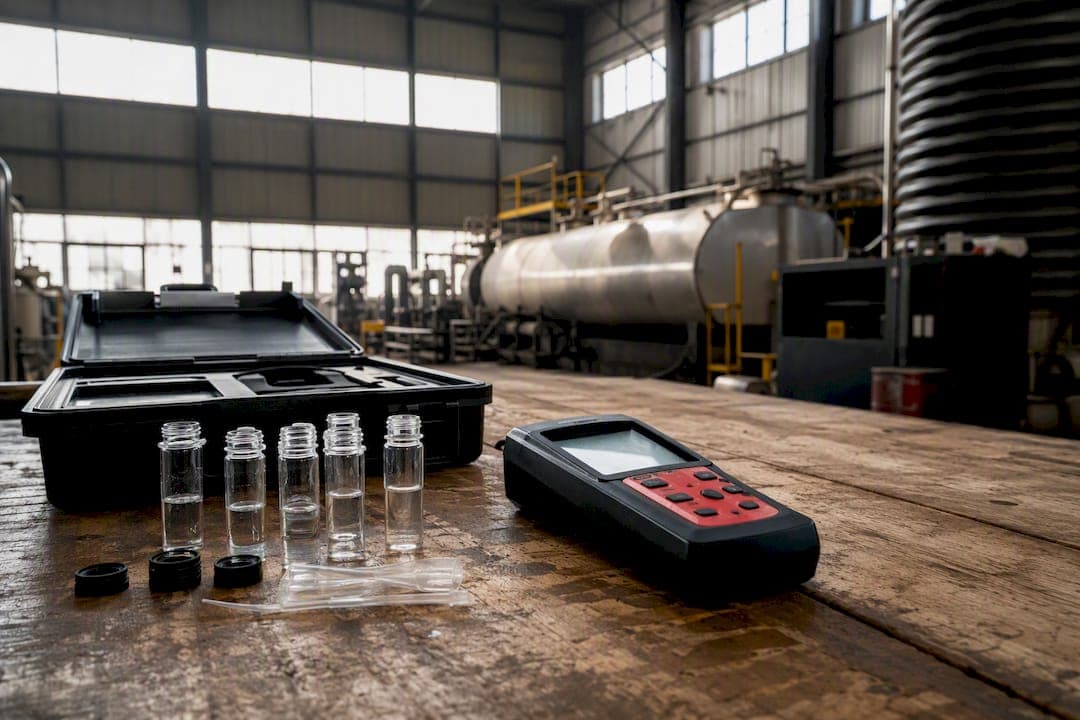
Pro Tip: If ATP results trend upward two quarters in a row, don’t wait for a failed test to act. Schedule fuel polishing and biocide treatment together, since polishing removes existing contamination while biocide keeps it from regrowing.
Why Delivery Logistics Determine Your Testing Schedule
A standard delivery truck holds around 4,000 gallons and flows at 60 to 100 gallons per minute. That sounds fast until you’re refueling four or five generators back to back after a load-bank test, and the truck-to-tank transfer time stacks up fast.
Site prep determines whether that flow rate works for you or against you:
- Pre-authorize gate access so the driver isn’t waiting on a phone call to get onto the property
- Designate a staging area with containment measures already in place before the truck arrives
- Confirm hose-run distance from the access road to each fill point, since long runs slow transfer and raise spill risk
- Assign one site contact who can meet the driver, confirm the delivery ticket, and sign off on volume
For sites running multiple generators, staging fuel into a temporary bulk tank or establishing a dedicated high-flow offload point cuts down the number of separate truck-to-tank transfers you need, which shortens total delivery time and reduces spill exposure compared to repeated single-tank fills.
Build a simple operational checklist before test day: pre-staged delivery documentation, the on-site contact’s direct line, and any permits required for off-hour access. A guide to on-site diesel delivery setup walks through the access and containment details most facilities miss on their first load-bank cycle.
Pro Tip: Walk the delivery route with your fuel vendor once, in person, before your first annual load test. A ten-minute site walk catches gate codes, low clearances, and hose-run obstacles that a phone call never will.
How Should Facilities Plan for Emergency Fuel Delivery?
Regional outages rarely fail because fuel doesn’t exist. They fail because terminals, roads, and surge demand choke the supply chain right when every facility in the region needs a truck at once. A contract signed after the storm starts is already too late.
Build your emergency plan around these SLA elements:
- Request a guaranteed response window in writing, not a best-effort estimate
- Negotiate standby availability fees versus pay-per-delivery pricing, and understand which model actually gets you priority when trucks are scarce
- Set up pre-authorized site access in advance, so an emergency delivery isn’t held up at the gate during the exact hours access matters most
Facilities that treat emergency delivery as a backup to a well-maintained storage and monitoring program fare noticeably better than those relying on ad-hoc calls during a crisis. That means:
- Coordinating with local utilities and the AHJ ahead of hurricane or wildfire season, not during it
- Confirming your vendor has standing relationships with terminal operators, since that relationship is often what determines who gets fuel first
- Keeping an emergency fuel plan template on file so your team isn’t drafting contract language mid-outage
What Belongs in Your Fuel Delivery Procurement Checklist?
Whether you’re writing an RFP or renewing a vendor contract, these are the line items that separate a real service agreement from a handshake deal:
- Fuel grade and specification — ASTM D975 diesel, clear or dyed, plus DEF if applicable
- Delivery type and volume — scheduled top-offs versus bulk fills for load-bank tests
- Emergency SLA — guaranteed response window, standby fee structure, and priority access terms
- Sampling support — vendor coordination for annual ASTM and quarterly ATP testing
- Compliance documentation — chain-of-custody records, EPA/DOT disposal responsibilities for contaminated fuel, and retention period for test and delivery records
- Invoicing and reporting — delivery cadence, proof-of-delivery (POD) format, and monthly usage summaries tied back to your NFPA 110 test log
Tanks should also be sized so stored fuel turns over within its usable storage life rather than sitting stagnant for years, since degraded fuel undermines every test cycle that follows it.
Anytime Fuel Pros: Built for NFPA 110 Testing Cycles
Anytime Fuel Pros runs exactly the service model this checklist calls for: scheduled top-offs after monthly exercises, bulk fills timed to your annual load-bank tests, DEF delivery, and 24/7 emergency response backed by documented delivery receipts for every drop.
Coordinating fuel polishing after a failed microbial check, requesting sampling support ahead of your annual ASTM slate, or setting up a standing emergency SLA before hurricane season all fall inside what a dedicated fuel partner should handle without you chasing separate vendors for each piece. Anytime Fuel Pros covers primary markets in San Antonio, Austin, Dallas-Fort Worth, and Salt Lake City directly, and reaches the rest of the continental United States through a nationwide partner network, so multi-site data center operators get one point of contact instead of a different vendor at every location.
When you’re ready to lock in a testing schedule, request diesel fuel delivery with a guaranteed response window, digital proof-of-delivery, and invoicing that maps directly to your NFPA 110 test log. You can also review bulk fuel delivery options for annual load-bank tests or start with a quote through Anytime Fuel Pros’s order page.
Recent Comments