
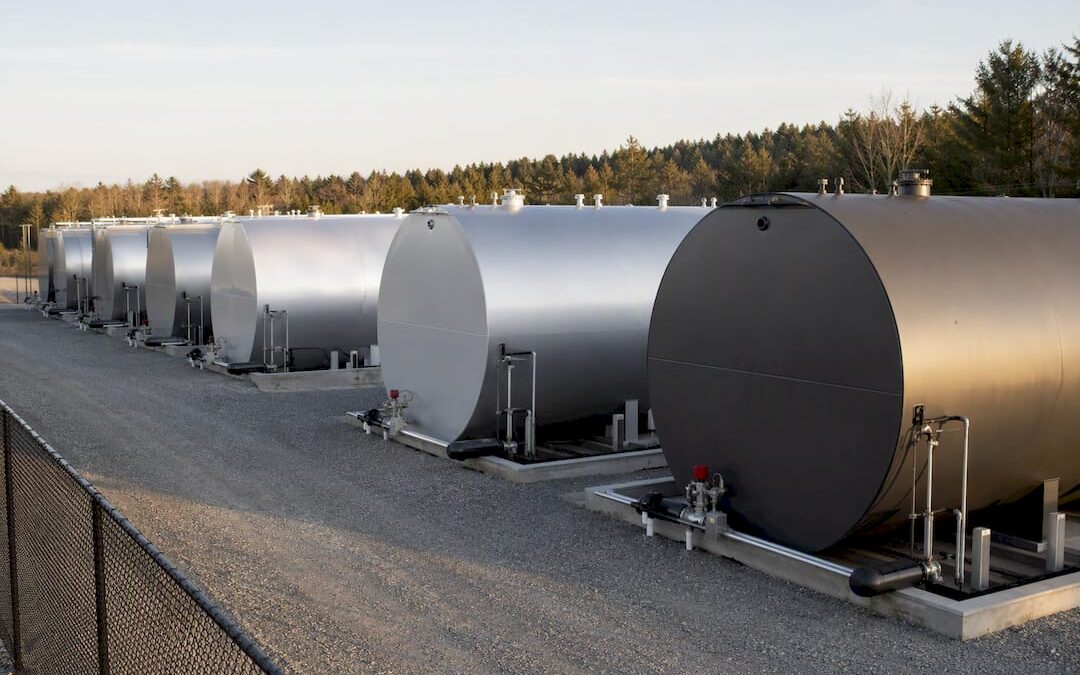
A hurricane fuel delivery plan works only if it names inventory thresholds, locks in supplier commitments before storm season, and spells out exactly who activates the response. This week, top off critical tanks, confirm your supplier’s emergency contact and allocation language in writing, and walk through a one-page activation SOP with your team. Anytime Fuel Pros can execute the delivery side of that plan once it’s built.
TL;DR:
- Ensure inventory thresholds are clearly documented, and supplier commitments are secured in writing before storm season begins.
- Conduct pre-season tank inspections and fully top off critical fuel storage as soon as a tropical outlook is issued.
- Calculate fuel needs accurately using burn rates, fleet requirements, and a 20% buffer to prevent running out during outages.
- Require suppliers to provide priority delivery, emergency response hours, and verified proof of delivery in contractual agreements before storms.
- Regularly train and exercise the fuel response plan, updating it based on lessons learned and real storm activations to ensure readiness.
Table of Contents
- What does a hurricane fuel delivery plan need to cover?
- Prepare site and inventory: top off, inspect, and secure fuel storage
- How much fuel do you actually need during a storm?
- What should a supplier contract require before hurricane season?
- How do terminal closures and road damage affect delivery?
- Activation, dispatch, and safe refueling procedures
- Train, exercise, and keep the plan current
- How Anytime Fuel Pros fits into your hurricane fuel delivery plan
- Request a readiness review from Anytime Fuel Pros
- Sources
What does a hurricane fuel delivery plan need to cover?
NOAA’s 2026 outlook calls for a below-normal Atlantic season, with a forecasted range of named storms and major hurricanes typical for below-normal seasons. That sounds reassuring until you remember it takes exactly one storm making landfall near your site to shut down generators, strand fleets, and cost you a week of revenue. A below-normal forecast is not a reason to skip planning. It’s a reason to plan smarter, because fewer storms often mean less public attention and slower supplier response when one does hit.
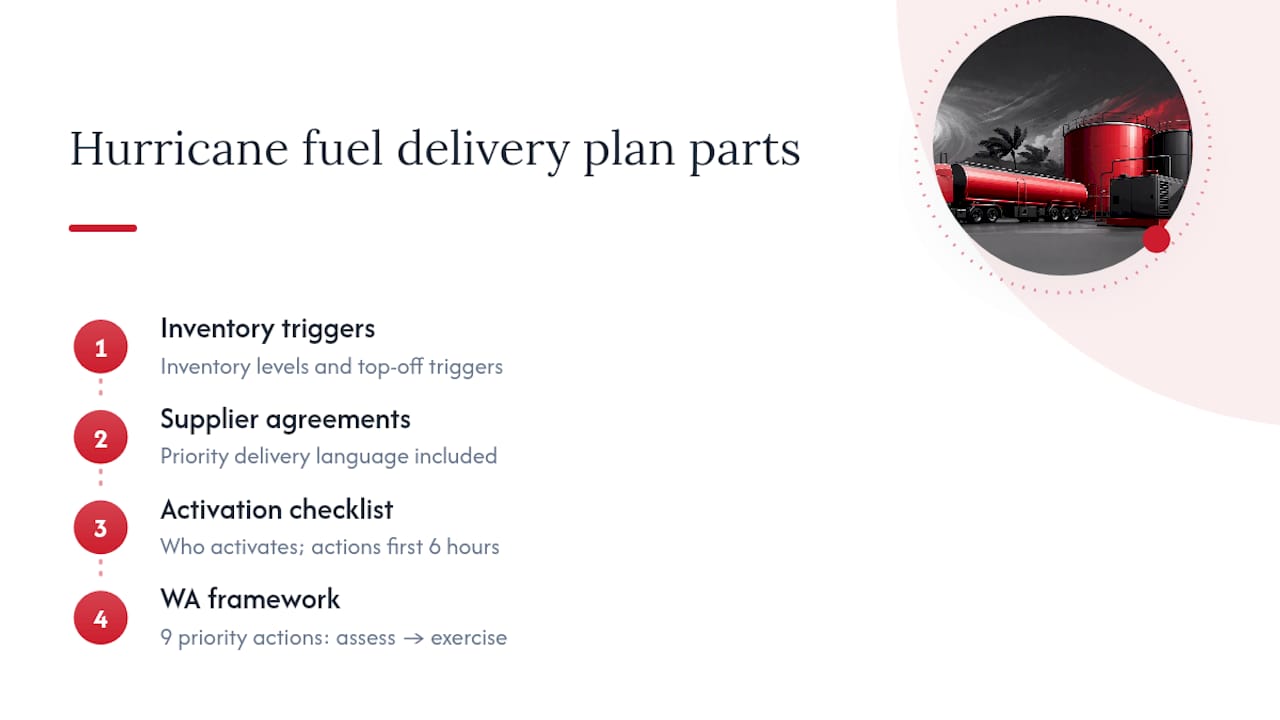
A working plan has three moving parts. First, documented inventory levels and top-off triggers tied to storm advisories, not vague intentions to “fuel up when it looks bad.” Second, supplier agreements with priority delivery language, not a phone number you hope answers. Third, an activation checklist that tells your team who pulls the trigger and what happens in the first six hours. Washington State’s fuel-planning framework breaks this into nine priority actions, from inventory assessment to exercising the plan, and it translates cleanly to a single facility even though it was built for local governments.
Prepare site and inventory: top off, inspect, and secure fuel storage
Waiting until a hurricane watch is issued to top off tanks is how facilities end up on a three-day waitlist behind everyone else who waited too. Fuel your critical tanks to capacity as soon as a tropical outlook names your region, not when the storm has a track and a name. Coastal Texas and Gulf sites should treat June 1 as the trigger for a full readiness pass, not just a calendar note.
Before hurricane season starts, walk your storage with this checklist:
- Check tanks, fittings, and pumps for leaks, corrosion, or worn seals.
- Confirm secondary containment is intact and drains are clear.
- Test dispenser seals and generator interface connections under load.
- Verify tie-downs and anchoring can handle high wind, and that low-lying tanks are protected against flood intrusion.
- Cross-check your tank setup against EPA underground storage tank requirements so you’re not scrambling to fix a compliance gap mid storm.
Pro Tip: Schedule your annual tank inspection for April or May, not hurricane season itself. Fixing a failed containment liner in July when contractors are booked solid is a much harder problem than fixing it in spring.
How much fuel do you actually need during a storm?
Most facilities guess at fuel needs and then either overbuy tank capacity they rarely use or underbuy and run dry on day three of an outage. The fix is a simple burn-rate calculation you run once and update annually.
- Calculate generator burn rate. A 500 kW diesel generator running at 75% load typically burns 30 to 40 gallons per hour. Multiply by expected runtime hours per day to get daily consumption.
- Add fleet and equipment fuel needs. Total your daily fleet fuel usage from dispatch logs, then multiply by the number of days you expect delivery disruption, usually 3 to 5 days for a moderate storm.
- Build in a buffer. Add 20% to your combined total to cover longer-than-expected outages or delayed resupply.
- Rank mission-essential functions (MEFs). Not every load matters equally. A data center’s cooling generators outrank a break-room refrigerator every time, and your allocation plan should say so in writing before the storm, not during it.
- Log everything. Track deliveries, meter readings, and generator run hours during the event. Those records make procurement negotiations and insurance claims faster after the storm.
A simple prioritization matrix, ranking loads as critical, essential, and deferrable, keeps decisions consistent when fuel runs tight and someone has to decide who gets the next delivery. Anytime Fuel Pros’s emergency fuel plan guide walks through this exact math with worked examples for multi-site operations.
What should a supplier contract require before hurricane season?
A handshake agreement with your regular fuel vendor is not a plan. It’s a hope. Before June 1, get these terms in writing with any supplier you expect to call during a storm:
- Priority delivery clause that puts your account ahead of general queue during declared emergencies.
- Emergency response hours specifying after-hours and weekend dispatch availability, not just business-hours service.
- Allocation and terminal access terms that state which terminal sources your fuel and what happens if that terminal closes.
- Proof-of-delivery and invoicing requirements, including GPS-timestamped delivery confirmation you can hand to insurers or auditors.
- Driver credentials, insurance, and permit confirmations on file before the storm, not requested during it.
Ask suppliers directly where their fuel is sourced and whether they have staging capacity inland. A supplier running from a single coastal terminal carries the same flood and closure risk you’re trying to plan around. Build in a fallback: a second supplier relationship, a mutual-aid agreement with a nearby facility, or a standing purchase order that activates automatically once a watch is issued.
How do terminal closures and road damage affect delivery?
Fuel doesn’t move in a straight line from refinery to your tank. It moves through pipelines, ports, and terminals, and a single flooded terminal or washed-out access road can add days to a delivery that normally takes hours. That’s the failure point most fuel plans miss. They plan around volume and forget that access, not supply, is usually what breaks first.
Build these checks into your plan:
- Confirm which terminal your primary supplier sources from and identify at least one alternate terminal in a different flood zone.
- Ask your supplier about inland pre-staging before storm landfall, since trucks parked ahead of flooding reach you faster than trucks trying to leave a coastal yard afterward.
- Map alternate delivery routes in advance using your dispatch or GIS tools, and update them each season as road infrastructure changes.
- Establish a direct contact with local emergency management for road-status and utility outage updates during active events.
Utility storm-prep programs pre-position crews and materials well ahead of landfall for exactly this reason. Fuel logistics should follow the same principle: position before, not after.
Activation, dispatch, and safe refueling procedures
Your plan needs a clear chain of command, because confusion during a Category 3 warning costs hours you don’t have. Assign one person the authority to activate the plan, name their backup, and define the trigger, typically a hurricane watch or warning for your county.
- Set the activation trigger. Tie it to NOAA watch or warning issuance for your specific region, not a subjective “it looks bad” call.
- Notify suppliers immediately upon activation. Confirm delivery windows and quantities against your pre-negotiated contract terms.
- Shift to top-off cadence before landfall, then move to continuous or scheduled replenishment once conditions allow trucks to move safely.
- Verify every delivery with proof-of-delivery documentation, including timestamps and meter readings, before the driver leaves.
- Enforce basic refueling safety: never refuel running generators or equipment, keep exhaust systems clear to prevent carbon monoxide buildup, and follow EPA UST storage guidance for any onsite tank handling.
Pro Tip: Print your activation SOP and post it near the generator room. When the internet and cell service are down, a laminated page beats a PDF nobody can open.
Train, exercise, and keep the plan current
A plan that lives in a shared drive and never gets tested will fail exactly when you need it most. Run at least one tabletop exercise annually, ideally in May before the season starts, covering scenarios like a terminal outage, a supplier no-show, a road closure cutting off your primary route, and a regional fuel allocation shortage.
- Include facilities staff, procurement, site security, and your fuel supplier’s account representative in every exercise.
- Document after-action items and assign owners with deadlines, not just a list of things that “should improve.”
- Update the plan document after each exercise and after every real activation, and maintain version control so everyone works from the current copy.
- Keep a current distribution list so the plan reaches new hires and rotating shift supervisors, not just the person who wrote it.
Fleet-focused teams updating broader readiness policies can also reference this fleet policy update guide for structuring the training side of the exercise calendar.
How Anytime Fuel Pros fits into your hurricane fuel delivery plan
Anytimefuelpros maps directly onto the plan you just built. Scheduled top-offs handle your pre-season inventory triggers. Emergency generator refueling and on-demand diesel delivery cover activation-phase dispatch. DEF delivery keeps fleet assets compliant and running, and our nationwide partner network gives multi-site operators one point of contact instead of five regional vendors to manage during a storm.
When you write your contract, request GPS-timestamped proof-of-delivery on every load, a named emergency contact with after-hours reach, and a priority delivery clause tied to declared weather events. Ask what SLA response window applies to your region. Our bulk fuel delivery capability supports the volume side of that commitment for larger sites.
Request a readiness review from Anytime Fuel Pros
Building the plan is the hard part. Executing it during an actual storm is where most facilities discover their gaps, usually at the worst possible moment. Anytimefuelpros exists to close that gap: instead of a facility manager cold-calling three fuel vendors during a hurricane warning, you get one contract with priority delivery language, documented SLAs, and a dispatch team that already knows your site.
Before you reach out for a readiness review, gather your tank capacities, average daily fuel consumption for generators and fleet, site access details for delivery trucks, and your preferred top-off windows. Coastal Texas and Gulf Coast sites should expect dispatch teams to prioritize confirmed contract customers first once a hurricane watch is issued, which is exactly why locking in terms now matters more than doing it during storm week. Ask about our emergency fuel plan resources for procurement-ready contract language, review bulk fuel delivery and storage options for job sites, or go straight to Order Now to start a scheduled top-off before this season’s first watch is issued.
Sources
- NOAA predicts below-normal 2026 Atlantic hurricane season
- Local jurisdiction fuel planning (Washington State Commerce / EREMO)
- Underground storage tanks (USTs) | US EPA
Recent Comments