
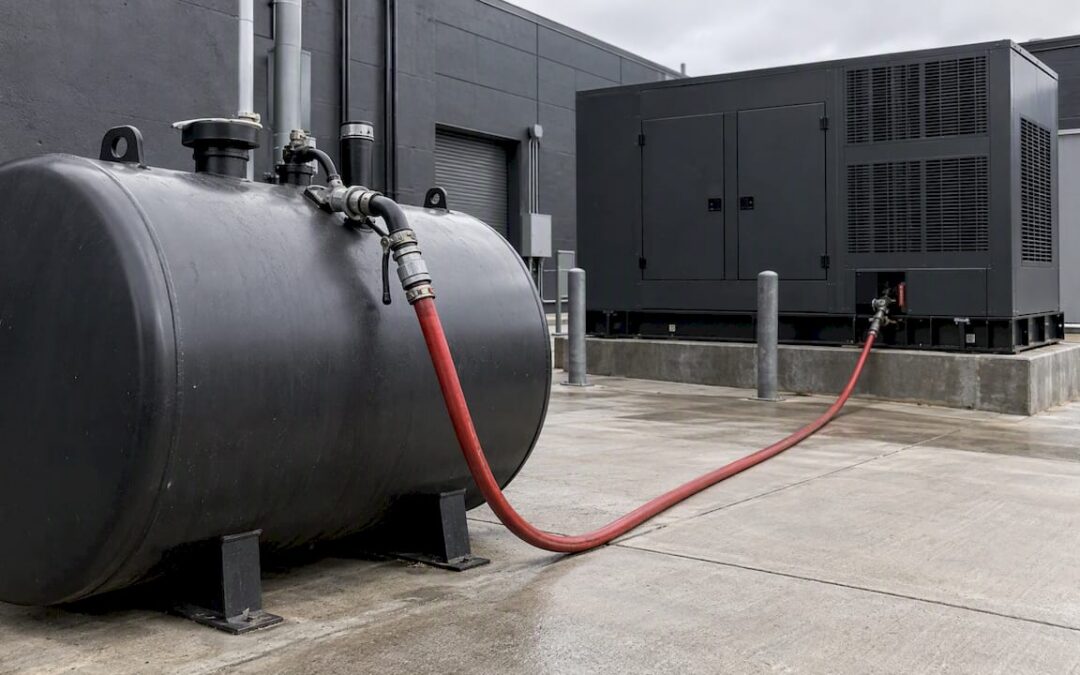
Follow a six-point operational checklist before any backup-generator refueling: coordinate the delivery, verify tanks and overfill protection, secure the site, run a controlled transfer, confirm fuel quality, and document everything. We anchor this checklist to OSHA, EPA SPCC/UST rules, and NFPA 110, and a fuel partner can help operationalize each step so your facility avoids delays, spills, or compliance gaps.
TL;DR:
- OSHA requires designated staff, engines off during typical transfers, and an accessible shutoff; documented dry break systems qualify for an exception outdoors with ventilation.
- Emergency generator UST spill buckets and overfill equipment need testing roughly every three years, alongside monthly or annual release detection monitoring.
- Test fuel at the first fill to establish a baseline, then sample bottom and inline ports at deliveries and track water and microbial results.
- For prolonged outages, metered pump trucks may fall short of generator demand; plan tanker rotations around hourly fuel needs, site access, and driver hour limits.
- After each delivery, recalculate runtime using only capacity available when tanks, pumps, or other components are under maintenance, then reconcile receipts and delivered gallons.
Table of Contents
- Pre-delivery coordination checklist: what to confirm before the truck arrives
- Step-by-step safety and fuel transfer procedures during delivery
- Tank and containment inspection checklist before and after delivery
- Fuel quality, sampling, and maintenance checklist
- Delivery logistics and access planning checklist
- Post-delivery actions and documentation checklist
- Spill response and emergency escalation checklist
- How Anytime Fuel Pros applies this checklist in practice
- Get your data center’s fuel readiness reviewed
- FAQ
- Sources
Pre-delivery coordination checklist: what to confirm before the truck arrives
A delivery that fails before the truck even reaches the gate wastes more runtime than most facilities account for. Confirming logistics ahead of arrival eliminates the most common causes of delay: access mismatches, wrong product grade, and incompatible equipment.
Before scheduling confirmation, your team should walk through:
- Delivery window, site contact, gate or badge access authority, and the exact staging location for the truck.
- Product type (clear diesel for on-road equipment versus dyed diesel for stationary generators), DEF needs, and required paperwork such as delivery receipts and manifests.
- Tank ullage and compatibility with your overfill-prevention devices, plus whether the delivery method, metered pump or direct transport offload, matches what your site can accept.
- Vendor equipment and qualifications: hose length, bonding clamps, automatic shutoff compatibility, proof of insurance, and a live emergency contact.
- Assigned site roles for the delivery window: a fueling lead, a safety observer, and a documentation owner.
Getting these five items locked down before dispatch keeps the delivery window tight and prevents a truck from idling at your gate while someone tracks down the right badge or the right paperwork. Our generator fueling schedules guide walks through how to set a recurring cadence so this coordination becomes routine rather than reactive.
Step-by-step safety and fuel transfer procedures during delivery
Once the truck is on-site, the sequence of actions matters as much as the actions themselves. OSHA’s fuel-handling standard requires that only designated persons perform fueling, that engines stay off during transfer, and that smoking or open flames are prohibited in the fueling zone. Powered dispensing equipment also needs an accessible emergency shutoff within reach of the operator.
A controlled transfer follows this order:
- Establish the fueling zone and post no-smoking and ignition controls before any hose is uncoupled.
- Bond and ground the transfer vessel to the receiving tank before opening any cap or valve, and confirm visual continuity on the bonding clamp.
- Shut down engines for a typical transfer; a documented exception exists for certified dry-break diesel quick-connect systems, which OSHA has recognized as a de minimis condition in well-ventilated outdoor settings.
- Keep the driver and a facility observer present for the full transfer, watching for leaks, unusual odors, or dispenser alarms.
- Monitor automatic shutoff indicators and stay ready to stop the pump manually, then use drip pans when disconnecting hoses and cap every open end immediately.
Pro Tip: Assign one person to watch the tank gauge and nothing else during transfer. Split attention is the most common reason overfill alarms get missed.
Tank and containment inspection checklist before and after delivery
Tank integrity and containment capacity determine whether a delivery goes smoothly or turns into a cleanup. These checks apply whether you run aboveground storage tanks, underground tanks, or day tanks feeding the generator directly.
Before and after every delivery, confirm:
- Tanks show no corrosion, dents, or visible leaks, and labeling matches the product inside.
- Secondary containment, dikes or berms, has adequate capacity, no standing water, and drainage valves are secured shut.
- Overfill prevention devices and spill buckets are present and on an active testing cadence; federal UST guidance for emergency generator systems calls for spill bucket and overfill equipment testing roughly every three years alongside monthly or annual release-detection monitoring.
- The last professional tank inspection date is on file, with any repairs logged and open work orders tracked for anything out of tolerance.
- Day tank pumps, level alarms, and automatic refill logic are functioning and tested, not just installed.
EPA’s SPCC guidance builds these checks into a documented inspection cycle for facilities storing oil above threshold volumes, which covers most data center bulk tanks and day tanks. Our SPCC checklist for facility managers breaks down which thresholds trigger a certified plan.
Fuel quality, sampling, and maintenance checklist
Fuel sitting in a tank for months degrades quietly, and the first sign of trouble is often a generator that won’t hold load. NFPA 110 guidance recommends starting fuel quality testing from the first fill so you have a baseline to measure against, rather than waiting until a problem shows up.
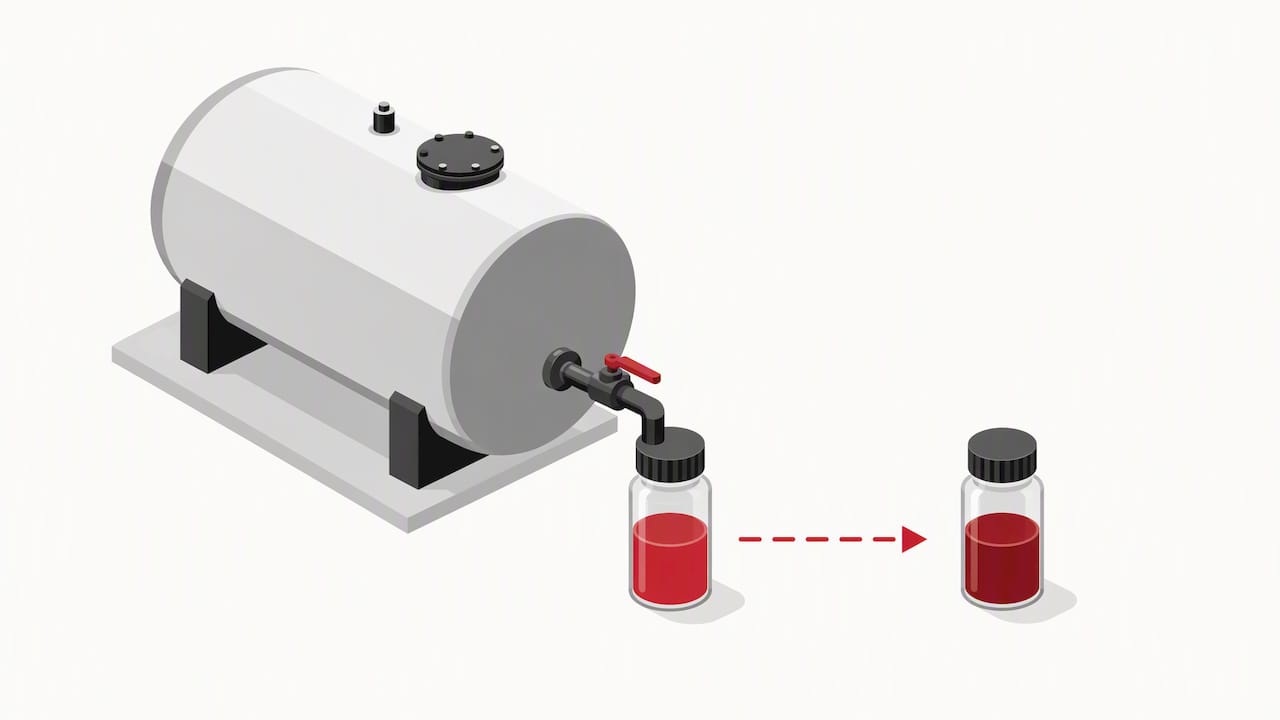
Fuel quality tends to degrade from water intrusion and microbial growth long before the fuel itself oxidizes, which is why NFPA 110 ties fuel surveillance directly to monthly generator exercising.
Build these habits into your maintenance rhythm:
- Sample from bottom and in-line ports at every delivery and send samples out for microbial and water content testing at set intervals.
- Verify fuel polishing or filtration equipment status, last service date, and any additive or biocide treatment records.
- Log lab results over time so the decision to polish or replace fuel comes from trend data, not guesswork.
- Minimize tank ullage and control storage temperature where the site design allows, since both affect how fast contamination takes hold.
Delivery logistics and access planning checklist
Capacity on paper means little if the truck can’t physically deliver fuel fast enough during an extended outage. Practitioner analysis from Data Center Frontier points out that metered pump trucks, fine for routine top-offs, often can’t keep pace with campus-wide generator demand once an outage stretches past a few hours, which makes truck rotation planning a real operational variable, not a footnote.
Work through these steps before you need them in a crisis:
- Estimate fuel flow needs against truck capabilities and plan rotations of metered pump trucks or larger transport tankers for extended generator runs.
- Map entry and exit routes, staging points, and parking positions that keep trucks within hose reach without compromising site security.
- Confirm driver hours-of-service limits and ask your vendor how they handle multiple-truck rotations when one delivery isn’t enough.
- Pre-authorize alternate delivery patterns, including staged offload points, and only permit truck-to-truck transfers under SPCC oversight with spill controls in place.
Pro Tip: Model your worst-case runtime scenario in gallons per hour, not just total gallons on-site. A tank full of fuel doesn’t help if trucks can’t resupply it fast enough.
Our power outage fuel logistics guide covers how to avoid the access bottlenecks that cause the longest delays.
Post-delivery actions and documentation checklist
A delivery isn’t finished when the truck leaves. The paperwork and inventory updates that follow determine how accurate your next runtime calculation will be.
Close out every delivery with:
- A signed delivery receipt capturing truck ID, gallons delivered, product grade, driver name, and time, with photos of the meter and fill point.
- An updated tank inventory that recalculates runtime using concurrently maintainable capacity, accounting for any tank or pump currently out of service.
- Filed paperwork for SPCC and procurement audits, with invoices reconciled against receipts.
- Logged irregularities, opened maintenance work orders, and scheduled fuel polishing or retesting if quality concerns came up during the delivery.
Treating concurrently maintainable capacity, not total onsite gallons, as your real reserve number keeps runtime estimates honest when equipment is mid-repair.
Spill response and emergency escalation checklist
When something goes wrong during a transfer, the first ninety seconds matter more than the next ninety minutes. Stop the transfer immediately, contain spilled product with absorbents or dikes, replace caps, and remove any ignition sources nearby.
From there, your facility’s SPCC plan takes over:
- Notify the designated emergency coordinator and begin documenting the spill as it happens.
- Check reporting thresholds under 40 CFR Part 112 to determine whether the incident requires notification to the National Response Center.
- Escalate to your fuel vendor and trigger emergency contract terms if the spill or failed delivery puts generator runtime at risk.
- Record the incident with photos and corrective actions, then schedule a follow-up inspection to review what happened.
Our diesel spill response guide lays out the containment sequence in more detail for facility and fleet teams.
How Anytime Fuel Pros applies this checklist in practice
We built our scheduling, emergency response, and documentation practices around the exact steps above, not around a generic delivery model. Scheduled recurring deliveries keep tank levels predictable, and 24/7 emergency response gives facilities a path forward when runtime drops faster than planned.
During a typical delivery, the team confirms access and product grade ahead of time, verifies hose reach and bonding before any cap comes off, and provides signed meter photos so your documentation owner has what they need without chasing paperwork. When a facility requests it, chain-of-custody handling for fuel samples headed to a lab is also supported.
If your vendor onboarding or service-level agreement doesn’t already reference SPCC and NFPA 110 requirements by name, consider updating it before the next contract renewal.
Get your data center’s fuel readiness reviewed
Diesel, DEF, and bulk fuel delivery is available on scheduled and emergency bases to help data centers maintain runtime. Whether you need recurring top-offs, a bulk transport delivery, or priority response during an outage, fuel services cover the full range this checklist calls for.
Reach out for a site readiness review and a sample delivery protocol tailored to your tank configuration, access constraints, and runtime targets. Our emergency fuel services for data centers page is the fastest way to start that conversation.
FAQ
How often should backup generator fuel be tested?
NFPA guidance recommends starting fuel quality testing at the first fill to set a baseline, then testing at defined intervals based on lab trend data rather than a fixed calendar alone, as described in NFPA 110 explanatory material. Spill buckets and overfill devices on emergency generator UST systems need testing roughly every three years under federal UST requirements.
Do engines need to be off during fuel transfer?
Yes, OSHA’s standard requires engines off during typical fuel transfers, with a documented exception for certified dry-break diesel quick-connect systems that OSHA has treated as a de minimis case in well-ventilated outdoor settings. Facilities should confirm with their fuel vendor whether their equipment qualifies before relying on that exception.
What is concurrently maintainable fuel capacity?
It’s the usable fuel reserve your site can count on after accounting for any tank, pump, or component currently out for maintenance, rather than your total onsite gallons on paper. This figure gives a more realistic runtime estimate than simply adding up every tank’s capacity.
Sources
- 1917.156 – Fuel handling and storage. | Occupational Safety and Health Administration
- Federal UST Requirements for Emergency Power Generator UST Systems
- NFPA 110 guidance and explanatory material
- Fuel resiliency demands more than just a fuel supplier (Data Center Frontier)
Recent Comments