
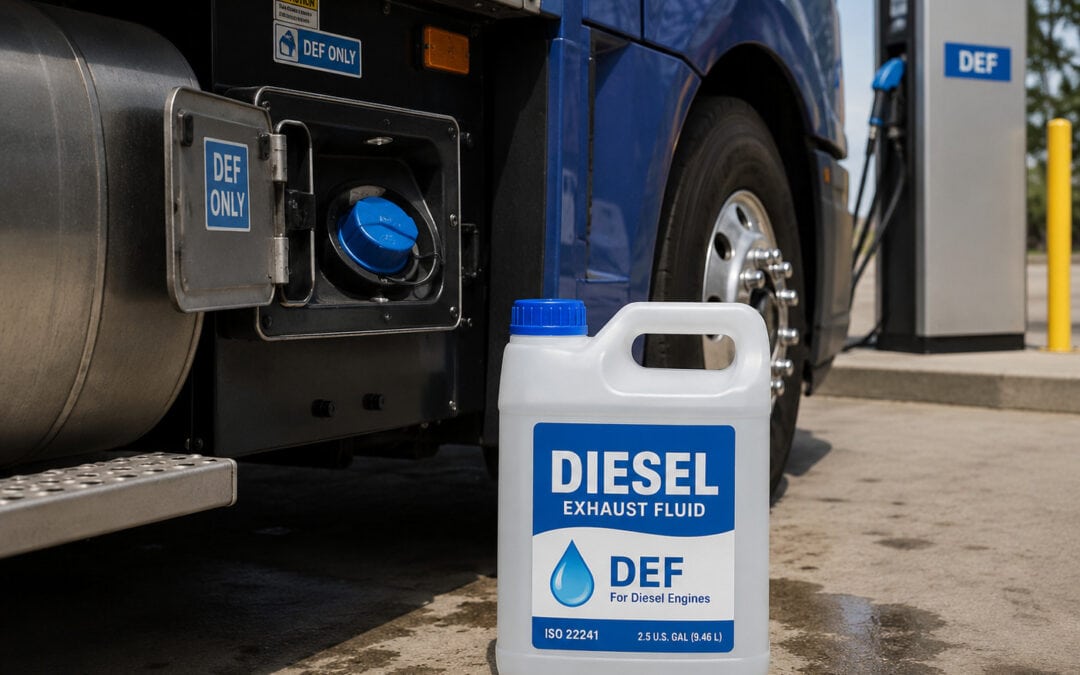
Managing a modern diesel fleet means balancing emissions compliance, fuel costs, and equipment uptime simultaneously. Most fleet managers understand that diesel exhaust fluid (DEF) is required for Selective Catalytic Reduction (SCR) systems, but far fewer treat DEF delivery as a strategic lever for reducing operating costs. The DEF delivery benefits diesel fleets gain go well beyond regulatory compliance. Structured DEF supply programs affect fuel economy, engine longevity, maintenance schedules, and total cost of ownership in ways that show up directly on your bottom line. This article breaks down exactly how.
Table of Contents
- Key Takeaways
- 1. DEF delivery benefits diesel fleets beyond basic compliance
- 2. Preventive maintenance and DEF system health reduce repair costs
- 3. Climate and route type change how you manage DEF storage
- 4. Bulk vs. packaged DEF delivery: what actually makes sense for your fleet
- 5. Tracking DEF consumption is where most fleets leave money on the table
- 6. Integrating DEF delivery into your broader diesel fleet management strategy
- My take on DEF delivery after years of watching fleets get this wrong
- How Anytimefuelpros supports diesel fleets with DEF and fuel delivery
- FAQ
Key Takeaways
| Point | Details |
|---|---|
| DEF improves fuel economy | SCR systems with DEF deliver a 3% to 5% fuel economy gain, generating measurable annual savings per truck. |
| Preventive DEF maintenance cuts costs | Structured DEF system care can reduce vehicle repair costs by up to 40% across Class 4-8 fleets. |
| Bulk DEF delivery lowers per-unit cost | Bulk delivery reduces per-gallon DEF cost and eliminates labor spent managing packaged jugs on-site. |
| Track DEF separately from diesel | Fleets that track DEF consumption independently gain accurate total cost of ownership data for better budgeting. |
| Climate affects DEF storage | DEF freezes in cold and crystallizes in heat, making proper storage and scheduled delivery critical for SCR uptime. |
1. DEF delivery benefits diesel fleets beyond basic compliance
The phrase “DEF delivery benefits diesel fleets” is shorthand for something the industry calls optimized fluid logistics. Diesel exhaust fluid delivery is not just a regulatory checkbox. When managed well, it is a cost-reduction tool.
SCR technology works by injecting DEF into the exhaust stream, where it converts nitrogen oxides (NOx) into harmless nitrogen and water vapor. The result is a 76% reduction in NOx emissions from highway vehicles since 2010. That environmental outcome is well documented. What gets less attention is the fuel economy side of the equation.
Modern diesel engines equipped with SCR and DEF systems improve fuel economy by 3% to 5% compared to older emissions-control approaches. For a fleet running 100 trucks at 60,000 miles per year and 6 miles per gallon, a 4% fuel economy improvement saves roughly 40,000 gallons of diesel annually. At current diesel prices, that is a significant number.
Pro Tip: Don’t treat DEF as a separate budget line that only adds cost. Factor the fuel economy gains from SCR into your total cost analysis and you will see that DEF pays for itself.
The benefits of DEF for fleets also extend to engine performance. SCR systems allow engine tuning to favor power and efficiency rather than burning cleaner inside the combustion chamber. That means less soot, less thermal stress, and less wear on internal components over time.
2. Preventive maintenance and DEF system health reduce repair costs
A DEF system that is ignored does not fail quietly. A clogged DEF injector or a degraded SCR catalyst can trigger a derate condition, where the engine management system limits power output to force a repair. In a commercial trucking or construction context, that means a truck or machine that cannot do its job until the issue is resolved.
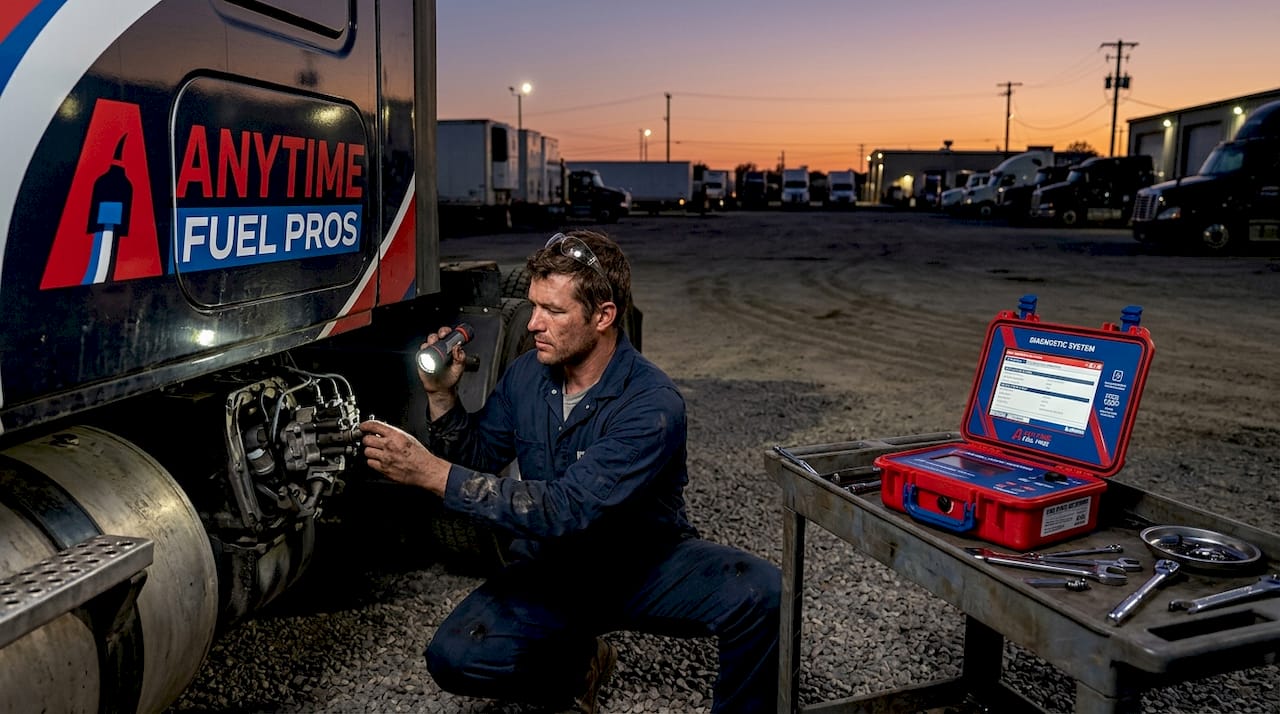
Structured preventive maintenance focused on DEF system health can reduce vehicle repair costs by up to 40% and extend vehicle lifespan across Class 4-8 commercial vehicles. That number reflects the difference between catching DEF injector fouling during a scheduled inspection versus replacing an SCR catalyst after a failure.
Here is what a practical DEF system maintenance schedule should include:
- Inspect DEF injector tips for crystallization buildup at every oil change interval.
- Test DEF fluid quality with a refractometer to confirm urea concentration stays at 32.5%.
- Check DEF tank level sensors and warning lights for accuracy.
- Inspect DEF lines and fittings for heat damage or cracking, especially in high-ambient-temperature regions.
- Monitor SCR catalyst efficiency through onboard diagnostics at each service visit.
Onboard diagnostics now provide enhanced visibility into remaining service life for oil, fuel, and DEF filters. This allows technicians to address multiple service needs in a single shop visit, cutting the number of times a vehicle is taken out of rotation.
Pro Tip: Schedule DEF system inspections to coincide with diesel fuel filter changes. The vehicle is already in the bay, and you avoid a second downtime event for what could have been a combined service call.
3. Climate and route type change how you manage DEF storage
DEF is not a forgiving fluid when it comes to storage conditions. It freezes in cold temperatures and crystallizes in heat unless stored and handled correctly. For fleets operating in Texas summers or Utah winters, this is not a theoretical concern.
DEF freezes at approximately 12 degrees Fahrenheit. SCR systems are designed to handle this with onboard heating elements, but bulk storage tanks on-site are not always equipped the same way. In extreme cold, an unheated bulk tank can freeze solid and leave an entire yard without DEF at the start of a shift.
Heat is the other threat. Prolonged exposure above 86 degrees Fahrenheit degrades the urea concentration over time. DEF stored in direct sunlight in a Texas summer can fall out of specification within weeks, causing SCR system faults and potential derate events.
The practical fix is scheduled diesel exhaust fluid delivery timed to your consumption rate, combined with proper tank placement and insulation. Fleets that rely on ad-hoc DEF purchasing from retail locations run the highest risk of storage-related quality problems, because they often stockpile fluid in suboptimal conditions to avoid running out.
Understanding what DEF actually does to your SCR system helps frame why storage quality matters as much as supply availability.
4. Bulk vs. packaged DEF delivery: what actually makes sense for your fleet
The DEF distribution advantages of bulk delivery over packaged jugs are real, but they are not universal. The right choice depends on fleet size, consumption rate, and storage infrastructure.
| Factor | Bulk DEF delivery | Packaged DEF (jugs/totes) |
|---|---|---|
| Cost per gallon | Lower (typically 20-40% less) | Higher, includes packaging markup |
| Minimum order | Usually 250+ gallons | No minimum, flexible quantities |
| Storage requirement | Dedicated bulk tank required | Standard shelving or yard storage |
| Labor to dispense | Minimal with pump system | Higher, manual handling per vehicle |
| Quality control | Consistent, sealed delivery | Variable, depends on handling |
| Best for | Fleets of 10+ trucks, high DEF consumption | Smaller fleets, remote or temporary sites |
For most mid-sized to large commercial fleets, bulk DEF delivery is the operationally superior choice. The labor savings alone justify the infrastructure investment. A yard with 20 trucks going through DEF manually from jugs is burning technician time on a task that a bulk pump system handles in seconds.
Smaller fleets or project-based operations, such as a construction crew on a remote site, often benefit from tote delivery (275-gallon intermediate bulk containers) as a middle ground. Totes provide bulk pricing without requiring a permanent installed tank.
Custom DEF tank solutions are worth evaluating for any fleet that runs more than 5,000 gallons of diesel per month. At that consumption level, DEF usage runs between 150 and 250 gallons monthly per vehicle. A properly sized bulk tank with a dedicated pump eliminates retail runs, reduces per-gallon cost, and gives you accurate inventory data for budgeting.
Integrating bulk DEF and diesel delivery through a single vendor also simplifies procurement, invoicing, and supply chain coordination across multiple sites.
5. Tracking DEF consumption is where most fleets leave money on the table
Many fleets do not track DEF costs separately from diesel, which means they are missing a significant piece of their total cost of ownership picture. DEF typically runs at 3% to 5% of diesel fuel consumed. For a truck burning 15,000 gallons of diesel annually, that translates to roughly $3,375 per year in DEF costs at a 5% consumption rate.
Multiply that across a 50-truck fleet and you are looking at $168,750 in annual DEF spend that many operations are not actively managing. That is not a rounding error.
Here is what a practical DEF cost tracking program looks like:
- Record DEF fill volumes at each fueling event, tied to the vehicle ID.
- Calculate DEF-to-diesel ratio monthly to identify vehicles consuming DEF at abnormal rates.
- Flag any truck running above 6% DEF consumption for SCR system inspection.
- Use consumption data to set accurate reorder points and avoid emergency purchases at retail prices.
Abnormal DEF consumption is often the first sign of an SCR system problem. A truck burning DEF at 8% of diesel consumption has a fault somewhere in the system, and catching it through data is far cheaper than catching it through a roadside breakdown.
Preventive maintenance programs tailored to specific route and duty cycles prevent over-servicing or under-servicing, and the same logic applies to DEF. A truck doing short urban cycles burns DEF differently than a long-haul unit. Your consumption benchmarks should reflect that.
Pro Tip: Set your DEF reorder trigger at 30% tank capacity rather than waiting for a low-level warning. That buffer gives you 48 to 72 hours to arrange delivery without disrupting operations.
6. Integrating DEF delivery into your broader diesel fleet management strategy
Improving diesel fleet efficiency is not about optimizing one variable in isolation. DEF delivery works best when it is integrated into a broader fuel and fluid management program rather than treated as a separate procurement task.
The def supply chain for diesel operations functions most efficiently when DEF and diesel deliveries are coordinated through the same vendor and the same schedule. A single delivery event that tops off both diesel and DEF reduces the number of times a fuel truck visits your yard, cuts administrative overhead, and gives you consolidated invoicing that makes cost tracking straightforward.
Fleet managers who treat DEF as an afterthought tend to encounter three recurring problems. First, they pay retail prices for DEF because they are buying reactively rather than on contract. Second, they experience SCR-related derates because DEF quality or supply was not managed proactively. Third, they cannot accurately calculate total operating cost per mile because DEF spend is buried in miscellaneous expenses.
The diesel fleet operational benefits of a structured DEF program compound over time. Better SCR health means longer catalyst life. Longer catalyst life means fewer major repair events. Fewer repair events mean more vehicles available for revenue-generating work on any given day. The math is straightforward once you start tracking it.
Understanding the role of DEF in modern diesel engines gives fleet managers the technical grounding to make smarter procurement and maintenance decisions rather than relying on reactive troubleshooting.
My take on DEF delivery after years of watching fleets get this wrong
I’ve seen fleet managers spend enormous energy optimizing diesel fuel contracts while completely ignoring DEF as a cost center. The assumption is that DEF is a minor consumable, not worth the same level of attention as diesel. That assumption is expensive.
In my experience, the fleets that run the tightest operations treat DEF the same way they treat diesel: contracted pricing, scheduled delivery, tracked consumption, and proactive system maintenance. The ones that don’t end up with unexpected SCR repair bills, derate events during peak operational periods, and DEF costs that are invisible in their budgeting.
What I’ve found is that the biggest gains don’t come from the DEF itself. They come from the data discipline that a structured DEF program forces on your operation. When you start tracking DEF consumption per vehicle, you suddenly have an early warning system for SCR problems that would otherwise surface as expensive failures. That diagnostic value alone justifies the program.
The uncomfortable truth is that emissions compliance and cost control are not competing priorities. A well-maintained SCR system running quality DEF on a reliable delivery schedule is cheaper to operate than a neglected one. The fleets that understand this stop asking “why use DEF in fleets” and start asking “how do we get more out of it.”
— Justin
How Anytimefuelpros supports diesel fleets with DEF and fuel delivery
Fleet managers who want to stop managing DEF reactively have a straightforward path forward. Anytimefuelpros delivers both diesel and DEF directly to your yard, job site, or equipment location on a scheduled basis, eliminating retail runs and supply gaps that create operational disruptions.
Anytimefuelpros serves commercial fleets across Texas, Utah, and nationwide through a partner network built for multi-site operations. Whether you need bulk DEF delivery for a 50-truck yard in San Antonio or coordinated on-demand diesel delivery for a construction fleet spread across multiple sites, AFP handles both under one contract with transparent, daily-rate pricing.
The fuel delivery benefits extend beyond convenience. Consolidated diesel and DEF delivery gives you accurate consumption data, predictable costs, and a single point of contact for your entire fluid supply chain. For fleets managing tight margins and tight schedules, that operational reliability is worth more than the per-gallon savings alone. Contact Anytimefuelpros to set up a delivery program built around your fleet’s actual consumption needs.
FAQ
What are the main DEF delivery benefits for diesel fleets?
Structured DEF delivery reduces per-gallon cost through bulk pricing, eliminates retail supply gaps that cause SCR derates, and provides consumption data that supports proactive maintenance and accurate cost tracking.
How much DEF does a diesel truck use?
DEF typically runs at 3% to 5% of diesel fuel consumed. A truck burning 15,000 gallons of diesel annually will use approximately 450 to 750 gallons of DEF per year.
Does DEF improve fuel economy?
Yes. Modern SCR systems using DEF improve fuel economy by 3% to 5% because they allow engine tuning to prioritize efficiency over in-cylinder emissions control.
What happens if DEF quality degrades in storage?
Degraded DEF falls outside the required 32.5% urea concentration, causing SCR system faults and potential engine derate events that limit power output until the system is serviced.
Is bulk DEF delivery worth it for smaller fleets?
Fleets running fewer than 10 trucks may find tote delivery (275-gallon containers) more practical than installing a bulk tank, while still capturing most of the cost and quality advantages over retail packaged DEF.
Recent Comments