
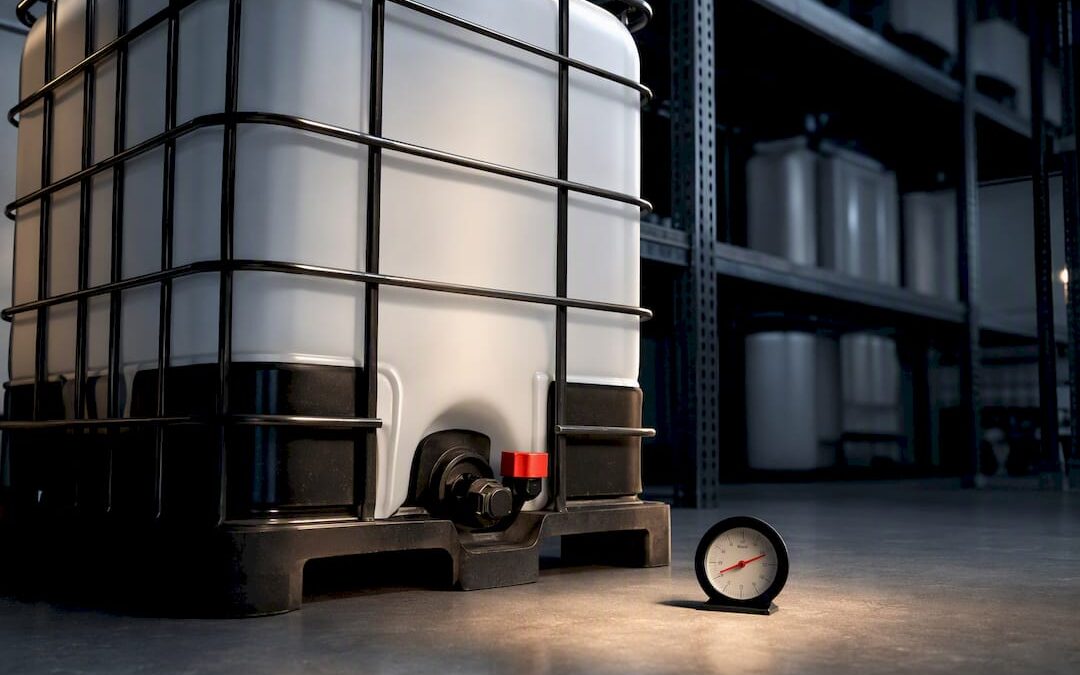
DEF generally remains on-spec for about 12 months under proper storage, and temperature is the controlling factor. Cooler, stable environments stretch that window well past a year, while heat and sun exposure can cut it down to six months or less. The operational rule for fleets is simple: store within the recommended temperature range, rotate stock on a first-in, first-out basis, and buy API-licensed DEF from suppliers who can document manufacture dates. If a container has sat outside those conditions or shows any sign of contamination, replace it before it reaches an injector.
TL;DR:
- DEF stored in cooler, shaded environments can last several years, but higher temperatures and exposure can reduce its shelf life to six months or less.
- Contamination from dirt, cross-contact with diesel, or improper handling can degrade DEF faster than temperature alone, especially if containers are open or in direct sunlight.
- Buying DEF with API certification, clear batch dates, and from suppliers using sealed, temperature-controlled shipments minimizes the risk of shelf-life issues.
- Implementing frequent, small deliveries based on actual usage reduces the chances of DEF sitting unused and degrading over time.
- Transit in hot weather can significantly impact DEF quality, so insulated or covered transportation and minimizing dwell time are critical in warm climates.
Table of Contents
- What Determines DEF Shelf Life? A Temperature-Based Breakdown
- What Shortens DEF Life on a Job Site
- Storing DEF Right in the Shop, the Truck, and the Bulk Tank
- How to Tell if DEF Has Gone Bad
- Buying Smart: Certification, Date Codes, and Supplier Standards
- The Fleet-Level Fix: Managed Delivery Instead of Stockpiling
- Transport Duration: How Long DEF Can Safely Sit in Transit
- Keep Fresh DEF on Hand Without the Guesswork
- Sources
What Determines DEF Shelf Life? A Temperature-Based Breakdown
DEF is roughly 32.5% urea dissolved in deionized water, and urea breaks down faster as temperature rises. That’s why every shelf-life estimate in the industry is really a temperature estimate. ISO 22241 sets the industry benchmark, tying shelf life to constant ambient temperature.
| Constant storage temperature | Approximate shelf life |
|---|---|
| Cooler temperatures | Several years |
| Up to 77°F | More than a year |
| Up to 86°F | Around a year |
| Up to 95°F | Several months |
Trade guidance from Heavy Duty Trucking confirms the same 12-month baseline at moderate temperatures, with life dropping to roughly six months once storage hits 86°F consistently.
That table assumes a constant temperature, which almost never happens outdoors. A yard that hits 100°F at 3 p.m. and drops to 70°F overnight isn’t storing DEF at a constant 100°F. Industry white papers recommend estimating shelf life from average daily temperature rather than the daily peak, since real-world heating and cooling cycles tend to lengthen effective shelf life compared to constant-heat assumptions. Even so, treat any DEF older than about three years as suspect, regardless of how well it was stored.
What Shortens DEF Life on a Job Site
Temperature gets most of the attention, but it’s rarely the only thing degrading DEF on an active site. A handful of preventable habits do more damage than a hot afternoon ever will.
- Sustained heat and UV exposure accelerate urea decomposition, and clear containers left in direct sun lose stability faster than shaded ones.
- Open or vented containers let water evaporate out, which concentrates the urea beyond the 32.5% spec and throws off the SCR system’s chemistry.
- Dirty funnels, shared hoses, and non-dedicated nozzles introduce contamination that no amount of proper temperature control will fix.
- Dust and job-site debris getting into an open drum can compromise an entire batch in seconds.
- Cross-contamination from diesel equipment happens when crews grab the wrong hose or reuse a container that once held fuel or oil.
Pro Tip: Color code your DEF equipment. A dedicated blue funnel, blue hose, and blue drum cap make it obvious to every crew member which tools never touch diesel or hydraulic fluid.
Reusing old containers, leaving drums unsealed between fills, and transferring DEF through lines that also handle other fluids are the three handling mistakes that cause the most avoidable losses on a fleet’s books.
Storing DEF Right in the Shop, the Truck, and the Bulk Tank
Where DEF sits determines how long it lasts, and each environment needs its own game plan.
- In the shop: Keep DEF in a climate-controlled or shaded, cool area away from direct sun. Store it in sealed, original containers, rotate stock on a strict first-in, first-out basis, and check date codes before every fill.
- In the vehicle: Don’t let jugs or totes sit in a hot cab or truck bed for days. API guidance recommends more frequent, smaller refills over long-term in-vehicle storage. If DEF freezes in the tank, let the vehicle’s built-in heating system thaw it. Additives are unnecessary and can void warranties.
- In bulk tanks or totes: Dedicate the tank to DEF only, use closed-loop transfer equipment, and consider shading or insulating tanks that sit in direct sun. Never overfill a tank that could freeze, since ice expansion can crack fittings.
- For inventory management: Buy only what you’ll turn over within a few months, request manufacture dates from your supplier, label every drum with its fill date, and time deliveries to match consumption instead of stockpiling.
Pro Tip: Treat DEF like milk, not like diesel. Diesel tolerates a full tank sitting for months; DEF wants a shorter path from delivery to injector.
For a deeper look at how tiered storage strategies apply across temperature zones, see this breakdown of tiered storage for facility managers.
How to Tell if DEF Has Gone Bad
DEF that’s degraded doesn’t always announce itself. It should be clear and colorless, but a visual check alone won’t catch a fluid that’s simply too concentrated or too diluted, since those changes are chemical, not visual. A cloudy appearance, a strong ammonia smell, or visible sediment are red flags worth acting on immediately.
- Check for cloudiness, discoloration, or floating particles before dispensing.
- A sharp ammonia odor usually signals urea breakdown from heat exposure.
- Visual and smell checks can’t confirm exact urea concentration. Lab testing for alkalinity and urea percentage is the only way to verify DEF is still within the 32.5% spec.
- Sample any batch that’s been stored past its expected shelf life or exposed to temperatures above 95°F for an extended period.
Roughly half of DEF-related SCR problems trace back to contamination or improper storage rather than manufacturing defects, which is why inventory turnover matters more than most fleets realize. If a batch fails inspection, drain and replace it, flush the dispensing lines, and clean the tank before refilling. DEF is generally non-hazardous and can typically go down a drain per local wastewater rules, but never dispose of it through a fuel system or fuel-recycling stream.
Buying Smart: Certification, Date Codes, and Supplier Standards
The easiest way to avoid a shelf-life problem is to never buy old or uncertified DEF in the first place. API’s DEF certification program verifies that a batch meets ISO 22241 purity standards, and the API donut mark on packaging is the quickest way to confirm it at delivery.
- Verify the API certification mark on every shipment, not just the first order from a new supplier.
- Ask for manufacture or batch dates on delivery paperwork, especially for low-volume sites that turn over inventory slowly.
- Require sealed shipments and closed-loop transfer equipment from your supplier to prevent contamination before DEF even reaches your tank.
- Build shelf-life language into supplier contracts: an API certification requirement, documented batch dates, and delivery temperature controls for hot-climate routes.
Fleets running smaller volumes benefit most from tightening these terms, since a slow-turnover site is exactly where an old batch can quietly sit past its usable window.
The Fleet-Level Fix: Managed Delivery Instead of Stockpiling
The fastest way to solve a DEF shelf-life problem is to stop having DEF sit around long enough to become one. High-consumption fleets and remote sites face the highest exposure risk simply because product sits in tanks or totes for months between orders. Scheduled, on-site delivery flips that equation: instead of stockpiling months of inventory against a forecast, fleets take smaller, more frequent deliveries timed to actual usage.
That approach also simplifies the paperwork side of compliance. Partner-managed recurring delivery reduces on-site inventory and gives fleets cleaner batch documentation for audits, since every delivery comes with its own manufacture and fill date.
If you’re evaluating a delivery partner, run through this short checklist first:
- Does the supplier offer freshness guarantees tied to manufacture date, not just delivery date?
- Is batch documentation provided automatically, or do you have to request it every time?
- Does the transfer equipment use a closed-loop system to prevent contamination at the point of fill?
Transport Duration: How Long DEF Can Safely Sit in Transit
Getting DEF from the plant to your site is its own shelf-life variable, and transport time matters more in summer than in winter. A tanker or tote sitting on a trailer in 95°F heat for several days is functionally the same as storing it in a hot yard. The temperature exposure counts whether the fluid is moving or parked.
Short-haul deliveries in moderate weather rarely create measurable degradation. A same-day or next-day delivery in temperatures under 77°F keeps DEF well within its expected window, since the ISO 22241 table allows up to 18 months of storage at that range. The risk climbs on longer regional hauls during peak summer, especially when a shipment sits on an un-shaded trailer at a distribution yard before the final leg.
Suppliers moving DEF long distances in hot climates should use insulated or covered transport, minimize dwell time at transfer points, and avoid letting totes sit exposed on asphalt lots where surface heat compounds ambient air temperature. For fleets in the Southwest or anywhere with sustained summer highs, asking a supplier how they manage transit exposure is a fair question to put in a service agreement. A delivery that looks fresh on paper can still arrive partially degraded if it spent three days on a hot trailer first.
Keep Fresh DEF on Hand Without the Guesswork
Expired DEF, contaminated totes, and surprise downtime all trace back to the same root cause: too much fluid sitting around for too long between deliveries. Anytime Fuel Pros solves that by putting fresh DEF on your site on your schedule, not on a forecast built months in advance.
DEF can be delivered on-site alongside diesel and gasoline for job sites, fleets, equipment yards, and generators across various regions, with nationwide coverage available through partner networks. Recurring scheduled deliveries help ensure DEF inventory better matches actual consumption instead of sitting unused for long periods. Bulk fills keep totes and tanks topped off without the lag of retail runs, and emergency response service covers the moments when a job can’t wait for a standard delivery window.
If your fleet is managing DEF the hard way, request a quote or schedule your next delivery and let a managed schedule handle the freshness problem for you.
Sources
- How to purchase, store & handle diesel exhaust fluid — API
- Don’t let bad DEF sideline your truck: storage, shelf life & safety tips — Heavy Duty Trucking (TruckingInfo)
Recent Comments