
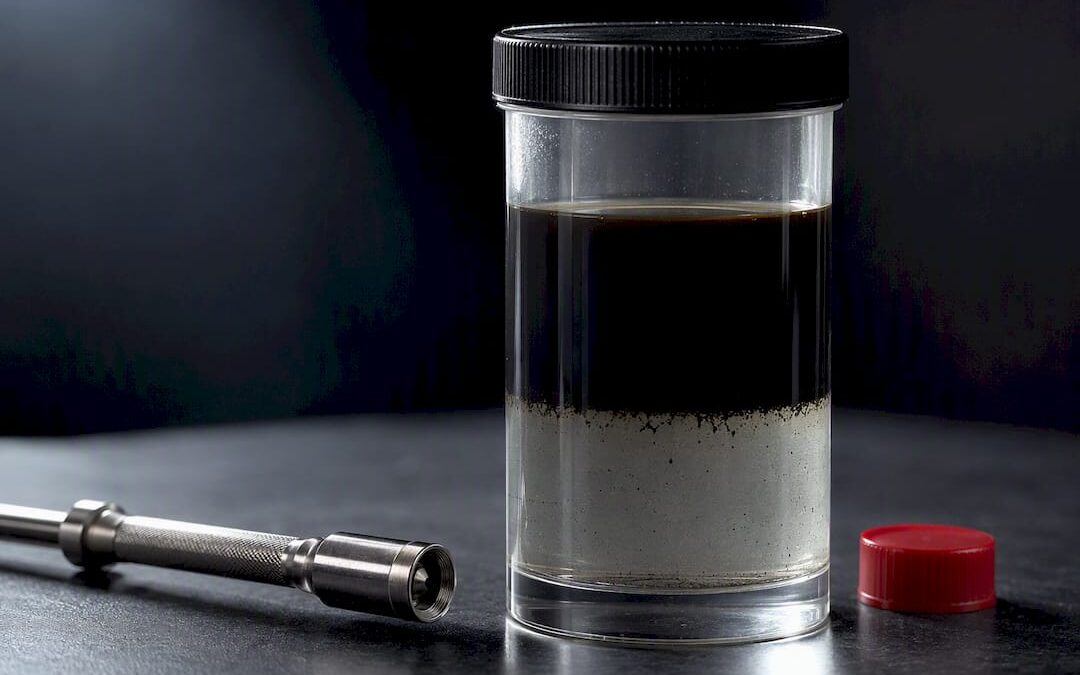
If you’re seeing slime in the fuel filter or repeated clogging, remove the free water first, then apply a shock dose of an EPA-registered diesel biocide. Run it through the system to circulate, replace filters once, and expect a second filter change within a few days. If sludge is heavy or contamination has hit a critical backup generator, call in fuel polishing before you burn another tank.
TL;DR:
- Removing free water is essential before applying a biocide, as microbes thrive at the water-fuel interface and cause rapid filter clogging and equipment wear.
- Dual-phase biocides that target microbes in both fuel and water layers are the most effective for treating microbial contamination in diesel tanks.
- A shock dose combined with circulation and multiple filter changes over 24 to 72 hours is necessary to fully control active microbial growth.
- Fuel polishing is recommended for heavy sludge or bonded contamination, especially if microbial biomass keeps clogging filters after biocide treatment.
- Preventive measures like keeping tanks full, draining water separators regularly, and dosing with maintenance biocide extend fuel shelf life and reduce costly remediation.
Table of Contents
- What Actually Causes Diesel Algae Contamination?
- Which Diesel Biocides Actually Work?
- How Do You Treat Diesel Algae Step by Step?
- When Do You Need Fuel Polishing Instead of Just Biocide?
- What’s the Best Way to Prevent Diesel Algae From Coming Back?
- When Should You Call a Fuel Delivery Professional?
- Sources
What Actually Causes Diesel Algae Contamination?
The name is misleading. What operators call “diesel algae” isn’t algae at all. True algae needs sunlight to grow, and there’s none inside a sealed fuel tank. What’s actually growing in that black sludge is a colony of bacteria, fungi, and yeast feeding at the boundary layer where water settles beneath diesel fuel, according to Highway and Heavy Parts.
That distinction matters for how you treat it. Microbial contamination needs three things to thrive: water, warmth, and a food source (the fuel itself, particularly biodiesel blends with higher moisture affinity). Diesel fuel picks up water through condensation in partially filled tanks, humid storage conditions, or contamination during transport and fill-ups. Once that water pools at the tank bottom, microbes colonize the interface and start producing the acidic byproducts and biomass that clog fuel filters, corrode tank walls, and eventually starve your engine of clean fuel.
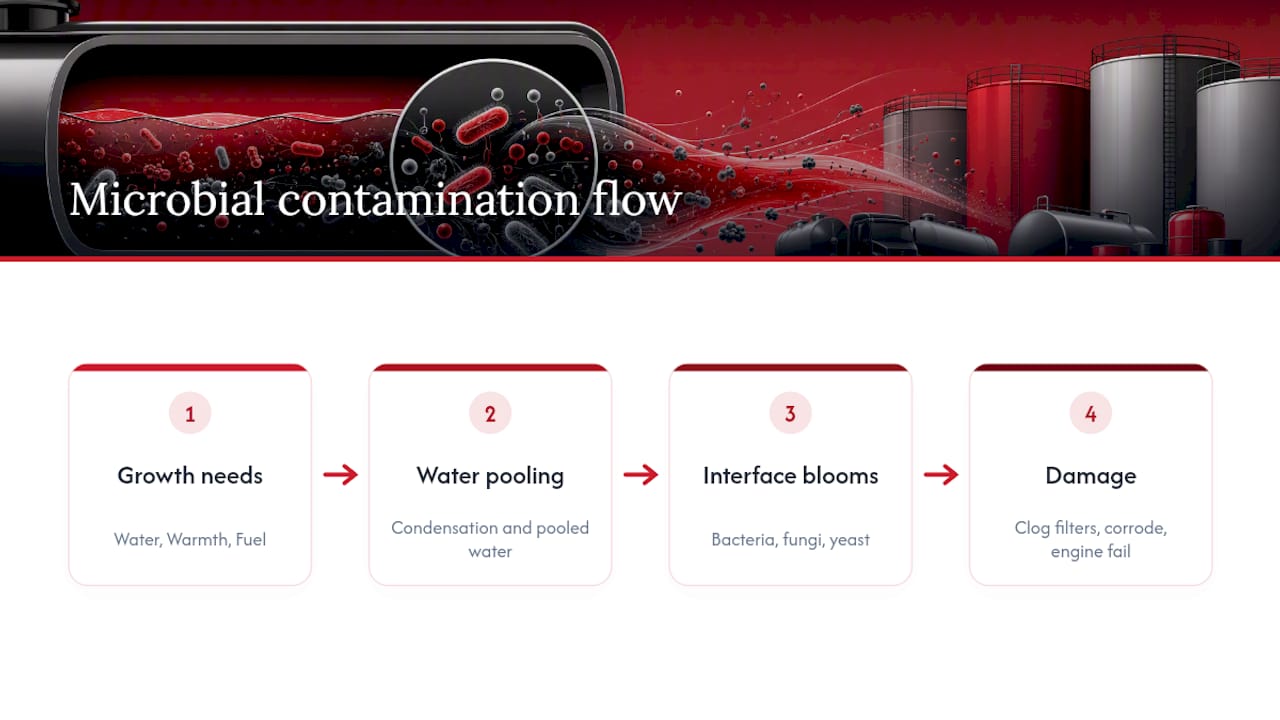
Ignore it long enough and the damage compounds. Fuel filters plug faster than you can swap them. Injector pumps wear prematurely from abrasive byproducts. Fuel gauges and sending units corrode. In backup generators that sit idle for months, contaminated fuel can mean a no-start during the exact outage you bought the generator to survive. That’s the real cost of skipping treatment for diesel algae: not a dirty tank, but equipment failure at the worst possible moment.
Which Diesel Biocides Actually Work?
Not every bottle on the shelf treats contamination the same way. Some work only in the fuel phase, some are dual-phase and active in both fuel and water, and dosing requirements vary enough that grabbing the wrong product for your tank size wastes both time and money. The best biocides are dual-phase formulas that reach microbes living right at the fuel-water interface, since a fuel-only treatment can leave the water layer as a refuge for regrowth.
Here’s how the leading options stack up for fleet and storage-tank use.
| Product | Best For | Treatment Type | Dose / Contact Time | Fuel Compatibility | Packaging / Price Range |
|---|---|---|---|---|---|
| Power Service Bio Kleen | Vehicle tanks and small-tank shock treatments | Fuel-only biocide | Follow label ratio for shock vs. maintenance dosing | Diesel, biodiesel blends | Quart and gallon sizes, widely stocked |
| Fuel Ox Star Plus Bio | Operators wanting an integrated biocide with clear how-to steps | Dual-phase | Manufacturer-published contact time; varies by tank size | Diesel, biodiesel blends | Retail and bulk sizes |
| Bellicide (Bell Performance) | Larger storage tanks with planned ATP testing | Dual-phase | Roughly 1 oz per 40 gallons for many applications, per Bell Performance’s guide | Diesel, biodiesel blends, heating oil | Quart, gallon, and drum sizes |
| Generic EPA-registered diesel biocide | Fleets that need label-backed chemistry from a local distributor | Varies by formula | Always follow the product’s own label | Check label for diesel/biodiesel/heating oil approval | Varies by supplier |
A shock dose is the accepted first move for active contamination. Many biocides need several hours of contact time to kill the microbial population, and Fuel Ox’s own treatment guide walks through that same water first, biocide second, filter after sequence. Bellicide’s manufacturer notes that a quality biocide can knock down microbial counts quickly, though Bell Performance recommends confirming that with an ATP test rather than assuming it worked.
Buying and handling notes:
- Wear chemical-resistant gloves and eye protection when handling concentrated biocide; most labels classify these as skin and eye irritants.
- Store opened containers in a cool, ventilated area away from ignition sources.
- Pull the manufacturer’s label or safety data sheet before dosing. Power Service’s product page lists Bio Kleen’s dosing benefits directly, and every EPA-registered biocide should carry the same level of label detail.
- Confirm the product is rated for your fuel blend. Some formulas are approved for straight diesel but not for biodiesel above B20 or for heating oil.
How Do You Treat Diesel Algae Step by Step?
Treating an active contamination isn’t guesswork if you follow the sequence in order. Skipping straight to biocide without pulling water first is the most common mistake operators make, and it’s why regrowth happens even after a “successful” treatment.
- Confirm the contamination. Check for slow fuel flow, repeated filter clogging, dark or hazy fuel, and a distinct sour smell. Pull a sample from the tank bottom using a sample thief or drain valve and look for a black, jelly-like layer. An ATP test gives you a fast numeric read on microbial activity; a lab test takes longer but confirms species and severity.
- Drain or pump out free water. Use the tank’s water drain sump if it has one, or use water-finding paste on a dipstick to locate the water layer before pulling it with a hand pump or vacuum extractor. Skipping this step lets microbes regrow at the interface even after biocide treatment, per Highway and Heavy Parts.
- Calculate and apply the shock dose. Read the product label for the shock-treatment ratio (often higher than the maintenance dose) and add it as you fill the tank so it disperses through the fuel column.
- Circulate the treatment. Run the engine or a transfer pump to move treated fuel through the lines, giving the biocide the full 8 to 24 hour contact window most labels specify before you expect results.
- Change the filter, then plan to change it again. Dead microbial biomass gets mobilized and immediately loads the filter media. Keep spare filters on hand for a staged replacement (pre-filter, secondary, final) rather than assuming one swap will hold.
- Monitor for 24 to 72 hours. If filters keep clogging past the second change, the tank likely has heavy sludge that biocide alone won’t clear.
Pro Tip: Run an ATP test before dosing and again 24 hours after treatment. It’s the only way to confirm the biocide actually worked instead of just hoping the smell went away.
When Do You Need Fuel Polishing Instead of Just Biocide?
Biocide kills the microbes. It does nothing to remove the dead biomass, sludge, and particulate they leave behind, and that’s exactly where a lot of operators get stuck repeating shock doses without solving the real problem.
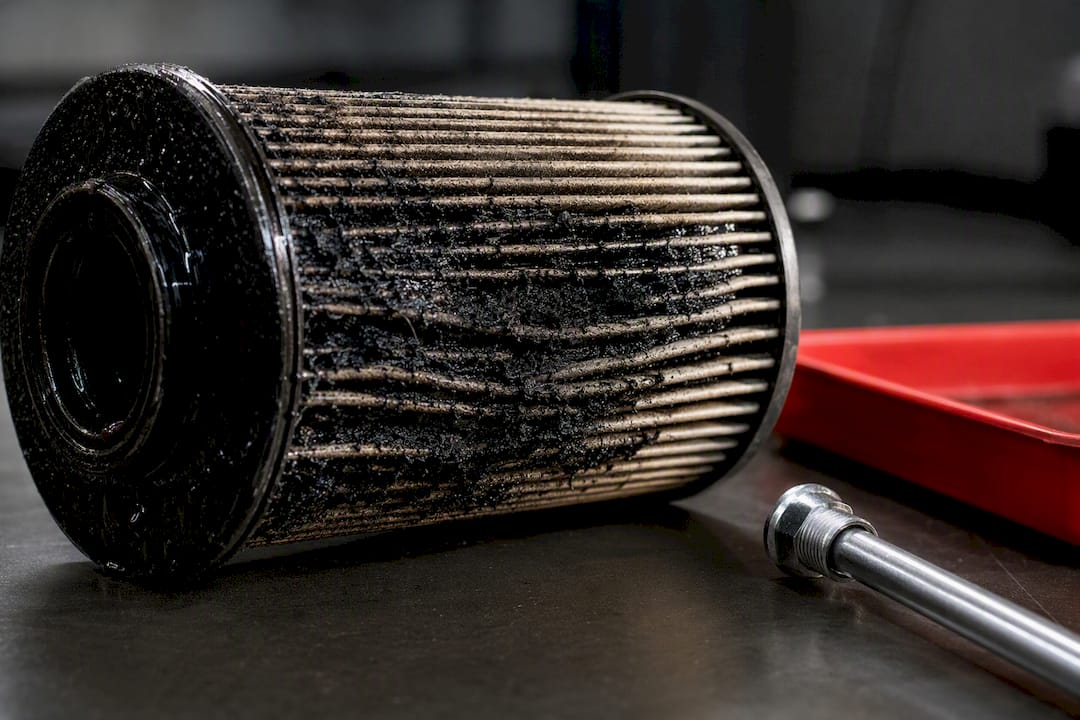
Fuel polishing pulls fuel through a filtration and water-separation system, typically down to a fine micron rating, to strip out suspended biomass and free water without touching the tank structure itself. It’s usually sufficient for moderate contamination in a large tank where the sludge hasn’t bonded to the tank walls. Full tank cleaning goes further: draining the tank completely, physically removing adhered sludge and scale, and inspecting for corrosion. That’s the move when contamination is severe or when you find pitting and rust during inspection.
Before hiring either service, ask the vendor these questions:
- What micron rating does their filtration reach, and can they document it?
- How do they dispose of the contaminated fuel and water they pull out?
- What’s the realistic turnaround time for your tank size?
- Can they provide references from similar fleet or storage-tank jobs?
Cost and timeline both scale with tank size and contamination severity. A single vehicle tank polish is a same-day job; a bulk storage tank with years of accumulated sludge can run into multiple days and carries higher disposal and standby fees. Boat Juice’s treatment guide notes that biocide alone rarely resolves heavy sludge cases, which is the clearest signal it’s time to escalate.
What’s the Best Way to Prevent Diesel Algae From Coming Back?
Prevention is cheaper than every remediation step above combined, and most of it comes down to controlling water before it ever reaches the microbes that feed on it.
- Keep tanks topped off. A fuller tank means less airspace for condensation to form, which starves the microbial colony of the water it needs to establish itself.
- Drain water separators on a schedule. Weekly for high-use fleet vehicles, monthly for slower-turnover storage tanks, more often in humid climates.
- Inspect vents and seals. A cracked gasket or a vent that draws in moist air undoes every other prevention step.
- Dose stored fuel with a maintenance-level biocide. This is a lower concentration than a shock dose, meant to keep microbial counts suppressed in fuel that sits for weeks or months.
- Test on a cadence, not just when something looks wrong. Bell Performance recommends ATP or lab testing periodically for long-term storage tanks, plus a test before and after any treatment to confirm it worked.
- Upgrade filtration hardware where it makes sense. Water-absorbing filters and coalescers with a fine micron rating catch moisture and particulate before they reach the engine or generator.
Pro Tip: Log every filter change and test result in one place. When a filter starts clogging faster than usual, that log is what tells you whether it’s a new contamination event or just normal wear.
Build these habits into your procurement and maintenance SOPs, and stored diesel can stay usable far longer than most operators expect. Anytimefuelpros covers exactly this kind of long-horizon storage planning in its guide to keeping diesel usable across tiered storage, which is worth reviewing before your next bulk fill.
When Should You Call a Fuel Delivery Professional?
Chemistry and filter changes solve most contamination cases. They stop being enough once filters keep clogging after a second or third shock dose, sludge has visibly bonded to tank walls, or the contaminated tank feeds a backup generator you cannot afford to have fail during an outage. At that point, the smarter move is on-site professional support rather than burning another round of biocide and hoping.
A professional fuel delivery service handles exactly this kind of remediation call. On-site fuel polishing removes water, biomass, and fine particulate without pulling your tank out of service, and the same visit can include a bulk top-off so equipment stays running while the fuel gets cleaned. That’s a meaningfully different position than calling a local shop for a tow-in tank clean and losing a piece of equipment for days. For fleets managing multiple sites, data centers with standby generators, or job sites where downtime has a real dollar cost attached, having one provider handle both the polishing and the fuel replacement removes a coordination headache most operators don’t think about until they’re stuck mid-remediation with an empty tank.
If you’re dealing with recurring filter clogging, a backup generator you need verified clean before hurricane season, or a bulk tank overdue for testing, start with Anytimefuelpros’s diesel fuel delivery page to see service availability, or reach out directly through the fuel delivery questions page to get a straight answer on turnaround and pricing for your site.
Recent Comments