

A heavy equipment fueling schedule is a planned system for refueling machines at set times that align with site workflows, shift patterns, and fuel consumption rates. Poor scheduling is a quiet profit killer on construction and mining sites. Equipment sitting idle while waiting for fuel, or worse, running dry mid-shift, compounds into lost hours and real money. Heavy equipment fueling schedule best practices give site managers and fleet supervisors a repeatable framework to keep machines running, fuel costs predictable, and downtime close to zero.
1. Schedule fueling around natural work pauses
Timing fuel deliveries during shift changes, maintenance checks, and lunch breaks is the single most effective way to protect productive equipment time. Machines stop anyway during these windows, so fueling adds zero downtime to the schedule. A dozer or excavator refueled during a 30-minute lunch break loses nothing. The same machine refueled mid-cycle loses that cycle plus the time to restart workflow sequencing across the crew.
- Align bulk fuel delivery windows with shift handover times (typically 6:00 AM, 2:00 PM, and 10:00 PM on three-shift sites)
- Coordinate with equipment operators the day before so machines are positioned for access
- Stack fueling with pre-shift walkarounds and fluid checks to consolidate downtime into one window
- Flag machines running below 25% tank capacity at end of shift for priority fueling before the next shift starts
Pro Tip: Build fueling into your daily site schedule as a fixed task, not a reactive one. Treat it the same way you treat safety briefings. If it has a time slot, it happens.
2. Use on-site mobile fueling to eliminate repositioning
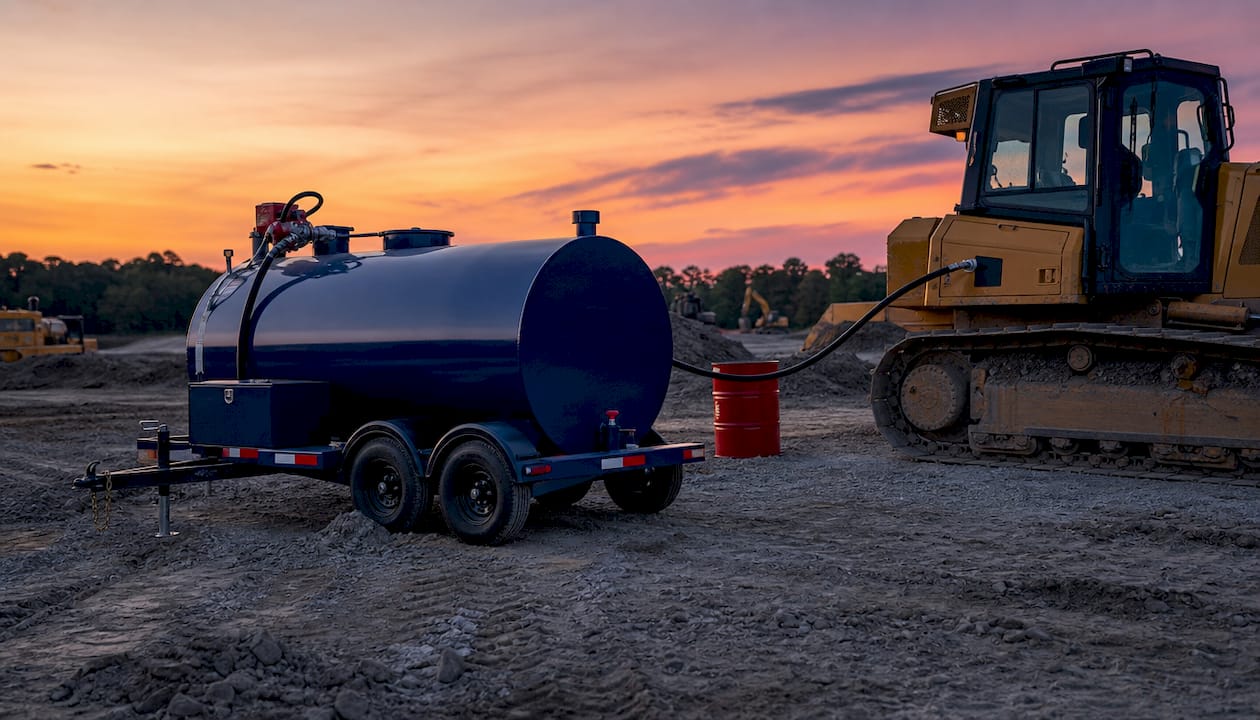
Moving a 90,000-pound excavator to a stationary fuel tank wastes 15–30 minutes per refuel cycle, and that cost multiplies across a fleet. Mobile fueling brings the fuel to the machine. This approach is standard practice on large earthmoving and grading projects where repositioning heavy equipment carries both time and wear costs.
Anytimefuelpros delivers diesel directly to job sites across Texas, Utah, and nationwide through its partner network, eliminating the need to move equipment off productive ground. On-site delivery also reduces the risk of fuel spills during equipment travel and keeps operators focused on their assigned tasks rather than logistics.
- Use mobile fueling for excavators, dozers, motor graders, and scrapers that are costly to reposition
- Reserve stationary tank access for smaller equipment like skid steers, compactors, and telehandlers
- Confirm site access routes and fueling zones with your delivery provider before the project begins
3. Train operators to reduce fuel consumption between fills
Operator behavior directly controls how fast a machine burns through its tank. Training on throttle control and idling reduction cuts fuel consumption by 15–25%, which extends the interval between fills and reduces total fuel demand across a fleet. That is not a marginal gain. On a 20-machine site, it translates to measurably fewer deliveries per week and lower fuel spend per productive hour.
Key operator behaviors that improve fuel efficiency:
- Throttle moderation: Run engines at the lowest throttle setting that completes the task. High throttle during light-load cycles wastes fuel with no productivity gain.
- Gear selection: Operating in the highest comfortable gear reduces engine RPM and fuel burn on haul roads and travel segments.
- Efficient travel paths: Optimizing cycle times and avoiding steep incline travel cuts fuel consumption on every pass.
- Idling discipline: Shut down machines during breaks longer than five minutes. An idling forklift alone burns over $1,000 in fuel annually.
Pro Tip: Pair operator training with telematics data. Show operators their own idle time and fuel consumption numbers weekly. Behavioral change accelerates when operators see their personal metrics, not just fleet averages.
4. Deploy technology to automate fuel monitoring and scheduling
Automated tank monitoring and telematics integration are the backbone of any serious heavy equipment fuel management program. Automated fuel management systems reduce fuel waste by 28–42% and cut idle fuel consumption by 35%. On a 25-asset fleet, that translates to $40,000–$75,000 in annual savings, often recovered within 90 days of deployment.
“Fuel cost per productive hour is the metric that separates reactive fuel management from operational control. It connects consumption to equipment health, revealing turbocharger faults and air restriction issues before engine fault codes appear.”
Telematics platforms track fuel consumption in real time alongside idle time, load cycles, and location data. This gives site managers a complete picture of where fuel is going and which machines are burning more than their baseline. AI-based idle detection classifies idle time into short, extended, and excessive durations, enabling targeted coaching rather than blanket policy enforcement.
| Technology | Primary function | Key benefit |
|---|---|---|
| Automated tank monitors | Track tank levels in real time | Trigger reorders before shortages occur |
| Telematics integration | Log fuel burn per machine per shift | Identify high-consumption outliers |
| AI idle detection | Classify idle duration by severity | Enable targeted operator coaching |
| Real-time alert systems | Notify supervisors of excessive idling | Reduce idle fuel costs by up to 27% |
Environmental monitoring tools also support fuel management programs by flagging spill risks and containment issues at storage points, which matters for compliance on permitted job sites.
5. Track fuel cost per productive hour, not just volume
Fuel cards track volume purchased. They do not track efficiency, unauthorized use, or which assets are underperforming. Fuel cards alone are insufficient to prevent theft or identify underutilized assets. Fuel management is an operational discipline, not a procurement function.
Fuel cost per productive hour connects consumption data to actual work output. A machine burning 12 gallons per hour during light grading work signals a mechanical problem, not a scheduling one. Tracking this metric identifies turbocharger and air restriction issues before engine codes appear, turning fuel data into a maintenance trigger. Linking fuel tracking to utilization and maintenance records reveals waste patterns that never show up on a monthly fuel bill.
Site managers who shift from volume tracking to cost-per-hour analysis typically find two or three machines in every fleet that are consuming fuel at rates well above their class average. Addressing those machines first delivers faster ROI than any scheduling change alone.
6. Calculate reorder trigger points based on consumption, not the calendar
Fixed weekly or monthly delivery schedules fail during high-intensity project phases. The correct reorder formula is: (Average Daily Consumption × Delivery Lead Time) + Safety Buffer. Relying on fixed schedules leads to shortages when earthmoving phases accelerate fuel demand beyond the calendar baseline.
Safety buffer stocks and reorder trigger levels must reflect dynamic site conditions. A grading phase burns fuel at a different rate than a finishing phase. Adjust your trigger points at the start of each project phase, not once per quarter.
Scheduling method comparison:
| Method | Best for | Risk |
|---|---|---|
| Calendar-based | Stable, predictable operations | Shortages during demand spikes |
| Usage-based | Variable project phases | Requires accurate consumption tracking |
| Telemetry-automated | Large fleets with monitoring systems | Higher upfront technology cost |
- Set your safety buffer at a minimum of two days of peak consumption, not average consumption
- Review trigger points at each project phase transition (clearing, grading, paving, finishing)
- Confirm delivery lead times with your fuel provider at project start, not when the tank hits empty
Pro Tip: Ask your fuel delivery provider for a consumption history report after the first 30 days on a new project. Use that data to recalibrate your reorder trigger before you enter the heaviest fuel demand phase.
7. Use real-time alerts to keep supervisors in control
Real-time alerts for excessive idling give supervisors the ability to intervene before fuel waste compounds. Supervisory intervention based on mobile alerts lowers idle fuel costs rapidly through immediate coaching, reducing operator idle times by up to 27% without strict policy enforcement. The key word is “immediate.” A supervisor who sees an alert and walks over to coach an operator in the moment gets a different result than one who reviews a weekly report.
Alert systems work best when they are tied to specific thresholds rather than generic notifications. Set idle alerts at five minutes for machines in active work zones and ten minutes for machines in staging areas. Classify alerts by severity so supervisors prioritize the highest-cost events first.
8. Adapt scheduling for fleet size and project type
Mid-size fleets (10–25 machines) and large-scale operations (50+ machines) require different scheduling approaches. A mid-size fleet on a single site can coordinate fueling manually with a shared delivery window. A 50-machine fleet across multiple sites needs telemetry-automated reorder triggers and a dedicated fuel coordinator.
- Earthmoving phases: Schedule fueling twice per shift. Dozers, scrapers, and excavators in heavy cut-and-fill work burn fuel fast. A single daily fill is not enough.
- Grading and finishing phases: Once-per-shift fueling typically covers demand. Machines work lighter loads and travel shorter distances.
- Multi-shift operations: Assign a fueling window to each shift handover. Never let the outgoing shift leave machines below 25% without flagging them for the incoming crew.
- Multi-site operations: Use a single fuel delivery provider with nationwide coverage to consolidate invoicing, pricing, and scheduling across all locations. Fragmented vendor relationships create pricing inconsistency and scheduling gaps.
Improving fleet fuel efficiency also means adjusting fueling frequency during cold weather months, when diesel gelling and slower engine warm-ups increase consumption rates above summer baselines.
9. Build safety and compliance into every fueling window
Fueling heavy equipment carries real risk if safety procedures are not embedded in the schedule itself. Bonding and grounding connections, fire extinguisher placement, and spill containment are not optional steps to complete when convenient. They are fixed requirements for every fueling event.
Site-specific factors like access hours, overhead clearances, and proximity to excavations affect where and when fueling can safely occur. Document these constraints in your site fueling plan before the project starts. Share that plan with your fuel delivery provider so their drivers arrive prepared, not improvising. Safe mobile fuel delivery depends on both the provider’s protocols and the site’s preparation.
Key Takeaways
A structured heavy equipment fueling schedule built around shift timing, consumption-based reorder triggers, and operator training is the most direct path to reducing fuel waste and equipment downtime on any job site.
| Point | Details |
|---|---|
| Time fueling to work pauses | Schedule refueling during shift changes, lunch, and maintenance windows to protect productive hours. |
| Use consumption-based reorder triggers | Calculate reorder points using daily consumption and lead time, not fixed calendar intervals. |
| Train operators on throttle and idle discipline | Operator behavior changes reduce fuel consumption by 15–25% regardless of equipment age. |
| Deploy automated monitoring | Fuel management systems cut waste by up to 42% and deliver ROI within 90 days on mid-size fleets. |
| Track fuel cost per productive hour | This metric catches mechanical faults and efficiency gaps that volume-only tracking misses entirely. |
Anytimefuelpros keeps your schedule running
Running out of fuel mid-shift is not a supply problem. It is a scheduling problem, and it costs more than the fuel itself. Anytimefuelpros delivers on-demand diesel fuel directly to job sites across Texas, Utah, and nationwide, so your machines stay fueled without repositioning equipment or pulling operators off task.
Whether you need scheduled recurring deliveries, emergency after-hours response, or bulk fuel delivery for a large earthmoving fleet, Anytimefuelpros builds the delivery schedule around your site operations, not the other way around. Contact Anytimefuelpros to set up a fueling program that fits your project timeline, fleet size, and site access requirements.
FAQ
How often should heavy equipment be refueled on a job site?
Refueling frequency depends on machine type and work intensity. Excavators and dozers in heavy earthmoving phases typically require refueling twice per shift, while lighter finishing equipment usually needs one fill per shift.
What is the best time to fuel heavy equipment?
The best time to fuel heavy equipment is during shift changes, lunch breaks, or scheduled maintenance windows. Fueling during natural pauses eliminates productive time loss and keeps workflow sequencing intact.
How do I calculate a fuel reorder trigger point?
Use the formula: (Average Daily Consumption × Delivery Lead Time) + Safety Buffer. Set your safety buffer at a minimum of two days of peak consumption to protect against demand spikes during heavy project phases.
Can operator training really reduce fuel costs?
Yes. Training on throttle moderation, gear selection, and idling discipline reduces fuel consumption by 15–25%. That reduction directly extends refueling intervals and lowers total fuel spend per productive hour across the fleet.
What is the difference between fuel cards and fuel management systems?
Fuel cards track volume purchased at the point of sale. Fuel management systems track consumption, idle time, cost per productive hour, and unauthorized use in real time, giving site managers the data needed to act before waste compounds.
Recommended
- Fueling Up for Holiday Season Logistics: Strategies to Meet Increased Demands – Anytime Fuel Pros
- Construction Site Fueling Workflow: Cut Downtime Fast
- The Hidden Cost of Idle Equipment: How On-Site Diesel Delivery Saves Time and Money – Anytime Fuel Pros
- Maximizing Efficiency: How On-Site Fuel Delivery and Fuel Tanks Can Boost Your Construction Project’s Productivity – Anytime Fuel Pros
Recent Comments