
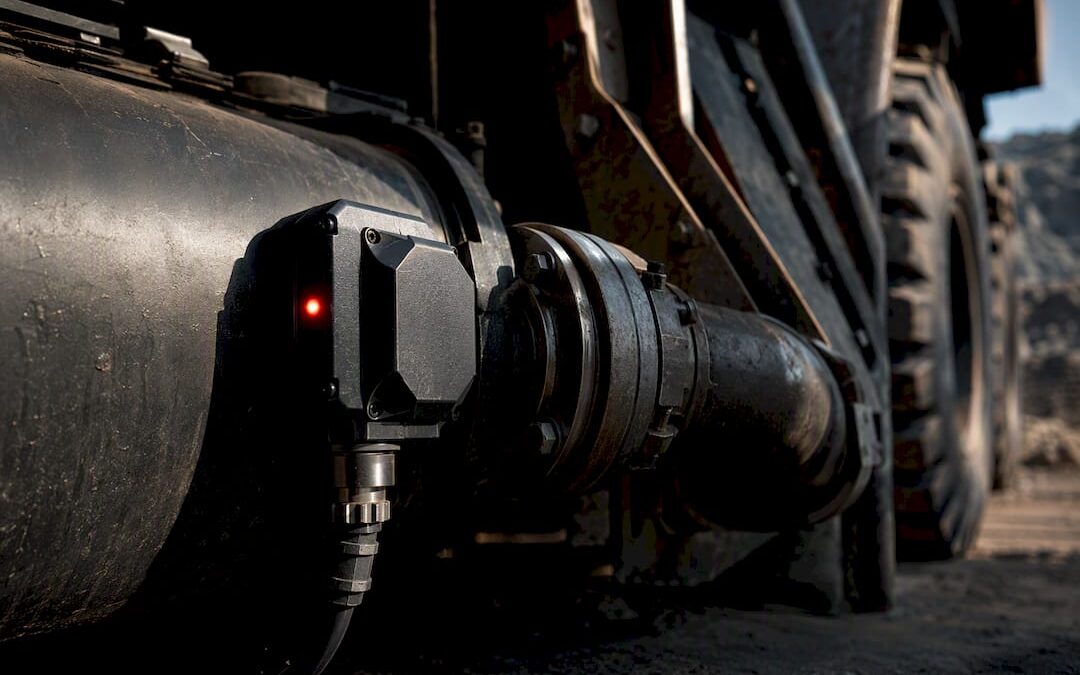
A solid mining equipment fueling plan combines five things: secure bulk tanks with secondary containment, metered dispensing at the asset level, real-time telemetry, a scheduled delivery and emergency resupply arrangement, and documented safety and compliance procedures. Sites that lack any one of these tend to bleed fuel through unexplained loss or lose hours to unplanned refueling. The first moves worth making are commissioning secure containment and getting telemetry online.
TL;DR:
- Steel bulk tanks with secondary containment and telemetry are crucial for preventing fuel loss and enabling real-time monitoring.
- Fuel flow meters, CAN-bus integration, and fuel collar devices help detect discrepancies and minimize theft or unplanned consumption.
- Proper planning, including assessing site needs and running a full pilot before scaling, reduces rework and ensures system reliability.
- Compliance with EPA SPCC thresholds and MSHA controls requires documentation, safety measures, and regular inspection records.
- An experienced fuel delivery partner should provide scheduled, emergency, and remote site fuel services with transparent invoicing and clear SLA adherence.
Table of Contents
- Key system components and technologies behind a fueling plan
- Designing a fueling plan: a step-by-step framework site teams can follow
- Safety, compliance and SPCC and MSHA considerations every fueling plan must address
- Operational best practices to reduce fuel theft, shrinkage and downtime
- Sizing storage and estimating consumption for common equipment classes
- Implementation checklist and KPIs to monitor after launch
- How a fuel-delivery partner executes the plan
- Sources
- FAQ
Key system components and technologies behind a fueling plan
A fueling plan is only as strong as its physical infrastructure and the data layer sitting on top of it. Skid tanks work well for smaller, semi-permanent fueling points near a pit face, while aboveground bulk tanks suit a central yard where volume and delivery frequency justify a fixed installation. Mobile bowsers earn their place on sites where equipment moves faster than any fixed point can serve it.
Secondary containment is not optional once storage crosses the threshold where SPCC applies, and overfill prevention devices belong on every bulk tank regardless of size. Dispensing choices then follow equipment mobility: fixed points suit stationary crushers and generators, bowsers serve roving fleets, and wet-hosing moves fuel directly from a tanker truck to the machine without an intermediate tank.
The technology layer is where most unexplained loss gets caught:
- Flow meters log every gallon dispensed against a specific asset, not just a tank level.
- Fuel collars attach to individual machines and flag mismatches between fill volume and expected burn.
- CAN-bus integrations pull engine and fuel data directly from the equipment for cross-checking against dispensed volume.
- Tank-level telemetry tracks inventory in real time, closing the gap between deliveries and reconciliation.
Recent industry coverage of telemetry-enabled fuel platforms points to combining secure hardware with real-time monitoring as the direction the sector is moving, largely because it supports both theft reduction and auditable emissions reporting.
Designing a fueling plan: a step-by-step framework site teams can follow
Building the plan in order, rather than bolting pieces on as problems appear, saves rework later.
- Assess the site. Inventory every diesel and gasoline asset, pull OEM duty-cycle estimates for daily burn, map the existing storage footprint, and check whether current or planned capacity crosses SPCC triggers.
- Choose the architecture. Centralize storage where equipment returns to a hub daily; distribute smaller tanks or bowsers where machines work remote faces for extended shifts.
- Lock in supply chain rules. Set delivery cadence, minimum fill thresholds that trigger a reorder, emergency resupply triggers, and the SLA terms a delivery contract needs to specify, including delivery windows and proof of delivery.
- Establish governance. Define who is authorized to fuel, write the fueling procedure, require transaction logging for every fill, and train staff before go-live.
- Validate and scale. Pilot the plan at one site or one equipment class, reconcile actual usage against telemetry, then expand once the numbers hold up.
Pro Tip: Run the pilot phase for at least one full billing cycle before scaling. A shorter window rarely surfaces the delivery timing and reconciliation issues that only show up once.
Safety, compliance and SPCC and MSHA considerations every fueling plan must address
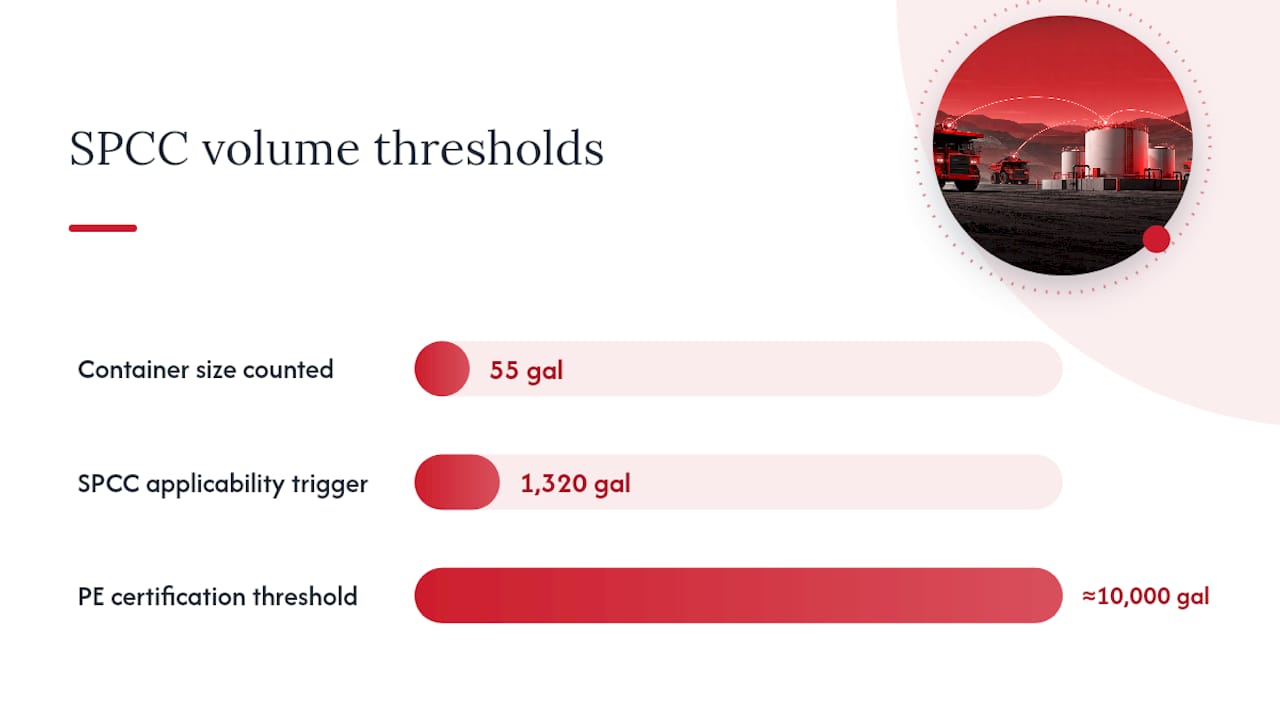
Two federal frameworks shape most of the compliance work here. The EPA’s SPCC guidance applies once aboveground oil storage passes 1,320 gallons counting containers of 55 gallons or larger, and facilities above roughly 10,000 gallons typically need professional engineer certification of the plan. That threshold alone determines whether a site yard needs a formal SPCC Plan or can operate under simpler recordkeeping.
MSHA’s compliance guidance on diesel particulate matter covers fueling practices, equipment maintenance standards, and where engineering controls are expected over administrative ones. Engineered containment and telemetry often satisfy that feasible-controls expectation better than a paper procedure alone.
On-site controls that support both frameworks include:
- Breather assemblies and dry-break couplings that limit vapor release and spill risk during transfer.
- Grounding and earthing on every tank and bowser before fuel moves.
- A firm no-refuel-while-loaded rule for haul trucks and excavators.
- PPE requirements and documented training for anyone authorized to fuel equipment.
Inspection and recordkeeping cadence matters as much as the hardware. Keep fill logs, containment inspection records, and training rosters current, since these are the first documents an inspector or auditor will ask to see.
Operational best practices to reduce fuel theft, shrinkage and downtime
Telemetry alone will not close every gap. Pair automated tank-level and asset-meter data with a scheduled manual reconciliation and a defined exception workflow for anything that does not match.
- Issue RFID cards or asset-level IDs so every transaction ties to a specific person and machine.
- Log every fill and run periodic audits against delivery records.
- Keep bowsers locked, bunding secured, and yard lighting and CCTV covering every dispensing point.
- Build shift handover checklists that flag open exceptions before the next crew starts.
Scheduling top-offs to match duty cycles, rather than fueling on a fixed clock, cuts both idle time and the window during which fuel sits exposed. Tamper alerts routed straight to ops dispatch turn a delayed discovery into same-shift action.
Pro Tip: Tie tamper alerts to a named dispatcher, not a shared inbox. Alerts that land in a queue nobody owns get resolved days later, if at all.
Sizing storage and estimating consumption for common equipment classes
Start with OEM duty-cycle handbooks for hourly burn, then apply a site-specific load factor based on grade, payload, and ambient temperature, since book figures assume ideal conditions that rarely match a working pit.
- Treat manufacturer figures as a starting point, then verify against telemetry once the fleet is running, since burn rates vary by machine and duty cycle.
- Excavators, dozers, and haul trucks each carry different ranges depending on size and load, and OEM handbooks remain the most reliable planning input for a specific model.
- Size buffer capacity in days of autonomy rather than gallons alone. Remote sites with unreliable delivery access need more buffer than a site near a paved highway.
- Cold weather changes fuel behavior and biodiesel blends can gel at lower temperatures, so storage and dispensing equipment should account for the blend and climate at the site.
Implementation checklist and KPIs to monitor after launch
A clean launch depends on sequencing, and the KPIs that matter most are the ones that surface a problem before it becomes a shutdown.
- Confirm containment, overfill prevention, and grounding are installed and inspected.
- Issue authorization credentials and confirm the fueling procedure is documented and trained.
- Commission telemetry across tanks and assets before the first live fill.
- File SPCC documentation and confirm PE certification status if the site’s capacity requires it.
- Set up four KPIs from day one: fuel variance percentage, delivery SLA adherence, fueling exception rate, and refill lead time.
Run daily reconciliation against telemetry, a monthly variance review with the full team, and an annual SPCC and plan review to catch anything that has drifted since launch.
How a fuel-delivery partner executes the plan
Building the infrastructure and governance above is only half the job. Someone still has to show up with fuel on schedule, respond when a tank runs low faster than expected, and hand over documentation clean enough to survive an audit. That is the part a fuel delivery partner is built to own.
A partner covering mining operations typically handles bulk fuel delivery and recurring scheduled fills, DEF delivery, wet-hosing for mobile fleets, and emergency fuel delivery when a resupply trigger fires outside normal hours. Before signing a contract, confirm these items:
- Defined delivery windows and a documented proof-of-delivery process for every fill.
- Transparent, itemized invoicing that reconciles against your telemetry data.
- A stated emergency response commitment for after-hours or remote-site calls.
- Pilot metrics agreed in advance, so variance reduction and SLA compliance can be measured against a baseline.
Specialized partners support remote mining fuel logistics with scheduled and emergency delivery across primary markets and nationwide through partner networks. Starting with a single-site pilot, measuring variance and SLA adherence for one cycle, and scaling once the numbers hold is the same validation step covered earlier in the design framework. Get a quote through the fuel services page to see how a pilot would fit your site.
Sources
For applicability and required Plan elements, start with the EPA’s SPCC guidance. For fueling and maintenance expectations under diesel particulate rules, review MSHA’s compliance guide. Industry coverage of telemetry platforms is also worth tracking as the technology matures.
- Spill Prevention, Control, and Countermeasure (SPCC) for the Upstream (Oil Exploration and Production) Sector | US EPA
- Mine Safety and Health Administration (MSHA) – Compliance Guides – METAL AND NONMETAL DIESEL PARTICULATE MATTER (DPM) STANDARD
- Orca Fuel Solutions–VERIDAPT to highlight smart, secure and ESG-aligned fuel management at Mining Indaba 2026 | IM-Engineering & Mining
FAQ
How much fuel does a 30-ton excavator use per hour?
Fuel burn for a machine in this class depends heavily on duty cycle, load, and terrain, so OEM handbook figures paired with site telemetry give the most reliable number for your specific site. Treat any general range as a planning starting point, not a fixed budget figure.
How much fuel does a Cat D11 use per hour?
Large dozers in the D11 class burn considerably more than smaller excavators because of engine size and typical load, but the exact rate depends on grade, blade load, and duty cycle. Pull the manufacturer’s duty-cycle data and confirm it against your own telemetry once the machine is running on site.
What is mining equipment called?
Mining equipment covers a wide category of heavy machinery including excavators, dozers, haul trucks, loaders, drills, and crushers used to extract and move material. Each class has distinct fuel and maintenance needs that a fueling plan should account for separately.
How much diesel does a 20-ton excavator use per hour?
A 20-ton excavator’s diesel use varies with load, terrain, and idle time, and OEM duty-cycle documentation remains the most dependable source for a specific model. Site telemetry after commissioning will confirm the actual rate under real working conditions.
Do I need an SPCC Plan for a mine site fuel yard?
An SPCC Plan is generally required once aboveground oil storage on site exceeds 1,320 gallons, counting containers of 55 gallons or larger. Facilities above roughly 10,000 gallons typically also need the plan certified by a professional engineer.
Recent Comments