
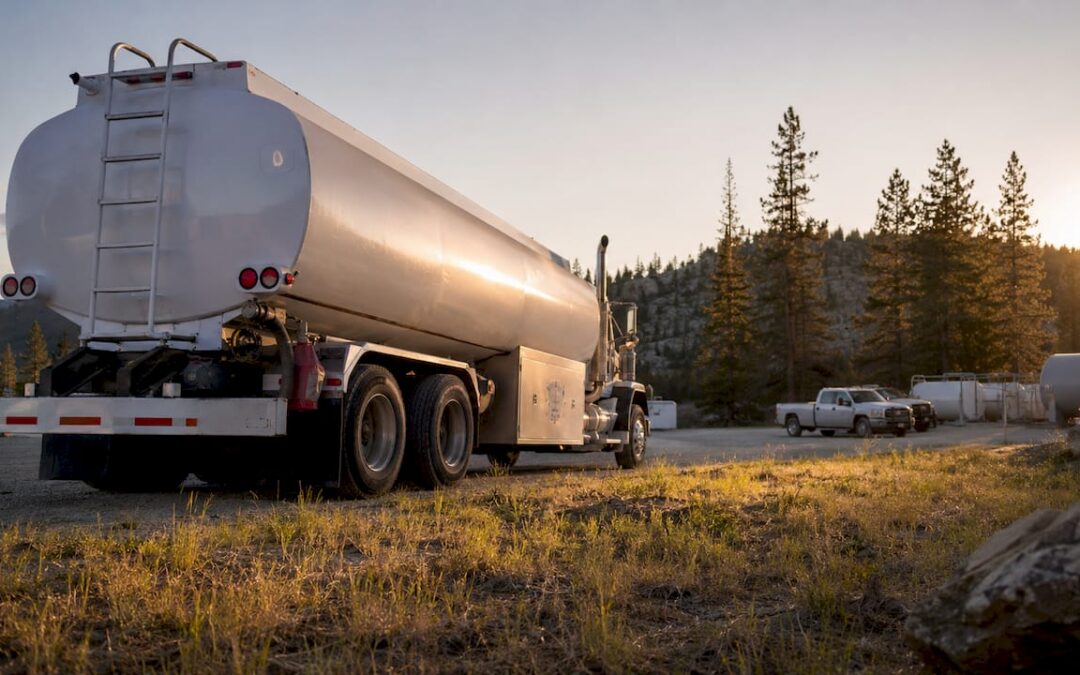
Contracted diesel delivery is the practice of securing a formal fuel supply agreement with a commercial provider to deliver diesel directly to utility fleet yards, substations, and remote infrastructure sites on a scheduled or on-demand basis. For utility companies managing power generation, water treatment, and gas distribution, this arrangement is not optional. It is the operational backbone that keeps fleets fueled, generators running, and service crews ready to respond at any hour. This article explains the operational, financial, and emergency preparedness case for contracted diesel delivery and what utility decision-makers need to know before signing a supply agreement.
Why utilities need contracted diesel delivery: the core case
Contracted diesel delivery solves a problem that retail fueling cannot. Utility fleets do not operate on predictable schedules. A line crew dispatched at 2 a.m. after a storm cannot wait for a fuel station to open. A water treatment plant running backup generators during a grid failure needs diesel on-site, not across town. The standard industry term for this model is “contracted fuel supply,” and it covers everything from scheduled bulk tank fills to emergency on-demand delivery.
The distinction matters because utilities that rely on retail pumps are treating fuel as a convenience rather than a strategic asset. Utility fleets’ unpredictable demands require on-site storage and contracted replenishment cycles to stay operationally ready. That means fuel must be available before the need arises, not sourced reactively when a crisis is already underway.
How contracted delivery eliminates downtime and boosts fleet efficiency
Every retail fuel stop costs more than the price at the pump. A standard retail fuel stop takes 20–30 minutes per vehicle, which adds up to more than 10 hours of lost productivity weekly for a fleet fueling five vehicles daily. For a utility operating 20 or 30 service vehicles, that number multiplies fast. Those are technician hours that should be spent on infrastructure maintenance, not idling at a gas station.
On-site delivery, commonly called wet-hosing, eliminates this entirely. A fuel truck arrives at your yard during off-hours or shift changes, tops off every vehicle, and leaves before your crew clocks in. Scheduling deliveries to coincide with crew downtime maximizes fleet readiness for the next shift without disrupting active work. Every vehicle starts the day with a full tank.
The efficiency gains extend beyond time savings:
- Dead mileage reduction: Vehicles no longer detour to fuel stations, cutting unnecessary miles from daily routes.
- Fuel theft prevention: Closed-loop on-site fueling removes the opportunity for unauthorized fill-ups at retail stations.
- Digital fuel logs: Precise digital tracking records consumption per vehicle and generator, reducing shrinkage and supporting maintenance planning.
- Fleet readiness: Every asset is fueled and ready at shift start, eliminating the “who forgot to fuel the truck” problem.
Pro Tip: Schedule your contracted deliveries to arrive between 10 p.m. and 5 a.m. This window aligns with the lowest fleet activity, so fueling never competes with active dispatch. Review your on-site delivery setup to configure tank placement and access points before your first scheduled drop.
Is contracted diesel a hedge against fuel price volatility?
Yes, and the numbers make the case clearly. Utilities face projected diesel price hikes of up to 49% by 2028. That kind of exposure makes spot-market buying a budget liability. A contracted fuel supply agreement locks in pricing structures, gives access to bulk volume discounts, and protects against the supply shortages that follow natural disasters or refinery disruptions.
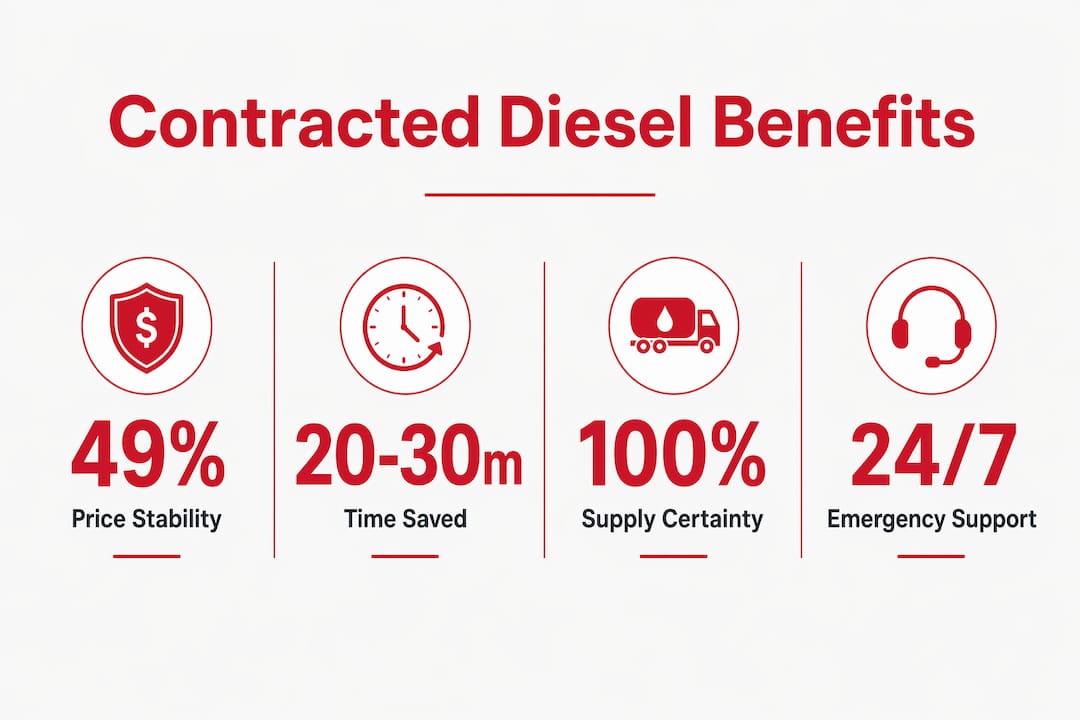
The difference between contracted and spot-market buying is not just price. It is supply certainty. During Hurricane Harvey in 2017, retail stations across Houston ran dry within 48 hours. Utilities with contracted delivery agreements had fuel trucks dispatched to their yards before the storm made landfall. Those without contracts scrambled.
| Factor | Contracted delivery | Spot/cash market buying |
|---|---|---|
| Pricing stability | Fixed or volume-based rates | Subject to daily market swings |
| Supply guarantee | Contractual delivery obligation | No guarantee during shortages |
| Budget forecasting | Predictable monthly fuel costs | Unpredictable, volatile expenses |
| Emergency access | Priority dispatch in crises | Compete with general public |
| Volume discounts | Available at bulk thresholds | Retail pump price only |
The table above shows why procurement officers at utilities increasingly treat contracted fuel supply the same way they treat power purchase agreements: as a financial instrument, not just a logistics arrangement. Locking in supply terms before a price spike or a storm is the difference between budget certainty and crisis spending.
What makes utility fleet fueling uniquely difficult?
Utility fleets face fuel supply challenges that most commercial fleets never encounter. Understanding these challenges explains why the importance of diesel logistics is so much higher for utilities than for, say, a construction company with a fixed job site.
The core problem is unpredictability. A utility fleet manager cannot predict when a transformer will fail, when a water main will burst, or when a gas leak will require an emergency response. Service calls arrive at random hours across wide geographic areas. Retail fueling simply cannot support that operational model.
Consider these utility-specific scenarios:
- Urban grid restoration: A crew of six vehicles responds to a substation failure at midnight. Without on-site fuel, at least one vehicle needs to detour before reaching the site, delaying restoration by 30–45 minutes.
- Remote infrastructure: Transmission line crews working in rural Texas or Utah may be 60 miles from the nearest diesel pump. A contracted provider with remote-site delivery capability eliminates that constraint entirely.
- Generator-dependent facilities: Water treatment plants and pumping stations running backup generators during outages consume diesel at high rates. Without a contracted replenishment cycle, a 72-hour outage can exhaust on-site reserves.
- Multi-site coordination: A utility managing substations across three counties needs fuel delivered to multiple locations simultaneously. A single contracted provider handles that coordination; retail fueling does not.
Retail pumps alone leave utilities vulnerable during outages, which is precisely when fuel demand spikes. Treating diesel as a strategic asset, with on-site storage and contracted replenishment, is the only model that matches the operational reality of utility work.
What should utilities know before signing a diesel delivery contract?
Contract structure determines whether a fuel supply agreement protects you or exposes you. The most common mistake utility procurement teams make is committing to volume thresholds that do not reflect actual usage. The legal case Orange & Rockland Utilities v. Hess is the clearest example in the industry. Fuel procurement contracts must align with realistic usage estimates, because over-commitment creates legal disputes and undermines supplier cooperation.
Every utility fuel contract should address four components:
- Delivery guarantees: The contract must specify response times for both scheduled and emergency deliveries. Vague language like “reasonable effort” is not acceptable for a utility.
- Flexibility clauses: Demand fluctuates. A good contract allows volume adjustments within defined bands without penalty, accommodating seasonal spikes or unexpected outages.
- Force majeure terms: Understand exactly what events excuse a supplier from delivery obligations. A supplier who cannot deliver during a hurricane is not useful to a utility responding to hurricane damage.
- Supplier vetting: Vetting suppliers for emergency delivery reliability matters more than choosing based on price alone. A low-cost provider who cannot mobilize at 3 a.m. is a liability.
Pro Tip: Request documented emergency response case studies from any supplier you are evaluating. Ask specifically: “What did you deliver, to whom, and within what timeframe during the last major regional outage?” A credible provider answers that question with specifics, not generalities.
How does contracted delivery strengthen emergency preparedness?
Emergency diesel fuel delivery is the difference between a utility that restores service in hours and one that takes days. When a storm knocks out grid power, the utility’s own vehicles and backup generators become the most critical assets in the region. Both run on diesel. Both need fuel before the emergency, not during it.
Contracted delivery supports emergency preparedness in three direct ways:
- Pre-positioned reserves: A contracted provider can top off all on-site storage tanks in the 24–48 hours before a forecasted storm, giving your fleet and generators maximum fuel depth before the crisis begins. Anytimefuelpros offers hurricane season preparation fueling programs specifically designed for this window.
- 24/7 rapid response: A contracted agreement with a provider like Anytimefuelpros includes after-hours and emergency dispatch. When your on-site tank drops below threshold at midnight, a truck is already en route.
- Continuity of supply: During regional shortages, contracted customers receive priority over spot buyers. Your agreement creates a legal obligation for the supplier to serve you first.
The operational logic is straightforward. A utility that runs out of diesel during a disaster is no longer a utility. It is a liability. Contracted delivery converts fuel from a variable expense into a guaranteed operational input, which is exactly how utilities need to treat it.
Key Takeaways
Contracted diesel delivery is the single most effective way for utilities to guarantee fuel availability, control costs, and maintain emergency readiness across every operational scenario.
| Point | Details |
|---|---|
| Retail fueling costs more than fuel | Lost productivity from retail stops exceeds 10 hours weekly for a five-vehicle fleet. |
| Price volatility is a real budget threat | Diesel prices are projected to rise up to 49% by 2028, making fixed-rate contracts a financial shield. |
| Utility fleets have unique fuel demands | Unpredictable emergency response and remote sites make on-site contracted delivery the only viable model. |
| Contract terms determine protection level | Delivery guarantees, flexibility clauses, and supplier vetting matter more than price alone. |
| Emergency preparedness requires pre-positioned fuel | Pre-storm tank fills and 24/7 dispatch capability are only available through contracted agreements. |
Power your utility operations with Anytimefuelpros
Anytimefuelpros delivers contracted diesel directly to utility yards, substations, generator sites, and remote infrastructure across Texas, Utah, and nationwide through a trusted partner network. Whether you need scheduled bulk tank fills, wet-hosing for your fleet, or emergency fuel delivery at 2 a.m. after a storm, Anytimefuelpros has the logistics and the contracts to back it up.
Utility customers get transparent invoicing, digital delivery logs, and a single point of contact for multi-site fueling across multiple states. Explore the full benefits of contracted fuel delivery or contact Anytimefuelpros directly to build a delivery program around your fleet’s actual usage patterns. Fuel is too critical to leave to chance.
FAQ
What is contracted diesel delivery for utilities?
Contracted diesel delivery is a formal fuel supply agreement between a utility company and a commercial provider, covering scheduled and emergency on-site diesel delivery to fleet yards, generators, and remote sites. It replaces retail fueling with a guaranteed, managed supply model.
How does contracted delivery reduce fuel costs for utilities?
Contracted agreements provide access to bulk volume discounts and fixed pricing structures, protecting utilities from spot-market price swings. Diesel prices are projected to rise up to 49% by 2028, making locked-in contract rates a direct cost control tool.
What should a utility look for in a diesel delivery contract?
The contract must specify delivery response times, volume flexibility clauses, force majeure terms, and emergency dispatch guarantees. Supplier reliability during regional outages matters more than base price when evaluating providers.
Can contracted diesel delivery support emergency response operations?
Yes. Contracted providers can pre-position fuel reserves before forecasted storms and dispatch trucks 24/7 during active emergencies. This ensures utility fleets and backup generators have fuel when demand is highest and retail supply is most constrained.
How does on-site diesel delivery improve fleet readiness?
On-site delivery, or wet-hosing, refuels vehicles during off-hours so every asset starts each shift with a full tank. This eliminates retail fuel stop detours, reduces dead mileage, and gives fleet managers precise digital consumption records for each vehicle.
Recent Comments