
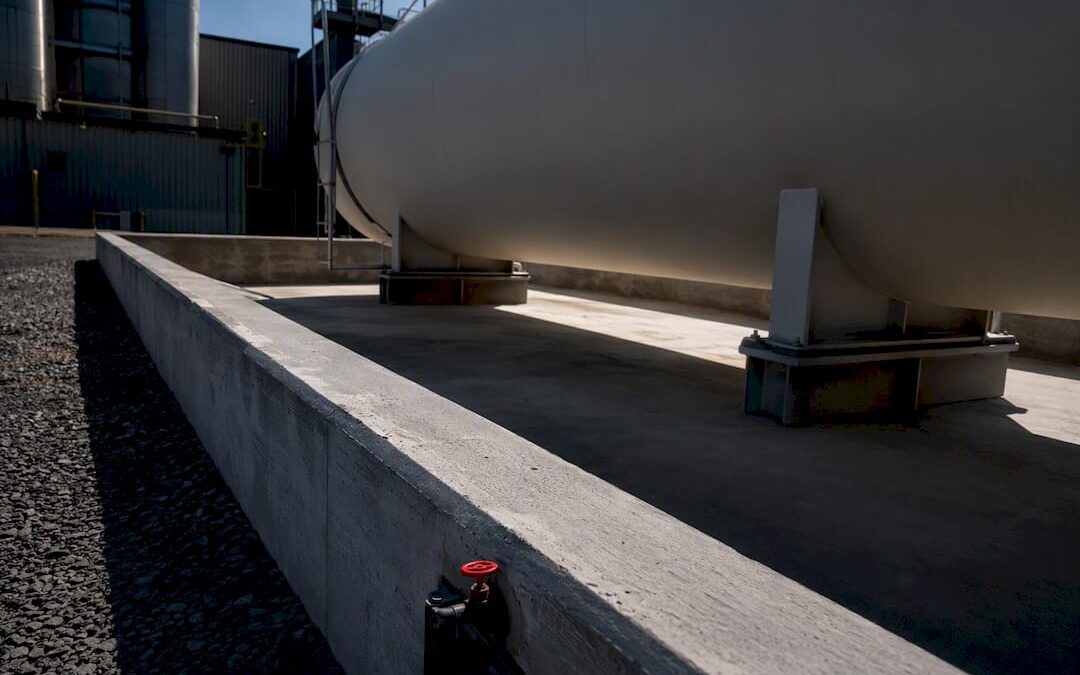
If your yard holds an aggregate aboveground oil capacity exceeding the federal threshold, or has a significant portion of combined tank volume buried underground, federal SPCC or UST rules already apply to you. Start today by tallying aggregate capacity, confirming secondary containment, checking your state’s registration status, and pulling your inspection and training files. State rules often add stricter thresholds, so verify your state program page before assuming federal minimums cover you.
TL;DR:
- Tanks exceeding 1,320 gallons aboveground or 42,000 gallons underground generally trigger federal SPCC or UST rules, but many states require compliance at lower thresholds.
- Maintaining organized records, including inspection logs, training certificates, delivery manifests, and spill response plans, is essential for passing inspections.
- Proper secondary containment must hold the largest tank’s volume and include impermeable surfaces and proper drainage, with phased upgrades recommended for improvised berms.
- Inspection protocols involve monthly visual checks, periodic integrity testing by certified inspectors, and immediate action on active leaks or corrosion.
- Registering tanks, scheduling inspections, and building a comprehensive compliance system should follow a structured step-by-step process, including engaging a professional engineer for large capacity tanks.
Table of Contents
- Quick Yard Tank Compliance Checklist
- What Federal Rules Actually Govern Yard Tanks?
- How Do State and Local Rules Change the Federal Baseline?
- What Inspection and Testing Standards Apply?
- What Records Do Regulators Actually Ask For?
- How Should You Build and Maintain Secondary Containment?
- What Training and Certification Do Operators Need?
- What Triggers an Enforcement Action?
- Building Your Compliance Plan Step by Step
- Where to Verify These Rules Directly
- Sources
Quick Yard Tank Compliance Checklist
Before you dig into the regulatory detail, walk your yard with this list in hand. It catches the gaps that trigger most citations, and it takes less than an hour for a typical site.
- Count every container 55 gallons or larger, including drums and small ASTs — they all count toward your SPCC aggregate threshold.
- Note any buried piping or tanks and estimate what percentage of total capacity sits underground, since that determines UST applicability.
- Call your state tank program and local fire marshal to confirm current registration or permit status.
- Check that secondary containment is sized for your largest single container and that any drains are valved, plugged, or fitted with oil/water separation.
- Locate your inspection logs, delivery manifests, and operator training records now, before an inspector asks for them.
- Confirm you have a spill kit on-site, a written response plan, and the phone number for your state’s spill-reporting hotline.
Pro Tip: Keep a single binder or shared drive folder with your SPCC plan, inspection logs, and training certificates together. When a state inspector calls with 48 hours’ notice, that one folder is the difference between a clean visit and a follow-up letter.
For yard-specific fueling setups, our guide to trucking yard fueling walks through the same checklist from an operational angle.
What Federal Rules Actually Govern Yard Tanks?
Two federal frameworks do most of the heavy lifting for onsite storage, and knowing which one applies changes your entire paperwork burden.
The Spill Prevention, Control, and Countermeasure rule covers aboveground oil storage tank compliance regulations under 40 CFR Part 112. It kicks in once your facility’s aggregate aboveground capacity exceeds 1,320 gallons, or completely buried capacity exceeds 42,000 gallons, and there’s a reasonable chance a discharge could reach navigable waters. Multiple small tanks add up fast: three 550-gallon totes push you over the line before you’ve filled a single truck.
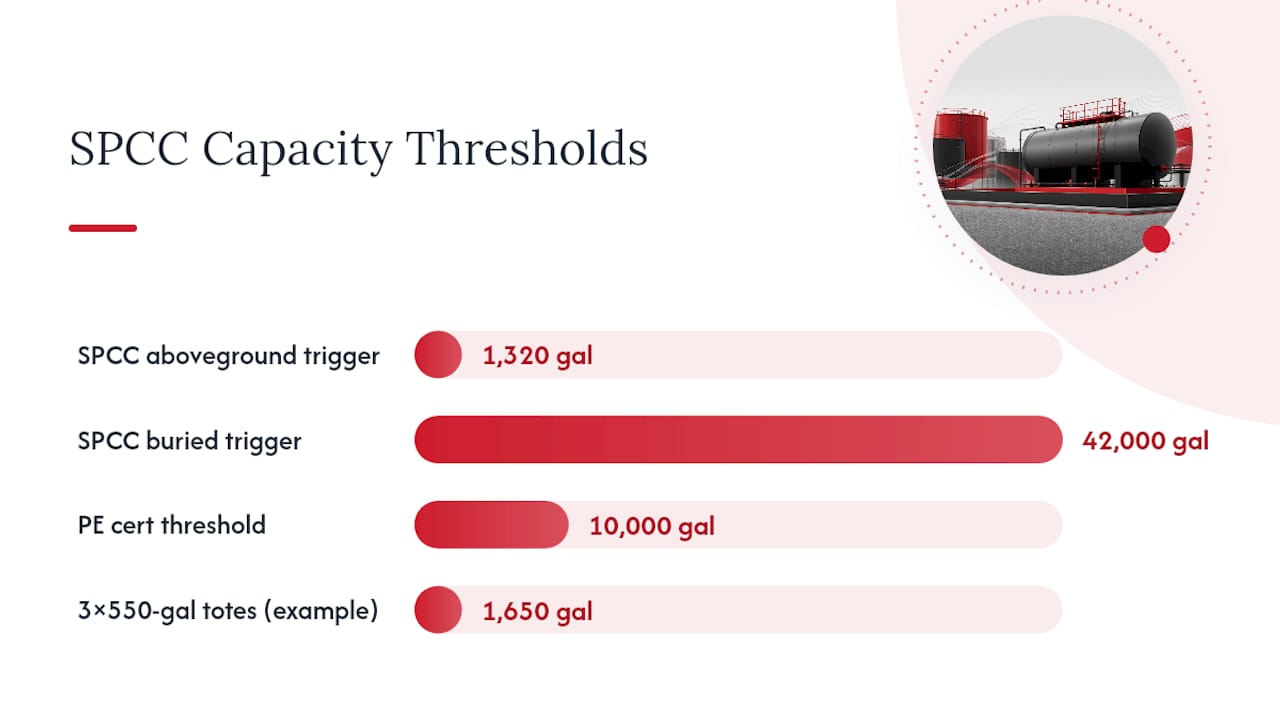
If you cross 10,000 gallons in aggregate capacity, EPA requires a professional engineer to certify your SPCC Plan. Below that, self-certification is often allowed, but the plan still has to document containment, inspection schedules, and spill response procedures in writing.
Underground storage gets its own rulebook. 40 CFR Part 280 defines UST systems and sets federal duties for release detection, release reporting, financial responsibility, and corrective action. Some heating oil tanks serving residential buildings are exempt, but yard tanks feeding equipment or generators rarely qualify for that carve-out.
Two more frameworks shape daily operations even when they don’t set capacity thresholds:
- OSHA’s standards for flammable liquids and confined-space entry govern how workers access, maintain, and repair tanks safely.
- NFPA 30 sets fire-code separation distances and construction details that most state fire marshals reference directly during permit review. Our breakdown of NFPA 30 diesel storage requirements covers the layout details most yards miss.
How Do State and Local Rules Change the Federal Baseline?
Federal thresholds are a floor, not a ceiling. States routinely require registration at capacities well below the SPCC 1,320-gallon line, and enforcement almost always runs through state or local agencies rather than EPA directly.
- Identify your state’s tank program. Nearly every state runs a database or registration portal through its environmental agency (often labeled DEP, DEQ, or a similar acronym), and some states register ASTs above 500 to 1,100 gallons rather than waiting for the federal threshold.
- Check your local fire marshal’s requirements. Many jurisdictions layer permit and placarding rules on top of state environmental registration, particularly for tanks storing flammable or combustible liquids.
- Ask about operator training mandates. Several states require documented training for anyone who handles fuel transfers, separate from any federal OSHA requirement.
- Confirm renewal cycles before you call. Have your tank capacities, location, and current permit numbers ready. Registration renewals commonly run on one- to three-year cycles, and missing a renewal window is one of the most common paperwork violations found during audits.
Because state agencies typically administer these programs directly, your state’s own tank database matters more day-to-day than the federal rule text. Our guide on bulk diesel storage compliance breaks down how these layers interact for larger storage setups.
What Inspection and Testing Standards Apply?
Inspection frequency depends on tank type, but the pattern is consistent: frequent visual checks, periodic formal inspections, and a structural review on a longer cycle for larger tanks.
Monthly visual inspections catch the obvious problems, corrosion, loose fittings, containment cracks, before they become spill events. EPA’s tank inspection guidance points to STI SP001 as the accepted standard for shop-fabricated aboveground containers, covering both routine monitoring and formal integrity testing intervals.
For large field-erected steel tanks, API 653 sets the standard inspectors use to determine in-service inspection intervals, repair criteria, and when a tank needs to come out of service for structural work. Expect external inspections on a shorter cycle and internal or ultrasonic thickness testing on a longer one, with the exact interval driven by tank age, corrosion rate, and prior findings.
Findings that typically demand immediate action include:
- Active leaks or seepage at seams, fittings, or the tank bottom.
- Containment sumps holding standing water or visible product sheen.
- Corrosion that has progressed past surface pitting into measurable wall loss.
- Missing or expired calibration on leak-detection equipment for UST systems.
What Records Do Regulators Actually Ask For?
Inspectors ask for paperwork before they ask for a tour, and a facility with tidy records almost always gets a shorter, friendlier visit.
Keep these on hand and organized:
- Inspection logs covering monthly visual checks and any formal integrity tests.
- Calibration records for leak-detection and monitoring equipment.
- Delivery manifests showing fuel type, volume, and date for every drop.
- Your current SPCC Plan, including the PE certification page if one applies.
- Operator training completion records with dates and signatures.
- Spill and near-miss logs, even for minor incidents that never reached a waterway.
Permit and registration renewals typically follow one- to three-year windows depending on your state, and a reportable spill or release usually triggers mandatory notification to your state agency within a set number of hours. If a regulator sends a formal Request for Information or shows up for an audit, having every document above in one place turns a multi-week scramble into an afternoon. Digitizing these files matters more than most facilities realize: poor recordkeeping gets cited even when physical containment is solid, because inspectors can’t verify what they can’t see on paper. Our piece on off-road diesel compliance examples shows what these records look like in practice.
How Should You Build and Maintain Secondary Containment?
Containment has to hold the entire volume of your largest single tank, not just a percentage of it, and the surface underneath has to be impermeable, not gravel with a tarp thrown over it.
Solid containment design includes a berm or wall height calculated against the tank’s full capacity, an impermeable pad or liner, and a drainage point that’s either sealed shut or routed through an oil/water separator rather than straight to open ground.
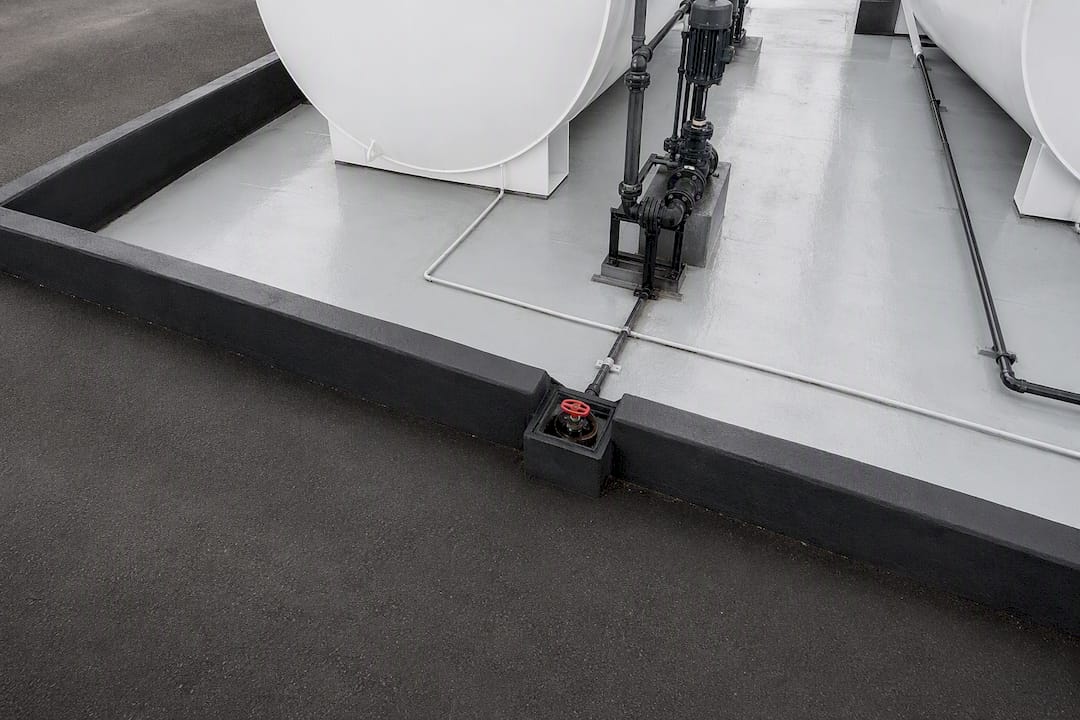
Pro Tip: If your containment relies on a plastic liner and sandbags, budget for an upgrade this year. Regulators consistently flag improvised berms during inspections because they can’t be verified in a plan or tested for integrity, while engineered containment sumps show up cleanly in your SPCC documentation.
Transfer procedures matter just as much as the containment itself:
- Ground and bond hoses and fittings before every transfer to prevent static discharge.
- Use locking, leak-tested couplings rather than friction-fit fittings.
- Inspect containment drains seasonally, since freeze-thaw cycles crack seals that looked fine in summer.
- Replace cracked or UV-degraded liners before they fail during an actual spill, not after.
What Training and Certification Do Operators Need?
Anyone transferring fuel or entering a tank for maintenance needs documented training, and the paperwork trail matters as much as the training itself when an inspector asks for proof.
- Operator training should cover transfer procedures, spill response, and basic recognition of tank integrity problems, with some states layering their own certification tiers on top of federal expectations.
- Confined-space entry into a tank requires a written permit, atmospheric testing before entry, a dedicated attendant, a rescue plan, and appropriate PPE under OSHA’s confined-space standard.
- Refresher training on an annual basis is a common baseline, and every session should end with a signed, dated record filed alongside your other compliance paperwork.
What Triggers an Enforcement Action?
Inspectors work through a predictable checklist: registration status, containment condition, leak-detection function, and whether your records match what they see on the ground.
- A minor paperwork gap, like a missing training record, usually draws a Notice of Violation with a corrective deadline rather than an immediate penalty.
- Physical hazards, such as failed containment or an active leak, can trigger a delivery prohibition until the problem is fixed and verified.
- Repeat or willful violations, especially unreported spills, tend to escalate into referrals with financial penalties attached.
- Documenting corrective action immediately, and reaching out to your state’s technical assistance program before a follow-up visit, consistently reduces the severity of the final outcome.
Building Your Compliance Plan Step by Step
Getting a yard from unknown status to fully documented compliance follows a sequence, and skipping steps is what creates the paperwork gaps inspectors find first.
Step 1: Run the quick-site audit. Assign one person, usually the facilities manager or EHS lead, to tally aggregate capacity across every container 55 gallons and up, and to flag any buried piping.
Step 2: Determine which rules apply and register. Once you know your aggregate capacity and underground percentage, you’ll know whether SPCC, UST rules, or both apply. Cross 10,000 gallons in aggregate aboveground capacity, and it’s time to hire a professional engineer to certify your SPCC Plan. File state registration paperwork in parallel; don’t wait for the federal picture to be perfect first.
Step 3: Schedule inspections and training. Book your monthly visual inspection routine, line up a certified inspector for API 653 or STI SP001 testing if your tanks qualify, and get operator training on the calendar with a documentation template ready.
Step 4: Upgrade containment and controls. Replace improvised berms with engineered containment, update transfer SOPs, and digitize your records so the next audit takes minutes instead of days.
Step 5: Set up ongoing monitoring. Build a maintenance calendar with inspection dates, renewal deadlines, and your state spill-reporting contact readily available to anyone on-site.
| Step | Primary Action | Who Owns It |
|---|---|---|
| 1. Audit | Tally aggregate capacity and buried volume | Facilities manager or EHS lead |
| 2. Register | File SPCC/UST paperwork; hire PE if ≥10,000 gallons | Compliance manager, outside PE |
| 3. Inspect and train | Schedule API 653/STI SP001 tests and operator training | Certified inspector, site supervisor |
| 4. Upgrade | Install engineered containment; digitize records | Operations team |
| 5. Monitor | Maintain calendar and emergency contacts | Site compliance owner |
Facilities running high-volume equipment yards often find that consistent, scheduled fuel delivery reduces the number of tanks and transfer events they have to manage in the first place. Anytimefuelpros supports operations across Texas, Utah, and nationwide through its partner network with bulk fuel delivery that cuts down on the small-container sprawl that pushes yards over SPCC thresholds unnecessarily. If your team is weighing whether to consolidate tanks, expand containment, or shift toward scheduled deliveries instead of stockpiling, our fuel delivery questions page walks through the operational tradeoffs.
Where to Verify These Rules Directly
Go to the source documents when you’re drafting a plan or preparing for a regulator’s questions, not a secondhand summary.
- EPA’s SPCC rule page covers thresholds, plan requirements, and PE certification triggers.
- EPA’s UST laws and regulations page covers release detection and reporting duties for buried systems.
- EPA’s tank inspection guidance explains accepted inspection standards, including STI SP001.
- API 653 guidance sets inspection intervals and repair criteria for large field-erected steel tanks.
- Your state environmental agency’s tank program page will list registration thresholds and forms specific to your jurisdiction.
Sources
- Spill Prevention, Control, and Countermeasure (SPCC) rule — EPA
- Underground storage tanks laws and regulations — EPA
- Tank inspections — EPA
- API 653 guidance (excerpt) — American Petroleum Institute
Recent Comments