
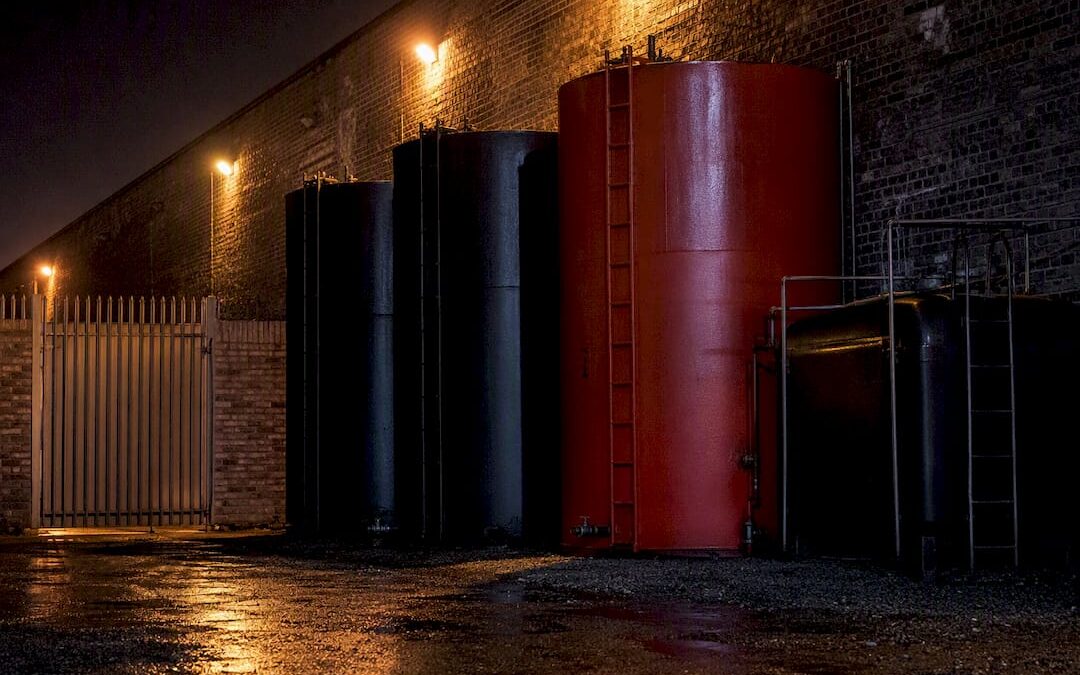
A layered defense of physical barriers, strict operational controls, and realtime monitoring is what stops most fleet fuel theft. No single lock, card policy, or sensor catches everything, but stacked together they close nearly every entry point a thief or a dishonest employee can exploit.
Here’s what to do in the next 24 to 72 hours, starting with what costs nothing:
- Move high-value equipment and fueled vehicles to the center of the lot, blocking access with lower-value assets. Thieves need clear sightlines and fast exits.
- Collect fuel cards left in vehicle cabs overnight. An unattended card in a truck is an open invitation.
- Install anti-siphon devices or locking caps on the worst-exposed tanks first. Cheap hardware stops the easiest crime.
- Pull the last 30 days of fuel card transactions and scan for odd locations or repeated small buys. Fraud patterns show up fast once you look.
- Set a daily fuel-level check on any stationary tank. A five-minute habit catches slip-tank losses before they compound.
Key Takeaways
Preventing fuel theft requires stacking physical hardware, strict card and audit policy, and realtime sensor monitoring, because each layer catches what the others miss.
| Point | Details |
|---|---|
| Start with cheap hardware | Install anti-siphon devices and locking caps before spending on sensors or telematics. |
| Lock down fuel cards | Assign unique PINs, per-vehicle restrictions, and transaction limits at no added cost. |
| Watch cross-system mismatches | Treat MPG drops paired with card or sensor discrepancies as confirmed theft, not coincidence. |
| Preserve evidence fast | Isolate the asset, save video and telematics logs, and freeze cards the moment theft is suspected. |
| Consider removing the tank | Scheduled delivery eliminates standing-tank risk entirely for high-theft or remote sites. |
Table of Contents
- How Fuel Theft Happens and Where Fleets Are Most Vulnerable
- Physical Security Measures That Stop Siphoning and Tampering
- Operational Controls That Close the Internal-Theft Gap
- Telematics, Sensors, and Video: Automating Detection
- Early Warning Signs That Reveal Theft
- What to Do the Moment Theft Is Suspected
- Prioritizing Prevention Spend: Costs, Timelines, and Red Flags
- The Alternative: Remove the Theft Vector with Scheduled Delivery
- Frequently Asked Questions
- Sources
How Fuel Theft Happens and Where Fleets Are Most Vulnerable
Fuel theft breaks down into four categories: physical siphoning or tank tampering, fuel card fraud, dispenser or pump fraud, and internal misuse by employees or contractors. Siphoning targets parked vehicles overnight and slip tanks left unattended on job sites. Card fraud shows up as “smurfing,” where a thief runs several small purchases under a reporting threshold instead of one large one that would trip an alert.
Vulnerability tends to cluster in predictable spots:
- Vehicles parked overnight at the edge of a yard, away from lighting or cameras.
- Slip tanks and bulk storage on active job sites with no fencing.
- Unattended dispensers at a company yard with no camera coverage.
- Fuel cards stored in glove boxes or left with a truck between shifts.
The scale of the problem is real money, not a rounding error. Industry estimates put fuel theft and fraud losses at roughly 6% to 15% of a fleet’s annual fuel budget, which on a mid-sized fleet can run into six figures a year before anyone notices a pattern.
Physical Security Measures That Stop Siphoning and Tampering
Hardware is where most fleets should start, because it’s the fastest fix per dollar spent. Anti-siphon devices and fuel tank alarms materially cut successful siphoning attempts when paired with camera coverage and deliberate parking.
Prioritize these, roughly in order of speed to deploy:
- Anti-siphon valves — install in under an hour per vehicle, blocks tube-and-hose siphoning outright.
- Locking fuel caps — a same-day fix, low cost, and a strong deterrent against opportunistic theft.
- Tank alarms — battery-powered units that trigger on cap removal or sudden level drops, installed in minutes.
- Dispenser locks — protect yard fuel islands, typically a half-day job with a locksmith.
- Fencing and site lighting — a bigger capital project, but the single best deterrent against nighttime access.
- CCTV at entry points and fuel islands — best value when angled to capture license plates, not just motion.
For portable containers on trucks, a lockable jerry can holder secures small-volume fuel that anti-siphon valves don’t cover.
Pro Tip: Park your most fuel-heavy equipment nose-in against a fence or building at night. It kills the easy exit route thieves rely on and forces them into camera sightlines.
Operational Controls That Close the Internal-Theft Gap
Hardware stops outsiders. Policy stops the harder problem: employees and contractors with legitimate access. Fuel card controls are the cheapest lever you have, and most go live with a phone call to your card provider.
Lock down cards with these settings:
- Assign a unique PIN to every driver, never a shared code.
- Restrict each card to its assigned vehicle only.
- Set per-transaction dollar and gallon limits tied to tank size.
- Build a station whitelist along approved routes.
- Require odometer entry at every fill.
Reconciliation catches what card settings miss. Check daily for transactions outside route hours or at unfamiliar stations. Run a weekly comparison of gallons purchased against miles driven.
- Require every driver to sign an acceptable-use policy before receiving a card.
- Run quarterly spot checks comparing card receipts to GPS logs.
- Document every flagged discrepancy, even minor ones, to build a pattern history.
Trained fueling procedures reinforce these habits at the operator level, not just the policy level.
Telematics, Sensors, and Video: Automating Detection
Manual checks catch theft after the fact. Technology catches it in progress. Hauliers are increasingly turning to AI-powered video telematics and sensor integrations as diesel theft rises, because organized crews can drain hundreds of liters in minutes and a human patrol simply can’t be everywhere.
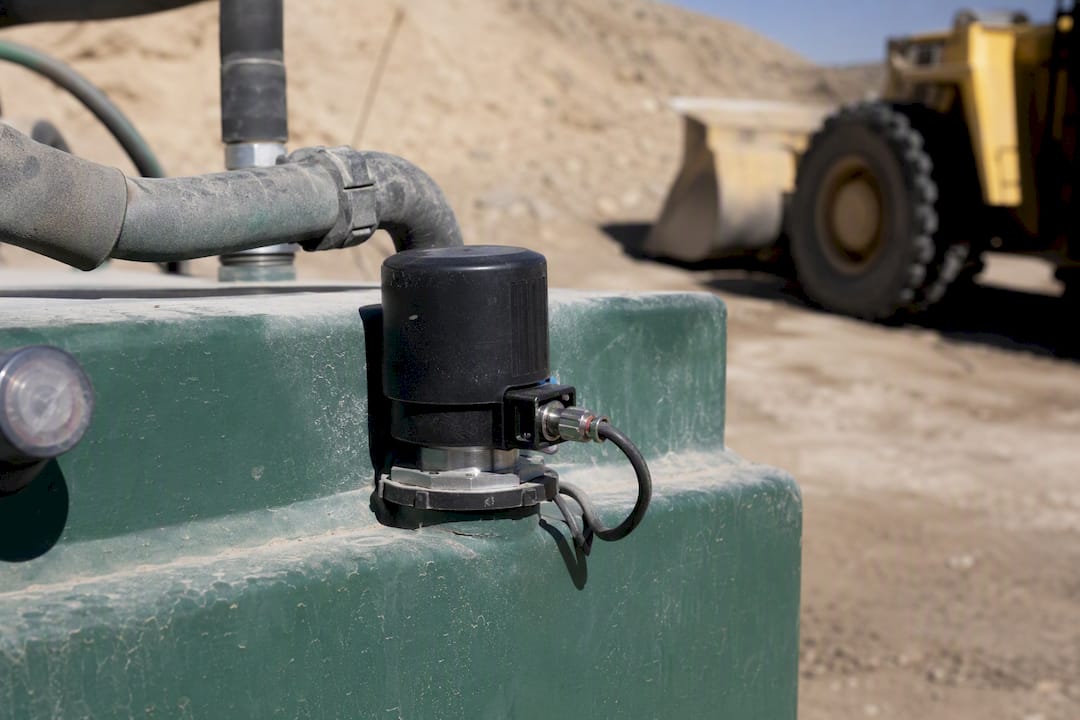
The core stack has three layers: in-tank fuel-level sensors that report continuously, GPS telematics that ties fuel purchases to vehicle location, and camera systems that trigger alerts on unusual after-hours activity near a tank. Continuous fuel-level monitoring matched against transaction data catches slip-tank theft the same day it happens, often paying for the sensor cost within the first prevented loss.
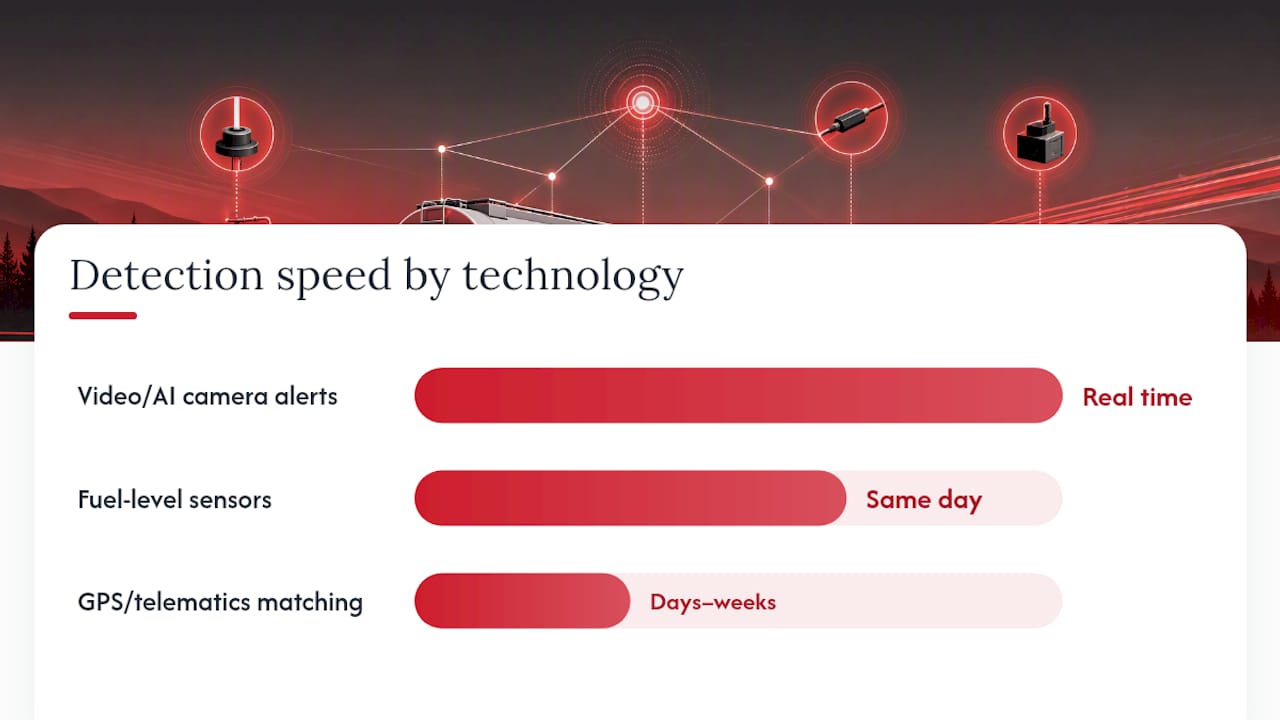
| Technology | Best for | Install complexity | Detection speed |
|---|---|---|---|
| Fuel-level sensors | Stationary and slip tanks | Low, plug-in units | Same day |
| GPS/telematics matching | Vehicle fleets | Moderate, needs card data feed | Days to weeks |
| Video/AI camera alerts | Yards and dispensers | Moderate to high | Real time |
When vetting a vendor, ask about false-alert rates before installation cost. A system that cries wolf gets ignored within a month.
Early Warning Signs That Reveal Theft
Watch for five signals that consistently show up before a theft is confirmed:
- A sudden drop in miles-per-gallon with no route change.
- Fuel card transactions that don’t match the vehicle’s GPS location.
- Multiple small purchases in a single day, a classic smurfing pattern.
- Card gallons purchased that don’t match the tank sensor’s actual rise.
- Inventory drops at yard storage between deliveries with no matching dispensing log.
A single signal deserves a quick look. Two or more together, especially a mismatch between sensor readings and invoiced deliveries, should be treated as confirmed theft until proven otherwise.
- Pull camera footage covering the window of the anomaly.
- Do a physical tank check for tampering or missing caps.
- Contact the driver or site lead assigned to that asset before confronting anyone.
What to Do the Moment Theft Is Suspected
Move fast, but methodically:
- Isolate the affected vehicle or tank from further use.
- Secure the physical scene and preserve any tampered locks or caps as-is.
- Pull and save video and telematics logs before they age out of storage.
- Change PINs and freeze any suspect fuel cards immediately.
Notify your operations lead and site security right away. If theft involves an organized ring rather than a one-off, involve local law enforcement. A New Jersey investigation charged 25 people and four companies in a large-scale diesel theft scheme, a reminder that fuel theft isn’t always a lone opportunist. Document everything, then tighten the control that failed.
Prioritizing Prevention Spend: Costs, Timelines, and Red Flags
Buy protection in the order that gives you the most loss reduction per dollar. Locking caps and anti-siphon devices come first because they’re cheap and install in hours. Fuel card controls come next since they’re a settings change, not a purchase. Sensors and telematics integration take longer to deploy and cost more, but they close the detection gap that hardware alone can’t.
| Control | Upfront cost | Install time | Best against |
|---|---|---|---|
| Locking caps / anti-siphon | Low | Hours | Physical siphoning |
| Fuel card rule changes | None | Same day | Card fraud |
| Tank alarms | Low to moderate | Hours to a day | Tampering |
| Fuel-level sensors | Moderate | 1 to 3 days | Slip-tank theft |
| Telematics integration | Moderate to high | 1 to 4 weeks | Cross-system fraud |
When evaluating a vendor, ask directly about false-alert rates, whether the system covers both stationary tanks and vehicle tanks, and how it integrates with the telematics you already run. A vendor that dodges the false-alert question is a red flag worth walking away from.
The Alternative: Remove the Theft Vector with Scheduled Delivery
The most direct way to prevent fuel theft on a job site is to stop storing large volumes of fuel there in the first place. Scheduled on-site delivery removes the siphoning target, shrinks card fraud opportunity since fewer fill-ups happen off-route, and replaces guesswork with predictable, itemized invoicing.
- No standing tank means no overnight siphoning risk.
- Delivery windows are logged, so inventory tracking replaces manual reconciliation.
- Works especially well for remote job sites, high-theft urban yards, and critical generator fuel at data centers where downtime isn’t an option.
Pro Tip: If a site has had more than one theft incident in a year, run the numbers on switching from a stored tank to scheduled delivery before buying more security hardware. Sometimes the cheapest fix is removing the target entirely.
Anytimefuelpros delivers diesel, gasoline, and DEF directly to job sites, fleets, and generators on a scheduled or on-demand basis, which eliminates the standing-tank exposure that drives most of the theft covered above. Explore the benefits of scheduled fuel delivery or check on-demand diesel delivery options for sites where removing on-site storage makes more sense than adding another layer of security hardware.
Frequently Asked Questions
What’s the fastest way to prevent fuel theft on a job site?
Move fueled equipment to the center of the lot, collect fuel cards from vehicle cabs, and install anti-siphon devices on the most exposed tanks. All three take under a day and cost little to nothing.
Do fuel-level sensors work on portable slip tanks?
Yes. Battery-powered sensors mount on most slip tanks and report level changes to a phone or dashboard, catching theft the same day it happens rather than at the next manual check.
How much does fuel theft actually cost a fleet?
Industry estimates put losses at 6% to 15% of annual fuel spend, which adds up quickly across a fleet running multiple vehicles or job sites.
Is scheduled fuel delivery cheaper than securing an on-site tank?
It depends on site volume and theft history, but for sites with repeat incidents, removing the standing tank often costs less over time than continuously adding security layers. A bulk delivery option can replace on-site storage entirely for many job sites.
Sources
- Attorney General Platkin announces charges against 25 people, four companies in large-scale diesel fuel theft scheme
- Diesel Fuel Theft Prevention Checklist | Fleet Security Guide
- Reducing Construction Fuel Theft and Slip-Tank Waste at Job Sites
- Fuel Theft in Fleet Vehicles: How to Detect It and Stop It
- Prevent Fleet Card Fraud | Trucking Fuel Theft
Recent Comments