
Secure a pre-negotiated emergency fuel contract that locks in IDIQ-style base and option years, verified activation triggers, guaranteed response SLAs, and logistics services beyond delivery. Waiting until a hurricane or grid failure hits to shop for fuel means paying spot-market surge prices to whoever answers the phone.
Start today with these five moves:
- Inventory critical fuel types, daily burn rates, and vehicle or generator counts across every site.
- Confirm activation triggers your contract will honor: declared emergency, verified pipeline interruption, or documented supply curtailment.
- Request proof of supplier capacity: tank inventory, fleet size, and current customer commitments.
- Negotiate SLA response windows and pricing caps before you sign, not after you call.
- Schedule a tabletop exercise within 90 days of contract award to confirm the plan actually works.
The DHS Emergency Fuel Supplies and Services IDIQ and North Carolina’s 405E statewide contract are useful benchmarks. Anytime Fuel Pros works with private operators building equivalent commercial agreements.
Key Takeaways
A reliable emergency fuel contract combines IDIQ-style flexible ordering, verified activation triggers, enforceable SLAs, and logistics services that go well beyond simply delivering gallons.
| Point | Details |
|---|---|
| Define scope precisely | Spell out fuel types, delivery methods, storage, and dispensing responsibilities in writing. |
| Choose the right structure | Use IDIQ or base-plus-option terms when your emergency fuel volume is unpredictable. |
| Lock in activation triggers | Require a specific declared emergency or verified supply interruption before terms kick in. |
| Negotiate pricing caps upfront | Set surge premium windows and pre-approval rules before an emergency, not during one. |
| Test the contract before you need it | Run tabletop and functional exercises to confirm the plan works. |
| Anytime Fuel Pros supports the full checklist | Offers pre-positioning, onsite dispensing, 24/7 emergency response, and generator fueling for commercial buyers. |
Table of Contents
- What Does an Emergency Fuel Contract Cover?
- How Are Emergency Fuel Contracts Structured?
- What Services Should the Contract Require Beyond Fuel Delivery?
- How Does Pricing and Billing Work in an Emergency Fuel Contract?
- What SLAs and Fuel Quality Clauses Should the Contract Include?
- What Should a Procurement Checklist for Emergency Fuel Include?
- How Do You Implement and Test an Emergency Fuel Contract?
- What Federal and State Contract Vehicles Should You Review?
- Where Can You Find Model Contract Language?
- How Anytime Fuel Pros Supports Your Emergency Fuel Contract
- Frequently Asked Questions
- Sources
What Does an Emergency Fuel Contract Cover?
An emergency fuel contract is a standing agreement that guarantees fuel access and delivery during a disruption, before the disruption happens. It covers backup generator fueling at data centers and hospitals, fleet refueling when retail stations lose power, and temporary fuel supply at storm-response staging areas or construction sites cut off from normal delivery.
A well-scoped agreement spells out, in writing, exactly what the supplier owes you:
- Fuel types: ultra-low sulfur diesel (ULSD), gasoline, propane, or jet fuel, with grade specifications.
- Delivery methods: bobtail trucks, tanker transports, or skid units, matched to your site access.
- Storage: whether the supplier provides temporary tanks or you supply your own.
- Dispensing and metering: who operates the pump, and how volume gets logged.
- Duration and volume caps: minimum and maximum gallons per event, and how long the agreement runs.
Pro Tip: Write logistics services directly into the scope-of-work section, not as a vague “additional services available” footnote. Language like “Contractor shall provide onsite dispensing, fuel filtration, and equipment repair as part of base contract obligations” prevents a supplier from treating those as billable extras mid-emergency.
How Are Emergency Fuel Contracts Structured?
Most standby fuel contracts follow one of three models. Indefinite Delivery/Indefinite Quantity (IDIQ) agreements set minimum and maximum order quantities without locking you into a fixed volume, which suits buyers who can’t predict exactly how much fuel a future emergency will demand. Multi-year base-plus-option contracts pair a one-year base term with renewal options, giving both sides time to adjust pricing without renegotiating from scratch. Statewide term contracts and firm-fuel RFPs, common among public agencies, pre-award a vetted supplier list that activates on a defined trigger rather than a case-by-case bid.

Activation mechanics matter as much as the structure itself. Your contract should specify exactly what counts as a trigger, such as a formal Declaration of Emergency, a verified pipeline interruption, or documented supply curtailment, along with who has authority to issue the activation notice and how fast the supplier must acknowledge it.
The DHS Emergency Fuel Supplies and Services IDIQ runs a one-year base period plus four one-year options, a pattern common enough in federal emergency fuel procurement that private buyers can reasonably mirror it when negotiating multi-year terms.
What Services Should the Contract Require Beyond Fuel Delivery?
Fuel that never reaches a running generator does you no good. Procurement guidance on scoping emergency fuel services points to logistics capability as the real differentiator between suppliers who can talk about emergencies and suppliers who can perform during one.
Require these operational services explicitly:
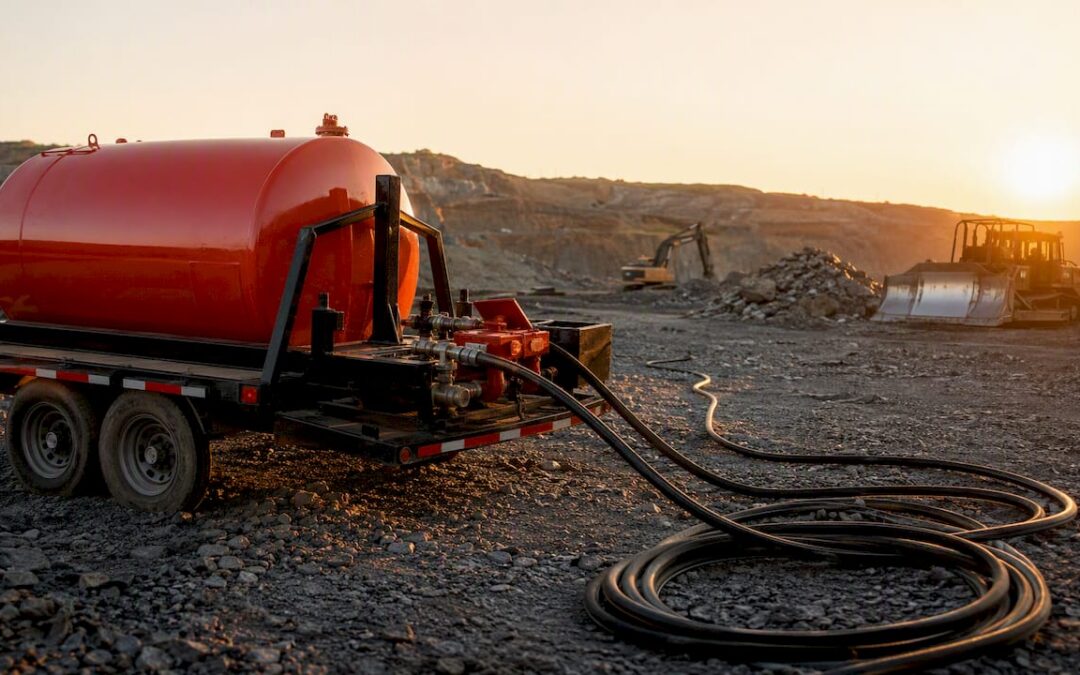
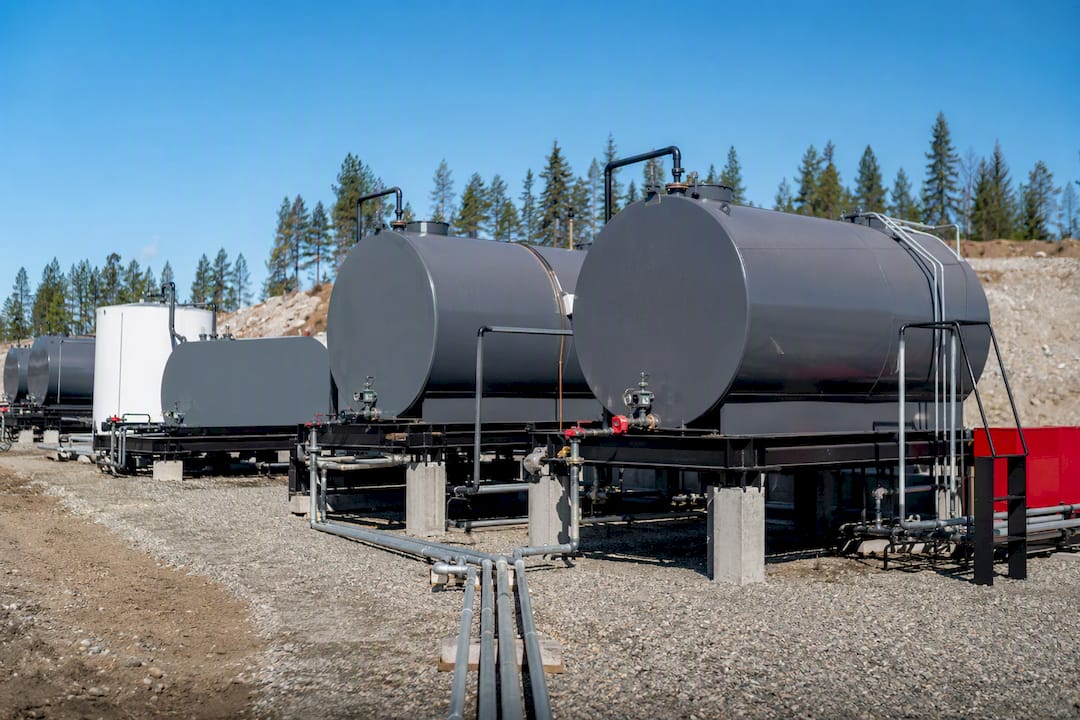
- Pre-positioning of mobile tanks at or near critical sites before a storm or outage.
- Onsite dispensing and metering with staff trained to operate pumps safely.
- Fuel filtration and quality testing on receipt.
- Equipment maintenance and repair for pumps, hoses, and tank fittings.
- Temporary storage capacity that can flex if a site loses grid power for days.
| Service Category | Contract Language Example | Typical Minimum Performance |
|---|---|---|
| Pre-positioned tanks | “Vendor shall pre-position self-sustaining mobile tank facilities” | minimum capacity per unit sufficient to support emergency fueling needs |
| Onsite dispensing | “Vendor shall provide metered dispensing and staffing” | Self-powered for night operation |
| Fuel quality testing | “Vendor shall sample and test fuel on delivery” | Testing against ASTM specification references |
| Equipment repair | “Vendor shall maintain and repair dispensing equipment” | Repair response within defined SLA window |
North Carolina’s 405E statewide contract requires vendors to pre-position tanks with defined minimum capacities and to keep them self-sustaining, since generator-powered pumps that need grid power defeat the purpose during an outage.
How Does Pricing and Billing Work in an Emergency Fuel Contract?
Three pricing models dominate fuel procurement contracts. A firm-fixed unit price with economic price adjustment locks a base rate that moves only with a published fuel index, protecting you from arbitrary markups. Daily market-based pricing with caps ties your rate to a benchmark like OPIS but sets a ceiling on how far surge pricing can climb. Volume discount tiers reward larger, more predictable orders with lower per-gallon rates.
Surge or priority pricing is where contracts go wrong if you don’t negotiate it upfront. Require a pre-negotiated uplift cap, a defined emergency premium window (say, the first 72 hours after activation), and language tying any surcharge directly to the activation trigger rather than the supplier’s discretion.
Your billing terms should mandate:
- Itemized fuel tickets for every delivery.
- Electronic transaction reporting for audit trails.
- Cost breakdowns separating fuel, equipment rental, hose deployment, and pumping labor.
- Defined invoicing timelines, typically 15 to 30 days post-delivery.
Pro Tip: Add a clause requiring written pre-approval or documented notification before any line-item surcharge appears on an emergency invoice. This single sentence has saved buyers from five-figure “expedite fees” they never agreed to.
What SLAs and Fuel Quality Clauses Should the Contract Include?
Service-level agreements turn a vague promise of “reliable delivery” into an enforceable commitment. At minimum, negotiate a guaranteed acknowledgment window (how fast the supplier confirms your activation call), an arrival window (how fast fuel physically shows up), and throughput metrics for how quickly a truck can offload at your site.
Fuel quality assurance deserves its own clause. Reference recognized specification standards for the fuel grade, require on-receipt sampling, and spell out an acceptance/rejection process if a delivery fails to meet spec.
Build in remedies for missed SLAs: service credits, escalating response fees for repeated delays, or the contractual right to activate a backup supplier without penalty. Defense Logistics Agency subcontracts for fuel oil delivery during natural gas curtailments have required 48-hour delivery windows, a useful benchmark when you’re setting your own response-time target.
What Should a Procurement Checklist for Emergency Fuel Include?
Work through the process in sequence rather than jumping straight to supplier selection.
- Planning: Map fuel volumes, vehicle and generator counts, and critical site locations. Owner: operations manager.
- RFP/RFQ drafting: Write scope language covering fuel types, logistics services, and activation triggers. Owner: procurement lead.
- Evaluation: Score proposals on operational readiness and price. Owner: evaluation committee.
- Award: Finalize SLA terms, pricing caps, and insurance requirements. Owner: contracts office.
- Onboarding: Exchange contact lists, site access details, and delivery instructions. Owner: facilities manager.
- Exercise: Run a tabletop drill to confirm activation actually works. Owner: emergency planner.
When you’re evaluating proposals, ask suppliers directly for:
- Proof of tank inventory and current fleet capacity.
- Equipment specifications, including pump flow rates and tank self-sufficiency.
- Sample SLA language from an existing contract.
- Insurance and indemnity limits.
- References from prior emergency response engagements.
- Sample invoices showing how they itemize surge charges.
A supplier offering the lowest rate but no pre-positioned tanks or after-hours staff is the cheapest option right up until the moment you need them.*
How Do You Implement and Test an Emergency Fuel Contract?
A signed contract that’s never been tested is a hope, not a plan. Build an operational handoff packet covering contact lists, delivery site coordinates, gate access codes, required permits, and fueling safety protocols, then confirm who at your organization has authority to sign off on deliveries during an activation.
Run exercises on a schedule, not just after an incident exposes a gap:
- Tabletop exercises annually, walking through the activation call and notification chain.
- Functional exercises every two years, testing actual communication systems and supplier response times.
- Full-scale exercises every three to five years, involving a real (small-volume) delivery to confirm site access and dispensing procedures work end to end.
Confirm onsite signage, fueling standard operating procedures, and emergency contact protocols are posted and current before the next drill, not discovered missing during a real event.
What Federal and State Contract Vehicles Should You Review?
The DHS Emergency Fuel Supplies and Services IDIQ bundles fuel procurement with transport, storage, dispensing, equipment maintenance, fuel quality assurance, and road debris clearance under a single vehicle, running May 2025 through May 2030 across its base and option years. It’s a solid model for how a comprehensive scope of work should read.
At the state level, North Carolina’s 405E contract offers a clear activation template:
The contract activates when the state’s contract administrator confirms either an interruption in normal pipeline supply or a Governor’s Declaration of Emergency, at which point pre-positioned vendors move mobile tank facilities into place and begin onsite dispensing under pre-negotiated terms.
That structure, verified trigger plus pre-positioned assets plus pre-negotiated pricing, is the core template worth adapting regardless of whether you’re a public agency or a private facility manager. Review both documents before you draft your own RFP language; they show what mature contract oversight actually looks like on paper.
Where Can You Find Model Contract Language?
Benchmark your own RFP against these primary sources:
- The DHS IDIQ solicitation for federal scope-of-work and period-of-performance language.
- North Carolina’s 405E contract for statewide activation and pre-positioning clauses.
- The Hawaiian Electric/Chevron supply contract for title transfer and force majeure clauses.
Cite these directly in RFP attachments or technical evaluation criteria to strengthen your own procurement package.
How Anytime Fuel Pros Supports Your Emergency Fuel Contract
Every clause covered above, pre-positioning, onsite dispensing, fuel quality testing, and guaranteed response times, maps directly to what Anytime Fuel Pros already builds into commercial fuel agreements.
Anytime Fuel Pros delivers on-demand and emergency diesel to job sites, data centers, and municipal fleets across Texas and Utah, with 24/7 response and a nationwide partner network for multi-site operations. Backup generator fueling and bulk tank storage come standard, not as add-ons you have to negotiate separately. When you request a contract-ready proposal, AFP provides insurance certificates, equipment specifications, and sample SLA language so your procurement team can move straight from evaluation to award. Start by requesting a capacity proof or proposal through Order Now and get your emergency fuel terms locked in before the next disruption forces your hand.
Frequently Asked Questions
What is the difference between an emergency fuel contract and a standard fuel delivery agreement?
A standard fuel delivery agreement covers routine, scheduled deliveries at predictable volumes. An emergency fuel contract adds activation triggers, guaranteed response SLAs, surge-pricing caps, and logistics services like pre-positioned tanks that only matter when normal supply chains break down.
How long do emergency fuel contracts typically run?
Many follow a base-plus-option structure, commonly a one-year base term with up to four one-year options, giving both parties multi-year price stability without a permanent lock-in.
What triggers activation of an emergency fuel contract?
Common triggers include a formal Declaration of Emergency, a verified pipeline interruption, or documented supply curtailment confirmed by an authorized contract administrator. Your contract should name the exact trigger and who has authority to invoke it.
Should small and mid-sized businesses use IDIQ-style contracts?
Yes, when future fuel volume is uncertain. IDIQ terms let you set minimum and maximum order quantities without committing to a fixed volume, which fits businesses that don’t know how large their next disruption will be.
What should I ask a fuel supplier before signing an emergency fuel contract?
Ask for proof of tank and fleet capacity, equipment specifications, sample SLA language, insurance limits, and references from actual emergency response engagements, not just routine delivery accounts.
Sources
- Emergency Fuel Supplies and Services (DHS, 2025)
- 405E – Emergency Source Fuels (North Carolina DOA)
- JP05 Scope of Services (PowerSouth)
- Supply Contract example (Hawaiian Electric / Chevron) — SEC exhibit
Recent Comments