

Yes, temporary fuel tanks are regulated in the United States, and three separate triggers usually decide how strict the rules get: local Authority Having Jurisdiction (AHJ) permitting under the International Fire Code, the EPA’s Spill Prevention, Control, and Countermeasure (SPCC) aggregate threshold, and the Portable Fuel Container Safety Act (PFCSA) for smaller cans. Skip any one of them and you risk a rejected delivery, a shut-down site, or a federal violation.
Here’s the fast version before we get into specifics:
- Local permit: Most AHJs require a site-specific permit once a temporary tank exceeds a minimum tank capacity, with common fees around permit fees in the approximate range of one hundred dollars.
- Federal SPCC trigger: Aggregate aboveground oil storage over a capacity threshold above which a written SPCC plan is required generally requires a written SPCC plan.
- Portable containers: Portable containers up to a certain volume threshold subject to PFCSA fall under PFCSA rules requiring flame mitigation devices.
The rest of this guide walks through what each trigger actually demands on site.
Key Takeaways
Temporary fuel tanks in the United States are regulated through a combination of local AHJ permitting, the EPA’s 1,320-gallon SPCC threshold, and PFCSA rules for portable containers.
| Point | Details |
|---|---|
| Permit threshold | Most AHJs require a site permit for temporary tanks over a minimum tank capacity, with fees around permit fees in the approximate range of one hundred dollars. |
| SPCC trigger | Aggregate aboveground oil storage over an aboveground oil storage capacity threshold above which a written SPCC plan is required includes smaller containers. |
| Inspection essentials | Secondary containment, vehicle protection, grounding/bonding, and a trained operator are standard AHJ checks. |
| Portable container rule | Containers up to a certain volume threshold subject to PFCSA need flame mitigation devices meeting ASTM F3429/F3326 and UL 30 standards. |
| Compliant delivery partner | Anytimefuelpros provides UL-listed tank rentals and trained operators to support AHJ inspections and documentation. |
Table of Contents
- Which Federal Rules Apply to Temporary Fuel Tank Regulations?
- When Do You Need a Site-Specific Permit or AHJ Approval?
- What Site Safety Requirements Will Inspectors Check?
- What Tank Types and Duration Limits Apply to Temporary Setups?
- Do You Need an SPCC Plan for a Temporary Tank?
- Which Standards Apply to Portable Fuel Containers?
- What Should Be Ready Before the Fuel Truck Arrives?
- How Anytimefuelpros Simplifies Compliant Fuel Delivery
- Frequently Asked Questions
- Sources
Which Federal Rules Apply to Temporary Fuel Tank Regulations?
Three federal frameworks govern how you store and dispense fuel temporarily, and each one kicks in at a different point. The EPA’s SPCC rule treats aboveground tanks as “bulk storage containers,” and once your site’s aggregate oil storage capacity crosses an aggregate aboveground oil storage capacity threshold above which a written SPCC plan is required, you need a written SPCC plan on file, whether the tanks are permanent or rented for six weeks.
Facilities routinely undercount their exposure by treating “temporary” as synonymous with “exempt.” EPA guidance is explicit that even secondary containers and smaller tanks get folded into the aggregate math, which means a job site running three 500-gallon tanks is already past the threshold before anyone realizes it.
The PFCSA governs smaller portable containers, mandating flame mitigation devices built to standards now codified through a Federal Register direct final rule. For larger fixed or movable tanks, expect cross-references to:
- NFPA 30 / NFPA 30A for flammable and combustible liquid storage and dispensing
- UL 2085 listing requirements for protected aboveground tanks
- International Fire Code sections including 2306, 5704.2, and 5706.2, which many local fire codes adopt directly
None of these frameworks operate in isolation. A single job site can trigger all three at once.
When Do You Need a Site-Specific Permit or AHJ Approval?
If your temporary tank holds more than a minimum tank capacity, plan on pulling a permit before the fuel truck ever shows up. That threshold shows up repeatedly in regional fire department specifications built on the IFC, and most AHJs will not approve delivery until an inspector has signed off on the site plan.
The permit process usually runs in this order:
- Submit a site plan showing tank placement, setbacks, and containment
- Provide a spill control plan with a 24-hour emergency contact
- Supply tank specifications, including listing and capacity
- Schedule and pass a pre-delivery inspection with the local fire marshal
- Receive written approval, often with a stated removal deadline
Documents fire departments commonly request include:
- A measured site plan (not a sketch)
- Manufacturer specs for the tank, including UL listing
- Spill prevention and containment details
- Proof of grounding/bonding equipment on hand
- A named 24-hour spill response contact
Lead time surprises a lot of operations managers. A precise site plan with accurate setback measurements can take several days to finalize with local officials, so treat permitting as a scheduling item, not a same-week formality. Fees vary by jurisdiction, but budgeting around permit fees in the approximate range of one hundred dollars per site is a reasonable starting point.
What Site Safety Requirements Will Inspectors Check?
AHJs inspect temporary fuel sites against a fairly consistent checklist, whether the tank is feeding a data center generator or a fleet of excavators. Physical controls matter most:
- Secondary containment or diking sized to the tank’s full capacity
- Separation distances from buildings, property lines, and ignition sources
- Vehicle impact protection such as bollards or K-rail barriers
- Grounding and bonding equipment used during every transfer
- Lockable fill openings and proper venting
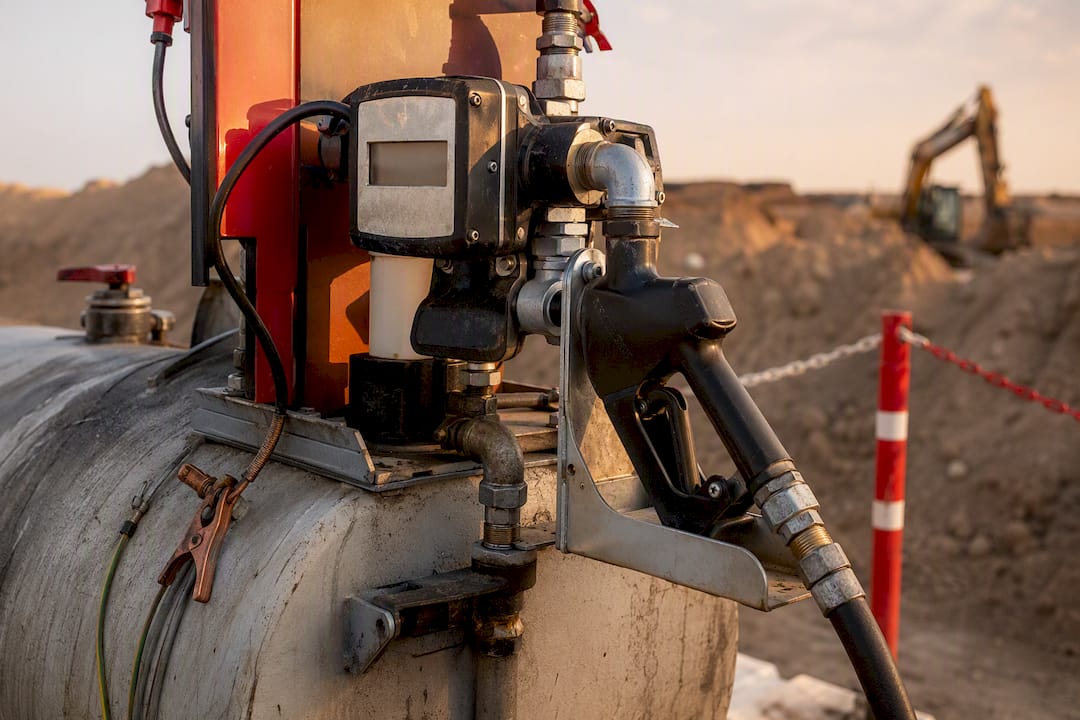
Operational controls get checked just as closely. Inspectors want to see a trained operator present during dispensing, self-closing nozzles on the dispensing equipment, “No Smoking” signage posted within the specified distance, and a fire extinguisher rated for Class B fires staged nearby. A municipal fire department specification for temporary ASTs lays out this exact combination: UL 2085 listing, spill control, vehicle protection, and operator attendance, all tied to IFC sections.
Pro Tip: Don’t assume a gravity-discharge setup will pass. Many AHJs limit or outright prohibit gravity feed on temporary tanks, so specify a tank with a mechanical pump and self-closing nozzle before you rent or buy it, not after the inspector shows up.
For diesel-specific setups, our NFPA 30 diesel storage checklist covers the code sections inspectors reference most often.
What Tank Types and Duration Limits Apply to Temporary Setups?
Temporary fueling generally comes down to three tank types: protected aboveground storage tanks (ASTs) with UL 2085 listing, movable tanks built to NFPA 30 construction standards, and mobile tank vehicles used for direct dispensing. Each carries different capacity and duration expectations.
Local specs frequently cap individual temporary tanks, with some fire department requirements limiting a single temporary AST to a maximum individual capacity is often specified for each tank before additional engineering review kicks in. Movable tanks also face duration limits in some state codes; Wisconsin’s administrative rule requires recertification or removal after a defined duration limit requiring recertification or removal after a specified period, alongside setback and collision protection requirements and mandatory operator attendance during transfer.
For procurement, that duration ceiling matters more than it looks. A long-running project that plans to keep a rented tank on site past that window needs to budget for recertification, not just for extended rental fees. Our guide on choosing the right tank capacity breaks down how project length should shape the tank size and type you select.
Do You Need an SPCC Plan for a Temporary Tank?
If your site’s aggregate aboveground oil storage exceeds an aboveground oil storage capacity threshold above which a written SPCC plan is required, the answer is yes, and that count includes smaller containers, not just the big tanks. The EPA’s guidance on aboveground storage treats these as bulk storage containers regardless of how long they’ll sit on site, and several state programs, including New Hampshire’s, mirror that federal threshold in their own AST rules.
Inspectors and auditors typically expect to see:
- A written SPCC plan, current and site-specific
- Monthly visual inspection logs
- Overfill prevention test records
- Annual integrity testing documentation
- A named spill response contact with 24-hour availability
Pro Tip: Once your aggregate capacity crosses the federal threshold, a licensed Professional Engineer often needs to certify the SPCC plan. That review adds cost and lead time, so factor SPCC planning into your project timeline the moment you’re scoping tank sizes, not after tanks are already on site.
Which Standards Apply to Portable Fuel Containers?
Portable cans up to a certain volume threshold subject to PFCSA (32 liters) fall under the PFCSA, which now requires flame mitigation devices meeting ASTM and UL standards. The CPSC’s guidance makes clear this applies to prefilled containers too, not just empty cans sold at retail.
When procuring portable containers for a job site or event, look for compliance markings tied to:
- ASTM F3429 and ASTM F3326, the performance standards for flame mitigation devices
- UL 30, Section 18, covering safety can construction
Field checklist for portable containers on site:
- Confirm the flame mitigation device is present and functional
- Verify labeling matches the required standard markings
- Reject unapproved prefilled containers where local rules restrict them
What Should Be Ready Before the Fuel Truck Arrives?
A short pre-delivery run-through catches the problems that cause rejected deliveries. Run this checklist the morning of, not the week before:
- Confirm the approved permit is on hand, printed or digital
- Have a copy of the site plan ready for the driver and any inspector
- Verify secondary containment and spill kit are staged and accessible
- Check vehicle protection (bollards, K-rail) is in place
- Confirm grounding and bonding gear is functional and within reach
- Verify tank labeling matches permit documentation
- Assign a trained attendant to be present for the entire transfer
Drivers should also verify setback distances and signage on arrival, and every site needs a named escalation contact in case something doesn’t match the paperwork. Our breakdown on fuel delivery documentation covers what to keep on file after delivery, too.
How Anytimefuelpros Simplifies Compliant Fuel Delivery
Anytimefuelpros handles on-site diesel and gasoline delivery along with temporary tank rental for construction sites, data centers, mining operations, and live events across Texas, Utah, and nationwide through our partner network.
Meeting every trigger in this guide, AHJ permits, SPCC thresholds, PFCSA-compliant containers, falls on you as the operations manager, but the equipment and paperwork don’t have to be a scramble. Anytimefuelpros delivers with UL-listed tanks, trained operators who handle grounding and bonding during every transfer, and documentation ready to hand an inspector on request. That means fewer surprises when the fire marshal shows up and less time spent chasing spec sheets before delivery day.
If you’re planning a temporary fueling setup for a job site, event, or emergency staging area, start with our diesel fuel delivery page to see service options and request a quote for your site’s specific tank and delivery needs.
Frequently Asked Questions
Do all temporary fuel tanks require a permit?
Not always, but most AHJs require one once a tank exceeds a minimum tank capacity that usually requires a site-specific permit. Smaller portable containers under that threshold typically fall under PFCSA rules instead of local permitting.
How is the SPCC 1,320-gallon threshold calculated?
It’s an aggregate count across all aboveground oil storage containers on site, including smaller secondary containers, not just your largest tank.
What happens if a movable tank exceeds its duration limit?
Some state rules require recertification or removal after a set period, commonly a defined duration limit requiring recertification or removal after a specified period, so tanks left on site longer may need re-inspection before continued use.
Are portable fuel container rules different from tank regulations?
Yes. Containers under portable containers up to a certain volume threshold subject to PFCSA fall under the PFCSA and require flame mitigation devices, while larger tanks are governed by fire codes, NFPA standards, and local AHJ permitting.

This article is general information, not a substitute for advice from a qualified lawyer. Consult a qualified legal professional about your own circumstances before acting on anything here.
Sources
- Fuel Storage Tanks (Temporary)
- Aboveground Storage Tanks | US EPA
- Portable Fuel Container guidance — U.S. Consumer Product Safety Commission (CPSC)
- Portable Fuel Container Safety Act Regulation — Federal Register
- Standards for Temporary AST & Motor Fueling Dispensing — Lake Havasu City Fire Department
Recent Comments