
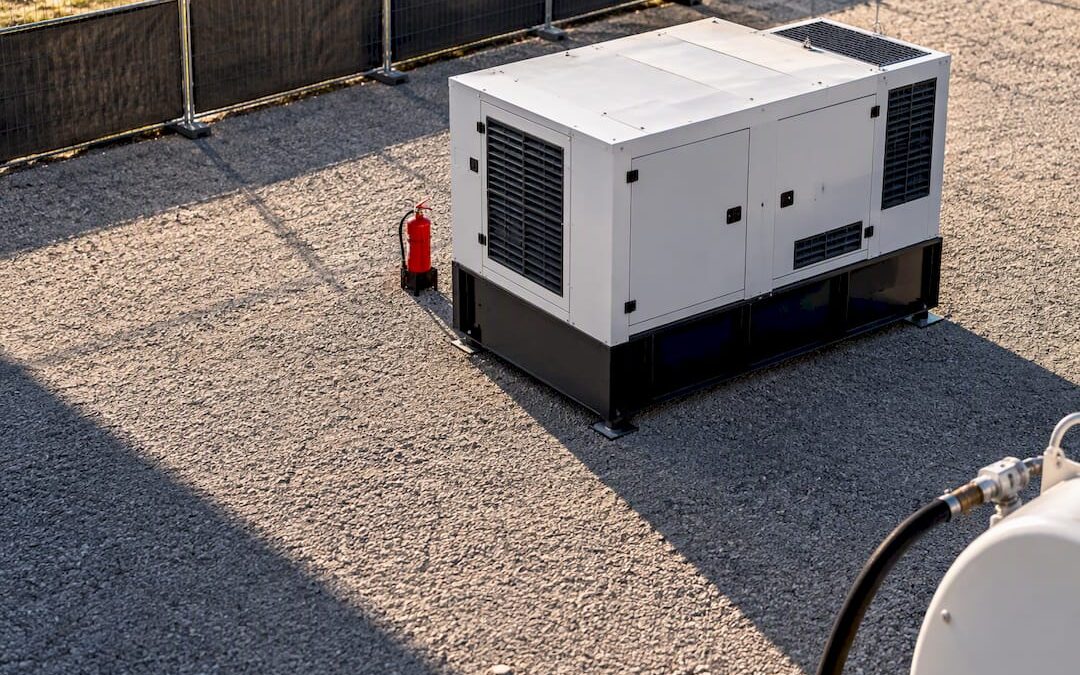
For Austin festivals, the first fuel-planning step is a code-compliant site plan showing every generator location, fuel storage point, and refueling window, filed early enough to meet Austin Center for Events and Austin Fire deadlines. Follow their standards and OSHA’s fueling rules, then lock a scheduled on-site fuel delivery partner like Anytime Fuel Pros well before load-in so refueling windows don’t become a last-minute scramble.
TL;DR:
- Permits must be filed early according to event size, with larger festivals requiring several months’ lead time for Tier 3 or 4 classifications.
- Generators must be positioned at least 10 feet from permanent structures and 20 feet from tents, with site plans showing fuel storage, fire safety gear, and delivery routes.
- Refueling is limited during events for tanks over 10 gallons to times when attendees are not present, requiring scheduled deliveries and strict safety procedures.
- On-site fuel storage should stay within city and federal capacity limits, with spill prevention and containment measures mandatory at the dispensing area.
- Emergency fuel delivery services are available for quick response, and proper documentation of generator details is required for large festivals exceeding 500 attendees.
Table of Contents
- Austin Festival Fuel Planning: Your First 7 to 30 Days
- What Permits Does Austin Require for Festival Generators?
- How Close Can a Generator Be to Tents or Buildings?
- When Can Generators Be Refueled During a Festival?
- How Much Fuel Can You Store on Site Legally?
- What Safety Controls Do Inspectors Check First?
- How Anytime Fuel Pros Keeps Austin Festivals Running
- Sources
- FAQ
Austin Festival Fuel Planning: Your First 7 to 30 Days
The early weeks of planning determine whether your fuel logistics run smoothly or turn into a fire-marshal negotiation on load-in day. Get these four moves done first, in roughly this order:
- Confirm your ACE tier and file immediately. Your permit deadline is set the moment your event size and complexity are classified, so don’t wait to find out which tier applies.
- Draft a site plan showing generator positions, fuel storage, the refueling route, barricades, and any impact on emergency egress.
- Estimate runtime and fuel volume per generator, then book scheduled deliveries plus an emergency refill window in case the event runs long.
- Assign designated fueling personnel and note what documentation you’ll need on hand when an inspector asks for it.
Pro Tip: Build your fuel schedule around actual generator load, not a rough guess. A fuel consumption calculator turns your equipment list into a realistic delivery cadence, so you’re not paying for standby capacity you never use.
What Permits Does Austin Require for Festival Generators?
Two city offices govern festival fuel operations: ACE handles the event permit itself, and Austin Fire reviews the safety details, including generator siting and refueling procedures. Miss either one’s timeline and your event risks a denied permit or a load-in delay.
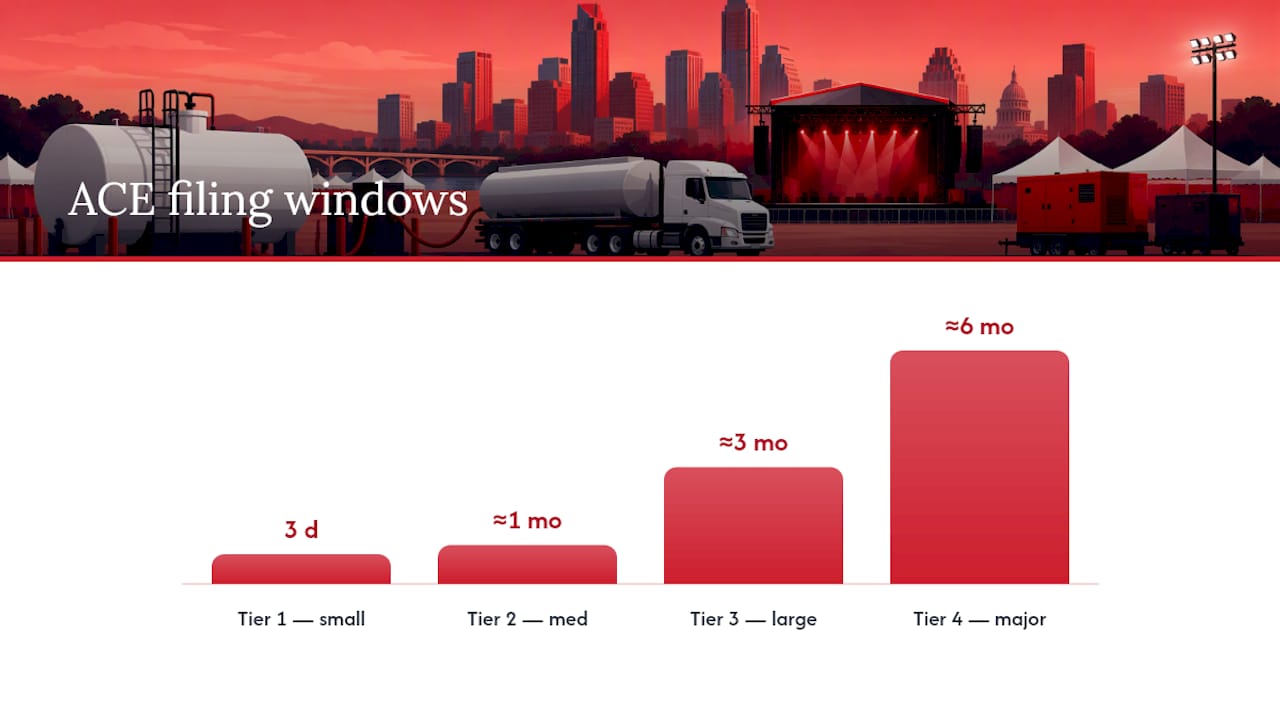
ACE tiers events by size and complexity, and each tier carries its own application deadline. According to the ACE Event Planning Guide, the filing windows are:
- Tier 1: 3 business days before the event
- Tier 2: about a month before the event
- Tier 3: several months before the event
- Tier 4: about half a year before the event
Larger, more complex festivals land in Tier 3 or 4, which means the paperwork clock starts months before your first act takes the stage. Your permit package should include a site plan marking generator and fuel storage locations, a full equipment inventory, and a delivery and removal plan for tanks and generators. Bigger events often need environmental awareness messaging as well.
Treat these published requirements as the floor, not the ceiling. Fire inspectors regularly add site-specific conditions once they walk the grounds, so build in margin for extra clearance or an additional extinguisher rather than planning to the exact minimum.
How Close Can a Generator Be to Tents or Buildings?
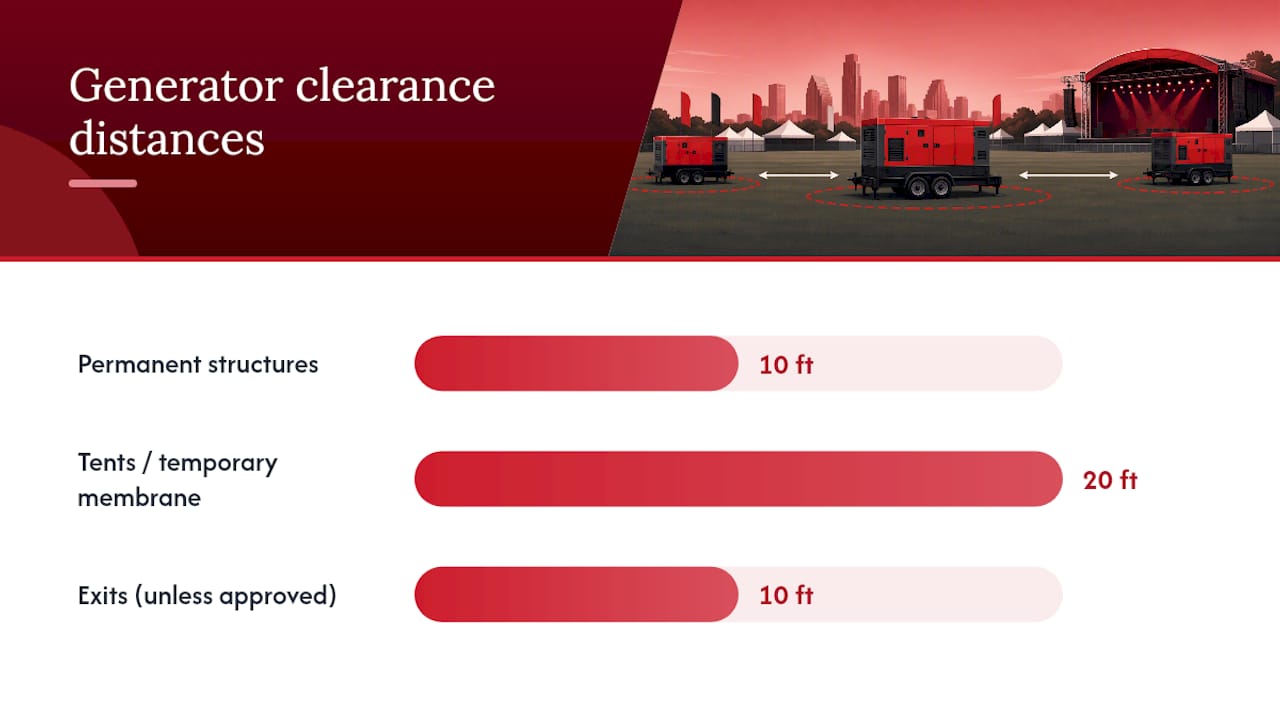
Austin Fire’s clearance rules are non-negotiable line items on your site plan, and they shape where your entire production footprint can sit. Per Austin Fire’s special events guidance, generators must be positioned:
- At least 10 feet from any permanent structure.
- At least 20 feet from tents or temporary membrane structures.
- Off sidewalks entirely, and never within 10 feet of an exit unless a fire inspector has specifically approved the layout.
Your overhead site plan needs to show more than generator dots. Mark fuel storage locations, fire extinguisher placement, cordoned refueling zones, and where delivery vehicles will park while fueling. A plan that shows the generator but not the fuel tank behind it is one of the fastest ways to get sent back for revisions.
Traffic logistics matter just as much as the footprint itself. Heavy tank delivery trucks need a defined route in and out, parking notes that account for their weight and turning radius, and Type III barricades if that route crosses any pedestrian path. Reserve crew parking separately, too. Nothing stalls a scheduled delivery faster than a fuel truck circling a lot because a food vendor parked in its unloading zone.
When Can Generators Be Refueled During a Festival?
The public’s presence, not the clock, decides your refueling window under Austin Fire rules. Generators under 10 gallons can be refueled during normal event hours, provided crews maintain 25 feet of separation from attendees. Anything over 10 gallons has to be refueled when the public is not present, which usually pushes larger top-offs to pre-event setup, post-event breakdown, or overnight hours during a multi-day run.
The fueling protocol itself follows OSHA’s fuel-handling standard closely, whether or not your event falls under OSHA’s direct jurisdiction:
- Shut the engine down and let it cool before any fuel touches the tank.
- Only designated, trained personnel handle fueling — never a stagehand grabbing a jerry can on the way to load-in.
- Use approved containers and pumps, per the OSHA fuel handling standard.
- Keep an attendant at the nozzle for the entire transfer, with the delivery driver handling the actual connections.
Pro Tip: Refueling logistics for larger tanks almost always require an off-public window, so build that window into your production schedule from day one instead of calling for an emergency top-off mid-set. Multi-day festivals benefit from recurring scheduled deliveries with buffer days built in, confirmed against your site contact’s access hours.
How Much Fuel Can You Store on Site Legally?
Austin allows modest on-site fuel storage for event use, but generator tank capacity and storage volume both have limits worth confirming with Austin Fire before you finalize equipment orders. As a general guidance point, generator fuel tanks have a maximum capacity set by regulations, and anything approaching the upper limit usually draws closer fire-marshal review.
Federal guidance fills in the gaps that city rules leave open, especially around spill prevention. EPA’s guidance for emergency generator fuel systems recommends:
- Overfill prevention devices on any stationary tank.
- Ordering fuel to roughly 90–95% of tank capacity, depending on the overfill device installed, rather than filling to the brim.
- Keeping spill response supplies (absorbent pads, containment berms) staged at the dispensing area, not in a truck three blocks away.
- Locking fill ports between deliveries and using UL-labeled tanks where the fire marshal requires them.
Good lighting and containment at the dispensing point aren’t optional extras. They’re often the first thing an inspector checks after clearances.
What Safety Controls Do Inspectors Check First?
Carbon monoxide gets the most attention, and for good reason: it’s invisible, fast-acting, and the single most common generator hazard at outdoor events. OSHA’s guidance on portable generators is direct on this point, and it maps cleanly onto festival operations:
- Never place a generator near doors, windows, or air intakes, even temporarily during setup.
- Maintain 3 to 4 feet of clearance on every side for airflow.
- Train staff to recognize CO symptoms (headache, dizziness, nausea) and evacuate the area immediately if exposure is suspected.
Fire extinguisher sizing scales with your fuel volume: generators storing under 60 gallons need a 2A:10BC-rated extinguisher nearby, while anything over 60 gallons steps up to 2A:20BC. Post “no smoking” signage at every fueling zone, and treat it as a hard perimeter, not a suggestion. On the electrical side, OSHA’s grounding guidance calls for a qualified electrician on any transfer-switch connection to a structure, along with GFCI protection and tested bonding connections. NFPA 37 remains the reference standard fire marshals lean on when questioning your fuel system layout, so aligning your setup with it before submission avoids a round of revisions later.
How Anytime Fuel Pros Keeps Austin Festivals Running
Anytime Fuel Pros handles the fuel logistics side of your event so your team can focus on production, not tank levels. That means generator fuel delivery scheduled around your actual runtime, bulk fuel delivery for large-capacity setups, fuel tank rentals, DEF delivery, and recurring deliveries timed to your show schedule rather than a generic weekly cadence.
Emergency response matters more at a festival than almost anywhere else, because a generator running dry mid-set isn’t a problem you can schedule around. Anytime Fuel Pros offers emergency fuel delivery for exactly that scenario, with after-hours response built into the service rather than bolted on as an afterthought. On the paperwork side, every delivery comes with confirmation records your team can hand straight to an inspector, and drivers follow staging and routing plans built around your site layout, not a one-size-fits-all delivery pattern. For Austin organizers scheduling generator fuel across a multi-day run, Anytime Fuel Pros’ Austin diesel delivery service is worth locking in during the same planning window you’re filing your ACE application. Check delivery availability for your event dates before you finalize your site plan, since fuel scheduling and permit timing tend to move together.
Sources
Keep these on hand when you submit your application or walk the site with an inspector:
- Austintexas
- EPG UST system requirements (EPA)
- 1917.156 – Fuel handling and storage. | Occupational Safety and Health Administration
FAQ
What Permit Tier Applies to My Austin Festival?
ACE assigns tiers based on event size and complexity, and each carries a different filing deadline: 3 business days for Tier 1, up to 180 calendar days for Tier 4. Check your event’s classification directly with the ACE event planning guide as soon as your headcount and footprint are settled.
How Far Must Generators Be From Tents at Austin Events?
Austin Fire requires at least 20 feet of separation between generators and tents or temporary membrane structures, and 10 feet from permanent buildings. These clearances must appear on the site plan you submit through Austin Fire’s special events review.
Can Generators Be Refueled While Attendees Are Present?
Generators under 10 gallons can be refueled during event hours with 25 feet of separation from the public. Anything larger needs to be refueled when attendees aren’t present, which usually means scheduling that work before gates open or after they close.
Does Anytime Fuel Pros Handle Festival Generator Fueling in Austin?
Yes. Anytime Fuel Pros provides scheduled and emergency generator fuel delivery for Austin festivals, including bulk delivery, tank rentals, and after-hours response coordinated around your event’s site plan. Current pricing is available directly through the fuel services page.
What Documentation Does Austin Require for Large Festival Generators?
Events expecting 500 or more attendees generally need an equipment inventory listing each generator’s model, year, horsepower, and estimated hours of operation. This inventory may need to be submitted after setup and amended following the event, so keep delivery and runtime records organized from day one.
Recent Comments