
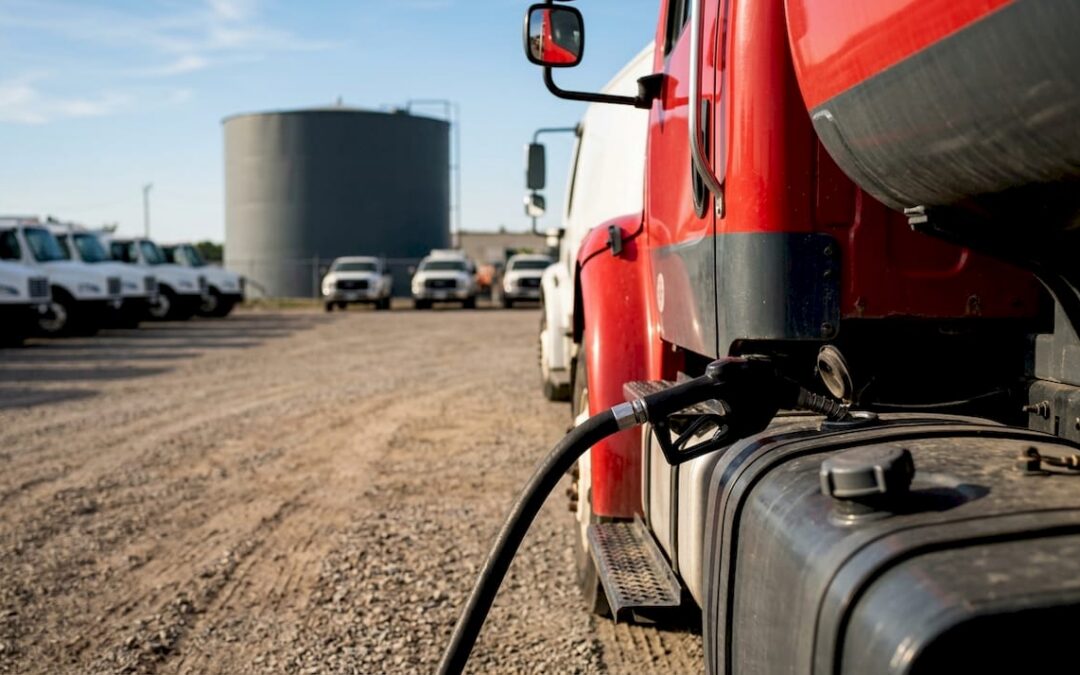
On-site fuel delivery is defined as the direct supply of diesel or gasoline to vehicles and equipment at their operating location, and it reduces labor costs by eliminating the paid time workers spend driving to and waiting at commercial fuel stations. For facilities and logistics managers, this distinction matters more than most fuel pricing conversations. Every fueling trip off-site is a labor expense that never shows up on a fuel invoice. Scheduled, on-site delivery removes that hidden cost entirely, reallocating workforce hours toward billable, revenue-generating work instead of fuel runs.
How fuel delivery reduces labor costs through workforce productivity
The most direct way on-site fueling cuts labor expenses is by returning productive hours to the workday. Scheduled fueling during off-hours ensures all fleet vehicles are ready at shift start, eliminating fueling detours that delay billable work. When a driver or equipment operator does not need to leave the job site to refuel, that time stays in the productive column.

Consider a construction site running five pieces of heavy equipment. If each operator spends 30 minutes per day driving to a fuel station and waiting in line, that is 2.5 hours of paid labor consumed by a task that generates zero revenue. Multiply that across a five-day week and you are looking at 12.5 hours of pure labor waste per week on a single site. On-site fuel delivery eliminates that entirely.
The same principle applies to trucking fleets. Route readiness at shift start is a measurable productivity metric. When drivers begin their routes without a fueling detour, dispatch windows tighten and on-time delivery rates improve. That improvement does not require hiring more drivers. It requires removing the friction that slows the existing workforce down.
- Vehicles are fueled overnight or during shift changes, so operators start work immediately
- Drivers avoid retail station queues that can run 15–30 minutes during peak hours
- Equipment operators stay on-site, maintaining workflow sequencing without interruption
- Fleet managers eliminate the administrative task of tracking off-site fuel card transactions
Pro Tip: Schedule fuel delivery to arrive 60–90 minutes before your first shift starts. That window gives your delivery provider time to fuel every vehicle before operators arrive, and it gives you a buffer if delivery runs slightly late.
What makes fuel delivery cost-effective compared to traditional fueling
The labor cost savings from on-site delivery extend well beyond the time saved on fuel runs. On-site fuel delivery reduces paid labor hours spent driving to and waiting at fuel stations, lowering overall operating costs beyond just fuel price savings. The comparison between traditional fueling and on-site delivery reveals multiple cost layers that facilities managers often underestimate.
| Cost factor | Traditional off-site fueling | On-site scheduled delivery |
|---|---|---|
| Labor time per fueling event | 20–45 minutes per vehicle | Near zero, handled off-hours |
| Equipment idle time | High, vehicles out of service | Minimal, fueled during downtime |
| Overtime risk | Elevated from delayed starts | Reduced through predictable scheduling |
| Administrative burden | Multiple transactions, receipts, card reconciliation | Consolidated invoicing, single vendor |
| Emergency refueling cost | High, unplanned labor and logistics | Low, covered by scheduled top-offs |
Fuel delivery eliminates equipment idle time spent traveling to fuel stations, which directly lowers labor costs by increasing productive equipment operation hours. Every hour a telehandler, excavator, or generator sits idle during a fuel run is an hour of depreciation with no output to offset it.
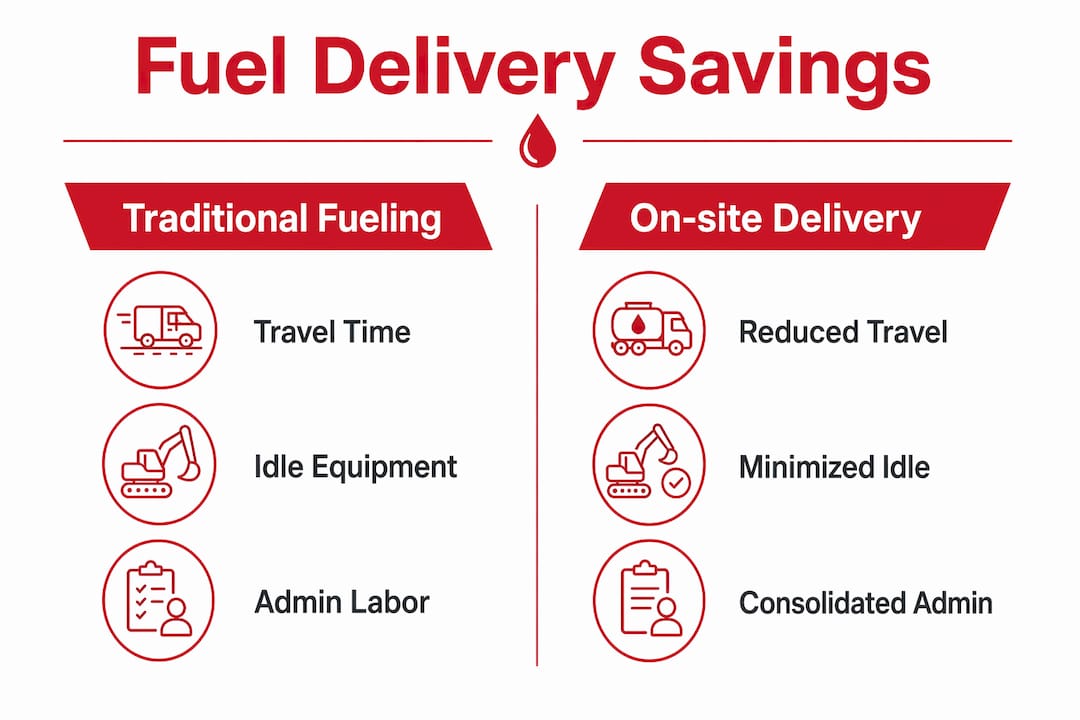
Consolidating fuel purchases into bulk delivery programs also reduces administrative labor tied to multiple fuel transactions and reporting. Firms that centralize procurement through a single delivery provider see fewer paperwork burdens and tighter cost control. That administrative savings is real labor time recovered from accounting and fleet management staff.
Pro Tip: Track your fleet’s total fueling time for two weeks before switching to on-site delivery. That baseline number becomes your benchmark for calculating actual labor savings after the switch, and it gives you a concrete figure to present to finance leadership.
How improved fuel logistics reduce overtime and scheduling variability
Unpredictable fueling is a quiet driver of overtime costs. Off-site fueling unpredictability causes delayed start times and overtime pay, while on-site delivery stabilizes labor demand timing and aligns scheduling with actual project needs. When drivers or operators arrive late because of fuel station queues or detours, the entire shift compresses. Work that was planned for eight hours gets pushed into overtime territory.
Fuel delivery improves scheduling predictability by removing variable factors like driver behavior and road conditions from the fueling equation. Operational directors who have made the switch consistently report that predictable fuel availability translates directly into tighter labor scheduling. You can staff to demand rather than staffing for the buffer time that unpredictable fueling requires.
The impact of fuel logistics on labor scheduling is most visible in industries with tight shift windows, such as municipal fleet operations, data center maintenance crews, and event production teams. A generator fueling delay at a live event does not just cost fuel. It costs the labor hours of every crew member standing idle while the generator is offline.
Here is where the multiplier effect becomes clear. One delayed start does not affect one worker. It affects every worker whose task depends on the equipment or vehicle that was not ready on time. On-site delivery cuts that chain reaction at the source.
- Predictable delivery windows allow managers to set firm shift start times without buffer padding
- Reduced overtime pay directly lowers the weekly labor cost line
- Consistent fuel availability aligns workforce scheduling with actual project demand
- Third-party fuel logistics remove road traffic and station queue variables from the equation
- Fuel management data gives managers visibility into consumption patterns, enabling more accurate labor and fuel budgeting
Best practices for implementing an efficient fuel delivery program
Getting the full labor cost benefit from on-site fuel delivery requires more than just signing a delivery contract. The program needs to be structured around your operational schedule, fleet size, and site layout.
-
Schedule deliveries during off-peak or shift change hours. Fuel arriving at 5:00 AM or during a lunch break does not interrupt active operations. Deliveries timed to shift changes mean vehicles are ready when operators clock in, with zero productive time lost.
-
Use bulk orders and consolidated deliveries. Ordering in bulk reduces the frequency of deliveries and lowers per-gallon administrative costs. Bulk fuel delivery also reduces the number of vendor interactions your procurement team manages, cutting administrative labor further.
-
Integrate fuel delivery with fleet route planning. Your fuel delivery schedule should mirror your fleet’s operational calendar. If certain vehicles run heavier routes on Mondays and Thursdays, those vehicles need priority fueling on Sunday and Wednesday nights. Coordinate with your delivery provider to match delivery frequency to actual consumption rates.
-
Monitor fuel usage per vehicle. Monitoring delivered fuel quantities per vehicle enables managers to identify inefficiencies and plan accurate fuel budgets. Better data transparency allows targeted operational improvements and scheduling adjustments. A vehicle consuming significantly more fuel than its peers may have a mechanical issue that is costing you both fuel and labor productivity.
-
Establish clear site access protocols for delivery drivers. Delivery delays caused by locked gates, unclear access routes, or missing contacts add time and cost to every delivery. Designate a fuel delivery contact, mark the fueling area clearly, and share access instructions with your provider before the first delivery.
-
Plan for fleet fuel management reporting. Require your delivery provider to supply per-vehicle delivery records. Those records feed directly into your cost-per-mile calculations and give you the data to justify the program to finance leadership.
A common pitfall is treating fuel delivery as a set-it-and-forget-it service. Delivery schedules need quarterly review as fleet size, project locations, and seasonal demand shift. Managers who review their delivery programs regularly capture more savings than those who lock in a schedule and walk away.
Challenges of fuel delivery and how to address them
On-site fuel delivery is not without practical constraints. Facilities managers need to plan for three main challenges: storage capacity, emergency demand, and geographic or regulatory factors.
On-site storage capacity is the most common limiting factor. Bulk delivery requires adequate storage tanks on-site. If your site does not have a fixed tank, portable above-ground storage tanks are a compliant option in most jurisdictions. Work with your delivery provider to size the tank correctly for your consumption rate and local fire code requirements.
Emergency and unexpected fuel demand can outpace a scheduled delivery program. Scheduled fuel deliveries reduce the need for emergency refueling by maintaining consistent supply, but no program eliminates every surge. Choose a delivery provider with 24/7 emergency response capability so that an unplanned demand spike does not become a labor crisis. Anytimefuelpros offers 24/7 emergency fuel delivery precisely for these situations.
Geographic and regulatory factors affect remote sites most directly. Mining operations, agricultural sites, and oil and gas locations often sit far from major distribution centers. Confirm that your delivery provider services your specific location before committing to a program. Regulatory requirements for dyed diesel, DEF compliance, and spill containment vary by state and site type. Fuel delivery safety protocols reduce labor risk exposure compared to manual off-site refueling or portable container handling, but those protocols must align with local regulations. Verify compliance requirements with your provider upfront.
Anytimefuelpros delivers fuel where your workforce needs it
Facilities and logistics managers who want to reduce labor expenses through better fuel logistics have a direct path forward with Anytimefuelpros. AFP delivers diesel, gasoline, and DEF directly to job sites, equipment yards, data centers, and fleet operations across Texas, Utah, and nationwide through its partner network.
Anytimefuelpros offers scheduled diesel delivery and bulk fuel programs built around your operational calendar, not a generic delivery window. Whether you manage a municipal fleet in San Antonio, a construction site in Dallas, or a data center in Salt Lake City, AFP’s 24/7 response and transparent invoicing give you the fuel cost control your labor budget depends on. Explore the full range of fuel delivery benefits or get answers to your specific operational questions at the Anytimefuelpros fuel delivery FAQ.
Key takeaways
On-site fuel delivery reduces labor costs by eliminating off-site fueling trips, cutting overtime from scheduling delays, and consolidating administrative fuel management into a single, trackable program.
| Point | Details |
|---|---|
| Eliminate off-site fueling trips | Every trip to a fuel station is paid labor time that generates no revenue. |
| Schedule deliveries off-hours | Fueling during shift changes or overnight keeps operators productive from the first minute of their shift. |
| Use bulk orders to cut admin labor | Consolidated deliveries reduce transaction volume and the staff time spent on fuel reconciliation. |
| Monitor per-vehicle consumption | Fuel usage data per vehicle reveals inefficiencies and supports accurate labor and cost budgeting. |
| Plan for emergency demand | Choose a provider with 24/7 response capability to prevent unplanned fuel shortages from becoming labor crises. |
FAQ
How does fuel delivery directly reduce labor costs?
On-site fuel delivery eliminates the paid time workers spend driving to and waiting at fuel stations. Those recovered hours shift directly to productive, revenue-generating tasks.
What types of operations benefit most from on-site fueling?
Construction sites, trucking fleets, municipal agencies, data centers, and mining operations see the largest labor savings because their equipment and vehicles have high daily fuel demand and tight shift schedules.
How does scheduled delivery reduce overtime pay?
Off-site fueling delays cause late shift starts, which compress the workday and push tasks into overtime. Scheduled on-site delivery ensures vehicles are ready at shift start, removing that delay entirely.
What is the role of bulk fuel delivery in cutting costs?
Bulk delivery programs reduce administrative labor by consolidating multiple fuel transactions into a single vendor relationship with centralized invoicing and reporting.
How do I handle emergency fuel needs with a scheduled delivery program?
Select a delivery provider that offers 24/7 emergency response alongside scheduled service. That combination covers both planned consumption and unexpected demand spikes without requiring your team to manage the logistics.
Recommended
- Mobile Fuel Delivery Explained: How This Can Save Your Business Money – Anytime Fuel Pros
- The Hidden Cost of Idle Equipment: How On-Site Diesel Delivery Saves Time and Money – Anytime Fuel Pros
- How Much Downtime Is Fueling Costing Your Fleet? – Anytime Fuel Pros
- Benefits of Fuel Delivery – Anytime Fuel Pros
Recent Comments