
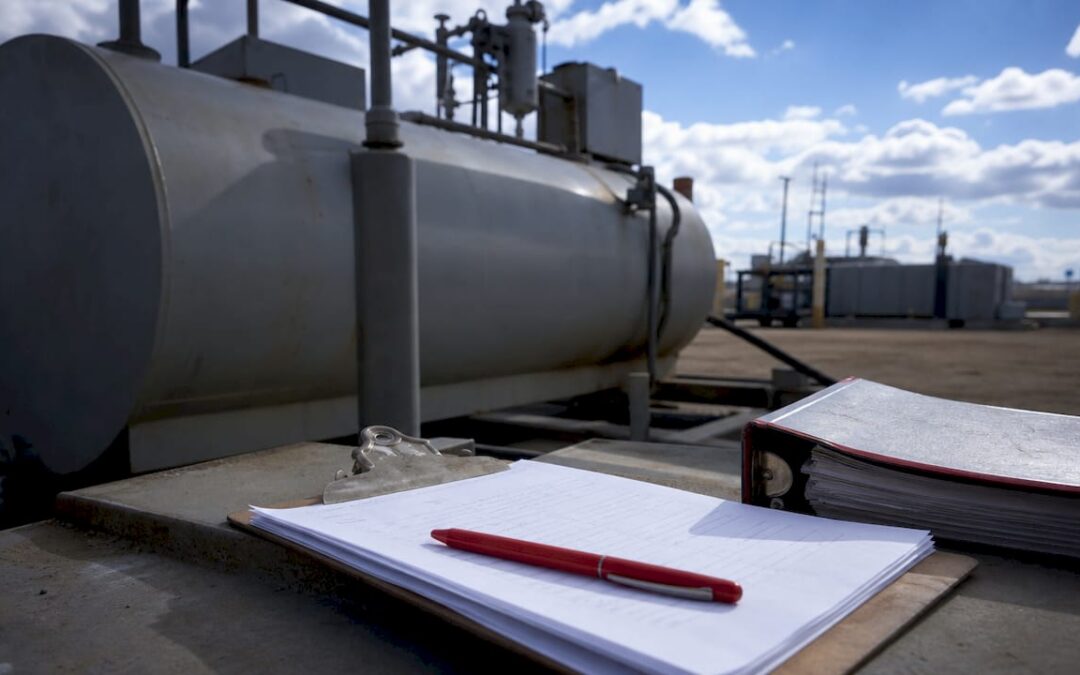
Fuel delivery documentation is the systematic recording and verification of all critical details related to fuel shipments, including volumes, fuel types, delivery times, batch IDs, and compliance evidence. This practice sits at the center of why fuel delivery documentation matters: without it, operations face regulatory exposure, undetected losses, and audit failures that compound into serious financial damage. EPA guidelines set variance thresholds at 1% over 30 days before triggering a formal investigation. For fleet managers, site superintendents, and operations directors, that threshold is not a technicality. It is a daily operational reality.
Why fuel delivery documentation matters for compliance and accountability
Fuel delivery records, known in the industry as proof-of-delivery documentation or fuel transaction records, capture the chain of custody from the moment fuel leaves a supplier to the moment it enters a tank or piece of equipment. The core data points in every compliant record include delivery date and time, volume dispensed, fuel type, batch reference numbers, and driver signatures. These elements create a verifiable audit trail that regulators, insurers, and internal finance teams can all rely on.
EPA and state-level regulations governing underground storage tanks (USTs) and bulk fuel deliveries require specific documentation to prove release prevention and leak detection compliance. Failing to maintain these records exposes an operation to fines of up to $37,500 per day. That figure applies per violation, per day, which means a documentation gap discovered during an audit can generate penalties that dwarf the cost of the fuel itself.

Beyond regulatory fines, accurate records support dispute resolution when delivery volumes are contested, and they form the evidentiary backbone of insurance claims after spills or equipment damage. A delivery record without meter calibration data or a custody seal notation is functionally incomplete. Regulators and insurers treat incomplete records the same way they treat no records at all.
Core components every fuel delivery record must include
Effective fuel delivery documentation goes beyond a basic receipt. Operations running diesel-powered fleets, generators, or heavy equipment should verify that every delivery record captures:
- Delivery date and time, including the exact window fuel was dispensed
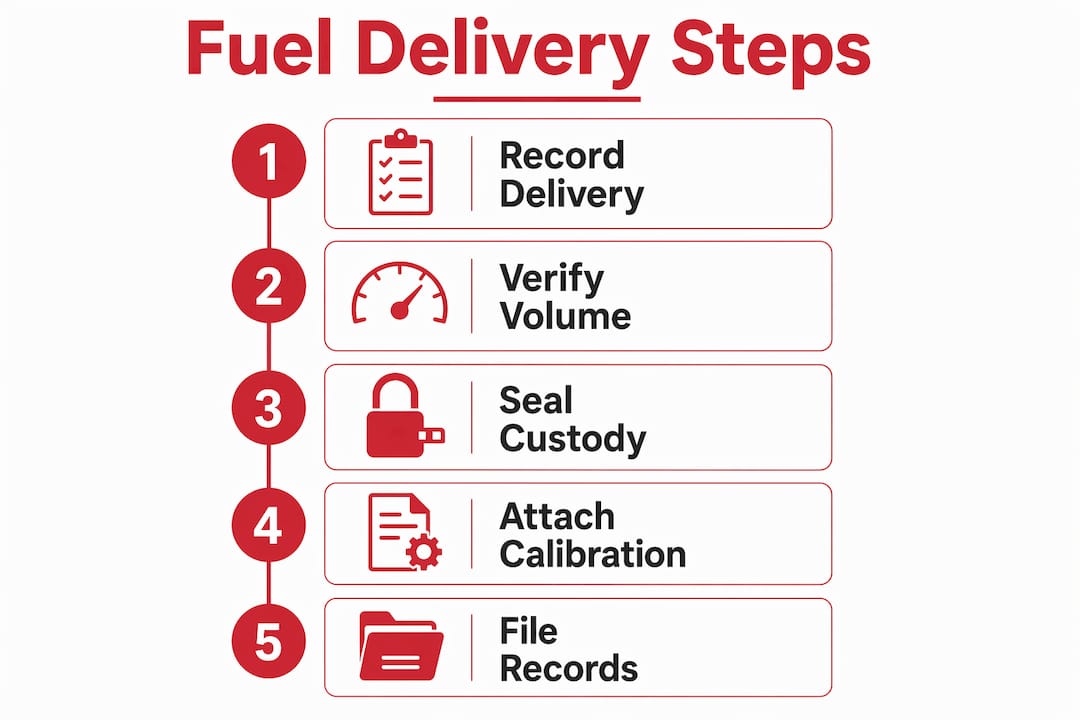
- Volume delivered, measured in gallons with meter calibration certificate attached
- Fuel type and grade, distinguishing between clear diesel, dyed diesel, DEF, and gasoline
- Batch or lot reference numbers, which trace the fuel back to its refinery origin
- Custody seal numbers, confirming the tank was sealed and untampered during transport
- Sampling protocol records, documenting fuel quality checks at point of delivery
- Driver and receiver signatures, establishing two-party verification
- Safety and emergency readiness checks, particularly for alternative fuel deliveries
These components reflect growing regulatory requirements for layered documentary evidence. Custody seals and meter calibration certificates, once considered optional best practices, are now standard expectations under decarbonization compliance frameworks.
Pro Tip: Store meter calibration certificates alongside each delivery record, not in a separate binder. Auditors expect to see them together, and separated files create unnecessary delays during inspections.
How does accurate documentation prevent financial losses?
Poor documentation is a quiet profit killer for logistics operations. Integrated fuel management platforms reduce reporting gaps that otherwise cause 3–5% annual fuel spend losses for large fleets. On a fleet burning $2 million in diesel annually, that range represents $60,000 to $100,000 in untracked losses per year.
The losses come from several sources. Fuel theft is one. Meter drift, where dispensing equipment gradually miscalibrates, is another. Delivery short-fills, where a supplier delivers less than the invoiced volume, are a third. Without delivery records that capture metered volumes and calibration data, none of these discrepancies are traceable. They simply disappear into the cost of doing business.
Documentation also drives scheduling accuracy. Clear records of delivery schedules, volumes, and fuel types enable predictable supply chains and prevent the emergency delivery fees that hit operations caught short. A site superintendent who can show three months of delivery records knows exactly when the next fill is due and at what volume. One who cannot is guessing, and guessing with diesel costs money.
The most common documentation errors that lead to financial exposure include:
- Missing or unsigned delivery receipts that cannot be used in dispute resolution
- Volume entries recorded in different units across delivery cycles, creating reconciliation errors
- Batch IDs omitted from records, making fuel quality tracing impossible after an equipment failure
- Delivery times left blank, which breaks the chain of custody for regulatory purposes
- Calibration certificates filed separately from delivery records, creating audit gaps
Pro Tip: Set a variance review trigger at 0.5% on your internal tracking system, not the EPA’s 1% threshold. Catching discrepancies earlier gives your team time to investigate before a regulatory review begins.
Logistics operations can also benefit from reviewing fuel delivery verification practices to close the gap between what is delivered and what is recorded.
What do alternative fuels require from documentation systems?
Alternative fuels, including liquefied natural gas (LNG), hydrogen, and biofuel blends, introduce documentation complexity that traditional diesel records were never designed to handle. Regulations under the International Maritime Organization (IMO), the EU FuelEU Maritime framework, and evolving EPA rules now require layered evidence that goes well beyond a standard delivery note. That evidence includes sampling data, meter records, custody seals, and emissions factor documentation, all tied to a single delivery event.
“Failing to maintain layered evidence leads to weak audit trails and legal and financial consequences under systems like EU ETS and IMO regulations. Increasing regulatory scrutiny transforms documentation errors into costly compliance risks.”
The 2026 compliance environment reflects this shift. Operations that handle alternative fuels now face audit challenges that did not exist five years ago. An auditor reviewing a biofuel delivery expects to see not just the volume and batch ID, but also the carbon intensity value, the feedstock origin documentation, and the sampling protocol used at point of delivery. Missing any one of these creates a failure point that can invalidate the entire delivery record for compliance purposes.
Practical steps operations can take to update their record protocols include:
- Expanding delivery record templates to include emissions factor fields for each fuel type
- Training drivers and receivers on sampling protocols specific to alternative fuels
- Requiring custody seal documentation for every delivery, not just regulated fuel types
- Reviewing 2026 off-road diesel compliance requirements to understand how new thresholds affect existing record formats
- Scheduling quarterly documentation audits before regulatory inspections occur
The logistics and transportation sector faces particular pressure here, as multi-modal operations often handle several fuel types across different sites, each with its own documentation requirements.
What are the best practices for managing fuel delivery records?
The most effective documentation systems tie together inventory data, telematics, accounting records, and compliance files in a single integrated platform. Integrating these data sources can save 100–200 hours of labor annually in a 100-vehicle operation by eliminating manual reconciliation and reducing reporting gaps. That time savings translates directly into lower overhead and faster audit response times.
The table below compares manual documentation methods against integrated digital systems across the dimensions that matter most to operations managers.
| Dimension | Manual documentation | Integrated digital system |
|---|---|---|
| Data entry accuracy | Prone to transcription errors | Automated capture reduces human error |
| Audit readiness | Records scattered across binders and files | Centralized, searchable, and timestamped |
| Variance detection | Identified during monthly reconciliation | Flagged in real time against set thresholds |
| Regulatory compliance | Dependent on staff training and discipline | Built-in compliance fields and alerts |
| Labor cost | High, especially across multi-site operations | Reduced by 100–200 hours per year for 100-vehicle fleets |
Piloting a new documentation workflow on a single site before full deployment is the most reliable way to identify gaps. A pilot run reveals which data fields staff skip under time pressure, which records get separated from their supporting documents, and which variance thresholds generate too many false alerts. Fixing these issues at one site costs far less than correcting them across an entire fleet.
Operations managing fuel delivery for logistics yards should also establish a formal record retention policy. EPA regulations require UST-related records to be kept for specific periods, and state rules often extend those requirements. A retention schedule built into the documentation system prevents accidental deletion of records that may be needed years later during an audit or litigation.
Pro Tip: Set your variance investigation threshold at 1% for monthly reconciliation and 0.5% for daily review. This two-tier approach catches both slow leaks and acute discrepancies before they become regulatory events.
Key Takeaways
Accurate fuel delivery documentation is the single most effective control an operations team has against regulatory penalties, untracked fuel losses, and audit failures.
| Point | Details |
|---|---|
| Compliance thresholds are strict | A 1% variance over 30 days triggers a formal EPA investigation, making precise records non-negotiable. |
| Financial losses are measurable | Poor documentation contributes to 3–5% annual fuel spend losses for large fleets. |
| Layered evidence is now required | Alternative fuel deliveries require sampling data, custody seals, and emissions records beyond standard delivery notes. |
| Integration cuts labor costs | Integrated platforms save 100–200 hours per year in a 100-vehicle operation by automating reconciliation. |
| Pilot before full deployment | Testing documentation workflows on one site first prevents costly errors from scaling across the operation. |
Anytimefuelpros delivers documentation you can count on
Operations that rely on accurate fuel records need a delivery partner who treats documentation as seriously as the fuel itself. Anytimefuelpros provides on-site diesel and gasoline delivery across Texas, Utah, and nationwide, with transparent invoicing and delivery confirmation built into every transaction. Every delivery comes with the volume data, fuel type records, and batch references your compliance team needs.
Whether you are managing a construction fleet in Dallas, a data center in Salt Lake City, or a multi-site logistics operation across several states, Anytimefuelpros gives you a single point of contact and a paper trail that holds up under scrutiny. Explore diesel fuel delivery services or review common fuel delivery questions to see how Anytimefuelpros supports your documentation and compliance requirements.
FAQ
What is fuel delivery documentation?
Fuel delivery documentation is the systematic recording of all details related to a fuel shipment, including volume, fuel type, delivery time, batch IDs, and driver signatures. These records create a verifiable chain of custody for regulatory and operational purposes.
What variance triggers an EPA investigation?
A variance greater than 1% in reconciled fuel data over 30 days triggers a formal EPA investigation. A daily 1% variance triggers an internal review under the same guidelines.
How does documentation prevent fuel losses?
Accurate delivery records make discrepancies traceable, whether from meter drift, short-fills, or theft. Fleets without integrated documentation systems lose an estimated 3–5% of annual fuel spend to untracked losses.
What additional records do alternative fuels require?
Alternative fuel deliveries require layered evidence including custody seals, meter calibration certificates, sampling protocols, and emissions factor data. Standard delivery notes alone do not satisfy IMO or EU FuelEU Maritime compliance requirements.
How long should fuel delivery records be kept?
Retention periods vary by regulation and state, but EPA rules for UST-related records set minimum retention requirements that often extend several years. A formal retention policy built into your documentation system prevents accidental deletion of records needed for future audits.
Recent Comments