
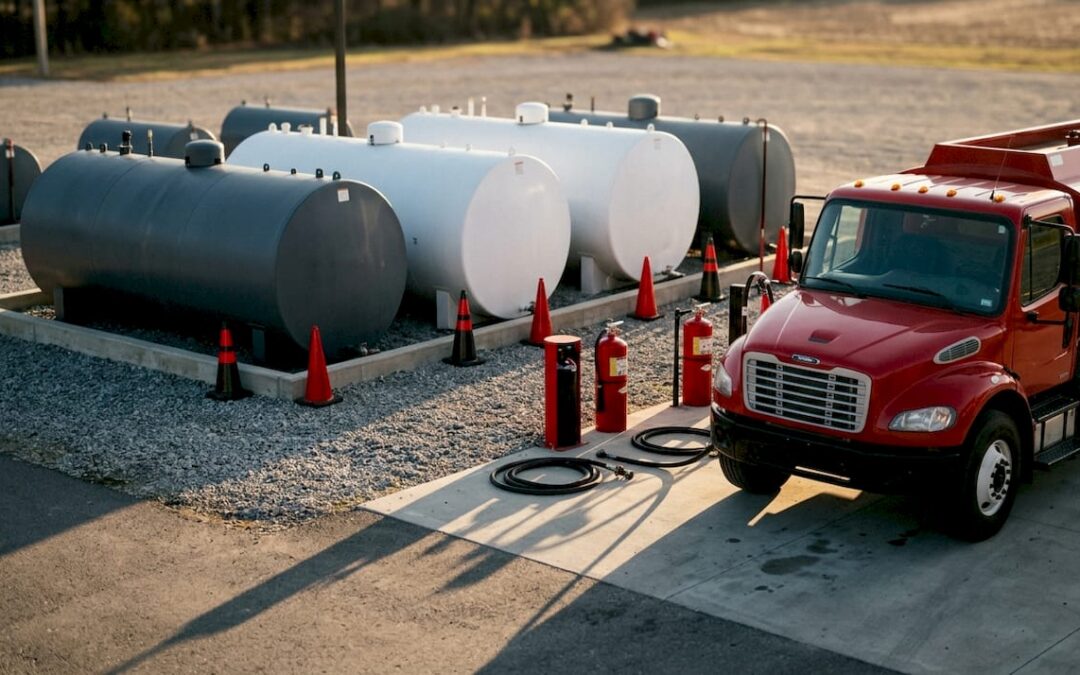
Texas commercial fuel delivery setup is the process of establishing an efficient, compliant, and reliable fuel distribution system tailored to your business operations across the state. Whether you manage a construction fleet in Dallas, a data center in Austin, or a municipal yard in San Antonio, the right setup determines whether your equipment runs or sits idle. This guide covers the four core delivery models, Texas Commission on Environmental Quality (TCEQ) compliance requirements, practical setup steps, and the most common pitfalls that cost operations time and money.
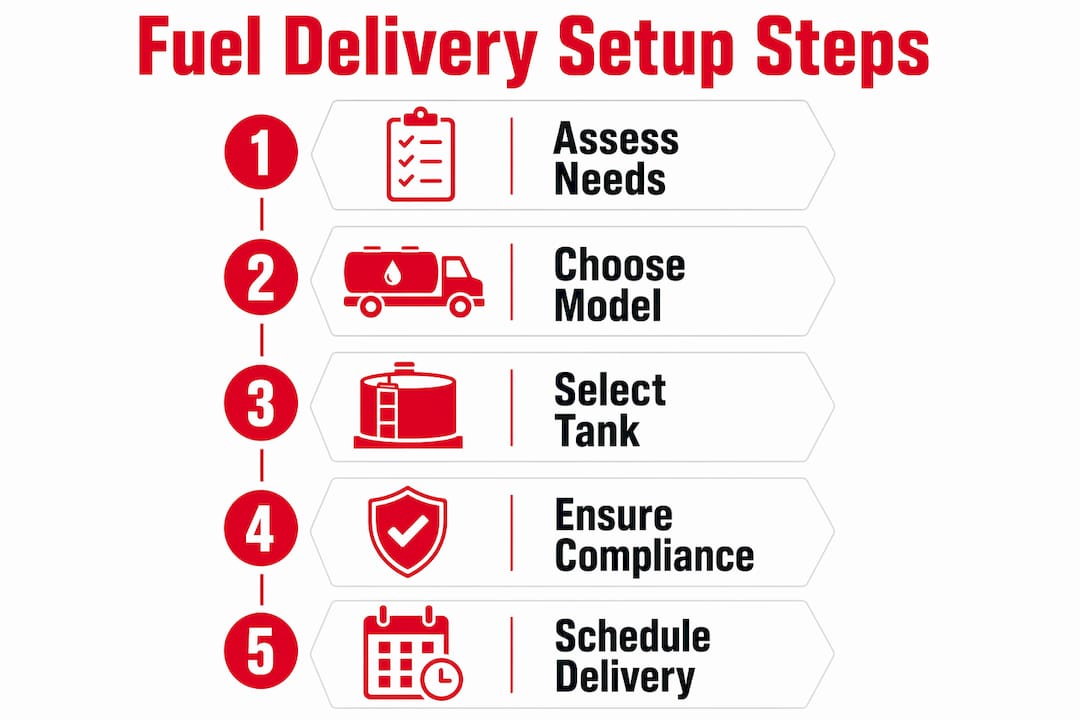
What are the essential delivery models for Texas commercial operations?
Texas commercial fuel distribution covers four core delivery models, and choosing the wrong one for your operation creates scheduling gaps and cost overruns.
The four models are:
- Scheduled bulk delivery: Regular fills to on-site storage tanks, ideal for high-volume operations like trucking yards, mines, and data centers with predictable consumption
- Fleet wet hosing: A driver brings fuel directly to each vehicle or piece of equipment, eliminating the need for on-site storage tanks entirely
- 24/7 emergency delivery: On-demand fuel supply that activates when operations face unexpected shortages or generator failures during storms or outages
- Temporary site support: Short-term fueling for construction projects, festivals, film productions, and other time-limited operations
Each model serves a distinct operational profile. A data center needs scheduled top-offs and guaranteed emergency response. A construction site superintendent typically needs temporary site support combined with wet hosing for heavy equipment.
Fuel types and tank options
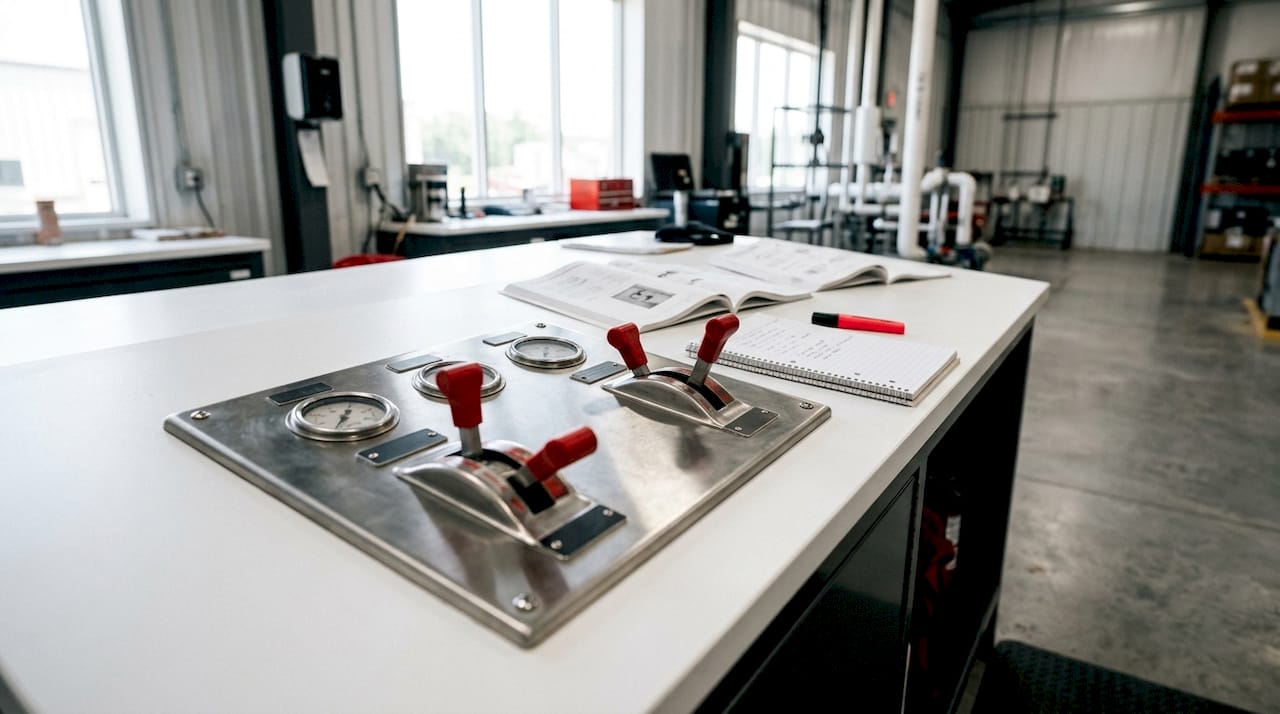
Texas commercial fuel suppliers carry four primary fuel types: dyed diesel (off-road use), clear diesel (on-road fleet vehicles), gasoline, and DEF (diesel exhaust fluid). Matching the correct fuel type to each asset protects you from IRS penalties on dyed diesel misuse and keeps equipment running within manufacturer specs.
Tank rentals range from 250 to 20,000 gallons, available in single-wall or double-wall configurations, with built-in pumps and optional fuel management technology. Short-term and long-term rental options exist for both stationary and portable setups, giving operations the flexibility to scale up during peak seasons and scale back when projects close.
| Fuel Type | Primary Use | Key Compliance Note |
|---|---|---|
| Dyed diesel | Off-road equipment | IRS-restricted; not for on-road vehicles |
| Clear diesel | On-road fleet vehicles | Standard highway fuel |
| Gasoline | Light fleet and generators | Separate storage required |
| DEF | Diesel emissions control | Required for Tier 4 engines |
What regulatory requirements apply to fuel storage and delivery in Texas?
TCEQ compliance is the single most consequential factor in a Texas fuel delivery setup. Getting it wrong triggers enforcement actions that halt operations and generate fines.
The Texas Commission on Environmental Quality requires fuel delivery certificates for all underground petroleum storage tanks (USTs) receiving motor fuel. TCEQ mandates that a current certificate be prominently displayed at the tank location. Without it, fuel deliveries to that tank are prohibited, and enforcement actions follow.
The compliance process involves five steps:
- Register your tank: Submit tank registration to TCEQ before accepting any fuel delivery.
- Obtain your fuel delivery certificate: Apply through TCEQ’s online portal after registration is confirmed.
- Display the certificate: Post it visibly at the UST location. Drivers are required to verify it before delivering.
- Track renewal dates: Certificates expire and must be renewed proactively. Lapsed certificates stop deliveries immediately.
- Register aboveground tanks separately: Aboveground storage tanks (ASTs) require their own registration certificates under TCEQ rules.
Facilities managers often overlook TCEQ compliance documentation, which leads to operational fines and delivery interruptions that ripple through the entire operation. The cost of a compliance audit is a fraction of the cost of a halted job site.
Pro Tip: Set a calendar reminder 60 days before your fuel delivery certificate expires. TCEQ’s online portal allows you to view and renew certificates without visiting a regional office, so there is no reason to let a renewal lapse.
Aboveground tanks are common on construction sites and agricultural operations. They carry their own registration requirements under TCEQ, separate from UST rules. If you operate both types, maintain two separate compliance tracks with distinct renewal schedules.
How do you plan and execute a commercial fuel delivery system setup?
A well-executed setup starts with a fuel needs assessment, not a tank purchase. Skipping the assessment is the most common reason operations end up with the wrong delivery model or undersized storage.
Follow these steps to build a functional setup:
- Calculate your daily fuel consumption by equipment type and shift schedule. Include generator runtime, vehicle fleet mileage, and seasonal peaks like harvest or hurricane season.
- Select your delivery model based on consumption patterns. High-volume, predictable operations benefit from scheduled bulk delivery. Variable or project-based operations do better with wet hosing or temporary site support.
- Choose your tank configuration. Single-wall tanks work for low-risk environments. Double-wall tanks with secondary containment are required in environmentally sensitive areas and are best practice everywhere else.
- Establish delivery schedules and communication protocols. Set reorder points, designate a site contact for each delivery, and confirm access routes for tanker trucks.
- Build an emergency response plan. Identify your 24/7 emergency fuel contact before you need one. Emergency fuel delivery services operate around the clock to prevent costly downtime, but they work best when your provider already knows your site layout and fuel requirements.
- Install fuel management technology if your operation runs multiple assets. Automated tank monitors track inventory in real time and trigger reorder alerts before you hit a critical low.
Key site preparation requirements include:
- Clear, paved or compacted access routes for tanker trucks (minimum 12-foot clearance)
- Secondary containment berms around aboveground tanks
- Proper grounding and bonding connections at fill points
- Visible signage for tank location and emergency contacts
- Documented spill response kit within 50 feet of the fill point
Pro Tip: For construction sites and job sites with changing layouts, use portable double-wall tanks with integrated pumps. They relocate without permits and eliminate the need to re-register a fixed tank every time the site configuration changes. Anytimefuelpros can advise on the right tank size for your projected runtime.
Scheduling matters as much as equipment. Coordinate delivery windows around your peak operational hours so fuel trucks are not competing with equipment movement on site. For on-site fuel logistics, early morning deliveries before shift start are the standard best practice.
What common challenges arise during fuel delivery setup?
Most fuel delivery disruptions trace back to three root causes: compliance gaps, scheduling failures, and poor communication with providers. Each is preventable.
- Compliance oversights: Lapsed TCEQ fuel delivery certificates are the leading cause of forced delivery stops. Scheduling conflicts and poor communication are primary causes of delivery disruption, and preventative compliance audits eliminate most of this risk before it materializes.
- Scheduling conflicts: Deliveries that arrive during peak equipment movement block access routes and create safety hazards. Build a delivery window into your daily site schedule and share it with your provider in writing.
- Inadequate communication: Providers who do not know your site contact, access codes, or tank location waste time and sometimes abort deliveries. This is avoidable with a simple onboarding document.
- No emergency backup plan: Operations that rely solely on scheduled deliveries face shutdowns during storms, supply disruptions, or unexpected consumption spikes. A 24/7 emergency fuel contact is not optional for mission-critical sites.
- Tank maintenance neglect: Tanks with corroded fill points, inaccurate gauges, or failed secondary containment create both safety risks and regulatory exposure. Schedule quarterly inspections as a fixed operational task.
“The operations that run without fuel disruptions are the ones that treat their fuel provider like a logistics partner, not a vendor. Clear access instructions, a named site contact, and a confirmed delivery window eliminate 90% of the problems we see on commercial sites.”
This reflects a consistent pattern across Texas fuel logistics: the sites with the fewest disruptions are the ones with the clearest protocols, not necessarily the largest budgets.
How do provider relationships improve Texas fuel delivery operations?
Clear communication protocols between operators and providers reduce delivery delays and prevent the misunderstandings that cascade into operational shutdowns. The onboarding process with a fuel provider sets the tone for the entire relationship.
A strong provider onboarding process covers:
- Site access instructions, gate codes, and contact names
- Preferred delivery windows and blackout periods
- Tank location, fill point specifications, and capacity
- Emergency contact hierarchy and after-hours protocols
- Invoicing preferences and pricing structure
Transparent pricing and flexible scheduling are the two factors Texas operations managers cite most often when evaluating fuel providers. Bulk fuel distributors that offer daily competitive pricing and confirmed delivery windows give procurement officers the data they need to manage fuel costs accurately.
Pro Tip: Request a written service agreement that specifies delivery windows, emergency response times, and pricing adjustment terms. Verbal agreements create disputes. A one-page service summary protects both parties and sets clear expectations from day one.
Consider a municipal fleet operation in San Antonio managing 200 vehicles across multiple yards. By establishing a single fuel provider with scheduled wet hosing at each yard and a 24/7 emergency contact for generator support, the fleet coordinator eliminates daily trips to retail stations, reduces fuel theft exposure, and gains consolidated invoicing across all locations. That is the multiplier effect of a well-structured provider relationship.
Anytimefuelpros delivers the Texas fuel setup your operation needs
Anytimefuelpros serves commercial operations across Texas with on-site diesel and DEF delivery, flexible scheduling, and 24/7 emergency response. Whether you need scheduled bulk fills for a Dallas data center, wet hosing for a construction fleet in Houston, or temporary site support for an Austin event, Anytimefuelpros brings fuel directly to your location.
Anytimefuelpros offers transparent daily pricing, TCEQ-aware delivery practices, and a single point of contact for multi-site Texas operations. From bulk fuel delivery to DEF supply and emergency response, the service is built for operations that cannot afford downtime. Contact Anytimefuelpros to set up a delivery schedule, discuss tank options, or activate emergency fueling support for your Texas sites.
FAQ
What is a Texas commercial fuel delivery setup?
A Texas commercial fuel delivery setup is a structured system for receiving, storing, and distributing fuel at commercial sites, covering delivery model selection, TCEQ compliance, tank configuration, and provider coordination.
What does TCEQ require for fuel delivery in Texas?
TCEQ requires a current fuel delivery certificate displayed at every underground storage tank receiving motor fuel. Aboveground tanks require separate registration certificates, and both must be renewed proactively to avoid enforcement actions.
What fuel types are available for Texas commercial delivery?
Texas commercial fuel suppliers deliver dyed diesel, clear diesel, gasoline, and DEF. Each fuel type has specific use restrictions, with dyed diesel limited to off-road equipment under IRS regulations.
How do I choose between bulk delivery and wet hosing?
Bulk delivery suits high-volume operations with on-site storage tanks and predictable consumption. Wet hosing works best for fleet operations without storage infrastructure, delivering fuel directly to each vehicle or piece of equipment.
What is the most common cause of fuel delivery disruptions in Texas?
Lapsed TCEQ fuel delivery certificates, scheduling conflicts, and poor communication with providers are the primary causes of delivery disruptions. Maintaining current compliance documentation and clear site protocols prevents most issues.
Key takeaways
A compliant Texas commercial fuel delivery setup requires selecting the right delivery model, maintaining current TCEQ certifications, and establishing clear communication protocols with your fuel provider before the first delivery arrives.
| Point | Details |
|---|---|
| Choose the right delivery model | Match bulk, wet hosing, emergency, or temporary site support to your actual consumption pattern. |
| Maintain TCEQ compliance | Keep fuel delivery certificates current for all USTs and register aboveground tanks separately. |
| Plan tank configuration early | Select single-wall or double-wall tanks based on site risk and environmental requirements. |
| Build an emergency fuel plan | Establish a 24/7 emergency fuel contact before a shortage occurs, not after. |
| Formalize provider communication | Document site access, delivery windows, and emergency contacts in writing at onboarding. |
Recent Comments