
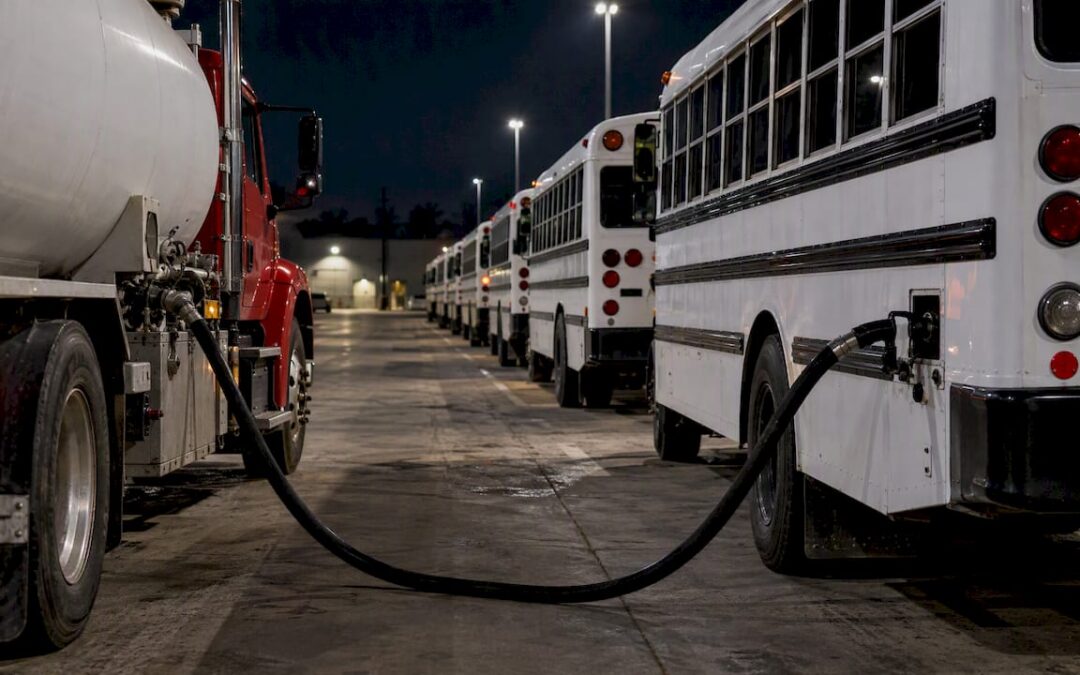
Diesel still fuels most school buses, but renewable diesel and biodiesel, propane autogas, CNG, and battery-electric are all realistic alternatives. One rule sorts them: match the fuel to your routes and duty cycle, your infrastructure budget, and the grant funding you can actually secure. For diesel and renewable diesel fleets, scheduled on-site delivery and wet-hosing keep buses fueled without extra depot labor.
TL;DR:
- Electric charger hardware costs $5,000 to $8,000 for Level 2 units and $21,000 to $27,000 for DC fast chargers, before site work.
- A propane station with a 1,000 gallon tank can cost about $40,000; CNG stations can run several hundred thousand, though suppliers may provide equipment.
- Electric buses need route analysis that accounts for hills, heating, and field trips, plus early utility coordination, before you commit to vehicles or chargers.
- Scheduled on site delivery and wet hosing can fill buses overnight, while vendor installed stations lower upfront costs but may require longer contracts.
Table of Contents
- What each fuel type means for your fleet
- Infrastructure and installation costs to budget for
- Operational planning: routes, charging, training, and data
- Fueling and logistics: on-site delivery, wet-hosing, and depot practices
- Environmental and emission standards for school bus fleets
- Safety and compliance for on-site fueling of school buses
- Managing diesel exhaust fluid (DEF) in school bus fleets
- Seasonal fueling and winterization for school buses
- How we support school districts with on-site fueling
- FAQ
- Sources
What each fuel type means for your fleet
Short-listing starts with knowing how each option behaves in daily service.
- Diesel: The baseline for most districts. Clear diesel serves on-road buses, while red-dye diesel is for off-road equipment such as groundskeeping machinery and generators, so keep the two separated in your tracking. Depot fueling and wet-hosing are the standard ways to fill a fleet.
- Renewable diesel and biodiesel: These are drop-in style fuels, so you change the fuel, not the bus. These fuels may fit existing routines, though check fuel and engine requirements before making a change.
- Propane autogas: Propane fueling can be fast, stations can be compact, and propane fleets have reported lower fuel and maintenance costs. Some districts recouped their added vehicle and infrastructure costs within three to eight years.
- CNG: CNG requires suitable vehicles and fueling infrastructure, so assess vehicle and station costs before choosing it.
- Battery-electric: Lower fuel and maintenance costs over the bus’s life, offset by higher purchase prices and charger costs. Route analysis and early utility engagement are not optional, and some fleets add energy storage or bidirectional charging.
Pro Tip: Rank your routes by daily mileage and idle time before comparing fuels. Compare each fuel with your routes, duty cycle, and infrastructure needs before choosing.
Whatever you choose, plan the fueling workflow at the same time as the vehicle order. A bus that cannot be fueled reliably is a bus that misses its route.
Infrastructure and installation costs to budget for
Infrastructure is where fuel decisions are won or lost, so put real numbers next to each option early.
For electric buses, EPA program reporting on rebate-funded purchases shows Level 2 chargers at $5,000 to $8,000 and DC fast chargers at $21,000 to $27,000. Those figures cover the charger hardware. Your site will carry additional costs on top.
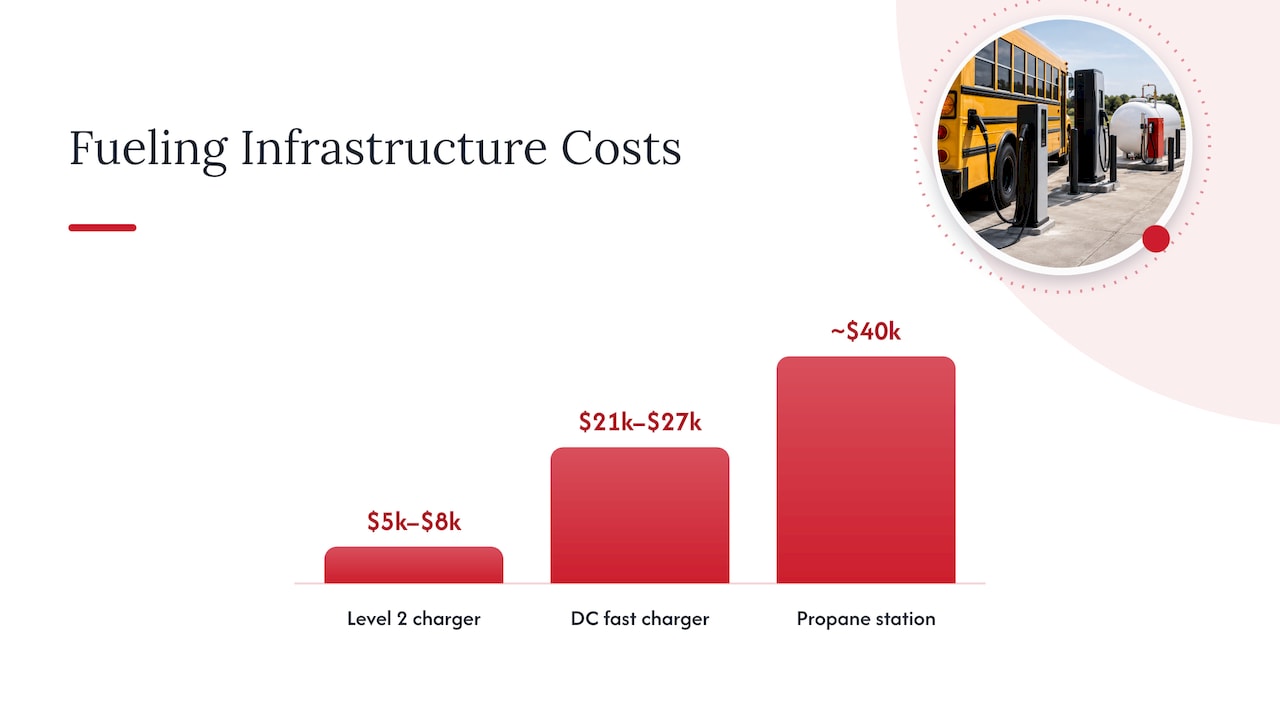
Propane is far cheaper to stand up. A standard station with a 1,000-gallon tank and dispenser can cost about $40,000, while CNG stations can run to several hundred thousand dollars depending on scope. Small operations of under 50 vehicles typically use tanks between 1,000 and 3,000 gallons, and many propane suppliers will furnish or install fueling equipment under a supply contract, which spares your capital budget.
Plan for these common line items:
- Electrical service upgrades and utility make-ready work
- Permits, engineering, and inspection fees
- Concrete pads, bollards, and fencing around tanks or chargers
- Dispensers, fuel management software, and card or key readers
- Tank cleaning before biodiesel use in older tanks, which is a best practice
Drop-in fuels such as renewable diesel typically need minimal equipment changes, which is part of their appeal. Even so, budget something for site prep on every option. A modest contingency for electrical and safety upgrades prevents a small surprise from stalling a funded project.
Operational planning: routes, charging, training, and data
The fuel you choose matters less than how well you prepare to run it. Work through this checklist in order:
- Analyze routes first. Match bus range and charger capacity to real daily mileage, including hills, heating, and field trips, before you sign a purchase order.
- Bring in the utility early. EPA and NREL planning materials walk through charging design, route analysis, and utility coordination, and NREL offers planning help through its Clean Bus Planning Awards.
- Manage charging load. Schedule charging off-peak and use managed charging so a dozen buses plugging in at once do not trigger demand charges.
- Train drivers and technicians. New fuels mean new safety habits, from propane handling to high-voltage systems. Schedule refreshers, not just a one-time session.
- Track everything. Telematics and fuel tracking give you miles per gallon or kWh per mile, maintenance intervals, and the data behind an honest total cost estimate.
- Pick a contracting model. Vendor-owned fueling infrastructure lowers upfront cost; district-owned tanks give you more control over long-term pricing.
Pro Tip: Start tracking cost per mile on your current diesel buses now. Without a baseline, you cannot prove that a new fuel saved anything.
Fuel price swings also shape these choices. Recent reporting on high diesel costs shows how price volatility pushes districts toward route consolidation, schedule changes, and a closer look at alternative fuels.
Fueling and logistics: on-site delivery, wet-hosing, and depot practices
Most districts end up fueling in one of two ways: buses go to a depot tank, or fuel comes to the buses. On-site delivery and wet-hosing send a truck to your lot, often overnight, and fill each bus where it is parked. That removes driver trips to retail stations and keeps fueling out of the morning rush.
Depot fueling can work well when you own tanks. Plan fueling operations and equipment to suit your fleet. Equipment suppliers describe features such as quick-connect nozzles and pull-away protection that make fueling safer and faster.
When you write an RFP or contract, ask vendors for:
- Scheduled recurring deliveries tied to your calendar, including breaks
- Bulk tank fills for depot storage
- Emergency and after-hours response with stated response times
- Itemized invoicing with delivery confirmation for every stop
- Coverage across all of your lots, not just your main yard
The tradeoff is simple. Vendor-installed stations reduce capital spending but may come with longer contract terms. District-owned equipment costs more upfront and gives you flexibility. For background on how a depot should be ready for vendor delivery, see our guide on how on-site diesel delivery works, and our overview of bulk fuel delivery and storage.
Diesel fuel efficiency also drives budgets. This fleet guide on diesel engine efficiency covers the maintenance factors that affect miles per gallon.
Environmental and emission standards for school bus fleets
School buses carry children, which is why emissions rules and funding programs focus on them. EPA’s analysis highlights the health benefits of replacing older diesel buses with low- or zero-emission models, noting that children and pregnant women are especially vulnerable to diesel exhaust. The same report points out that electric school buses can add grid resiliency through bidirectional charging.
For fleet managers, that translates into practical questions. Which of your buses are oldest and dirtiest? Those are usually the strongest candidates for replacement funding. Which cleaner fuel fits your routes? Renewable diesel and propane can cut emissions without a charging build-out, while electric removes tailpipe emissions entirely.
Federal priorities also evolve. EPA’s March 2026 Request for Information signals a focus on broadening technology choices for the Clean School Bus Program and collecting input on vehicle availability, pricing, and fueling infrastructure. That suggests districts should watch for program rules that welcome more than one fuel type.
Check your state air agency as well. State rules on idling, retrofits, and emissions can add requirements beyond federal ones, and they may unlock separate funding. Document your fleet’s model years, engine families, and fuel types now, so you are ready when a rebate or grant window opens.
Safety and compliance for on-site fueling of school buses
Fueling safety requirements vary by fuel and equipment. Consult the applicable authorities and equipment manufacturers, and have qualified professionals establish procedures for your site.
Have qualified professionals establish written fueling procedures for your site, and ensure staff follow the applicable requirements.
Compliance also means paperwork. Tanks, spill prevention, and fuel storage can trigger federal, state, and local requirements, and the details depend on your tank size and location. Confirm with your fire marshal and state environmental agency before you install or change equipment.
When a vendor fuels your buses on site, ask for their driver training records, insurance coverage, and spill response plan. Make sure delivery windows avoid student loading times, and that your depot layout gives a truck safe room to maneuver. Clear delivery confirmations for every stop give you an audit trail if an inspector asks.
Managing diesel exhaust fluid (DEF) in school bus fleets
Check each bus’s engine and emissions-system specifications to determine whether it needs diesel exhaust fluid. Running out is not a minor inconvenience: a bus can derate or lose power when DEF runs low, which turns a supply gap into a missed route.
Treat DEF as a planned supply, not an afterthought. Track consumption per bus over a full season so you know your real demand, then set reorder points before tanks run low. Keep DEF in sealed, clean containers or a dedicated tank, because contamination damages the system and is costly to fix.
Storage matters. DEF freezes in deep cold and degrades in heat, so store it in a climate-appropriate location and rotate older stock first. Never use a funnel or hose that has touched diesel.
Many districts fold DEF into their fuel delivery contract so one vendor handles both. That cuts vendor count and keeps invoicing in one place. Ask whether your vendor can deliver DEF on the same schedule as diesel, and whether your invoice itemizes each product. Your DEF numbers belong in the same fuel tracking system as your gallons, so you can see how usage ties to buses and routes.
Seasonal fueling and winterization for school buses
School bus fleets run through the coldest months and the hottest ones, and fueling plans should change with the calendar. Cold weather can affect fuel and equipment. Follow your fuel supplier’s and engine manufacturer’s guidance for winter operations, including fuel selection, storage, and maintenance.
Follow your supplier’s guidance on winter fuel storage and arrange deliveries to maintain an appropriate supply.
Seasonal heat and extended storage can affect fuel and DEF. Follow supplier guidance on storage, rotation, and testing. Schedule deliveries around breaks so you neither run dry nor over-store.
How we support school districts with on-site fueling
We deliver fuel to your depot or parking lot so your buses are ready before the first route. For school districts, our relevant services include:
- On-site diesel and gasoline delivery
- DEF delivery on the same schedule as fuel
- Bulk fuel delivery for depot tank fills
- Wet-hosing and mobile fleet fueling
- Scheduled recurring deliveries and emergency response
The benefit is straightforward: less driver labor, fewer trips to retail stations, itemized invoicing, and one point of contact for multi-site deliveries through our national partner network.
To get started, gather your fleet size, typical route lengths, and a description of your current depot infrastructure, then request a quote through our fuel services page. If wet-hosing is your priority, see our mobile fleet fueling services.
FAQ
What is the fuel efficiency of a school bus?
It varies widely with bus size, engine, route type, and idling. Track miles per gallon (or kWh per mile) in your own fleet with telematics, because your routes and stop patterns matter more than a generic average.
Who manufactures school buses in the US?
Several manufacturers build school buses for the U.S. market, and many offer diesel, propane, CNG, and electric models. Ask each vendor for current fuel options and delivery timelines, and confirm which models qualify for the funding you plan to use.
How do electric school buses work?
They run on a battery pack that powers an electric motor, and they charge at depot chargers instead of fueling at a pump. Planning guidance says success depends on route analysis and early utility engagement, and some fleets add bidirectional charging.
Do school buses have a V8?
Some buses, especially older or gasoline models, use V8 engines, while many modern buses use inline-six diesel engines. Check the engine specification for each bus in your fleet, since it affects fuel choice and fueling requirements.
What does it cost to add propane fueling for a school bus fleet?
A standard station with a 1,000-gallon tank and dispenser can cost about $40,000. Costs vary with station size and scope, and some suppliers furnish equipment under a supply contract.
Sources
- Clean School Bus Webinar Series Presentation: Deployment Considerations
- Alternative Fuels Data Center: Electric School Bus Planning Guide
- Breaking Down Alternative Fuel Infrastructure Costs | School Bus Fleet
- Alternative Fuels Data Center: Propane Rolls on as Reliable Fleet Fuel
Recent Comments