
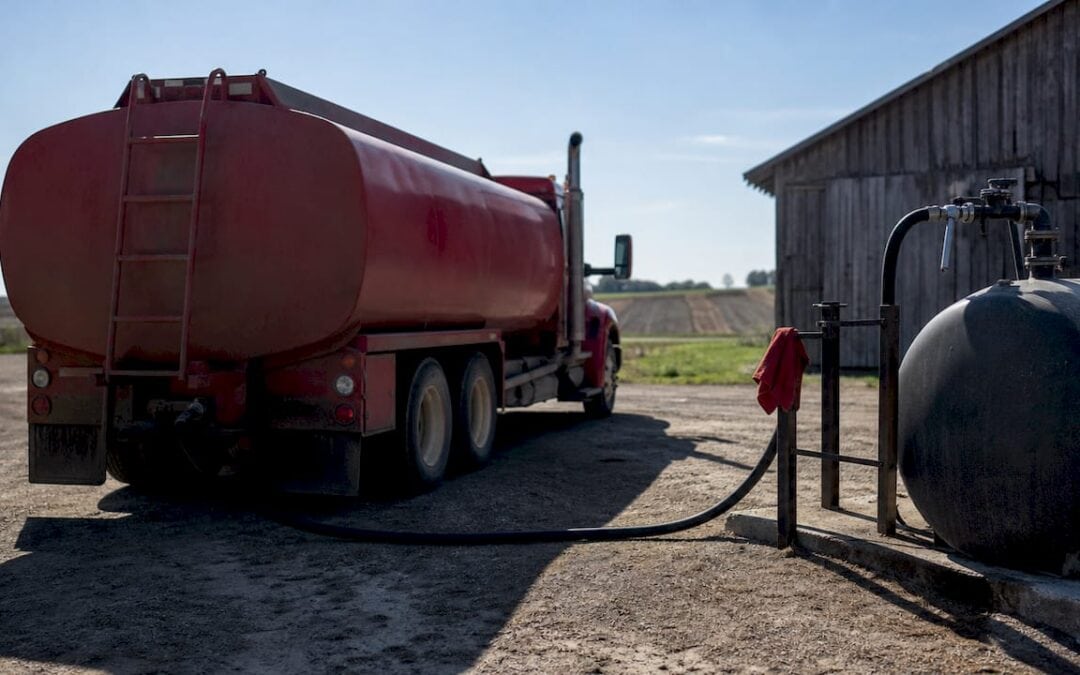
Agricultural diesel delivery is defined as a service where a fuel provider transports diesel directly to a farm or ranch, pumping it into on-site storage tanks or equipment rather than requiring operators to drive to a retail station. This is the industry standard term: on-site fuel delivery for agricultural operations. If you run tractors, combines, sprayers, or irrigation pumps, understanding how farm diesel delivery services work can mean the difference between a harvest that runs on schedule and one that stalls mid-field. This article covers how the process works, what sets agricultural diesel apart from regular diesel, the real benefits and limitations, and how to prepare your operation for reliable fuel supply.
How does agricultural diesel delivery work?
On-site fuel delivery means a supplier dispatches a tanker truck to your farm location and transfers diesel directly into your storage tanks or equipment. The process removes the need for a driver or operator to leave the property to refuel. That time savings compounds quickly during planting and harvest, when every hour of equipment uptime counts.
Here is how a typical delivery unfolds:
- Schedule a delivery window. You contact your fuel provider and set a time that fits your operation. Many providers offer seasonal delivery scheduling aligned with peak demand periods like spring planting or fall harvest.
- Confirm your storage capacity. The provider needs to know your tank size and current fuel level to dispatch the right truck and volume. Aboveground tanks, underground tanks, and portable skid tanks all qualify, but each has different fill procedures.
- Receive the delivery. The tanker arrives, connects to your tank or equipment, and transfers the fuel. Delivery timing can be scheduled overnight or early morning before crews start work, so operations are never interrupted.
- Verify and document. A delivery ticket confirms the volume transferred, the fuel type, and the price. Keep these records for tax purposes, especially when using dyed diesel that qualifies for off-road tax exemptions.
- Repeat on a schedule. Most farms set up recurring deliveries based on usage patterns. This removes the guesswork and prevents the costly mistake of running dry during a critical operation window.
Pro Tip: Track your fuel consumption by equipment type over a full growing season. That data gives your supplier enough information to build a delivery schedule that keeps your tanks at a safe working level without over-ordering.
Minimum delivery volumes are a real consideration. Successful on-site delivery depends on fuel usage volume, storage capacity, and geographic accessibility. Very small operations that use only a few hundred gallons per month may not meet a provider’s minimum threshold. Confirm this with your supplier before committing to a delivery plan.

What is the difference between agricultural and regular diesel?
Farm diesel and highway diesel come from the same refinery process, but they are regulated and taxed differently. Knowing which fuel belongs in which equipment protects you from legal penalties and mechanical problems.
| Feature | Agricultural (Dyed) Diesel | Regular (Clear) Diesel |
|---|---|---|
| Color | Red dye added | Clear or slightly yellow |
| Tax status | Tax-exempt for off-road use | Subject to federal and state road taxes |
| Legal use | Tractors, combines, irrigation pumps, off-road equipment | Highway vehicles, on-road trucks |
| Sulfur standard | Ultra-low sulfur (ULSD) compliant | Ultra-low sulfur (ULSD) compliant |
| Penalty for misuse | Fines and back taxes if found in on-road vehicles | No restriction on off-road use |
Agricultural diesel is dyed red and is exempt from certain road-use taxes because it is intended for non-road equipment only. The red dye is added by the IRS and state tax authorities as a visual marker for enforcement. If a tax inspector finds red diesel in the tank of a highway vehicle, the operator faces fines and back taxes.
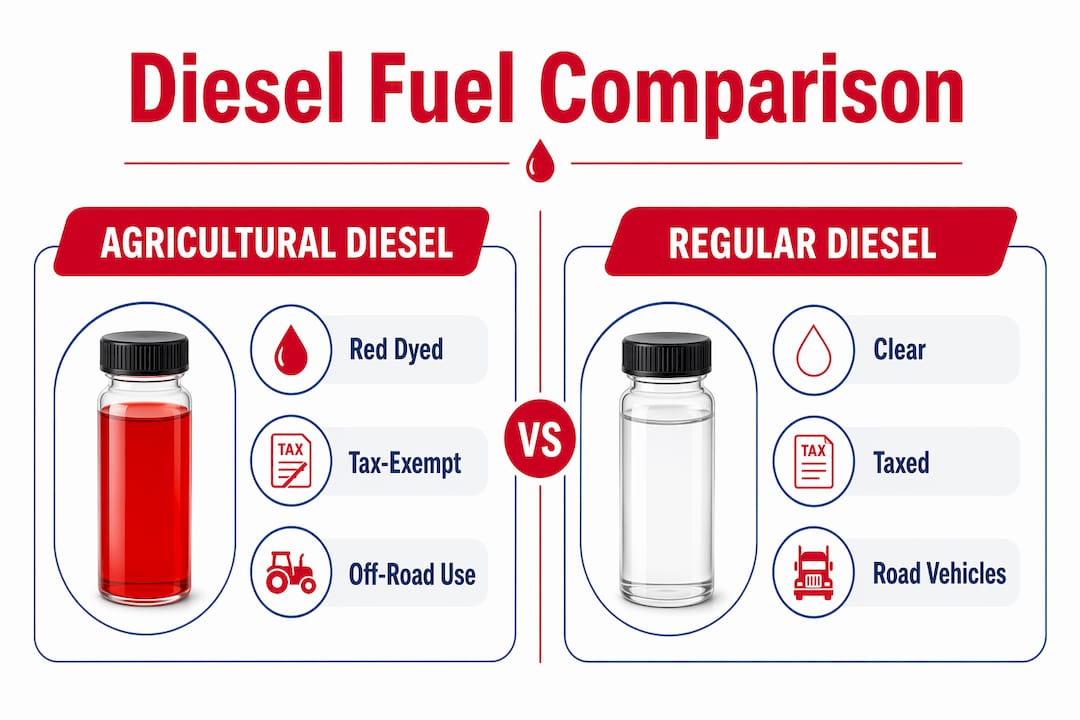
The chemical composition of dyed and clear diesel is nearly identical. Mixing the two fuels is generally discouraged not because of mechanical incompatibility but because of regulatory and tax compliance reasons. Use each fuel in its intended application and you avoid both legal exposure and any ambiguity during a tax audit.
Key points to keep in mind:
- Dyed diesel cannot legally be used in any vehicle that operates on public roads, including farm trucks that haul grain to a co-op.
- Clear diesel can be used in off-road equipment without penalty, but you pay road taxes on it unnecessarily.
- Both fuel types comply with ultra-low sulfur diesel (ULSD) standards, which protect modern diesel engine emissions systems.
What are the benefits and limitations of farm diesel delivery?
The core benefit of on-site agricultural fuel supply is time. Sending a driver 20 miles to a fuel station and back during harvest costs more than the fuel itself when you factor in lost equipment hours and labor. Timely fuel delivery reduces equipment downtime during peak planting and harvest seasons by keeping fuel available on demand. That continuity directly protects your yield and your margins.
Benefits of on-site diesel delivery for farms:
- No wasted labor trips. Operators stay on the equipment. Fuel comes to them.
- Bulk pricing advantages. Ordering larger volumes typically lowers your per-gallon cost compared to retail pump prices.
- Consistent supply during peak demand. Fuel usage spikes during critical agricultural operations. A scheduled delivery plan prevents shortfalls when you can least afford them.
- Simplified recordkeeping. Delivery tickets and invoices from a single provider make tax documentation and fuel cost tracking straightforward.
- Reduced theft exposure. On-site tanks with controlled access reduce the opportunity for fuel theft compared to leaving equipment at a public station.
Pro Tip: Ask your fuel provider about on-site fuel delivery benefits specific to your equipment mix. A provider familiar with agricultural operations can flag whether your current tank setup is sized correctly for your peak-season consumption.
The limitations are real and worth understanding before you commit. Minimum delivery volumes often start at several hundred gallons per week, which means very small operations may not qualify for scheduled service. Geographic location matters too. Remote farms in areas with limited supplier coverage may face longer lead times or higher delivery fees. Storage infrastructure is also a prerequisite. You need a compliant tank before a provider will pump fuel onto your property.
How to prepare your farm for diesel delivery and stay compliant
Getting set up for recurring farm diesel delivery services requires more than a phone call to a supplier. Your infrastructure, safety setup, and recordkeeping all need to be in order before the first tanker arrives.
- Install or inspect your storage tank. Farm tanks can be aboveground, underground, or portable, but all carry regulatory compliance requirements. Have your tank inspected for leaks, corrosion, and proper venting before scheduling a delivery.
- Set up spill containment. Bulk fuel storage requires spill containment structures around the tank. This is not optional. Local fire codes and environmental regulations mandate secondary containment to prevent ground contamination in the event of a spill or overflow.
- Confirm access for the delivery truck. A tanker truck needs a clear, firm path to your tank. Soft ground, low-clearance gates, or overhead obstructions can prevent a delivery or damage equipment. Walk the route before your first delivery and address any obstacles.
- Verify your location is within the provider’s service area. Confirming service availability in your location is critical before committing to a delivery plan. Not every provider covers every rural zip code. Ask specifically about lead times and minimum order requirements for your area.
- Establish a fuel usage log. Track consumption by piece of equipment and by month. This data helps you build an accurate delivery schedule, negotiate better pricing based on volume, and catch abnormal consumption that might signal a mechanical problem or fuel theft.
- Review your local fire and environmental codes. Tank placement, distance from structures, and labeling requirements vary by county and state. Check with your local fire marshal and state environmental agency before installing new storage. Review best practices for farm diesel delivery to make sure your setup meets current standards.
Proactive communication with your fuel provider is the final piece. Give them advance notice before peak seasons, update them when your usage patterns change, and confirm delivery windows at least 48 hours ahead. Providers who know your operation schedule their routes more efficiently, which often translates to faster service and better pricing for you.
Key takeaways
Agricultural diesel delivery is the most direct way for farm operators to keep equipment running without sacrificing labor hours or risking fuel shortfalls during critical seasons.
| Point | Details |
|---|---|
| Core definition | Agricultural diesel delivery brings fuel directly to your farm, eliminating trips to retail stations. |
| Dyed diesel rules | Red-dyed off-road diesel is tax-exempt but cannot legally be used in highway vehicles. |
| Delivery requirements | You need a compliant storage tank, spill containment, and clear truck access before scheduling service. |
| Peak season planning | Schedule recurring deliveries ahead of planting and harvest to prevent costly equipment downtime. |
| Provider fit | Confirm minimum volume thresholds and service area coverage before committing to a delivery plan. |
Get reliable agricultural diesel delivery from Anytimefuelpros
Anytimefuelpros delivers dyed and clear diesel directly to farms and ranches across Texas, Utah, and nationwide through a trusted partner network. Whether you need a one-time bulk fill before harvest or a recurring delivery schedule tied to your equipment usage, Anytimefuelpros builds a plan around your operation, not a generic route.
Anytimefuelpros serves agricultural operators in San Antonio, Austin, Dallas-Fort Worth, and Salt Lake City, with nationwide reach for multi-site and remote locations. Transparent invoicing, 24/7 emergency response, and competitive daily pricing make it straightforward to keep your tanks full without the administrative headache. Explore the full range of diesel delivery services or learn more about the benefits of fuel delivery for agricultural operations. Contact Anytimefuelpros to schedule your first delivery.
FAQ
What is agricultural diesel delivery?
Agricultural diesel delivery is a service where a fuel provider transports diesel directly to a farm or ranch, pumping it into on-site storage tanks or equipment. It eliminates the need for operators to drive to a retail station, keeping machinery fueled and running during critical work periods.
What is farm diesel and how does it differ from regular diesel?
Farm diesel is typically dyed red and is tax-exempt for use in off-road agricultural equipment such as tractors, combines, and irrigation pumps. Regular clear diesel is taxed for highway use and cannot be substituted for dyed diesel in on-road vehicles without legal consequences.
How do i order agricultural diesel delivery for my farm?
Contact a licensed fuel delivery provider, confirm your storage tank capacity and location, and set a delivery schedule based on your usage patterns. Most providers require a minimum order volume and need clear truck access to your tank before scheduling the first delivery.
Can i use dyed agricultural diesel in my farm truck?
No. Dyed off-road diesel is restricted to non-road equipment only. Using it in a vehicle that operates on public roads can result in fines and back taxes if discovered during a roadside inspection or audit.
How often should i schedule diesel delivery for my farm?
Delivery frequency depends on your equipment fleet size and seasonal usage. Most farms benefit from seasonal delivery planning that increases frequency during planting and harvest and scales back during slower months. Tracking monthly consumption by equipment type gives you the data to build an accurate schedule.
Recent Comments