
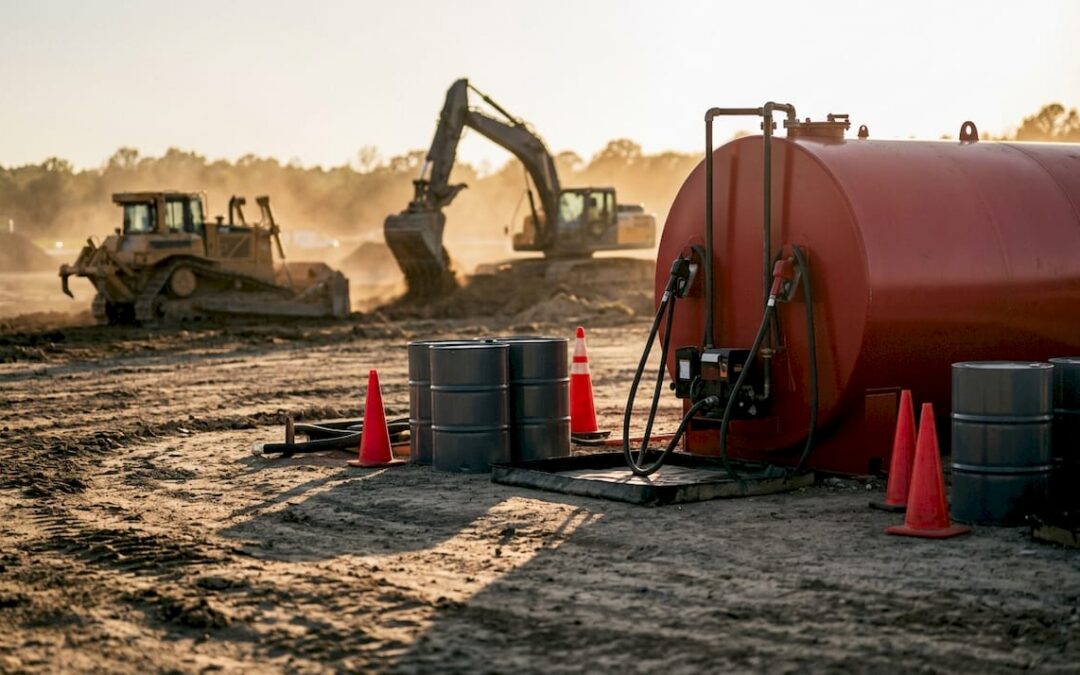
On-site fuel is defined as diesel or gasoline stored and dispensed directly at a job site, eliminating the need for equipment operators or crew members to leave the site for refueling. Construction site managers who rely on off-site fueling accept a hidden productivity tax every time a machine runs dry. The case for on-site fueling solutions is built on three pillars: equipment uptime, regulatory compliance under EPA frameworks like the Spill Prevention, Control, and Countermeasure (SPCC) plan, and total cost control. Understanding why construction sites need on-site fuel means understanding how fuel access directly shapes project schedules, crew efficiency, and environmental liability.
Why construction sites need on-site fuel to stay productive
On-site fueling is the single most effective way to prevent equipment downtime on a construction project. When an excavator, dozer, or telehandler runs out of fuel mid-shift, the entire workflow sequencing around that machine stalls. Subcontractors waiting on that machine lose billable time. The ripple effect across a crew is immediate and measurable.
Jobsite fueling allows refueling during off-peak hours, such as early morning or during lunch breaks, so equipment is ready the moment work resumes. That scheduling control is something off-site fueling simply cannot replicate. A fuel truck that arrives at 5:00 a.m. means every machine on your site starts the day with a full tank.
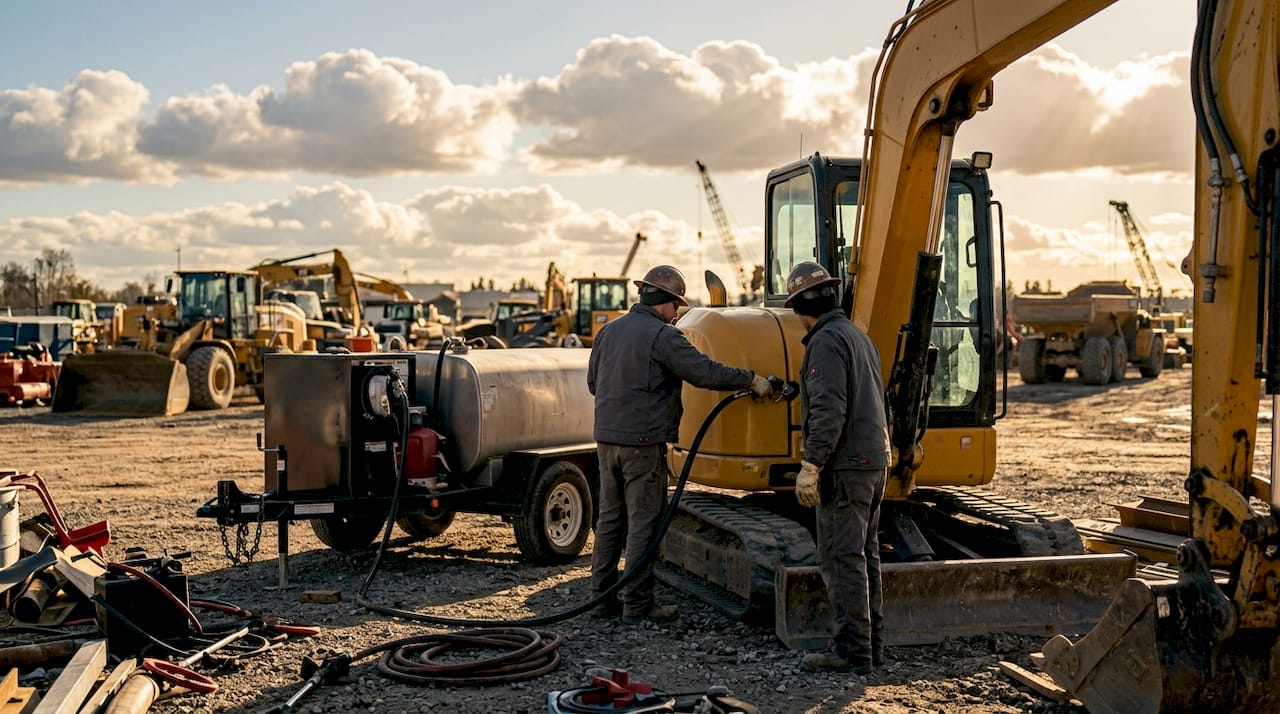
The operational benefits of on-site fueling solutions extend well beyond convenience. Site managers gain direct visibility into fuel consumption patterns, which supports better budget forecasting and flags unusual usage that could indicate equipment inefficiency or theft. Timely fuel delivery on-site acts as a critical control point, preventing the cascading schedule disruptions that follow when a machine unexpectedly runs dry.
Key operational benefits of construction site fuel delivery include:
- Equipment uptime: Machines refuel without leaving the site, keeping production hours intact.
- Crew focus: Operators stay on task instead of driving to a fuel station.
- Fuel usage tracking: Delivery records create a paper trail for cost allocation by phase or subcontractor.
- Scheduling flexibility: Deliveries align with project phases, not retail station hours.
- Reduced wear on support vehicles: Fewer off-site trips lower maintenance costs on trucks and support equipment.
Pro Tip: Schedule fuel deliveries to arrive 30–45 minutes before your first shift starts. That window gives your team time to top off every machine before the day’s workflow sequencing begins, with zero interruption to productive hours.
How do safety and regulatory compliance shape on-site fuel storage?
Fuel storage at construction sites is not optional territory for compliance. The EPA’s Spill Prevention, Control, and Countermeasure (SPCC) program, established under the Clean Water Act, requires any facility with more than 1,320 gallons of aboveground oil storage to maintain a written spill prevention plan. That threshold applies to aggregate storage across all containers on site, including portable tanks and equipment fuel tanks above certain sizes.
SPCC plans require more than paperwork. They mandate secondary containment systems, regular inspections, personnel training, and recordkeeping. Missing or incomplete SPCC plans can trigger regulatory penalties even when no spill has occurred. EPA inspectors frequently cite violations related to absent plans and inadequate containment, not just actual environmental incidents.
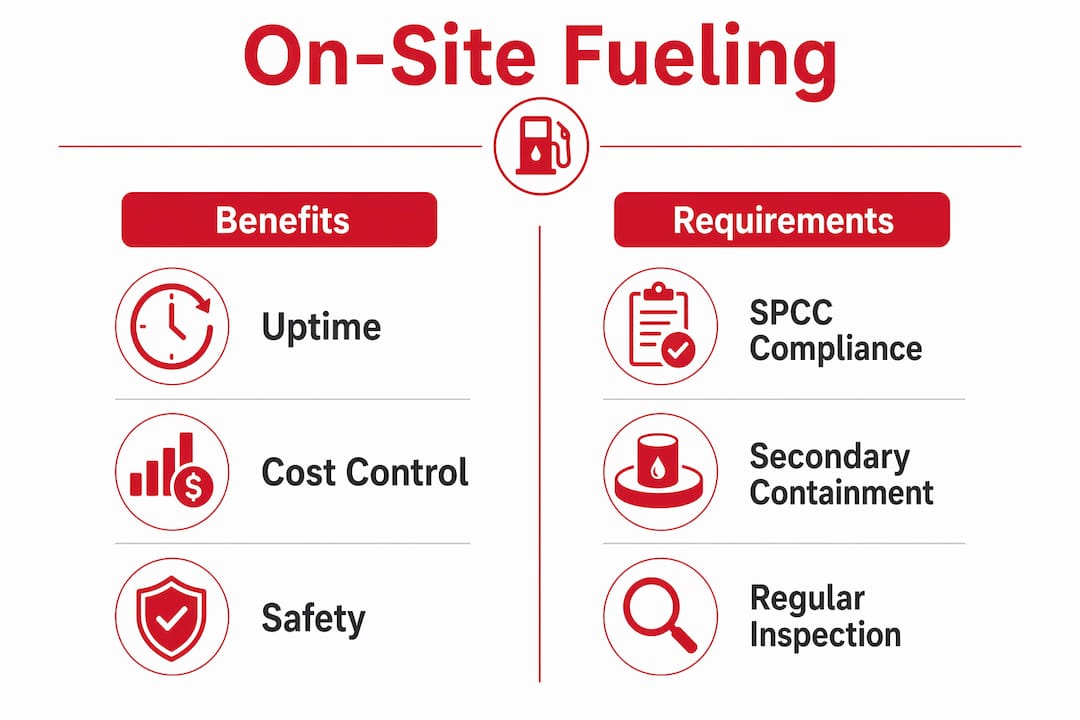
Secondary containment is the physical backbone of SPCC compliance on a construction site. The containment system must hold at least 100% of the largest single tank volume plus additional freeboard for precipitation. Physical barriers like berms and operational controls like overfill alarms work together to prevent discharge to navigable waters.
One detail that surprises many site managers: containment liners must use impervious materials such as sprayed polyurea or polyurethane. Bare concrete alone does not meet the standard because it is porous and can allow fuel to seep through over time. Getting this detail wrong during mobilization means costly retrofits later.
| Regulatory element | Requirement | Best practice |
|---|---|---|
| SPCC plan trigger | 1,320 gallons aggregate aboveground storage | Draft plan before mobilization, not after |
| Secondary containment capacity | 100% of largest tank plus precipitation freeboard | Use polyurea or polyurethane liner, not bare concrete |
| Inspection frequency | Regular documented inspections required | Log every inspection with date, findings, and corrective actions |
| Personnel training | All fuel-handling staff must be trained | Train at onboarding and document completion |
| Plan updates | Required after significant changes or spills | Review plan at each new project phase |
Fuel system compliance integrates environmental protection with site productivity. Sites that treat compliance as a parallel workflow, rather than an afterthought, avoid the fines and operational disruptions that follow an EPA inspection finding.
What logistics and infrastructure do you need for on-site fuel delivery?
Effective fuel management for construction starts with choosing the right storage configuration for your site’s scale and duration. Three primary options exist: aboveground storage tanks (ASTs) for long-duration projects, mobile fuel trailers for sites that shift locations, and dispensing units integrated with existing bulk tanks. Each option carries different cost, compliance, and logistics profiles.
Delivery frequency should align with project phases, not just calendar intervals. During earthmoving phases, when dozers, excavators, and compactors run continuously, fuel consumption spikes. During finishing phases, consumption drops. A fixed weekly delivery schedule wastes money during low-consumption periods and risks shortfalls during peak phases. Work with your fuel provider to build a delivery schedule that tracks your project timeline.
Environmental risk management is a non-negotiable part of logistics planning. Every storage location on site needs to account for drainage patterns, proximity to storm drains, and soil permeability. Placing a fuel tank uphill from a drainage channel without secondary containment is a compliance violation waiting to happen.
Practical infrastructure considerations for site managers include:
- Tank placement: Position tanks away from drainage paths and at least 50 feet from site boundaries where local codes require.
- Access for delivery vehicles: Confirm that fuel trucks can reach the storage area without crossing active work zones.
- Dispensing controls: Use metered dispensing units to track fuel by machine or operator.
- Spill kits: Station absorbent materials and containment booms within reach of every storage point.
- Signage and lighting: Mark fuel storage areas clearly and light them for early-morning or after-hours deliveries.
Pro Tip: Install your secondary containment system and establish your recordkeeping process during initial site mobilization. Retrofitting containment after equipment is already in place costs significantly more and creates inspection risk during the gap period.
On-site vs. off-site fueling: which method actually works?
The comparison between on-site and off-site fueling is not close when measured against the demands of an active construction project. Off-site fueling requires operators to drive equipment or support vehicles to a fuel station, consuming productive hours and adding wear to machines not designed for road travel. Fueling on-site reduces miles driven by refueling vehicles, lowering both vehicle wear and emissions compared to repeated off-site trips.
The safety profile also differs significantly. Off-site fueling at a retail station means handling diesel in an uncontrolled environment, often without the secondary containment or spill response equipment present on a properly configured job site. An on-site spill within a contained system is manageable. A spill at a public fuel station creates liability exposure and potential regulatory reporting requirements outside your control.
| Factor | On-site fueling | Off-site fueling |
|---|---|---|
| Equipment downtime | Minimal. Refueling happens during off-peak hours. | High. Operators leave the site during work hours. |
| Fuel cost control | Tracked by delivery invoice and dispensing meter. | Difficult to allocate by machine or phase. |
| Spill risk | Managed within contained, compliant storage. | Uncontrolled environment at retail stations. |
| Environmental footprint | Fewer transport miles, lower emissions. | Higher transport frequency increases emissions. |
| Compliance readiness | SPCC-aligned with documentation on site. | No on-site compliance infrastructure. |
| Schedule impact | Zero disruption when delivery is timed correctly. | Direct disruption every refueling cycle. |
The productivity math is straightforward. Every hour an operator spends driving to a fuel station is an hour of machine time lost. Across a fleet of excavators, loaders, and compactors running multiple shifts, those hours accumulate into real project delays. On-site fuel delivery converts that lost time into productive output.
Key Takeaways
On-site fuel delivery is the most direct way construction site managers can protect equipment uptime, control fuel costs, and maintain EPA compliance across every project phase.
| Point | Details |
|---|---|
| Uptime protection | On-site fueling eliminates refueling trips that pull operators and machines off productive work. |
| SPCC compliance threshold | Sites with more than 1,320 gallons of aboveground storage must have a written SPCC plan in place. |
| Secondary containment standard | Containment must hold 100% of the largest tank volume and use impervious liner materials, not bare concrete. |
| Delivery scheduling | Align fuel delivery frequency with project phases to avoid shortfalls during peak equipment use. |
| Cost and emissions advantage | On-site fueling reduces transport miles, lowering both fuel costs and vehicle emissions compared to off-site methods. |
Anytimefuelpros delivers fuel where your project runs
Construction site managers across Texas, Utah, and nationwide rely on Anytimefuelpros to keep excavators, dozers, loaders, and heavy equipment fleets fueled without interrupting the workday. Anytimefuelpros delivers on-site diesel, bulk fuel, and DEF directly to job sites on a schedule built around your project phases, not a generic calendar.
Whether you need a recurring delivery program for a long-duration earthmoving project or emergency fuel response when a tank runs unexpectedly low, Anytimefuelpros provides 24/7 service with transparent invoicing and compliance-ready documentation. The team handles everything from single-truck job sites to multi-state enterprise contracts. Learn more about the benefits of fuel delivery for construction operations, or get details on bulk fuel storage options for your next project.
FAQ
Why do construction sites need on-site fuel instead of off-site stations?
On-site fuel eliminates the productive hours lost when operators drive equipment or support vehicles to a retail station. It also provides a controlled, compliant environment for fuel storage and spill management that off-site stations cannot offer.
What triggers an SPCC plan requirement on a construction site?
Any site with more than 1,320 gallons of aboveground oil storage in aggregate must have a written SPCC plan under EPA Clean Water Act regulations. This threshold applies even to temporary construction projects based on total fuel volume across all containers.
What materials are required for secondary containment on a job site?
Secondary containment must use impervious materials such as sprayed polyurea or polyurethane. Bare concrete does not meet the standard because it is porous and allows fuel to seep through over time.
How often should fuel be delivered to an active construction site?
Delivery frequency should match project phase activity, not a fixed calendar schedule. Earthmoving and grading phases consume significantly more fuel than finishing phases, so delivery intervals should adjust accordingly to avoid both shortfalls and excess inventory.
Can on-site fueling reduce a project’s environmental footprint?
On-site fueling reduces the number of transport miles driven by refueling vehicles, which lowers vehicle wear and emissions compared to repeated off-site fueling trips. Proper secondary containment also reduces spill risk, which is the primary environmental liability in fuel management for construction.
Recommended
- What Is Temporary Site Fueling? A 2026 Guide
- Construction Site Fueling Workflow: Cut Downtime Fast
- Why More Job Sites Are Choosing On-Site Fuel Delivery (And Why Yours Should Too) – Anytime Fuel Pros
- Maximizing Efficiency: How On-Site Fuel Delivery and Fuel Tanks Can Boost Your Construction Project’s Productivity – Anytime Fuel Pros
Recent Comments