
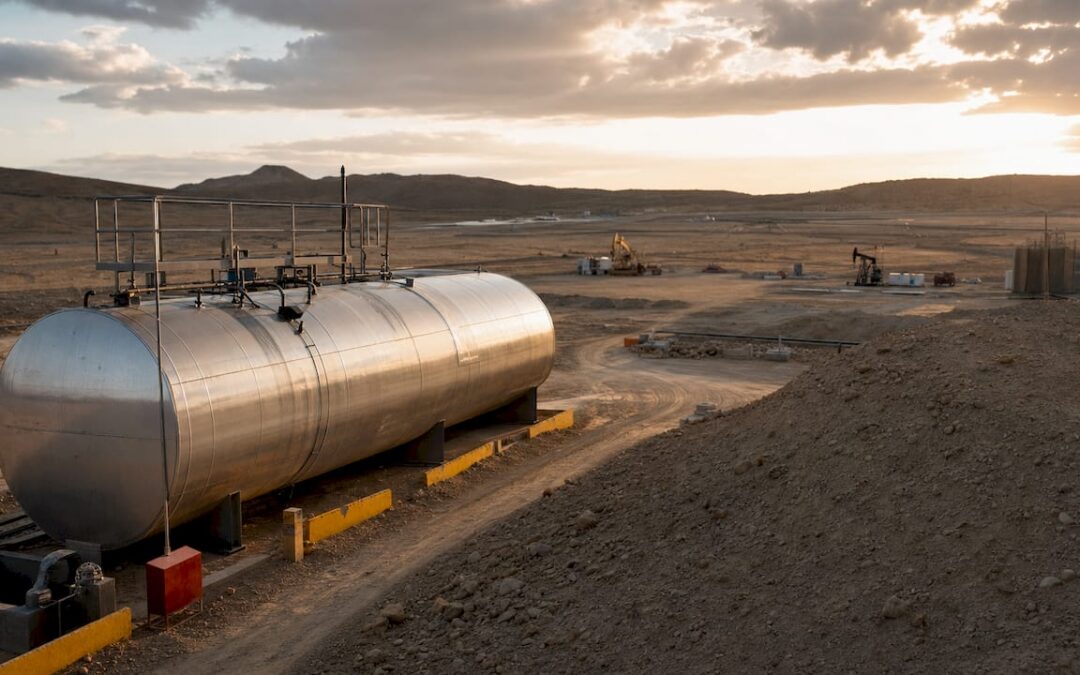
Oil field remote fuel delivery is the process of supplying diesel and other fuels to oilfield sites in isolated locations using coordinated logistics, specialized transport, and real-time monitoring technologies to maintain continuous operations. Without a reliable remote fuel supply, drilling rigs, frac pumps, generators, and support equipment grind to a halt. The cost of that downtime is not just measured in idle hours. It ripples through crew schedules, contract timelines, and equipment wear. This guide covers the tools, coordination steps, common challenges, and compliance requirements that site managers need to keep fuel flowing at even the most difficult locations.
What tools and technologies are essential for oil field remote fuel delivery?
Remote site fueling depends on two categories of technology: monitoring hardware and delivery infrastructure. Get either one wrong, and the entire supply chain breaks down.
Wireless remote tank monitoring
Wireless remote monitoring uses non-contact radar sensors with built-in cellular connectivity to report real-time fuel levels without wiring or power outlets. The Readybit IQ-1 is one example. It mounts in under five minutes, runs on a rechargeable battery lasting over one year, and transmits level data over cellular networks. That means you can deploy it on a portable tank in the middle of a Utah basin with no infrastructure at all.
These systems provide automated alerts before fuel drops below a set threshold. That alert triggers a delivery order rather than a frantic call after equipment shuts down. Usage analytics from these sensors also feed consumption forecasting, so delivery schedules reflect actual burn rates rather than guesswork.
Delivery vehicles and ERP integration
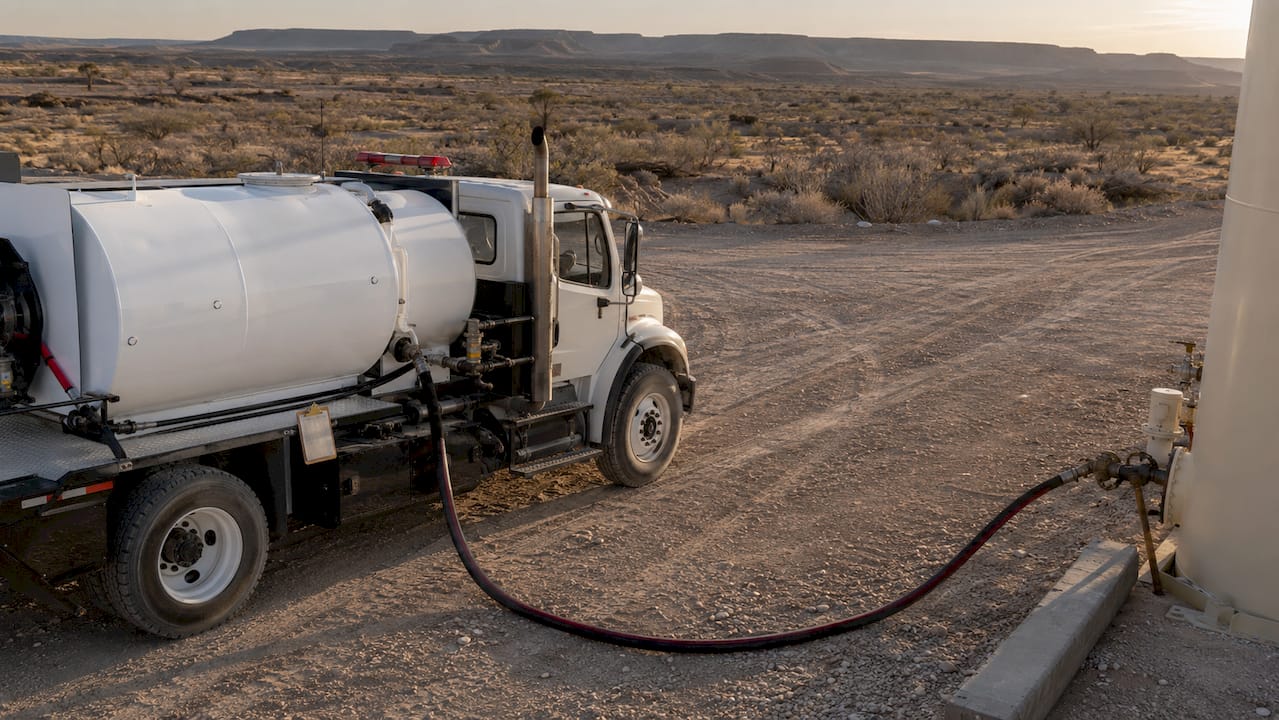
Specialized fuel delivery trucks are built for remote, rough terrain and long-haul trips. They carry compliance-rated tanks, metered dispensing systems, and safety equipment required for oilfield access. A standard commercial tanker is not built for a two-track road in the Permian Basin or a mountain access route in the Uinta Basin in Utah.
API and webhook integrations connect monitoring data directly to ERP and route planning systems. When a tank hits its reorder threshold, the system can trigger an automated delivery request without human intervention. That level of integration is what separates a reactive fueling program from a proactive one.
| Feature | Remote monitoring | Manual checks |
|---|---|---|
| Real-time visibility | Yes | No |
| Automated alerts | Yes | No |
| Labor required | Minimal | High |
| Stockout risk | Low | High |
| Deployment time | Under 5 minutes | N/A |
Pro Tip: Choose monitoring hardware rated for the temperature range and cellular coverage at your specific site. A sensor that works in South Texas may lose connectivity in a canyon in southeastern Utah. Verify carrier coverage maps before committing to a device.
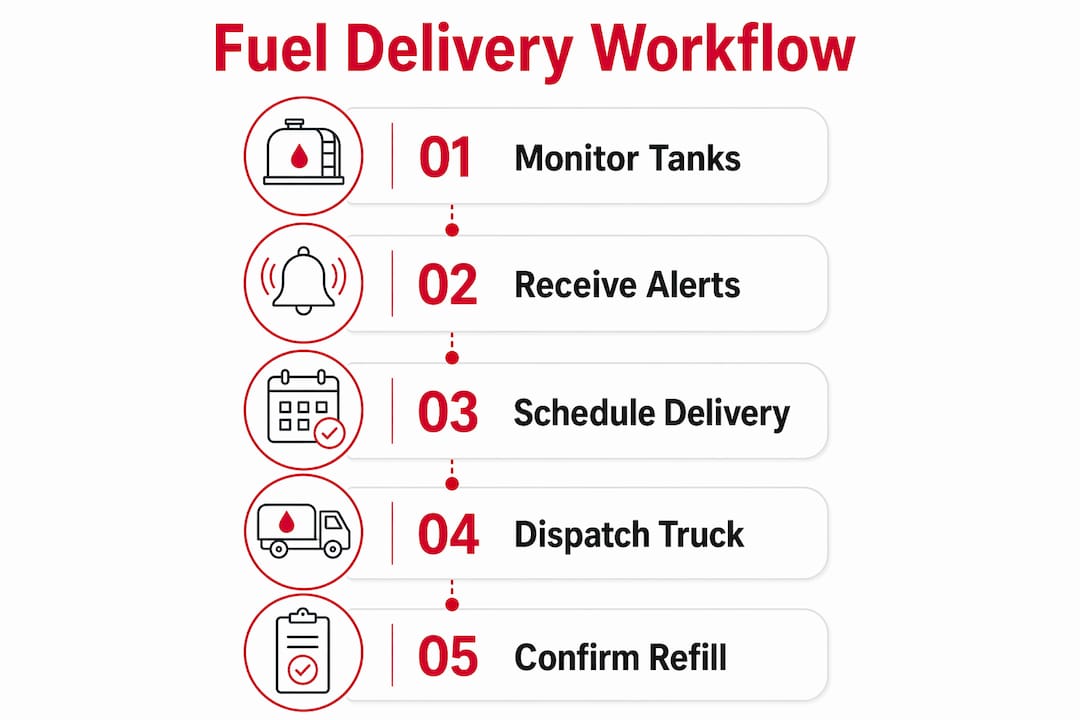
How to coordinate remote site fuel delivery for oilfield operations
Remote site fuel delivery coordination is a process, not a one-time setup. Sites that treat it as a static schedule run out of fuel. Sites that treat it as a living system stay operational.
-
Audit current fuel consumption. Pull equipment logs and calculate daily diesel burn for every major asset: drilling rigs, generators, frac pumps, and light vehicles. Do not estimate. Use actual meter readings.
-
Assess storage capacity. Measure usable tank volume at each storage point on site. Account for heel volume (the unusable fuel at the bottom of a tank) and any regulatory limits on above-ground storage.
-
Set reorder thresholds based on delivery lead time. Reorder points must account for travel time, road conditions, and weather delays. If your delivery truck needs 18 hours to reach the site and you burn 500 gallons per day, your reorder trigger should fire with at least 1,000 gallons remaining.
-
Map delivery routes and identify access constraints. Route planning for remote sites must account for road weight limits, seasonal closures, gate access hours, and weather windows. A route that works in september may be impassable in february.
-
Establish communication protocols between field and dispatch. Assign a single point of contact on site for fuel coordination. That person confirms delivery windows, clears access, and reports any consumption spikes to the logistics team.
-
Schedule recurring deliveries aligned to consumption cycles. Use telemetry data to identify peak consumption periods, such as during frac stages or extended drilling runs, and pre-position extra fuel before those windows open.
-
Review and adjust monthly. Operational tempo changes. Equipment gets added or removed. Consumption trends shift, and delivery programs that are not reviewed regularly fall out of sync with reality.
Pro Tip: Build a 20% buffer into your reorder threshold during winter months or when operating in areas with unpredictable road access. A single weather event can add 24 to 48 hours to a delivery window. That buffer is cheap insurance against a full shutdown.
What challenges are common with remote site fueling and how to overcome them?
Remote site fueling challenges are predictable. Most of them come down to mismatches between planning assumptions and field reality.
Reorder thresholds that do not match actual burn rates are the most common failure point. A site manager sets a threshold based on average consumption, but frac operations or extended drilling runs spike demand. The alert fires too late, and the delivery truck is still four hours away when the tank hits empty.
Weather and road access create the second major category of delays. A gravel road that handles a loaded tanker in dry conditions becomes impassable after two days of rain. Sites in Utah, Wyoming, and North Dakota face this reality every spring and fall. The fix is a weather-contingent delivery schedule that pre-positions fuel before forecast weather events.
Communication gaps between field teams and dispatch cause a third category of failures. When the person who knows the site is not the person coordinating the delivery, critical details get lost. Gate codes change. Access roads get rerouted. Equipment moves to a different pad. A direct line between the site contact and the fuel logistics coordinator eliminates most of these gaps.
Best practices to reduce remote fueling risk:
- Install wireless tank monitors on every storage vessel, not just primary tanks
- Set automated alerts at two levels: a warning level and a critical level
- Maintain a printed emergency contact list for fuel suppliers on site
- Keep a minimum 48-hour fuel reserve as a standing policy
- Document every delivery with a signed ticket and photo of the meter reading
- Conduct a monthly review of consumption data versus delivery records to catch drift early
How does real-time remote tank monitoring improve fuel delivery efficiency?
Real-time monitoring removes the guesswork from remote fuel supply. Without it, site managers rely on manual dip sticks, radio calls, and memory. All three fail under pressure.
Non-contact radar sensors measure fluid levels without touching the fuel. They transmit data over cellular networks to a cloud dashboard that any authorized user can access from a phone or laptop. Automated alerts fire when levels drop below preset thresholds, giving dispatch enough lead time to schedule a delivery before operations are affected. That shift from reactive to consumption-based delivery planning is the core efficiency gain.
The data these systems generate also supports longer-term planning. Consumption analytics reveal patterns that manual tracking misses. A site that burns 600 gallons per day during normal drilling but 1,100 gallons per day during frac operations needs a delivery schedule that accounts for both modes. Monitoring data makes that distinction visible.
| Monitoring feature | Operational benefit |
|---|---|
| Real-time level data | Eliminates manual tank checks |
| Automated threshold alerts | Triggers delivery before stockout |
| Consumption analytics | Supports accurate delivery scheduling |
| API integration | Connects to ERP and logistics systems |
| Battery-powered sensors | Deploys without site power infrastructure |
The benefits of on-site fuel tracking extend beyond preventing stockouts. Accurate consumption records support cost allocation by equipment, project, or cost center. That data is useful at budget review time and during contract negotiations with fuel suppliers.
What are the safety and regulatory compliance requirements for remote fuel delivery?
Safety and compliance in remote oilfield fueling are not optional. Violations carry financial penalties, and incidents carry far worse consequences.
SPCC and NFPA 110 are the two regulatory frameworks most relevant to on-site fuel storage and delivery. SPCC (Spill Prevention, Control, and Countermeasure) applies to any facility storing more than 1,320 gallons of oil above ground. It requires a written plan, secondary containment, and regular inspections. NFPA 110 governs emergency power systems and the fuel storage that supports them.
Compliance requirements for remote oilfield fueling:
- Maintain a current SPCC plan and keep a copy accessible on site
- Inspect secondary containment structures before and after every delivery
- Document all fuel receipts with quantity, date, supplier, and driver information
- Train site personnel on spill response procedures before fuel is stored on site
- Conduct monthly visual inspections of tanks, fittings, and containment berms
- Coordinate with your fuel supplier to confirm their drivers carry required hazmat certifications
Emergency response planning is a separate requirement that many sites underestimate. Every remote site should have a written spill response procedure, a spill kit within reach of the storage area, and at least two personnel trained to execute the plan. Fuel delivery vendors who operate in oilfield environments should be able to provide documentation of their drivers’ training and certifications on request.
Anytimefuelpros delivers fuel where other providers stop
Anytimefuelpros serves oil and gas operations across Texas, Utah, and nationwide through a partner network built for exactly this kind of work. Field fueling, frac support, and remote site delivery are core services, not afterthoughts. Whether your operation runs in the Permian Basin, the Uinta Basin, or a remote site anywhere in the continental United States, Anytimefuelpros provides scheduled bulk delivery, emergency response, and DEF supply under one contract.
Site managers working with Anytimefuelpros get competitive daily pricing, transparent invoicing, and 24/7 emergency response. The benefits of fuel delivery go beyond convenience. Reliable supply directly protects operational uptime. For on-demand diesel delivery to your oilfield site, visit Anytimefuelpros diesel delivery or contact the team to set up a recurring delivery program.
Key takeaways
Reliable oil field remote fuel delivery requires real-time monitoring, consumption-aligned scheduling, and compliance-ready delivery infrastructure working together to prevent costly operational shutdowns.
| Point | Details |
|---|---|
| Monitor every tank wirelessly | Deploy cellular-connected sensors to get real-time fuel levels without manual checks. |
| Set reorder thresholds by lead time | Calculate reorder points using actual burn rates plus full delivery travel time. |
| Plan routes for worst-case access | Account for seasonal road closures and weather delays when scheduling deliveries. |
| Integrate monitoring with logistics systems | Use API connections to trigger automated delivery orders from tank level data. |
| Stay current on SPCC and NFPA 110 | Maintain written plans, secondary containment, and documented inspections at every storage point. |
FAQ
What is remote site fuel delivery?
Remote site fuel delivery is the scheduled or on-demand transport of diesel or other fuels to isolated work sites using specialized tanker trucks and logistics coordination. It eliminates the need for site crews to travel off-site for fuel, keeping equipment and operations running continuously.
How does wireless tank monitoring support remote fuel supply?
Wireless tank monitors use radar sensors and cellular connectivity to report real-time fuel levels to a cloud dashboard. Automated alerts fire before levels hit critical thresholds, giving dispatch enough lead time to schedule a delivery without interrupting operations.
What are the biggest remote site fueling challenges?
The most common challenges are mismatched reorder thresholds, weather-related delivery delays, and communication gaps between field teams and fuel dispatch. Each one is preventable with accurate consumption data, buffer stock policies, and a direct site-to-dispatch communication protocol.
Does Anytimefuelpros serve Utah remote site fuel coordination?
Anytimefuelpros serves Salt Lake City and Utah operations directly and covers remote oilfield sites statewide through its partner network. Utah remote site fuel coordination is a core part of its oil and gas service offering.
What regulations apply to on-site fuel storage at oilfield sites?
SPCC regulations apply to any facility storing more than 1,320 gallons of oil above ground, requiring a written spill prevention plan, secondary containment, and regular inspections. NFPA 110 governs fuel storage for emergency power systems and applies to generator-dependent oilfield infrastructure.
Recent Comments