
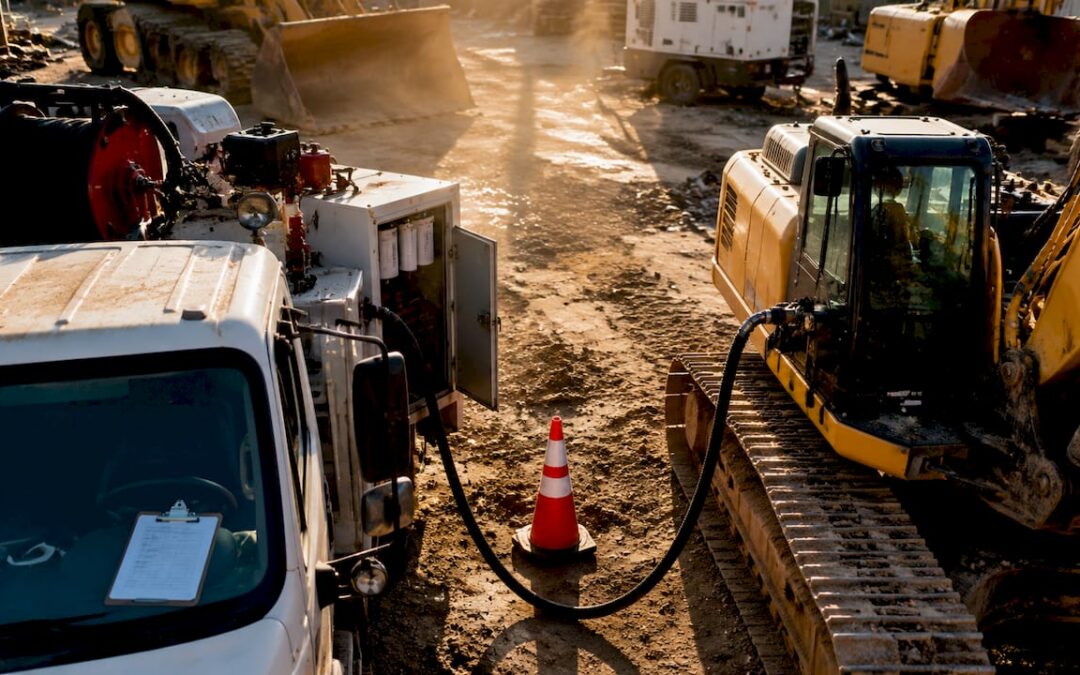
On-site fuel delivery is defined as a commercial fueling service that brings diesel or gasoline directly to a business’s location, eliminating the need for vehicles or equipment to travel to retail fuel stations. The benefits of on-site fuel delivery extend well beyond simple convenience. For fleet managers, site superintendents, and operations directors, this model reduces equipment downtime, cuts labor costs, and gives businesses direct control over fuel supply and pricing. Whether you’re managing a construction fleet in Dallas, a data center in Salt Lake City, or a mining operation in a remote location, on-site fuel supply benefits translate directly into measurable operational gains.
1. How on-site fuel delivery reduces downtime and boosts productivity
Equipment downtime is one of the most expensive problems in fleet-heavy operations. When an excavator, dozer, or telehandler runs low on fuel mid-shift, the entire workflow sequence can stall. Sending an operator or driver off-site to refuel costs time, disrupts scheduling, and creates a ripple effect across dependent tasks. Fleets report a 5-6% reduction in indirect equipment downtime when on-site fueling is in place. That figure may sound modest, but across a 20-machine fleet running 10-hour shifts, it represents hours of recovered productivity every week.
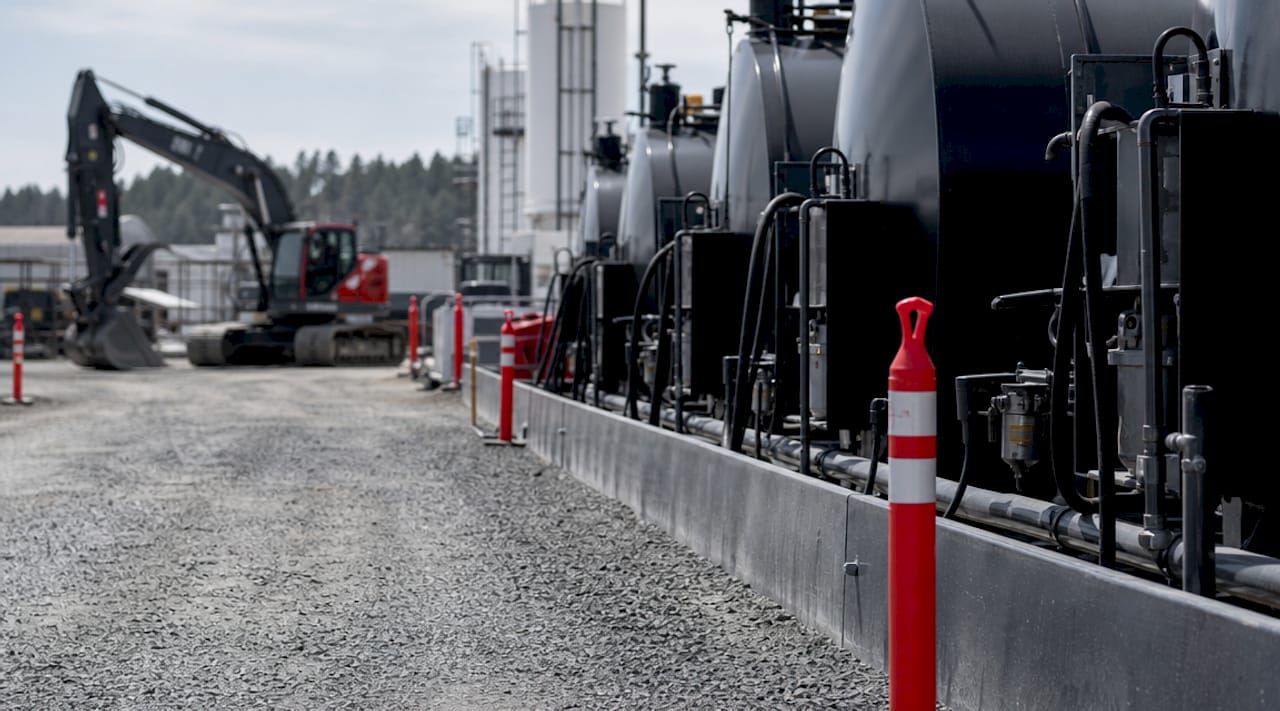
The choice of fueling system also matters. Slow-fill systems cost less upfront and work well for fleets with overnight parking and longer turnaround windows. Fast-fill systems carry a higher initial cost but serve operations with frequent refueling needs and limited staging space, such as urban construction sites or busy logistics yards. Matching the system to your operational rhythm prevents bottlenecks at the fuel point itself.
Scheduling fuel delivery to align with shift changes or equipment downtime windows is the most effective way to capture these gains. A delivery arriving at 5:00 a.m. before the first shift means every machine starts the day at full capacity.
Pro Tip: Sync your fuel delivery schedule with your equipment maintenance windows. Both require machines to be stationary, so combining them eliminates two separate interruptions instead of one.
2. Cost savings on-site fuel delivery delivers across the operation
The financial case for on-site fuel delivery goes beyond the per-gallon price. Bulk fuel delivery allows businesses to schedule refueling at operational convenience, which directly reduces lost work time and the labor cost attached to it. When a driver spends 45 minutes making a round trip to a fuel station, that time carries a fully loaded labor cost. Multiply that across a fleet of 15 vehicles making multiple trips per week, and the hidden labor expense becomes significant.
The table below illustrates the cost difference between traditional off-site refueling and an on-site delivery model across four key expense categories.
| Cost factor | Traditional off-site refueling | On-site fuel delivery |
|---|---|---|
| Labor per refueling trip | 30-60 minutes per vehicle | Eliminated |
| Vehicle wear and mileage | Added miles on fleet vehicles | No additional mileage |
| Fuel price consistency | Subject to daily retail fluctuation | Bulk pricing with scheduled rates |
| Spill and incident risk | Higher at public stations | Reduced with trained handlers |
Fleet operators who install private fueling infrastructure report fewer surprises in availability and budgeting. That predictability matters to CFOs and procurement officers who need to hold fuel costs to a budget line. Bulk purchasing also creates leverage in price negotiations that retail pump purchases simply cannot match.
Reduced wear on fleet vehicles is a secondary savings that rarely appears in initial cost analyses. Every unnecessary trip to a fuel station adds miles, engine hours, and tire wear to vehicles that already carry heavy operational loads. Over a 12-month period, eliminating those trips can meaningfully extend service intervals and defer maintenance costs.
Pro Tip: Track your current monthly labor hours spent on off-site refueling trips before switching to on-site delivery. That baseline number becomes your ROI benchmark when evaluating the cost of a delivery contract.
3. Operational control and reliability of on-site fuel supply
Operational control is the core reason most businesses adopt on-site fueling. When fuel is delivered directly to your site and stored in a dedicated tank, you control the location, the quantity, and the timing. That removes the unpredictability of retail supply, which can be disrupted by regional shortages, price spikes, or station closures during weather events.
Key operational advantages of managing your own on-site fuel supply include:
- Inventory forecasting accuracy. On-site tanks with level monitoring give operations managers real-time visibility into fuel consumption rates, making it straightforward to schedule the next delivery before a shortage occurs.
- Fuel quality assurance. Fuel stored in a dedicated, sealed tank is less exposed to contamination from shared pumps or inconsistent retail stock. This matters particularly for diesel-powered equipment with sensitive fuel injection systems.
- Scheduling flexibility. Deliveries can be timed to match operational peaks, harvest seasons, event production schedules, or generator maintenance windows, rather than being constrained by station hours or pump availability.
- Cost center accountability. Private fueling infrastructure makes it easier to track fuel consumption by department, vehicle, or project, which supports accurate job costing and budget reporting.
Regulatory compliance is a factor that shapes on-site fuel strategy from the start. Involving Environmental Health and Safety teams early in the planning process avoids costly retrofits later. Storage tank design, berm sizing, and containment specifications are far cheaper to get right during installation than to correct after the fact.
4. Safety and environmental benefits of professional fuel delivery
Professional on-site fuel delivery reduces the safety exposure that comes with sending employees to retail stations or handling fuel transfers without proper equipment. Trained fuel handlers and proper delivery equipment minimize the risk of employee accidents and environmental contamination. That reduction in incident risk can translate to lower insurance premiums and fewer OSHA recordable events.
The environmental case is equally concrete:
- Lower transport emissions. Centralizing fuel storage reduces haul distances and cuts transport emissions by up to 30% in some applications. Fewer fuel runs mean fewer vehicle miles and a smaller carbon footprint for the overall operation.
- Spill prevention through secondary containment. Facilities storing above-ground oil in volumes exceeding 1,320 gallons in the United States must maintain a Spill Prevention, Control, and Countermeasure plan under EPA regulations. Proper secondary containment design is not optional at that scale. It is a legal requirement.
- Rainfall event compliance. Containment systems must hold 100% of tank volume plus freeboard to account for a 25-year, 24-hour rainfall event, preventing overflow and groundwater contamination. Building this capacity into the original installation is significantly more cost-effective than retrofitting.
- Reduced public exposure. Fueling at a dedicated on-site location removes employees from the hazards of public fueling stations, including traffic, slip risks, and vapor exposure in poorly ventilated areas.
Pairing spill containment design with initial tank installation is more cost-effective than retrofitting and reduces operational disruption. This is a planning decision that pays for itself in avoided compliance costs and incident liability.
5. On-site fuel delivery vs. traditional fuel acquisition
Understanding when on-site delivery outperforms traditional refueling requires an honest look at the full cost picture, not just the pump price.
| Factor | Traditional fuel acquisition | On-site fuel delivery |
|---|---|---|
| Time per refueling event | 30-90 minutes including travel | Near zero for operators |
| Pricing model | Daily retail spot price | Negotiated bulk or contract rate |
| Supply reliability | Dependent on station availability | Controlled and scheduled |
| Safety management | Employee-managed at public stations | Handled by trained delivery professionals |
| Compliance burden | Minimal for the buyer | Managed by the delivery provider |
| Scalability | Limited by station proximity | Scales with tank capacity and delivery frequency |
Traditional fuel acquisition works for small fleets with low daily consumption and easy access to fuel stations. Once a fleet exceeds 10 vehicles, operates in a remote location, or runs equipment that cannot leave the job site, the math shifts decisively toward on-site delivery. The fuel delivery service advantages become most visible at scale, where the cumulative labor savings, pricing stability, and reduced downtime compound across every operational day.
Construction and excavation operations offer the clearest illustration. A site running five excavators, two dozers, and a telehandler cannot practically send each machine to a fuel station. The equipment does not move that way, and the time cost would be prohibitive. On-site delivery is not a convenience for these operations. It is the only practical model.
For industries like data centers and municipal fleets, the reliability argument is equally strong. A data center generator that runs dry during a grid outage represents a catastrophic failure. Scheduled top-offs and emergency response fueling from a provider like Anytime Fuel Pros remove that risk entirely. You can explore how different industries benefit from on-site fueling to see where your operation fits.
Key takeaways
On-site fuel delivery is the most cost-effective and operationally reliable fueling model for any business running heavy equipment, large vehicle fleets, or mission-critical power infrastructure.
| Point | Details |
|---|---|
| Downtime reduction | Fleets report a 5-6% drop in indirect equipment downtime with on-site fueling in place. |
| Labor cost elimination | Removing off-site refueling trips cuts fully loaded labor costs that rarely appear in standard fuel budgets. |
| Operational control | On-site tanks give managers real-time inventory visibility and remove dependence on retail supply availability. |
| Regulatory compliance | SPCC plans and secondary containment are legally required above 1,320 gallons and are cheaper to build in than retrofit. |
| Environmental impact | Centralizing fuel storage can reduce transport-related CO₂ emissions by up to 30% in applicable operations. |
Keep your operation running with Anytime Fuel Pros
Anytime Fuel Pros delivers diesel and gasoline directly to job sites, equipment yards, data centers, mining operations, and live events across Texas, Utah, and nationwide through a trusted partner network. Whether you need scheduled bulk deliveries, emergency after-hours response, or DEF supply for a large fleet, AFP brings fuel to where the work happens.
AFP’s on-demand diesel delivery service covers San Antonio, Austin, Dallas-Fort Worth, and Salt Lake City, with nationwide reach for multi-site enterprise contracts. Transparent invoicing, competitive daily pricing, and 24/7 emergency response make AFP the single point of contact for operations that cannot afford a fuel shortage. If you have questions about what service fits your operation, the fuel delivery FAQ is a direct starting point. You can also order fuel now to get a delivery scheduled without delay.
FAQ
What are the main benefits of on-site fuel delivery?
On-site fuel delivery reduces equipment downtime, eliminates labor costs tied to off-site refueling trips, and gives businesses direct control over fuel pricing and supply reliability. Fleets using on-site fueling report measurable reductions in indirect downtime and more predictable fuel budgets.
Is on-site fuel delivery cost-effective for small fleets?
On-site delivery becomes most cost-effective for fleets of 10 or more vehicles or operations where equipment cannot leave the job site. Smaller fleets with easy station access may not generate enough volume to justify dedicated storage infrastructure.
What compliance requirements apply to on-site fuel storage?
U.S. facilities storing more than 1,320 gallons of above-ground oil must maintain an EPA-compliant Spill Prevention, Control, and Countermeasure plan that includes secondary containment. Containment systems must hold the full tank volume plus freeboard for a 25-year, 24-hour rainfall event.
How does on-site fueling reduce environmental impact?
Centralizing fuel storage reduces the number of vehicle trips made for refueling, which cuts transport-related CO₂ emissions by up to 30% in some applications. Professional delivery also reduces spill risk compared to employee-managed refueling at public stations.
What is the difference between slow-fill and fast-fill fueling systems?
Slow-fill systems cost less upfront and suit fleets with overnight parking and longer turnaround times. Fast-fill systems are more expensive but handle frequent refueling needs and limited staging space, making them the better fit for high-throughput operations.
Recommended
- How On-Site Fuel Delivery Can Elevate Your Business – Anytime Fuel Pros
- Why More Job Sites Are Choosing On-Site Fuel Delivery (And Why Yours Should Too) – Anytime Fuel Pros
- Benefits of Fuel Delivery – Anytime Fuel Pros
- Top Industries That Benefit Most from On-Site Diesel Delivery – Anytime Fuel Pros
Recent Comments