

The strongest alternatives to Fuelster.co fall into two distinct categories: on-site mobile fuel delivery services and fuel management software platforms. Fleet managers and procurement officers evaluating their options in 2026 need to understand that distinction before committing to any solution, because the right choice depends entirely on whether your primary problem is physical fuel logistics or data and compliance management.
Here is a quick breakdown of what the market offers:
- On-site mobile fuel delivery: Trucks come to your job site, yard, or depot and refuel equipment directly. No driver time lost, no retail station runs, no dry tanks on a Monday morning.
- Fuel management software: Cloud platforms and hardware systems that track consumption, control dispensing access, reconcile transactions, and integrate with ERP or fleet management tools.
- Hybrid approaches: Some operations need both layers working together, particularly multi-site fleets with owned depots and field equipment spread across regions.
- Key features to compare: Fuel types supported (diesel, gasoline, DEF, biodiesel), service coverage, scheduling flexibility, emergency availability, pricing transparency, and system integration.
- Anytimefuelpros covers the physical delivery side with on-site diesel and gasoline delivery across Texas, Utah, and the continental U.S. through a national partner network, including emergency response and scheduled recurring service.
Table of Contents
- What do the best Fuelster.co alternatives offer in 2026?
- How do you choose the right fuel delivery service for your fleet?
- What is the difference between on-site fuel delivery and fuel management software?
- How do fuel providers approach environmental and sustainability goals?
- Anytimefuelpros delivers where other options fall short
- Key Takeaways
What do the best Fuelster.co alternatives offer in 2026?
Choosing among fuel delivery alternatives means comparing several service dimensions that directly affect fleet uptime and operating costs. The table below maps the core evaluation criteria across service categories.
| Feature | On-site mobile delivery | Depot hardware systems | Cloud fuel management |
|---|---|---|---|
| Service coverage | Regional to national | Fixed depot location | Anywhere with internet |
| Fuel types | Diesel, gasoline, DEF, dyed diesel | Diesel, gasoline, alternative fuels | Tracks all card-linked fuel types |
| Scheduling | Recurring, on-demand, emergency | Authorized dispense on demand | Monitors card transactions in real time |
| Emergency/after-hours | Yes, 24/7 with capable providers | Depends on depot staffing | Alerts only; no physical delivery |
| ERP/fleet integration | Invoice and delivery data | RFID logs push to fleet systems | Native ERP integration (e.g., NetSuite) |
| Pricing model | Per-delivery or contract | Hardware plus subscription | Per vehicle per month |
| Theft prevention | Delivery confirmation and invoicing | Hardware-level RFID control at pump | Post-transaction anomaly detection |
| Contract flexibility | Pay-per-delivery or contract terms | Typically multi-year hardware agreements | Subscription, often monthly cancel |
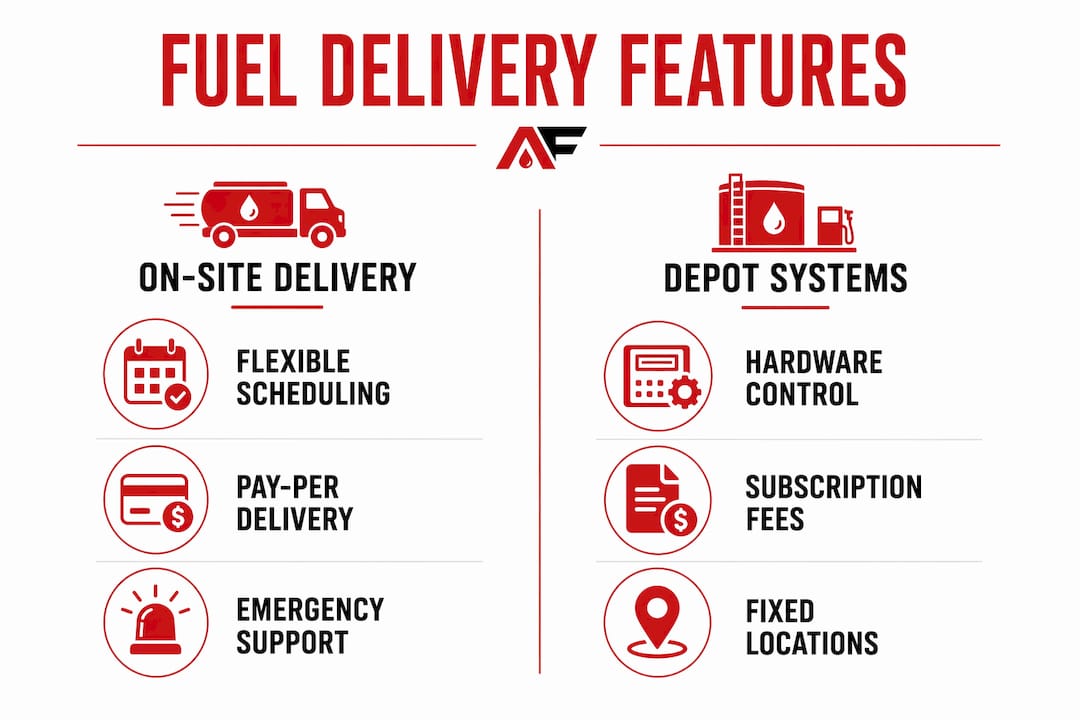
Scheduling flexibility through recurring deliveries and on-demand refueling directly affects how reliably fuel reaches your equipment. Providers that offer emergency and after-hours delivery are particularly valuable for fleets with critical uptime demands, where a dry generator or stalled excavator carries real financial consequences.
Pricing structures vary considerably. Some alternatives operate on a pay-per-delivery basis with no subscription fees, while others bundle services into contract terms with transparent invoicing. Knowing which model fits your procurement cycle matters before you sign anything.
How do you choose the right fuel delivery service for your fleet?
Start by identifying your primary operational pain point. Physical fuel logistics and financial data management are complementary layers, not competing solutions, and the best choice addresses whichever layer is causing the most friction right now.
Key criteria to work through:
- Operational pain point first: If equipment is running dry or crews are wasting time at retail stations, a mobile delivery provider solves that immediately. If fuel costs are unreconciled and theft is suspected, a management platform addresses the data layer.
- Integration with existing systems: Integrating fuel tools with ERP or fleet management platforms eliminates manual data exports and the bottlenecks they create. Ask any vendor specifically how their data flows into your current systems.
- Coverage alignment: Confirm the provider’s service area matches your fleet’s geography. A national partner network matters for multi-state operations; regional depth matters for daily job-site fueling.
- Pricing and contract terms: Understand whether you are paying per delivery, per vehicle per month, or under a fixed contract. Review billing frequency, invoice detail, and what triggers additional charges.
- Technology features: Look for delivery tracking, fuel type options, and a usable interface your team will actually adopt. Hardware systems that use PIN, RFID, or vehicle ID authentication prevent unauthorized draws at the pump level, not just after the fact.
- Emergency availability: Confirm 24/7 response capability in writing, not just in the sales pitch.
Pro Tip: Treat physical fuel delivery and fuel management software as two separate budget line items that work together. A mobile delivery provider handles the logistics; a management platform handles the data. Running both in parallel gives complex fleets the tightest operational control.
Procurement officers managing construction fuel budgets should also factor fuel costs into project expense categories early, since fuel delivery contracts affect both cash flow timing and cost-per-unit reporting.
What is the difference between on-site fuel delivery and fuel management software?
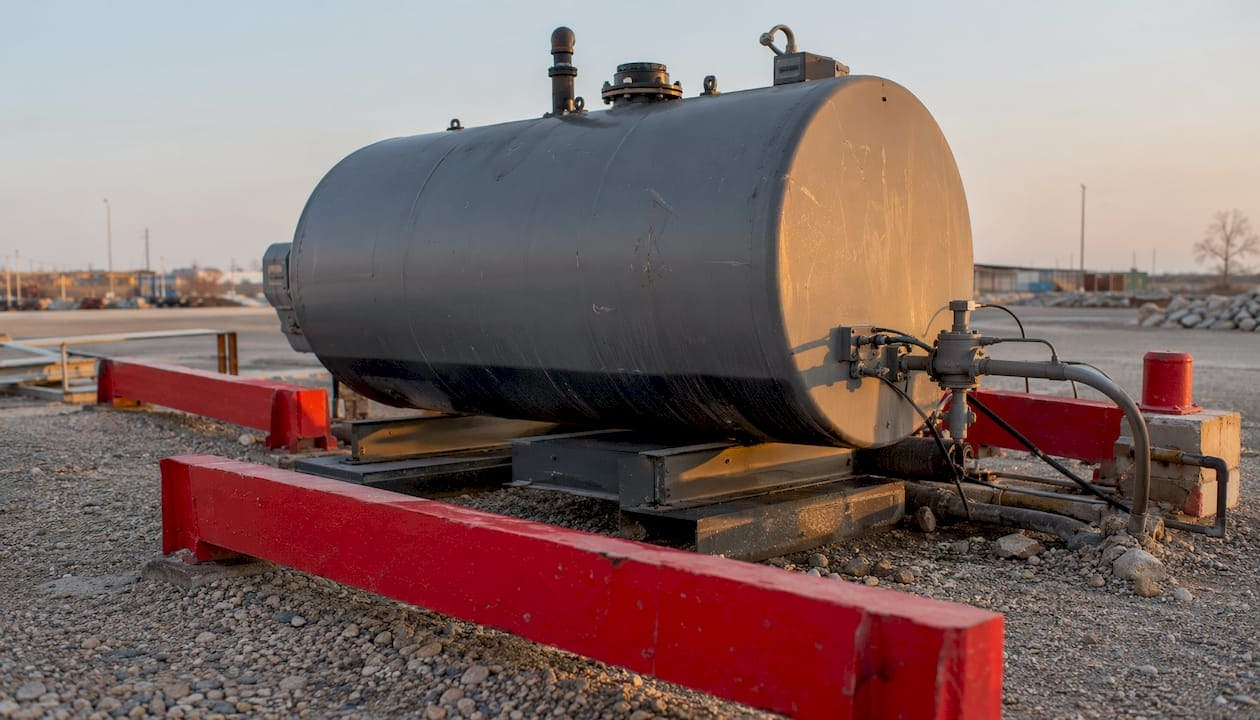
These two service types are frequently confused, and that confusion leads to buying the wrong solution. On-site mobile fuel delivery is a physical logistics service: a tanker truck arrives at your location and refuels your equipment, generators, or fleet vehicles directly. Fuel management software, by contrast, is a data and control layer that tracks consumption, reconciles transactions, and enforces access policies.
The operational roles look like this:
- Mobile fuel delivery eliminates the need for drivers or operators to leave the site, reduces dry-tank downtime, and works for remote or hard-to-reach locations where a fixed depot is impractical.
- Fuel management platforms handle data reconciliation, compliance reporting, and inventory control across depots or card networks. They tell you where fuel went and flag anomalies.
- Hardware-level dispensing control uses PIN, RFID, or vehicle ID authentication to prevent unauthorized fuel draws at the pump, a fundamentally different approach from cloud-only platforms that detect fraud after the transaction has already occurred.
- Fleet-wide cloud platforms reconcile fuel card transactions against GPS distance and engine hours, surfacing cost-per-mile trends and off-route fills.
Fuel theft prevention illustrates the gap clearly. A hardware system stops an unauthorized draw before it happens. A cloud platform flags it after the fuel is gone. For owned depots, the former is the stronger control. For distributed card fleets, the latter provides the visibility layer.
Combining both approaches gives complex operations the most complete picture: physical delivery keeps tanks full, and a management platform keeps the data clean and audit-ready.
How do fuel providers approach environmental and sustainability goals?
Sustainability is becoming a real procurement criterion, not just a marketing checkbox. Fleet managers evaluating fuel delivery alternatives should ask providers direct questions about their environmental practices and what fuel types they can supply.
Several trends are shaping what providers offer in 2026. Fuel delivery services increasingly support biodiesel blends and renewable diesel alongside conventional diesel and gasoline, giving fleets a path toward lower-emission operations without replacing equipment. DEF (diesel exhaust fluid) delivery is now a standard offering among serious commercial providers, supporting SCR systems that reduce NOx emissions from diesel engines. Providers serving government and municipal fleets often face additional sustainability reporting requirements, making transparent invoicing and fuel-type documentation a compliance necessity rather than a preference.
Carbon reporting is emerging as a standard expectation for enterprise contracts, particularly in industries with ESG commitments. When evaluating alternatives, ask whether the provider can document fuel type, volume, and delivery date in a format compatible with your sustainability reporting framework.
Anytimefuelpros delivers where other options fall short
Fleet managers who need physical fuel at the right place and the right time, without the administrative overhead of managing multiple regional vendors, get a direct answer from Anytimefuelpros. The gap most alternatives leave is national reach combined with genuine emergency response. AFP closes it.
Anytimefuelpros delivers on-site diesel (dyed and clear), gasoline, DEF, and bulk fuel across San Antonio, Austin, Dallas-Fort Worth, and Salt Lake City, with nationwide coverage through a trusted partner network. That means a single point of contact for multi-site, multi-state operations instead of juggling four regional vendors. Emergency and after-hours response is available 24/7, which matters when a generator goes dry at 2 AM or a construction fleet needs fuel before a Monday morning pour.
Pricing is competitive and daily-rate based, with transparent invoicing that gives procurement teams the documentation they need without chasing down delivery confirmations. AFP serves data centers, mining operations, construction fleets, municipal agencies, events, and disaster response deployments. The benefits of on-site fuel delivery are clearest when you calculate what dry-tank downtime actually costs your operation per hour. Get a quote from Anytimefuelpros and put a number to it.
Key Takeaways
Anytimefuelpros is the strongest physical delivery alternative for fleets that need reliable on-site fueling, emergency response, and national coverage under one contract.
| Point | Details |
|---|---|
| Two distinct solution types | Mobile fuel delivery handles physical logistics; fuel management software handles data, compliance, and access control. |
| Integration drives efficiency | Fuel tools that connect directly to your ERP or fleet platform eliminate manual exports and administrative bottlenecks. |
| Hardware beats cloud for theft prevention | PIN and RFID controls stop unauthorized draws at the pump; cloud platforms only flag them after the fuel is gone. |
| Sustainability is now a procurement factor | Ask providers for fuel-type documentation and carbon reporting compatibility before signing a contract. |
| Anytimefuelpros for national physical delivery | AFP covers Texas, Utah, and the continental U.S. with scheduled, on-demand, and 24/7 emergency fueling under one vendor relationship. |
Recent Comments