
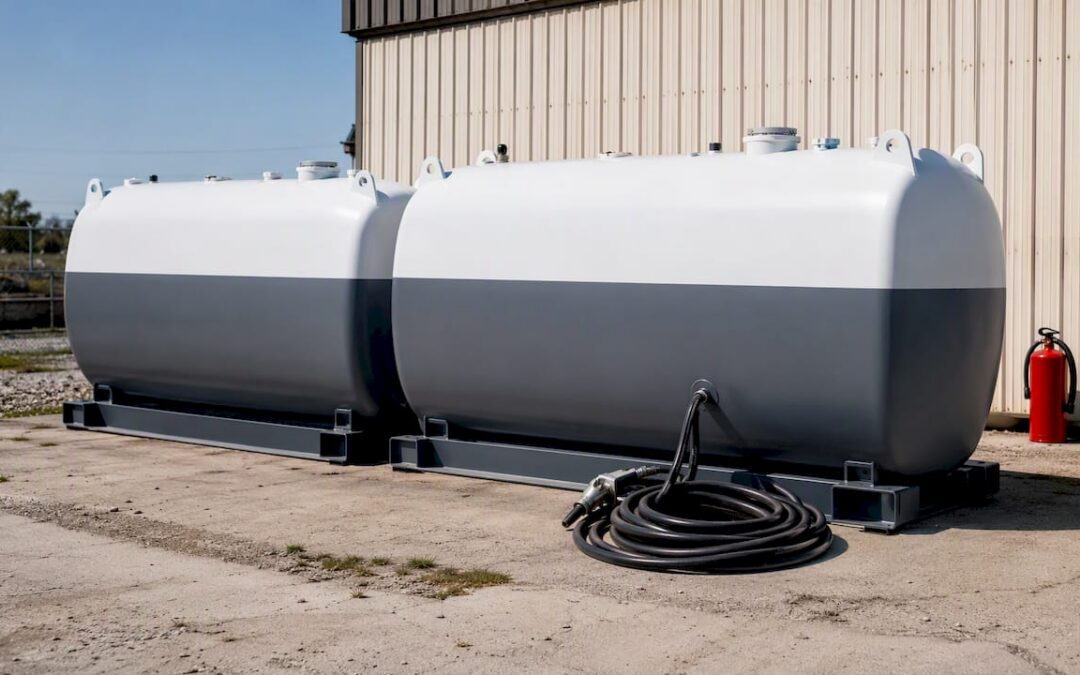
The commercial on-site fuels you need to know are clear (on-road) diesel, red-dyed/off-road diesel, fleet gasoline, diesel exhaust fluid (DEF), and biodiesel blends with varying proportions. Each one serves a distinct operational role, and ordering the wrong product creates compliance exposure, equipment damage, or costly downtime. Providers like Anytimefuelpros deliver all of these directly to job sites, data centers, and equipment yards across the continental U.S., meeting ASTM D975 fuel quality standards and EPA SPCC requirements.
- Clear (on-road) diesel — highway-registered vehicles, backup generators, and any equipment that operates on public roads
- Red-dyed/off-road diesel — excavators, dozers, stationary engines, and any non-highway equipment (tax-exempt, IRS-regulated)
- Fleet gasoline — gasoline-powered service trucks, light equipment, and portable tools
- DEF (diesel exhaust fluid) — SCR-equipped diesel engines (Tier 4 and later); ordered separately, not mixed with fuel
- B5/B20 biodiesel blends — compatible diesel equipment where the OEM approves blended fuel
Table of Contents
- What kinds of gas does on-site fuel delivery actually cover?
- Which fuel should you order for each piece of equipment?
- What fuel specs should you verify before accepting delivery?
- How does on-site fuel delivery actually work?
- Storage, handling, and U.S. compliance basics
- DEF: what every site manager needs to know
- What drives fuel price, and what contract terms matter?
- Procurement checklist: what to have ready before you call
- How emergency fueling works when you need it fast
- Key Takeaways
- Anytimefuelpros delivers every fuel type your site needs
- Useful sources for compliance and standards
What kinds of gas does on-site fuel delivery actually cover?
Understanding the differences between these products prevents costly mistakes at the pump, the tank, and the IRS audit.
Clear (on-road) diesel
Clear diesel is standard highway-grade ultra-low-sulfur diesel (ULSD), designated under 40 CFR Part 1090 at 15 ppm sulfur or less. Federal excise tax applies at the point of sale. Use it for any road-registered vehicle, backup generator serving a facility connected to public infrastructure, or mixed-use equipment that occasionally travels on public roads.
Red-dyed (off-road) diesel
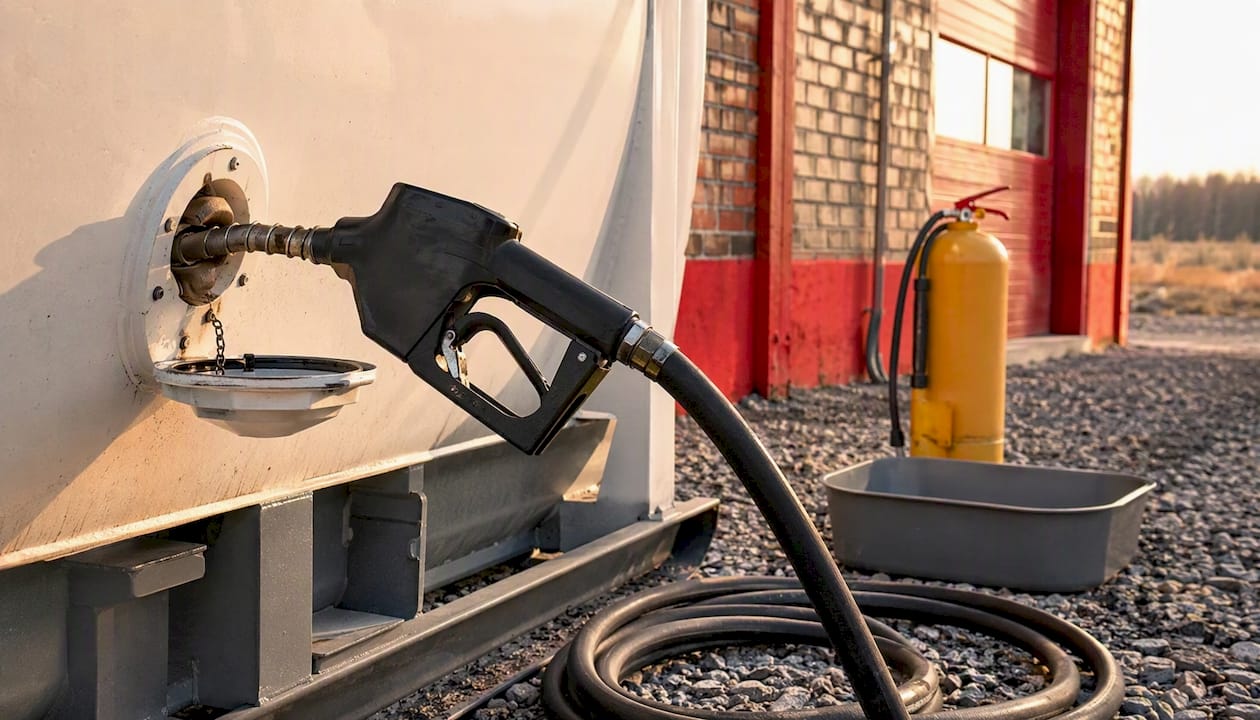
Chemically identical to on-road diesel, red-dyed fuel is dyed at the terminal to signal tax-exempt off-road use. The federal excise tax applies to highway diesel; using dyed fuel in a highway vehicle carries significant penalties starting at $1,000 or per-gallon fines. Storage tanks must be conspicuously labeled, and withdrawal records are mandatory.
Fleet gasoline
Fleet gasoline is a distinct product class for gasoline-powered light vehicles, service trucks, and portable equipment. It is ordered and delivered separately from diesel and stored in dedicated tanks. Cross-contamination with diesel is a serious equipment risk.
DEF (diesel exhaust fluid)
DEF is a urea-based fluid, not a fuel. It feeds the selective catalytic reduction (SCR) system on Tier 4 and later diesel engines to reduce NOx emissions. It must meet ISO 22241 purity standards; off-spec DEF damages SCR components. Order it in totes or bulk, store it separately from fuels, and use dedicated dispensing equipment.
Biodiesel blends (such as B5 and B20)
The number in a biodiesel blend designation indicates the proportion of biodiesel in the mix: lower blends are broadly compatible with most diesel equipment, while higher blends require OEM confirmation. B20 requires OEM confirmation, especially for older engines and generator fuel systems sensitive to cold-flow properties and seal compatibility.
| Fuel | Primary use | Tax/dye status | Compatibility note |
|---|---|---|---|
| Clear diesel (ULSD) | Road vehicles, generators | Taxed (highway) | Universal for diesel engines; confirm ULSD for Tier 4 |
| Red-dyed diesel | Off-road equipment, stationary engines | Tax-exempt (off-road) | Same engine compatibility; IRS penalties for highway misuse |
| Fleet gasoline | Light vehicles, portable tools | Standard fuel tax | Separate storage required; never mix with diesel |
| DEF | SCR diesel engines | Not a fuel | ISO 22241 required; dedicated pumps and storage |
| B5 blend | General diesel equipment | Taxed | Broadly compatible; verify cold-weather performance |
| B20 blend | OEM-approved diesel equipment | Taxed | Confirm OEM approval; avoid in sensitive generator systems |
Which fuel should you order for each piece of equipment?
Matching the right product to the right machine is where most ordering errors happen, particularly on mixed-use yards.
- Backup generators (data centers, events, hospitals) — clear diesel unless the unit is permanently off-road and never road-registered; confirm ULSD spec
- Excavators, dozers, loaders, scrapers — red-dyed off-road diesel; these machines never operate on public roads
- Highway-registered haul trucks and fleet vehicles — clear diesel only; dyed fuel in these vehicles triggers federal penalties
- Portable generators and light towers (event sites) — clear diesel; event equipment often moves between sites on public roads
- Gasoline-powered service trucks and compactors — fleet gasoline, stored in a separate dedicated tank
- Tier 4 diesel equipment (any SCR-equipped machine) — diesel plus DEF ordered and stored separately
Mixed-use yards with both highway and off-highway vehicles need physically separate tanks with clear labeling. A single misfueled haul truck can expose the entire site to IRS dyed-fuel penalties. When biodiesel blends are in play, get written OEM confirmation before specifying anything above B5 for generator service.
What fuel specs should you verify before accepting delivery?
Fuel quality is where generator failures and compliance violations quietly originate. Accepting a delivery without documentation is an operational risk.
- ASTM D975 — the industry reference for diesel fuel quality; request a spec sheet confirming conformance and recent batch test results before any generator delivery
- ULSD (≤15 ppm sulfur) — required for Tier 4 engines and most modern diesel equipment; confirm on the delivery ticket
- ISO 22241 — the purity standard for DEF; reject any product that cannot show conformance documentation
- Biodiesel blend level — verify the blend percentage matches what was ordered; B20 delivered as B5 (or vice versa) affects cold-flow and OEM warranty
- Batch or terminal source — ask for the terminal origin and batch number so you can trace any quality issue back to the load
Water intrusion and microbial growth are the two most common causes of generator fuel failure, and NFPA 110 requires annual fuel quality testing per ASTM D975 for standby generator systems. Most sites miss this until a storm hits.
Pro Tip: Schedule fuel sampling every 12 months for any tank holding diesel longer than 6 months. Long-term storage degrades fuel stability, promotes microbial growth, and voids some generator warranties. Keep the lab results on file alongside your NFPA 110 inspection records.
How does on-site fuel delivery actually work?
On-site delivery removes the labor cost and downtime risk of sending crews to retail stations. The method you choose affects site access requirements, regulatory obligations, and per-gallon efficiency.
| Method | Best use case | Typical minimum | Site requirements |
|---|---|---|---|
| Bulk tank fill (AST/UST) | High-volume recurring demand | Varies by supplier | Fixed tank, fill port access, SPCC review if >1,320 gal |
| Wet hosing | Fleet vehicles, mixed equipment | Varies by supplier | Parked vehicles, ignition controls, site access for tanker |
| Portable tank drop (fuel cube) | Temporary sites, remote locations | Varies by supplier | Level surface, secondary containment, pickup coordination |
| Mobile dispensing | Events, small equipment fleets | Varies by supplier | Clear site access, personnel on site |
Operations with relatively high and consistent fuel usage are strong candidates for scheduled recurring delivery, which typically offers better per-gallon pricing than spot buys. Emergency deliveries carry a premium and a minimum-fee surcharge. Tell your supplier upfront: access point location, gate codes, day or night delivery restrictions, and whether a site contact must be present.
Storage, handling, and U.S. compliance basics
The EPA SPCC rule applies to facilities with aboveground oil storage above 1,320 gallons. Crossing that threshold typically triggers secondary containment requirements and, for larger sites, often requires a PE-certified spill prevention plan. Adding tanks to reduce delivery frequency is a common move that unintentionally triggers SPCC obligations.
For dyed diesel, the IRS requires conspicuous labeling at every storage and dispensing point, plus withdrawal logs that identify the equipment receiving the fuel. State rules can be stricter: North Carolina, for example, requires retention of invoices, monthly meter readings, and inventory logs for dyed diesel, and failure can result in excise tax assessed on all gallons delivered to that storage point.
Minimum on-site controls for any fuel storage:
- Labeled tanks (product type, dye status, capacity)
- Spill kits within reach of every fill point
- Secondary containment (berms or double-wall tanks) sized for the largest tank
- Scheduled inspections and documented fuel test frequency
- Separate storage for DEF, clear diesel, dyed diesel, and gasoline
Pro Tip: When both dyed and clear diesel are on site, keep a separate withdrawal log for each tank showing date, gallons drawn, equipment ID, and operator name. This single control prevents the IRS presumption that all gallons in a labeled tank were used on the road.
DEF: what every site manager needs to know
DEF is a 32.5% urea solution that feeds the SCR system on Tier 4 and later diesel engines. It is not a fuel additive and must never contact diesel or gasoline. Contamination, even from a residue in a shared pump, degrades SCR performance and can require expensive catalyst replacement.
- Store DEF in a cool, UV-protected environment; direct sunlight and heat above 86°F accelerate degradation
- Typical shelf life is 12 months when stored correctly; reject product with no manufacture date or compromised packaging
- Use only dedicated DEF pumps and dispensing nozzles, clearly labeled and physically separated from fuel dispensing
- Order in totes (275-gallon IBC) for medium sites or bulk for high-consumption operations; small jugs are inefficient and expensive at scale
- Never use galvanized steel containers; DEF corrodes zinc and copper, contaminating the fluid
What drives fuel price, and what contract terms matter?
Fuel pricing at the rack level tracks commodity markets daily. Your delivered price adds terminal location, haul distance, seasonal demand, and any emergency or after-hours surcharge on top of that base.
- Scheduled delivery contracts — predictable pricing, lower per-gallon cost, committed volumes; best for operations with consistent weekly or monthly demand
- Spot buys — flexible but subject to daily rack price swings; useful for one-time or irregular needs
- Emergency/standby agreements — higher per-gallon cost and minimum-fee surcharges, but guaranteed priority dispatch; worth negotiating before an outage, not during one
Key contract terms to nail down: minimum gallons per delivery, response time SLAs for emergency calls, who bears responsibility for fuel testing, and how invoices are itemized (product, volume, delivery fee, taxes). Mission-critical sites like data centers should align fuel volume contracts with runtime objectives, since industry guidance often targets multiple days of sustained operation for contingency planning.
Procurement checklist: what to have ready before you call
Use this list when placing an order by phone or email. Suppliers need every item to quote accurately and schedule without delays.
Site and contact information:
- Delivery address with GPS coordinates or landmark if rural
- Site access instructions (gate codes, escort requirements, height restrictions)
- Primary contact name and direct phone number
- Backup contact for after-hours deliveries
Order specifics:
- Product: clear diesel / red-dyed diesel / fleet gasoline / DEF / B# blend
- Quantity in gallons
- Delivery method: bulk tank fill / wet hosing / portable tank drop
- Requested delivery window (date, time range, day or night)
- Tank capacity and current ullage (space available)
Billing and compliance:
- Billing contact and PO number or cost center
- For dyed diesel: equipment ID list and withdrawal log template ready
- Any site-specific safety permits or hot-work restrictions
- Secondary containment status if requesting a bulk fill above 1,320 gallons
How emergency fueling works when you need it fast
Emergency fuel delivery operates differently from scheduled service. Expect prioritized dispatch, a minimum-fee surcharge, and response windows that depend on your location and the provider’s on-call fleet. Pre-planning is what separates a managed outage from a crisis.
- Establish an emergency fuel agreement before storm season or planned maintenance windows, not after the generator alarm sounds
- Keep a pre-authorized release form on file with your supplier so fuel can be dispatched without waiting for approval chains
- Stage a minimum fuel reserve on site (typically 72–96 hours of generator runtime) to bridge the gap before a delivery arrives
- During an emergency, maintain chain-of-custody documentation for dyed fuels even under pressure; IRS rules do not pause for disasters
- Inspect delivered fuel for contamination before pumping into a generator tank; emergency logistics increase the risk of cross-contamination or off-spec product
- For data centers and hospitals, align your fuel reserve target with your contingency runtime objective and build that volume into your standing contract
Anytimefuelpros provides 24/7 emergency fuel delivery with prioritized dispatch for mission-critical sites, including data centers, hospitals, and event venues across Texas, Utah, and the continental U.S. through its partner network.
Key Takeaways
Ordering the right commercial fuel by dye status, spec, and delivery method is the single most important step to avoiding equipment failure, IRS penalties, and SPCC violations on site.
| Point | Details |
|---|---|
| Match fuel to use case | Clear diesel for road-registered vehicles and generators; red-dyed diesel for off-road equipment only. |
| Verify specs before delivery | Request ASTM D975 conformance and ULSD confirmation on every diesel delivery ticket. |
| Know your SPCC threshold | Aboveground oil storage above 1,320 gallons triggers EPA SPCC documentation and often requires a PE-certified plan. |
| Keep dyed-fuel records | Maintain withdrawal logs with equipment ID and dates; IRS penalties for misuse start at $1,000 per incident. |
| Anytimefuelpros covers all fuel types | AFP delivers clear diesel, red-dyed diesel, DEF, and fleet gasoline with scheduled and 24/7 emergency service nationwide. |
Anytimefuelpros delivers every fuel type your site needs
Running a mixed fleet or a mission-critical generator bank means you cannot afford a supplier that handles only one fuel type or one region. Anytimefuelpros delivers clear diesel, red-dyed off-road diesel, fleet gasoline, and DEF directly to job sites, data centers, event venues, and equipment yards, with scheduled recurring deliveries and 24/7 emergency response built into the same contract.
Every delivery comes with transparent invoicing that itemizes product, volume, and fees, so your procurement team always knows what they are paying and why. The partner network extends coverage across the continental U.S., giving multi-site operations a single point of contact instead of juggling regional vendors. Whether you need a bulk tank fill for a construction yard in Dallas, wet hosing for a municipal fleet in San Antonio, or emergency generator fueling for a data center in Salt Lake City, AFP dispatches from the nearest available asset.
Contact Anytimefuelpros to arrange on-site diesel delivery or get a quote for scheduled service, emergency standby agreements, or bulk DEF supply.
Useful sources for compliance and standards
- EPA 40 CFR Part 1090 — federal fuel designation requirements, ULSD standards, and biodiesel definitions
- 40 CFR § 1090.1015 (Cornell LII) — diesel and distillate fuel designation requirements by batch
- IRS/Treasury dyed fuel rules (LegalClarity) — federal excise tax rates, dye rules, and penalty structure for highway misuse
- EPA SPCC guidance (FuelCare) — storage thresholds, secondary containment triggers, and NFPA 110 fuel testing requirements
- NFPA 110 — standby generator fuel quality testing requirements per ASTM D975
- North Carolina dyed diesel guide (NCDOR) — example state recordkeeping requirements for dyed diesel storage and withdrawal
- Shipley Energy: off-road diesel overview — practical summary of dyed diesel labeling and storage obligations
Recent Comments