
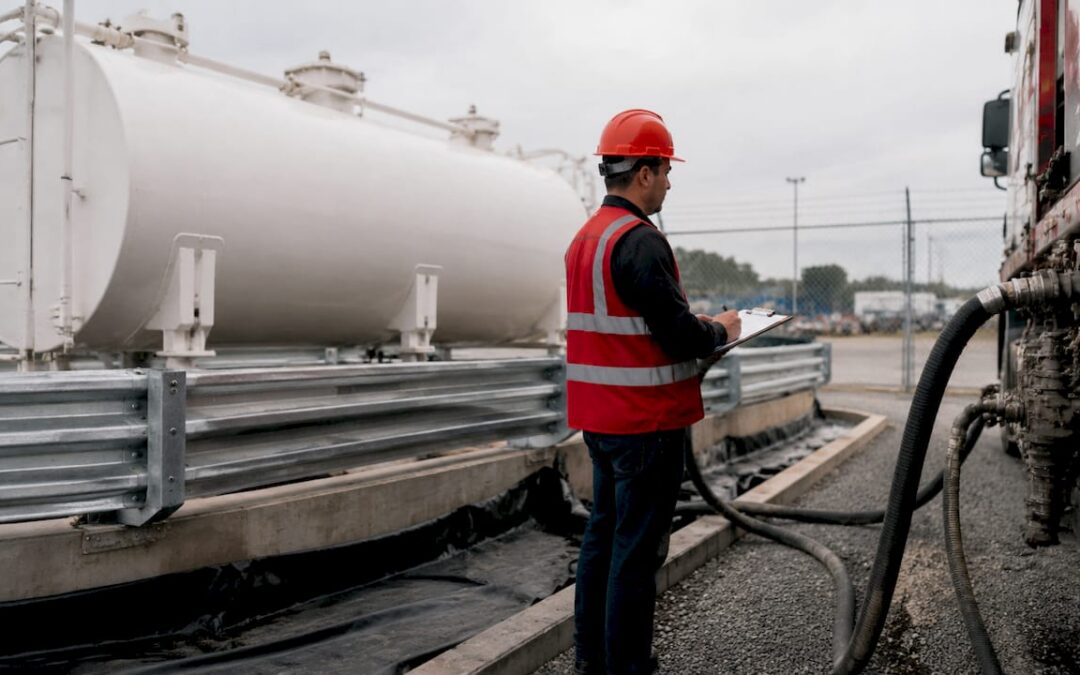
An on-site diesel delivery setup is the process of building a safe, compliant, and scheduled fuel supply system directly at your operation site so that fleets and heavy equipment never stop for fuel. The industry term for this practice is on-site fueling, and it covers everything from bulk storage tank installation to mobile wet-hosing services where a tanker fuels each vehicle individually overnight. Operations managers at construction sites, mining operations, and logistics yards use this model to eliminate the productivity drain of sending equipment or drivers off-site to refuel. Done correctly, on-site fuel supply converts fueling from a reactive scramble into a predictable logistics workflow.
How to assess your fuel needs for an on-site diesel delivery setup
Accurate fuel demand assessment is the foundation of any on-site diesel delivery setup. Without it, you either over-order and tie up capital in stored fuel, or you under-order and face the exact downtime you were trying to prevent.
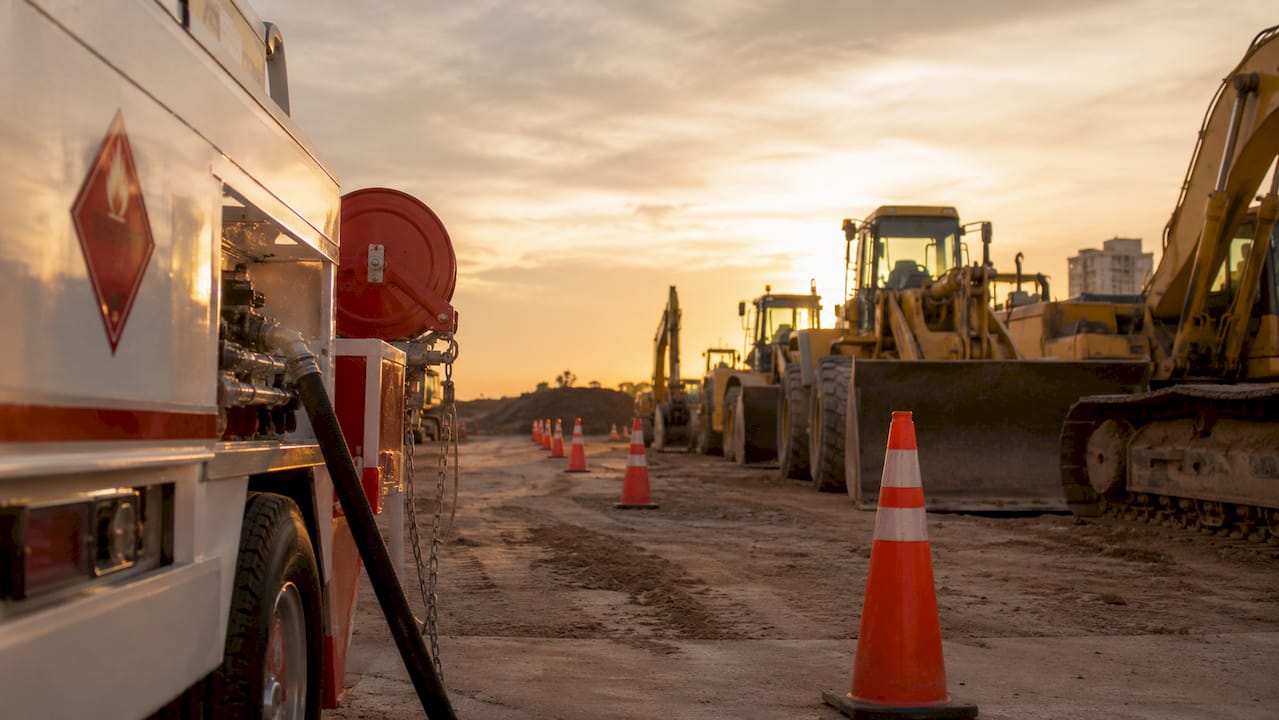
Start by pulling 90 days of historical consumption data from your fleet management system, fuel cards, or purchase receipts. Look for patterns tied to project phases, seasonal shifts, and equipment utilization rates. A 20-machine excavation fleet running two shifts will burn fuel at a fundamentally different rate than the same fleet running single-shift operations during a slow phase.
Key variables to factor into your forecast:
- Equipment type and engine size. A Cat 390 excavator burns roughly 20 to 30 gallons per hour under load. A fleet of five of these machines on a 10-hour shift can consume 1,000 to 1,500 gallons per day.
- Shift structure. Operations running overnight or 24-hour rotations need delivery windows that do not interrupt active work.
- Project phase changes. Earthmoving phases consume far more diesel than finishing or inspection phases. Build phase transitions into your forecast calendar.
- Seasonal demand spikes. Harvest operations in Texas and Utah, for example, compress enormous fuel demand into short windows.
Bulk fuel delivery typically requires minimum volumes of several hundred gallons per week to be economically viable for the supplier. This means operations with sporadic or low-volume demand may not qualify for scheduled bulk service and should evaluate mobile diesel service alternatives instead.
Pro Tip: Track fuel consumption by individual machine, not just by site total. This reveals which equipment is burning disproportionately more fuel, which often signals a maintenance issue rather than a scheduling problem.
Software tools like Fleetio, Samsara, and Verizon Connect all include fuel tracking modules that can automate consumption logging and flag anomalies in real time. Even a basic spreadsheet with daily meter readings per machine will outperform guesswork when it comes to ordering accuracy.
What storage solutions meet compliance requirements for on-site fuel?
Selecting the right storage tank and preparing your site correctly determines whether your fuel delivery setup runs without friction or gets rejected on arrival. Delivery delays more often result from inadequate storage readiness and missing regulatory approvals than from supplier scheduling failures.
Follow this site preparation sequence before your first delivery:
- Match tank capacity to consumption. A general rule is to maintain a minimum of three to five days of fuel reserve. For a site burning 1,000 gallons per day, a 5,000-gallon above-ground storage tank (AST) provides a reasonable buffer without excessive inventory carrying costs.
- Confirm local fire code compliance. Most jurisdictions require ASTs to maintain specific setback distances from buildings, property lines, and ignition sources. The National Fire Protection Association’s NFPA 30 standard governs flammable and combustible liquid storage and is the baseline most local fire marshals reference.
- Install secondary spill containment. EPA regulations under 40 CFR Part 112 require spill prevention, control, and countermeasure (SPCC) plans for facilities storing more than 1,320 gallons of oil above ground. A containment berm or double-walled tank satisfies this requirement.
- Mark the fill port clearly and keep the path unobstructed. The fill interface location must be accessible before the tanker arrives. A driver who cannot reach the fill port without repositioning the truck multiple times will either delay the delivery or decline it entirely.
- Post required signage. OSHA and fire code requirements typically mandate “No Smoking,” “Flammable Liquid,” and emergency contact signage at the storage area.
| Storage option | Best for | Key trade-off |
|---|---|---|
| Above-ground storage tank (AST) | Permanent or long-term sites | Requires SPCC plan above 1,320 gallons |
| Portable skid tank | Temporary job sites, construction phases | Lower capacity, more frequent deliveries needed |
| Mobile wet-hosing service | Fleet vehicles without permanent storage | No infrastructure required, but higher per-gallon cost |
| Underground storage tank (UST) | Permanent facilities with space constraints | Highest compliance burden, EPA UST regulations apply |
Mobile wet-hosing eliminates the need for on-site storage entirely by fueling each vehicle directly from a tanker, typically overnight. This is the right choice for trucking yards and municipal fleets where installing a permanent tank is impractical or cost-prohibitive.
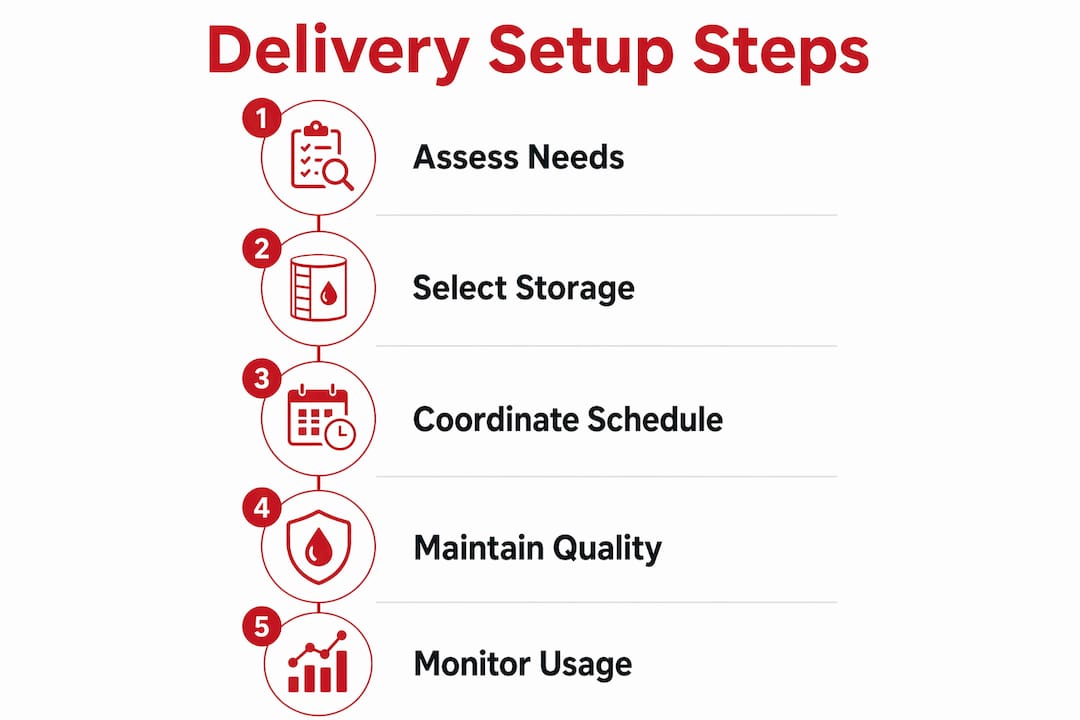
Pro Tip: Before finalizing your tank location, walk the site with your fuel supplier. They will identify access constraints that are not obvious on a site plan, including overhead clearances, soft ground near the delivery path, and gate widths that may not accommodate a full tanker.
How should you coordinate supplier schedules with site operations?
Scheduling fuel delivery as a logistics workflow rather than an ad-hoc activity substantially reduces project timeline disruptions and crew downtime. The goal is to have fuel arrive when equipment is idle, not when it is mid-cycle.
Practical coordination principles that operations managers rely on:
- Align delivery windows with shift transitions. Scheduling deliveries at shift change, typically early morning before the day shift begins, means equipment is stationary and the fill process does not interrupt active work. Delivery timing aligned with overnight or pre-shift rotations is the most effective model for high-utilization sites.
- Require confirmed delivery windows, not just scheduled dates. A supplier who commits to a four-hour window is operationally different from one who commits to a calendar day. Confirmed windows allow you to position a site contact and keep the delivery area clear.
- Designate a single point of contact on-site. This person receives the driver, confirms the delivery volume, signs the ticket, and reports any fuel quality concerns immediately. Ambiguity about who handles deliveries creates delays and missed discrepancies.
- Build a contingency protocol for emergency fuel needs. Equipment does not always consume fuel on a predictable schedule. A site running extra shifts before a project deadline can burn through reserves faster than the standard delivery cycle covers. Your supplier should offer 24/7 emergency response with a defined response time, not just a general promise of availability.
- Communicate schedule changes proactively. If a project phase ends early or a site shuts down for weather, notify your supplier at least 24 hours in advance. This protects your delivery slot and prevents a wasted truck run.
Suppliers like Anytimefuelpros provide scheduled recurring deliveries with digital tracking and transparent invoicing, which removes the guesswork from both sides of the coordination equation. A supplier who cannot confirm delivery windows or provide proof-of-delivery documentation is a liability in any operation where fuel continuity is non-negotiable.
What fuel quality practices protect your equipment and operations?
Fuel quality failures are a quiet profit killer. Contaminated diesel causes injector wear, filter clogging, and engine damage that sidelines equipment for days, not hours. Training staff on fuel handling protocols and contamination prevention is as operationally critical as the delivery schedule itself.
Implement these practices from day one of your fuel delivery setup:
- Inspect every delivery before accepting it. Draw a sample from the delivery hose before the fill begins. Clear, bright diesel with no cloudiness or sediment is the baseline. Cloudy fuel indicates water contamination. Dark or hazy fuel suggests microbial growth or oxidation.
- Log every delivery with date, volume, supplier, and condition notes. Delivery documentation improves forecasting accuracy and creates a paper trail if a quality dispute arises with your supplier.
- Test stored fuel monthly if tanks sit for extended periods. Diesel degrades over time, particularly in hot climates like Texas and Utah where summer temperatures accelerate oxidation. A simple water-finding paste on a dipstick detects water accumulation at the tank bottom.
- Train all staff who handle fuel transfers on proper grounding and bonding procedures. Static discharge during fuel transfer is a documented ignition risk. Ground the tanker to the storage tank before any transfer begins.
- Establish a clear reporting chain for fuel anomalies. Any crew member who notices unusual equipment behavior after refueling should report it immediately. Early detection of a contaminated batch prevents it from spreading to the entire fleet.
Pro Tip: Add a fuel polishing service to your annual maintenance calendar if your site stores more than 5,000 gallons. Fuel polishing removes water, sediment, and microbial contamination from stored diesel and extends its usable life significantly.
Key takeaways
A successful on-site diesel delivery setup requires aligned fuel volume assessment, compliant storage infrastructure, coordinated supplier scheduling, and trained staff to maintain fuel quality and prevent equipment downtime.
| Point | Details |
|---|---|
| Assess consumption accurately | Use 90 days of historical data and factor in shift structure, equipment type, and project phases. |
| Match storage to compliance requirements | Select tank type based on site permanence and volume, and confirm SPCC and fire code compliance before delivery begins. |
| Schedule deliveries around shift transitions | Pre-shift or overnight delivery windows keep equipment fueled without interrupting active operations. |
| Designate a site fuel contact | One accountable person per site prevents delivery delays, missed discrepancies, and communication breakdowns. |
| Train staff on fuel quality checks | Inspect every delivery, log all receipts, and report contamination signs immediately to protect equipment and schedules. |
How Anytimefuelpros supports your on-site fueling operation
Operations managers who want a fuel partner rather than just a fuel vendor turn to Anytimefuelpros. AFP delivers bulk diesel and mobile fueling to construction sites, mining operations, trucking yards, data centers, and municipal fleets across Texas, Utah, and nationwide through a trusted partner network.
AFP’s scheduled recurring deliveries come with confirmed delivery windows, digital proof-of-delivery, and transparent invoicing. The 24/7 emergency response capability means a fuel shortage at 2 a.m. before a critical project deadline gets resolved, not deferred. Whether you are setting up a permanent bulk tank at a long-term excavation site or need mobile wet-hosing for a fleet of 40 trucks, AFP structures the delivery program around your operational schedule. Explore the full range of diesel delivery services or contact AFP directly to discuss a recurring delivery contract for your site.
FAQ
What is an on-site diesel delivery setup?
An on-site diesel delivery setup is a structured fuel supply system where a commercial fuel provider delivers diesel directly to your job site, equipment yard, or facility on a scheduled or on-demand basis. It eliminates off-site fueling trips and keeps heavy equipment and fleets operational without interruption.
How much fuel do I need to qualify for bulk diesel delivery?
Bulk delivery typically requires a minimum of several hundred gallons per week to be economically viable for the supplier. Operations with lower or irregular demand may be better served by mobile wet-hosing or on-demand diesel delivery services.
What storage compliance requirements apply to on-site diesel tanks?
Above-ground storage tanks holding more than 1,320 gallons require an EPA-compliant SPCC plan, secondary spill containment, and adherence to NFPA 30 fire code setback requirements. Local fire marshals may impose additional conditions, so confirm requirements before installing any tank.
How do I prevent fuel contamination in on-site storage tanks?
Inspect each delivery for cloudiness or sediment before accepting it, log all deliveries with condition notes, and test stored fuel monthly using water-finding paste. For tanks holding more than 5,000 gallons, schedule annual fuel polishing to remove water and microbial buildup.
What is mobile wet-hosing and when does it make sense?
Mobile wet-hosing is a service where a fuel tanker travels to your site and fuels each vehicle individually, typically overnight, without requiring any on-site storage infrastructure. It is the right choice for trucking fleets, municipal vehicle yards, and temporary sites where installing a permanent tank is not practical.
Recent Comments