
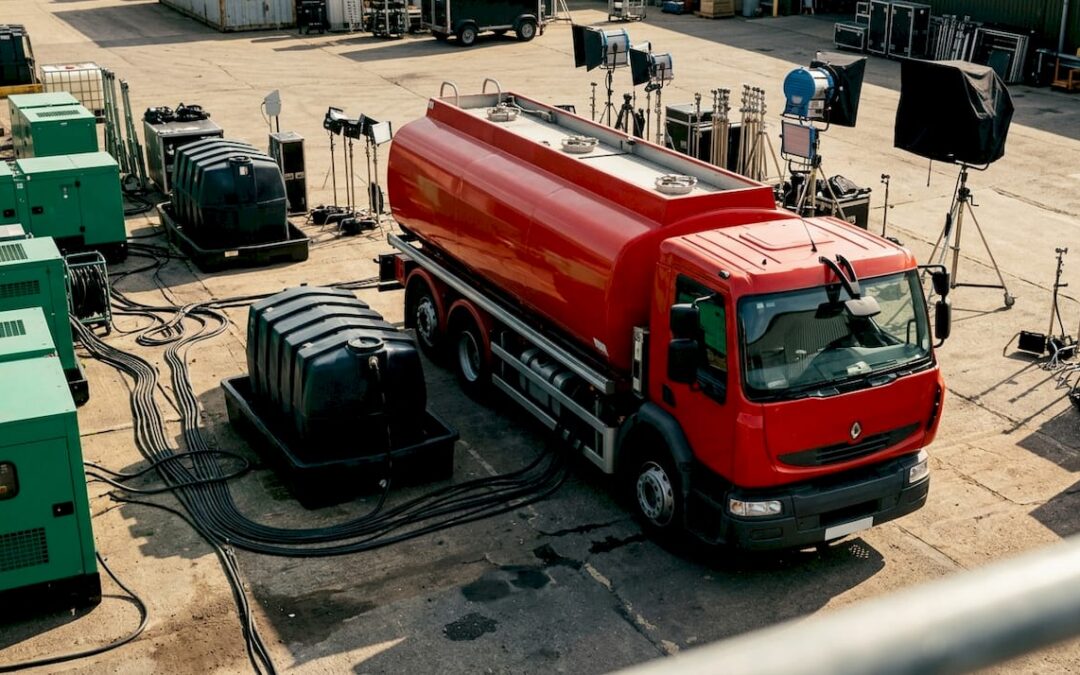
Fuel delivery for film production is the scheduled or on-demand provision of fuel directly to a film set, powering generators, vehicles, heating units, and support equipment throughout the shoot. Without it, a single generator running dry can halt an entire production day. The service covers everything from planned refills tied to call sheets, to emergency deliveries when consumption runs higher than expected. Providers like Anytimefuelpros specialize in this exact scenario, bringing diesel, gasoline, and bulk fuel to locations where retail stations are not an option. Understanding how fuel delivery works gives production coordinators a direct tool for protecting their schedule and budget.
How does fuel delivery work on a film set?
On-set fuel delivery centers on one core principle: fuel comes to the equipment, not the other way around. A fuel provider arrives with a tanker or positions a temporary stationary tank on location, then refuels generators, picture cars, heating units, and crew transport vehicles without interrupting the shoot. The provider monitors tank levels and coordinates refill timing with the production schedule, so the fuel operation stays invisible to the camera department.
Delivery timing falls into three categories that production managers should understand before signing a fuel contract:
- Scheduled delivery: Refills happen at fixed intervals based on projected consumption, calculated from the equipment list and expected run hours.
- On-call delivery: The provider responds when the production team requests a refill, useful for shoots with variable daily equipment loads.
- Emergency delivery: A rapid-response dispatch when fuel runs critically low. A rapid fuel delivery in under 4 hours saved a major production from a costly delay, showing exactly how much a fast response is worth.
Responsible providers handle safe fuel transfer, spill containment, and discreet positioning of equipment away from active shooting areas. They also track delivery volumes and provide documentation for production accounting. Learning the full process of on-site diesel delivery helps coordinators set realistic fuel budgets before day one.
Pro Tip: Ask your fuel provider to review your equipment list and daily call sheet before the first delivery. That single conversation lets them right-size the tank and schedule refills around your shooting blocks, not around their route.
What are the top fueling solutions for film production?
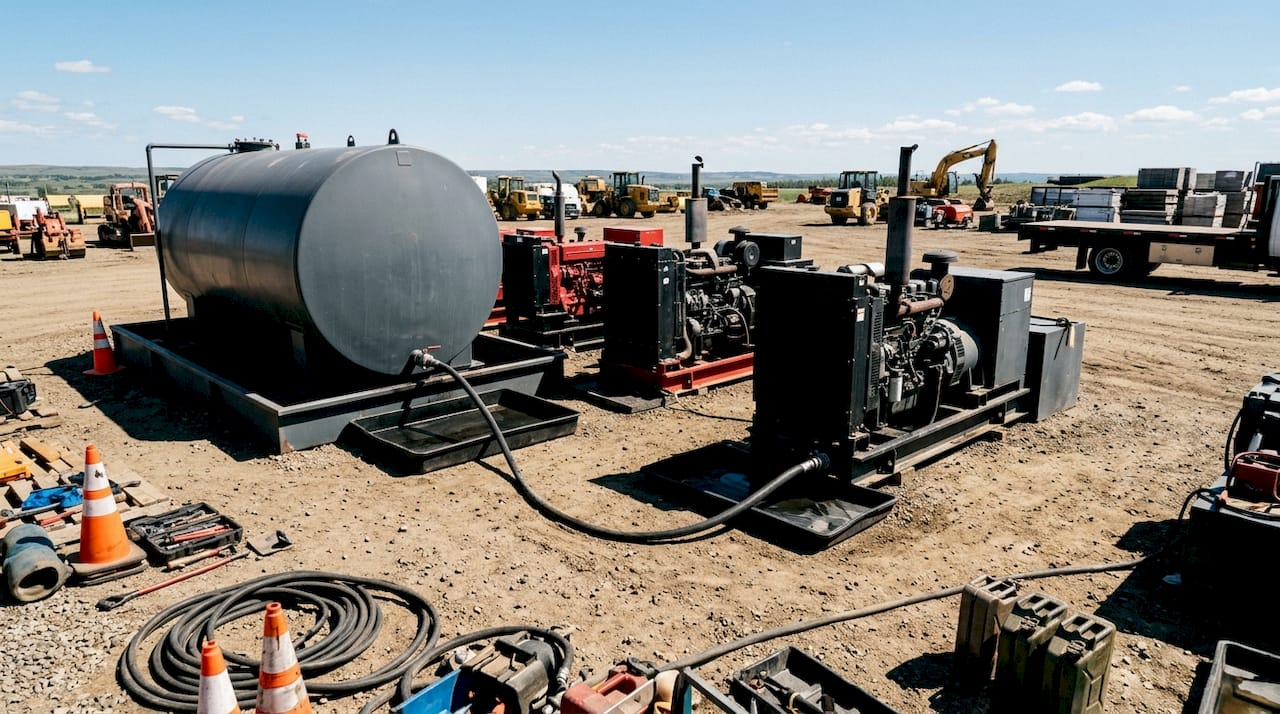
The fuel type and delivery system a production chooses directly affects noise levels, emissions, and operational cost. Diesel remains the dominant choice for film generators because it offers high energy density and wide availability. Petrol powers smaller support vehicles and some portable equipment. Bulk propane serves heating applications and certain specialty rigs on location.
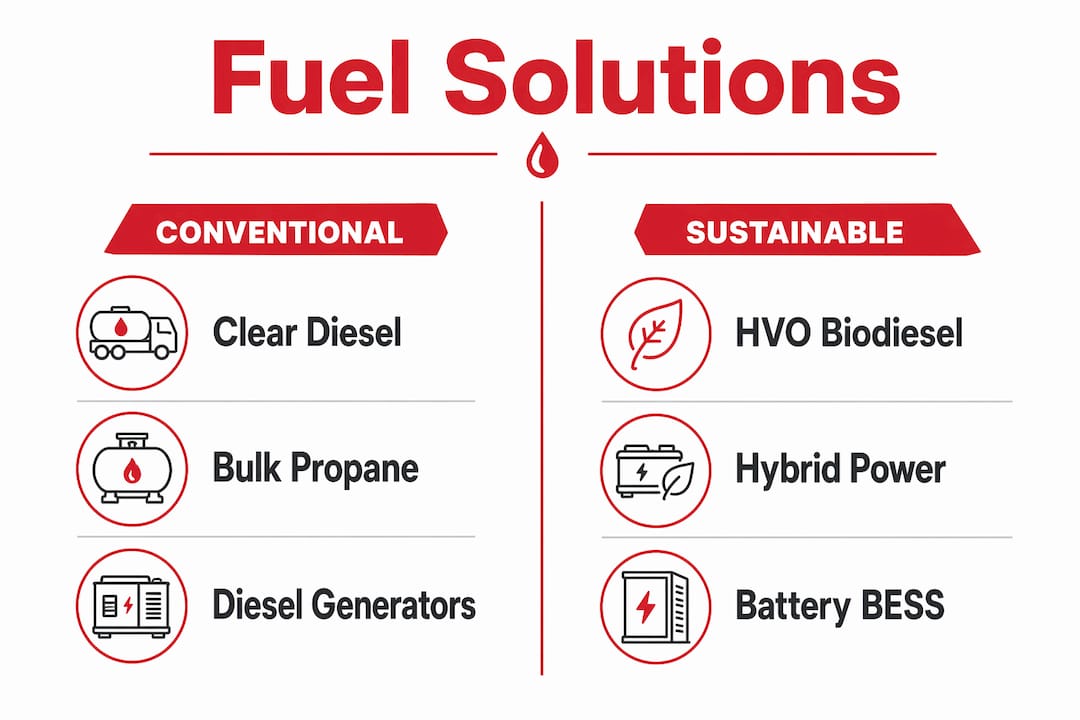
Sustainable alternatives are gaining ground fast. HVO biodiesel meets EN590 standards and works in existing diesel engines without modification. That compatibility matters because productions do not need to replace equipment to reduce their carbon footprint. Stage V compliant generators, which meet the strictest European emissions limits, pair well with HVO to cut particulate output on set.
The table below compares the main fuel and power system options production teams evaluate:
| Solution | Best use case | Key advantage | Key limitation |
|---|---|---|---|
| Clear diesel | Primary generators, large vehicles | High availability, proven reliability | Higher emissions than alternatives |
| HVO biodiesel | Drop-in diesel replacement | EN590 compliant, lower carbon output | Higher per-liter cost than standard diesel |
| Bulk propane | Heating units, specialty rigs | Clean burn, efficient for heat | Requires separate storage and handling |
| Battery Energy Storage Systems (BESS) | Noise-sensitive or interior shoots | Silent operation, zero direct emissions | Higher upfront cost, requires charging source |
| Solar plus battery | Remote or noise-restricted locations | No generator noise, no fuel runs | Weather-dependent, limited power output |
Hybrid power models combining BESS with diesel generators reduce overall fuel consumption and eliminate generator noise during takes. That combination is particularly valuable on dialogue-heavy shoots where generator hum is a constant problem. Solar-plus-battery systems go further, allowing crews to place lighting in locations where cable runs and generator noise were previously prohibitive.
Pro Tip: If your shoot includes interior dialogue scenes or wildlife locations with noise restrictions, specify a BESS or hybrid power option in your fuel brief. The daily fuel savings often offset the equipment premium within a week of shooting.
How does fuel delivery support complex and remote film locations?
Remote locations create fuel logistics problems that standard delivery services cannot solve. Access roads may be unpaved, weight-restricted, or seasonally impassable. Delivery windows may be limited to specific hours by permit conditions. Terrain can prevent a standard tanker from reaching the set at all.
Reliable remote delivery requires route knowledge, proper tank sizing, and precise timing coordination with the production. That is not a capability every fuel vendor has. Experienced suppliers treat remote delivery as a core service, not an exception. They scout access routes in advance, use smaller tankers or intermediate bulk containers where large vehicles cannot go, and build delivery timing into the production’s daily schedule.
Key logistics factors for remote location fueling:
- Route assessment: The provider must confirm vehicle access before the shoot begins, not on delivery day.
- Tank placement: Bunded tanks positioned at the edge of the set allow refueling without vehicle traffic near the camera.
- Consumption forecasting: Right-sizing tanks based on call sheets prevents both over-delivery, which wastes space, and under-delivery, which stops production.
- Backup planning: A secondary delivery route or reserve tank prevents a single access problem from shutting down the shoot.
Production coordinators managing location shoots should treat fuel logistics the same way they treat catering logistics. Both are time-sensitive, both affect crew performance, and both require a vendor who understands production rhythms. The cost of a fuel stoppage on a remote location is far higher than the cost of a well-planned delivery contract, because getting a replacement delivery to a backcountry location takes time the schedule does not have.
How can fuel delivery improve operational efficiency and reduce production risks?
Fuel supply failures are a quiet budget killer on film sets. When a generator runs dry mid-scene, the production loses not just the time to refuel but also the time to reset lighting, reset camera positions, and bring talent back to first position. Every minute of unplanned downtime carries a cost that multiplies across the full crew rate.
Professional fuel delivery removes that risk through three specific mechanisms:
- Turnkey fueled packages: Pre-fueled bunded tanks arrive on set ready to power equipment immediately. There is no waiting for a first delivery after setup, and no scramble if the shoot starts ahead of schedule.
- Scheduled refills with real-time monitoring: Smart monitoring systems track fuel levels and equipment health continuously, shifting that responsibility from the production crew to the fuel provider. The generator operator focuses on the equipment, not on watching a gauge.
- Emergency response protocols: A fuel provider with 24/7 dispatch capability covers the scenarios that scheduled deliveries cannot anticipate, including extended shooting days, unexpected equipment additions, and weather-related consumption spikes.
The operational benefit extends beyond avoiding downtime. When fuel management moves off the production team’s plate, coordinators recover time they were spending on logistics calls and fuel checks. That time goes back into the shoot. Productions with sustainable fuel goals also benefit directly: using HVO biodiesel or hybrid power systems supports green production certifications without changing the delivery workflow.
Pro Tip: Build a fuel contingency buffer of at least 20% above your projected daily consumption into your fuel contract. That buffer covers extended shooting days, added equipment, and the inevitable moments when the schedule runs long.
Key Takeaways
Professional fuel delivery for film production is the single most reliable way to protect a shooting schedule from unplanned downtime caused by fuel supply failures.
| Point | Details |
|---|---|
| Core definition | On-site fuel delivery supplies generators, vehicles, and equipment directly on set, on schedule. |
| Scheduling options | Scheduled, on-call, and emergency delivery each serve different production scenarios. |
| Sustainable fuels | HVO biodiesel meets EN590 standards and works in existing diesel engines with no modifications. |
| Remote location logistics | Right-sizing tanks from call sheets and scouting access routes prevents delivery failures on location. |
| Efficiency gains | Smart monitoring and pre-fueled bunded tanks shift fuel management from crew to provider. |
Anytimefuelpros keeps your production running
Film sets run on tight schedules and tighter margins. Anytimefuelpros delivers on-site diesel, bulk fuel, and emergency refueling to productions across Texas, Utah, and nationwide through a trusted partner network. Every delivery is backed by 24/7 dispatch, transparent invoicing, and the kind of scheduling flexibility that production coordinators actually need.
Whether you are fueling a generator fleet on a remote Texas location or managing a multi-week shoot in Salt Lake City, Anytimefuelpros builds a delivery plan around your call sheet, not around a standard route. Explore the full range of film production fuel services or get a custom fuel plan started today with on-demand diesel delivery built for your production schedule.
FAQ
What is fuel delivery for film production?
Fuel delivery for film production is the on-site provision of diesel, gasoline, or bulk propane to power generators, vehicles, and equipment directly on a film set. Providers manage scheduling, tank placement, and refills so production crews can focus on filming.
What types of fuel do film productions typically use?
Most productions run on clear diesel for generators and vehicles, with bulk propane for heating units. Sustainable alternatives like HVO biodiesel are increasingly common because they meet EN590 standards and work in existing diesel engines without modification.
How do fuel providers handle remote or off-grid film locations?
Experienced providers scout access routes in advance, use appropriately sized tankers or intermediate bulk containers, and coordinate delivery timing with the production schedule. Remote delivery expertise is a core competency, not an add-on service.
What is a bunded fuel tank and why does it matter on set?
A bunded tank is a double-walled fuel container with a built-in containment layer that catches leaks or spills. Arriving with pre-fueled bunded tanks means equipment is ready to run immediately on delivery, with no spill risk on the set.
How does smart fuel monitoring reduce production risk?
Smart monitoring systems track fuel levels and equipment health in real time, alerting the fuel provider before levels become critical. That shifts the monitoring burden from the production crew to the supplier, reducing the chance of an unplanned shutdown mid-shoot.
Recent Comments