
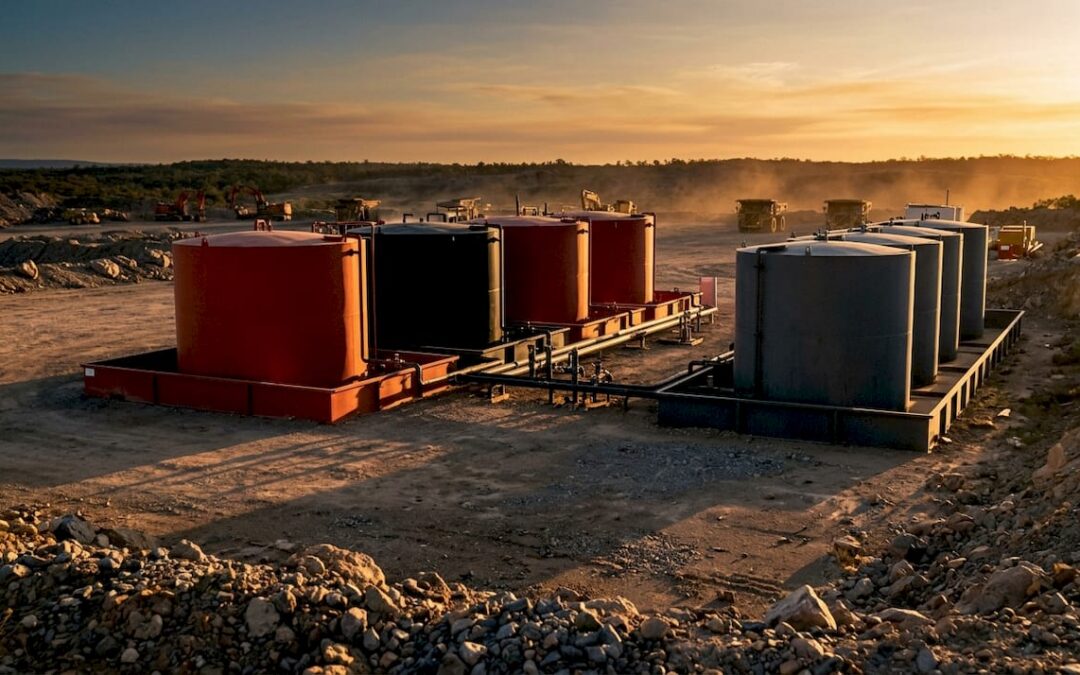
Fuel delivery for remote mining is defined as the coordinated process of transporting, storing, and managing bulk diesel and fuel supplies to isolated mining sites where no commercial fueling infrastructure exists. Mining operations now treat fuel as a key driver of output continuity, not just a commodity cost. A single unplanned fuel shortage can halt excavators, haul trucks, and processing equipment simultaneously, turning a logistics gap into a production crisis. Site managers who integrate fuel supply into their reliability planning avoid that outcome. This guide covers how remote mining fuel logistics work, what storage solutions fit different site profiles, and how to build resilience against the risks that derail supply.
What is fuel delivery for remote mining?
Fuel delivery for remote mining is the specialized logistics discipline that moves bulk diesel from refineries or regional depots to active mining sites that sit far outside normal distribution networks. The industry term for this broader practice is mining fuel logistics, and it encompasses transportation planning, on-site storage, consumption forecasting, and supply chain risk management. Unlike urban fleet fueling, remote mining fuel delivery must account for unpaved access roads, extreme weather, long lead times, and equipment fleets that consume thousands of gallons per day. A site running a fleet of haul trucks, loaders, and drilling rigs cannot afford to treat fuel procurement as an afterthought. Fuel supply must be integrated into site reliability models to prevent unexpected production halts.
The scale of fuel demand at a remote mine is the factor that separates mining fuel logistics from standard commercial delivery. Heavy equipment like Caterpillar 793 haul trucks can consume more than 100 gallons per hour under load. Multiply that across a full fleet operating two or three shifts, and a mid-size mine can burn through tens of thousands of gallons weekly. That volume requires bulk delivery infrastructure, not pump-and-go solutions.
How does fuel delivery work at remote mining sites?
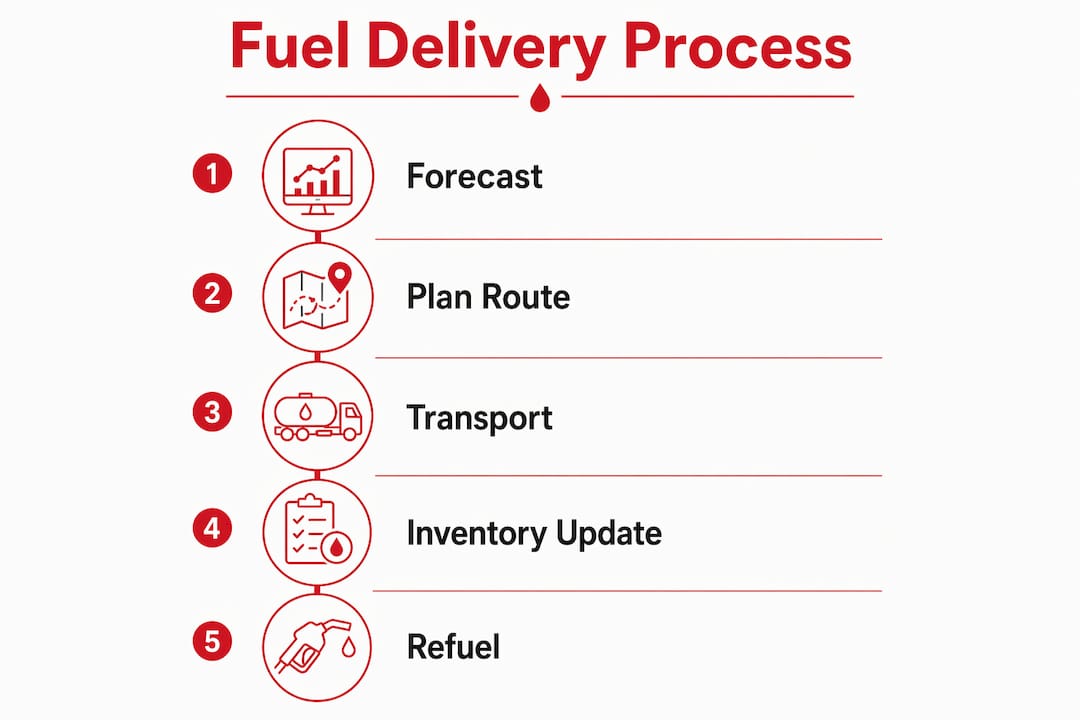
Remote fuel supply services follow a structured sequence that begins well before a delivery truck leaves the depot. The process breaks down into five core stages:
- Consumption forecasting. Site managers calculate daily and weekly fuel burn rates based on equipment schedules, shift patterns, and production targets. Accurate forecasting prevents both shortages and costly overstocking.
- Route planning and access assessment. Specialized all-terrain fuel trucks and pre-planned delivery routes are selected based on road conditions, load limits, and seasonal access constraints. A route that works in july may be impassable in february after heavy rain.
- Scheduling and lead time management. Deliveries are timed to arrive before on-site tanks drop below a minimum threshold, typically a buffer of several days of consumption. Reactive ordering triggers premium freight charges and risks supply gaps.
- Transport execution. Bulk fuel tankers, sometimes supported by secondary all-terrain vehicles for the final approach, deliver diesel directly to on-site storage tanks. For sites in Utah or remote Texas, Anytimefuelpros coordinates this through its national partner network to reach locations beyond primary market coverage.
- Delivery confirmation and inventory update. Volume delivered is recorded against consumption data, and tank levels are updated in the fuel management system for the next scheduling cycle.
Pro Tip: Set your reorder trigger at 30–40% of tank capacity, not at empty. That buffer gives you enough lead time to handle a delayed delivery without shutting down equipment.
Technology now plays a central role in how fuel delivery works at scale. Real-time fuel monitoring and tracking systems allow site managers to schedule deliveries proactively and manage stock levels without manual dip-stick checks. Fuel visibility tools feed consumption data directly into scheduling platforms, reducing unplanned downtime caused by supply gaps.
What fuel storage solutions work best for remote mining sites?
On-site storage is the physical backbone of any remote fuel supply strategy. The right storage configuration depends on site size, access frequency, and environmental regulations.
| Storage type | Best fit | Key advantage |
|---|---|---|
| Self-bunded bulk tanks | Permanent or long-term sites | Built-in secondary containment meets environmental compliance |
| Mobile fuel trailers | Temporary or expanding sites | Relocatable as the mine footprint changes |
| Skid-mounted tanks | Mid-size sites with limited space | Compact footprint, easy to position near equipment zones |
| Automated fuel management systems | Any site with multiple equipment types | Tracks usage per machine, flags anomalies, and supports scheduling |
Self-bunded tanks are the standard for established remote mines because they integrate secondary containment directly into the tank structure. That design satisfies environmental protection requirements without requiring a separate bunded compound, which saves both space and construction cost. On-site bulk fuel tanks with automated fuel management improve efficiency and reduce downtime by eliminating the need for equipment to travel off-site for refueling. That time savings compounds across a large fleet operating around the clock.
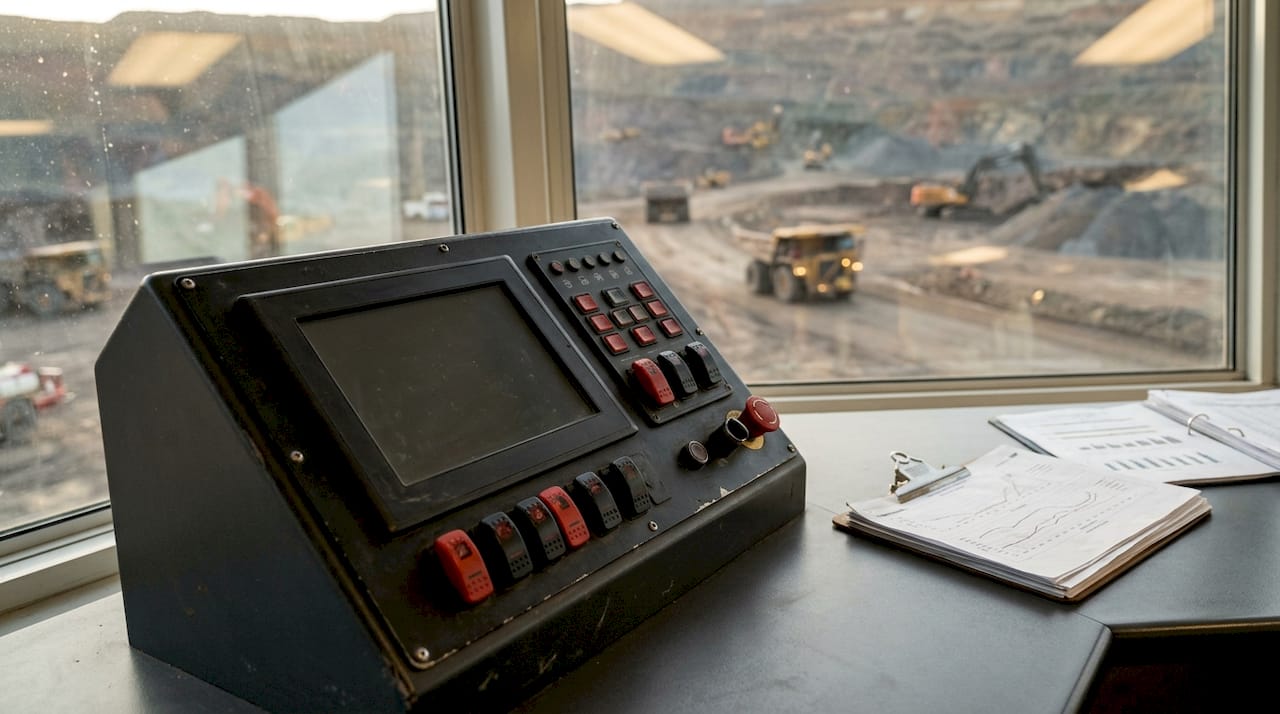
Automated fuel management systems add a layer of control that manual processes cannot match. These systems use RFID authentication or PIN entry to record which operator and which machine drew fuel, how much was dispensed, and at what time. That data feeds directly into maintenance scheduling and cost allocation, giving site managers a complete picture of fuel consumption by asset.
Pro Tip: Install your automated fuel management system before your site reaches full production capacity. Retrofitting it into an active operation is significantly more disruptive than commissioning it during the ramp-up phase.
Refueling at the site improves operational efficiency by keeping equipment closer to work zones. The productivity gain from eliminating drive time to an off-site fuel point is measurable, particularly for equipment that operates on tight shift cycles.
What are the key challenges in remote mining fuel delivery?
Remote fuel transport carries risks that do not exist in urban or suburban delivery contexts. Site managers need to plan for each of them explicitly.
- Fuel theft. Remote sites with limited security coverage are vulnerable. Sites implementing strict monitoring and authentication protocols see a measurable reduction in fuel losses. RFID-based dispensing systems and perimeter monitoring are the two most effective controls.
- Access constraints. Unpaved roads, river crossings, and steep grades can make a site unreachable for standard tanker trucks. All-terrain fuel vehicles and advance route surveys are the standard mitigation. For a detailed breakdown of access planning, the site manager’s guide to remote delivery covers transportation barriers in depth.
- Weather disruptions. Seasonal flooding, snow, and extreme heat all affect both road access and fuel quality. Diesel gelling in cold climates requires the use of winter-grade fuel or fuel additives, and delivery schedules must account for seasonal access windows.
- Supply chain volatility. Global diesel markets fluctuate based on crude oil prices, refinery capacity, and geopolitical events. Mining operators maintaining dedicated fuel buffers reduce operational risk during market disruptions. A strategic stockpile of five to seven days of consumption provides meaningful protection against short-term supply shocks.
- Regulatory compliance. Dyed diesel (off-road diesel) is the standard fuel for mining equipment, and its use is governed by IRS regulations in the United States. Misuse carries significant penalties. Site managers must verify that their delivery provider supplies the correct fuel grade and maintains compliant documentation.
The shift from reactive to strategic fuel procurement is the single most impactful change a site manager can make. Planned fuel logistics are more cost-effective than reactive procurement, and they eliminate the premium charges that emergency deliveries carry.
What innovations are improving remote mining fuel logistics?
The fuel logistics sector has adopted several technologies that directly improve reliability and reduce cost for remote mining operations.
- Cloud-based transportation management systems (TMS). Platforms built for bulk haulage, such as those described in modern logistics architecture, give operators real-time visibility into delivery status, route conditions, and estimated arrival times. That visibility eliminates the uncertainty that forces site managers to over-order as a buffer.
- Telematics-integrated fuel monitoring. Connecting equipment telematics to fuel management systems allows consumption data to flow automatically into scheduling tools. The system flags when a machine is burning more fuel than expected, which can indicate a maintenance issue before it becomes a breakdown.
- Strategic fuel buffers with vendor coordination. The most resilient sites combine on-site storage capacity with a contracted delivery schedule from a single logistics provider. That arrangement locks in pricing, guarantees delivery frequency, and gives the vendor enough lead time to plan routes efficiently.
- Alternative and lower-emission fuels. Hydrotreated vegetable oil (HVO) and biodiesel blends are entering remote mining supply chains as operators face emissions reporting requirements. These fuels are compatible with most modern diesel engines and can be delivered through the same bulk logistics infrastructure as conventional diesel, though storage compatibility must be verified with equipment manufacturers.
- Drone and autonomous vehicle pilots. Several large mining operations are testing autonomous fuel delivery vehicles for the final approach to active work zones. These programs remain in early stages, but they point toward a future where the last mile of fuel delivery does not require a human driver on a hazardous haul road.
The common thread across all these innovations is the move from reactive to proactive fuel management. Changing fuel delivery from a reactive purchase to a strategic resilience function is the defining shift in how modern mining sites manage supply risk.
Key Takeaways
Remote mining fuel delivery is most reliable when it is treated as a production input integrated into site reliability planning, not as a standalone logistics task.
| Point | Details |
|---|---|
| Define the logistics scope early | Mining fuel logistics covers transportation, storage, forecasting, and compliance, not just delivery. |
| Match storage to site profile | Self-bunded tanks suit permanent sites; mobile trailers fit temporary or expanding operations. |
| Set proactive reorder triggers | Reorder at 30–40% tank capacity to absorb delivery delays without halting equipment. |
| Mitigate theft with authentication | RFID-based dispensing and monitoring protocols measurably reduce fuel loss at remote sites. |
| Shift from reactive to strategic | Planned delivery schedules cost less and carry less risk than emergency procurement. |
Anytimefuelpros: Reliable Fuel Delivery for Remote Mining Sites
Remote mining operations need a fuel partner that understands the logistics, not just the product. Anytimefuelpros delivers bulk diesel directly to mining sites across Texas, Utah, and nationwide through its partner network, covering locations that standard distributors will not reach.
Anytimefuelpros supports mining site managers with scheduled bulk diesel delivery, DEF supply, on-demand emergency response, and transparent invoicing that simplifies cost tracking across multi-site operations. Whether your site runs a fleet of haul trucks in West Texas or drilling equipment in rural Utah, Anytimefuelpros provides a single point of contact for all fueling needs. Get answers to your specific logistics questions on the fuel delivery FAQ page, or go directly to on-demand diesel services to discuss scheduled delivery for your site.
FAQ
What is fuel delivery for remote mining?
Fuel delivery for remote mining is the coordinated process of transporting bulk diesel to isolated mining sites using specialized vehicles, pre-planned routes, and on-site storage infrastructure. It is a critical component of mining fuel logistics, directly tied to equipment uptime and production continuity.
How does fuel delivery work at a remote mine?
Delivery follows a cycle of consumption forecasting, route planning, scheduled transport, and inventory update. Proactive scheduling based on real-time tank monitoring prevents shortages and eliminates the cost premium of emergency deliveries.
What type of fuel do remote mining sites use?
Most remote mining equipment runs on dyed diesel, also called off-road diesel, which is tax-exempt under IRS regulations for non-highway use. Site managers must confirm their delivery provider supplies the correct grade and maintains compliant delivery documentation.
How can mining sites reduce fuel theft?
RFID-based dispensing systems and perimeter monitoring are the most effective controls. Sites that implement strict authentication protocols see a measurable reduction in fuel losses compared to sites using manual dispensing without access controls.
What is the most cost-effective approach to remote fuel procurement?
Planned, scheduled delivery contracts are consistently more cost-effective than reactive or emergency procurement. Maintaining a strategic fuel buffer of several days of consumption protects against both supply disruptions and premium freight charges.
Recent Comments