
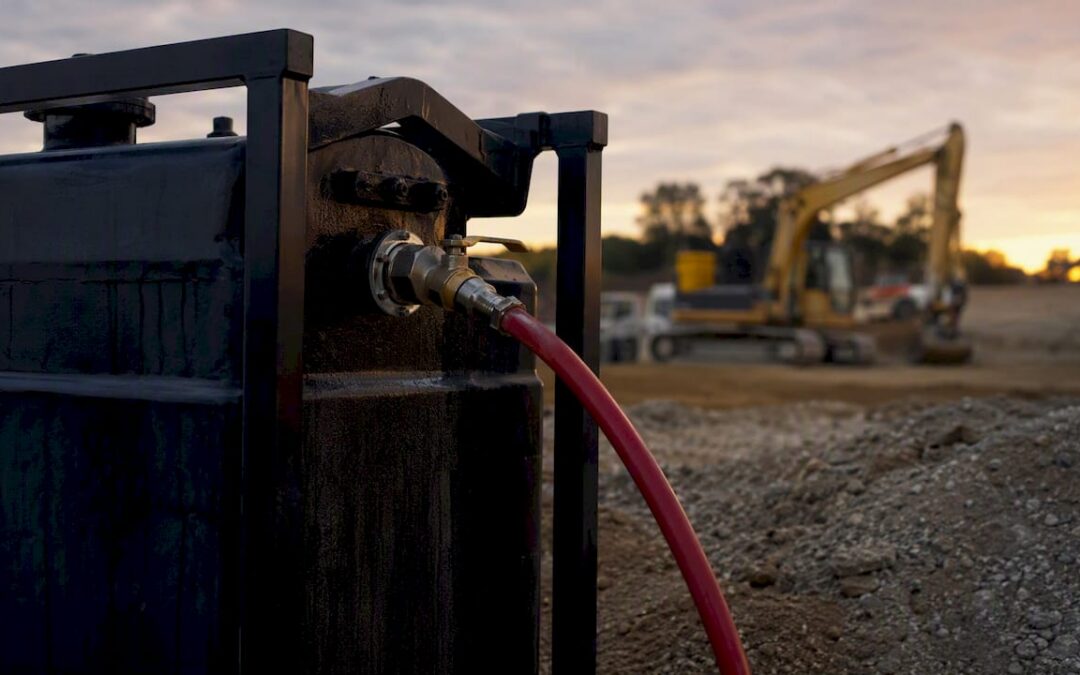
Off-road diesel (also called dyed diesel or red diesel) is available at three practical sources: cardlock and commercial fuel stations on networks like CFN, farm and bulk fuel suppliers, and on-site bulk delivery from commercial providers like Anytimefuelpros. If you have cardlock access, that is usually the fastest self-serve option. If you do not, scheduled bulk delivery is the more reliable path for most commercial operations.
Your three main channels at a glance:
- Cardlock/commercial stations (CFN and similar networks): Fast and self-serve, but require a verified fleet account or fuel card. Not available at most retail gas stations.
- Farm co-ops and bulk fuel suppliers: Good for rural operators and agricultural users. Often sell in larger quantities with delivery options, but may require an established account.
- On-site bulk delivery (commercial providers): Best for job sites, equipment yards, and multi-machine operations. No station trips, no cardlock account required, and delivery comes to you.
Pro Tip: Before driving to any station, call ahead to confirm they carry dyed diesel and what payment they accept. Many commercial stations only sell dyed fuel to verified account holders, not cash or credit card customers.
Key Takeaways
Off-road diesel is available at cardlock stations, farm co-ops, and bulk suppliers, but on-site delivery is the most reliable option for commercial operations without nearby cardlock access.
| Point | Details |
|---|---|
| Three sourcing channels | Cardlock stations, farm/bulk suppliers, and on-site delivery each suit different volume and access situations. |
| Tax savings are real | Off-road diesel skips the $0.244 per gallon federal excise tax plus applicable state taxes, compounding savings at scale. |
| Cardlock requires accounts | Most commercial stations selling dyed diesel require a verified fleet account, not cash or credit card. |
| Documentation prevents audits | Delivery tickets, driver logs, and reconciled inventory records are the primary defense against IRS penalty assessments. |
| Anytimefuelpros delivers on-site | Scheduled and emergency red dye diesel delivery with wet hosing, metered tickets, and nationwide coverage through a partner network. |
Table of Contents
- What is off-road diesel fuel, and how does it differ from on-road diesel?
- Who can legally use off-road diesel, and what uses are prohibited?
- How much cheaper is off-road diesel? Taxes and typical savings
- Where can you find off-road diesel near you?
- How to buy dyed diesel at a cardlock station
- Bulk delivery vs. station purchases: which option fits your operation?
- Compliance, storage, and recordkeeping: an audit-proof checklist
- Quick operational checklist: find, buy, and use off-road diesel safely
- Anytimefuelpros delivers off-road diesel directly to your job site
- Sources
What is off-road diesel fuel, and how does it differ from on-road diesel?
Off-road diesel, formally called dyed diesel or tax-exempt diesel, is the same base fuel as the diesel sold at retail pumps, with one critical difference: it carries a red dye added during distribution as an enforcement marker. That dye is Solvent Red 26, and its only job is to let inspectors identify fuel that has not had federal and state excise taxes applied to it.
Chemically, the fuel performs the same way. Per EIA’s diesel fuel explainer, most off-road diesel sold today is ultra-low sulfur diesel (ULSD), the same specification as on-highway diesel. That shift happened because EPA sulfur standards phased non-road diesel into ULSD requirements, so the old concern about sulfur content differences between on-road and off-road fuel is largely a non-issue for equipment managers today.
Practical differences that matter to operators:
- Color: Red dye makes it visually distinct from clear on-road diesel.
- Tax status: Off-road diesel is not subject to federal or most state motor fuel excise taxes, making it less expensive per gallon.
- Legal use restriction: It is sold exclusively for equipment not operated on public roads.
- Availability: Not sold at retail gas stations. Requires commercial stations, bulk plants, or delivery.
The core rule: Dyed diesel is tax-exempt for off-road equipment use. Using it in a licensed vehicle driven on public roads is a federal violation, regardless of how the fuel was purchased.
For a deeper comparison of the two fuel types, on-road vs. off-road diesel covers the technical and legal distinctions in full.
Who can legally use off-road diesel, and what uses are prohibited?
The tax exemption on dyed diesel is tied to the equipment, not the buyer. The IRS and federal excise tax rules define permitted uses narrowly, and enforcement is real.
Permitted uses:
- Farm tractors and agricultural machinery
- Construction equipment (excavators, bulldozers, loaders, compactors)
- Stationary and portable generators
- Mining equipment and off-road industrial machines
- Refrigeration units not connected to a vehicle’s drivetrain
- Heating oil applications (where state rules allow)
Prohibited uses:
- Any licensed motor vehicle operated on a public road, including pickup trucks, semi-trucks, and passenger vehicles
- On-road use even when the vehicle is also used off-road part of the time
Penalty exposure is significant. Under eCFR Section 48.4082-1, the penalty for using dyed diesel in a taxable (on-road) use is $1,000 or $10 per gallon, whichever is greater, assessed per violation. IRS inspectors can check fuel tanks at weigh stations and during roadside inspections.
Some states and commercial stations add a layer of verification. They may require a registered fleet account, a state agricultural permit, or a signed declaration of intended use before selling dyed diesel. This is why many cardlock stations will not sell dyed fuel to walk-up cash customers.
How much cheaper is off-road diesel? Taxes and typical savings
The price difference between on-road and off-road diesel comes entirely from tax exemption. According to the EIA, off-road diesel is not subject to the state and federal excise taxes applied to on-road diesel. The EIA does not publish separate price indexes for off-road diesel precisely because it is sold outside the taxed retail channel.
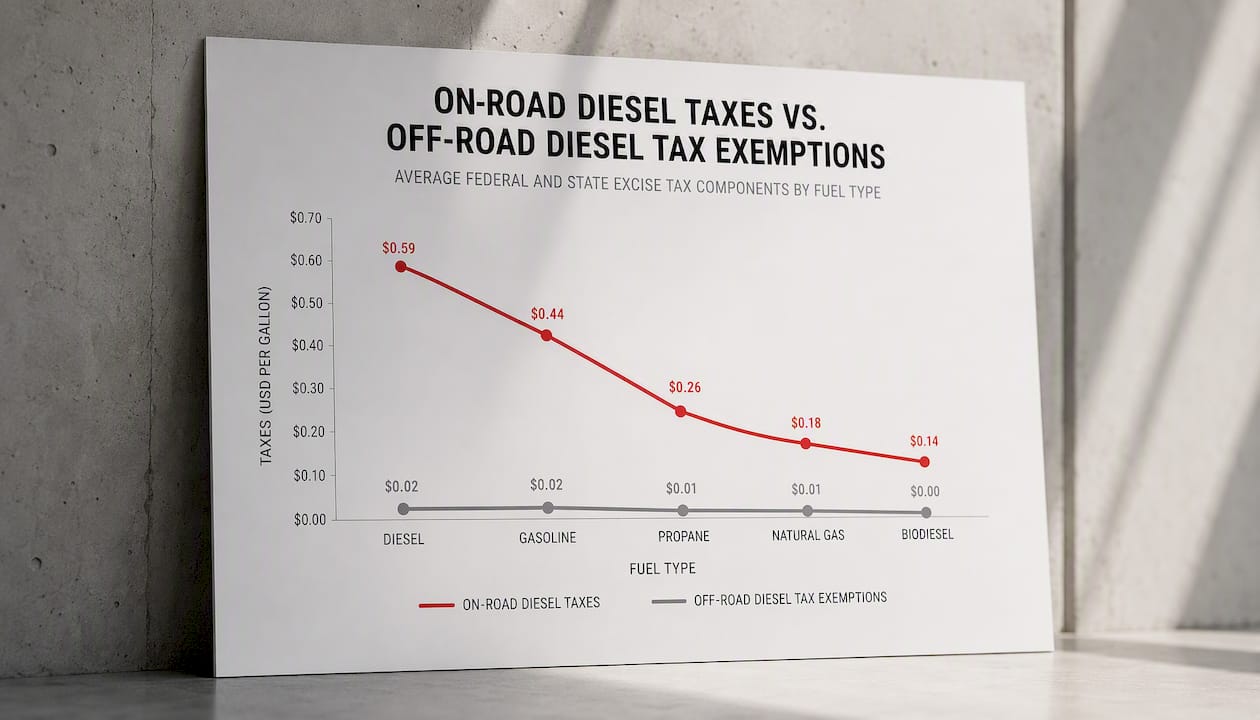
Federal and state tax components that apply to on-road diesel but not off-road:
| Tax component | Applies to on-road diesel | Applies to off-road diesel |
|---|---|---|
| Federal excise tax (Highway Trust Fund) | Yes — $0.244 per gallon | No |
| State motor fuel excise tax | Yes — varies by state | No (in most states) |
| State sales tax on fuel | Varies by state | Varies by state |
| Underground storage tank fee | Often yes | Often no |
The federal excise tax alone is $0.244 per gallon. State motor fuel taxes vary considerably. Washington State’s motor vehicle fuel tax rates and Oregon’s current fuel tax rates illustrate how much state-level rates differ, which is why operators in high-tax states see larger savings per gallon than those in lower-tax states.
What this means in practice: On a 500-gallon fill for a construction site, the federal tax exemption alone saves over $120. Add state tax savings and the per-fill advantage grows quickly, especially for operations running multiple machines through a harvest season or a multi-month excavation project.
Where can you find off-road diesel near you?
Most retail gas stations do not carry dyed diesel. The fuel is distributed through commercial channels, and knowing which station types to target saves wasted trips.
Station types that commonly carry dyed diesel:
- Cardlock/commercial fuel stations: The most reliable source. Networks like CFN (Commercial Fueling Network) operate locations across the U.S. specifically for fleet and commercial accounts. PFleet’s location maps compile cardlock stations by city and state and are a practical starting point.
- Truck stops with commercial lanes: Some larger truck stops carry dyed diesel in their commercial lanes, but availability is inconsistent. Always call ahead.
- Rural and family-owned fuel stations: In agricultural areas, local stations often carry dyed diesel for farm customers. These are worth calling if you are in a rural county.
- Farm co-ops and agricultural suppliers: Many co-ops sell dyed diesel to members and sometimes to non-members with a valid account.
- Bulk fuel plants and petroleum distributors: These wholesale suppliers sell in larger quantities and often deliver, making them a hybrid between station purchase and delivery.
How to find stations near you:
- Use the CFN station locator or similar network maps and filter for dyed or off-road diesel.
- Contact your local farm bureau or agricultural co-op for member fuel programs.
- Ask your construction equipment dealer or rental yard who they use locally.
- CN RGF’s location guide explains how to use the CFN locator and what to enter when searching for dyed diesel availability.
Pro Tip: Network locators show station addresses, but not always real-time inventory or payment requirements. Call the station directly before your first visit to confirm dyed diesel is in stock and whether they require a fleet card or account number at the pump.
How to buy dyed diesel at a cardlock station
Cardlock stations are unmanned, 24-hour commercial fueling sites. The purchase process differs from a retail pump, and first-time users often hit friction points that delay their fill.
- Set up a fleet or fuel card account. Most cardlock networks require a business account before you can pump. Apply through the network’s website (CFN, Fuelman, or similar) or through a fuel card provider. Account setup typically takes 3–7 business days.
- Activate your card and register authorized drivers. Each driver or piece of equipment may need its own card or PIN. Confirm with your network whether cards are driver-assigned or vehicle-assigned.
- Arrive at the pump and authenticate. Cardlock pumps prompt for a card swipe and PIN. Some networks also ask for an odometer reading or unit number for recordkeeping.
- Select the correct fuel grade. Dyed diesel is usually labeled “off-road diesel,” “dyed diesel,” or “red diesel” on the pump display. Do not assume the default diesel selection is dyed.
- Complete the transaction and retain the receipt. The printed receipt is your primary transaction record. Keep it for your fuel log.
Payment reality check: Most cardlock stations will not accept cash or personal credit cards for dyed diesel. The account-based system is how stations verify that buyers are legitimate commercial operators, not individuals trying to avoid road taxes.
Pro Tip: Log the equipment unit number, driver name, and gallons pumped on every receipt before filing it. That 30-second habit is what separates a clean audit from a costly one. For fleets tracking multiple machines, trucking expense tracking tools can automate fuel log reconciliation across transactions.
Bulk delivery vs. station purchases: which option fits your operation?
For many commercial operators, the choice between driving to a cardlock and arranging bulk delivery is not about preference. It is about what the job site actually allows.
When station purchases make sense:
- Low volume needs (under 100–200 gallons per fill)
- You already have a cardlock account and a nearby station
- Equipment is mobile and can reach a commercial station without significant downtime
When bulk delivery is the better call:
- High-volume operations (multiple machines, frequent fills)
- Remote or access-restricted job sites where equipment cannot leave
- No cardlock account or no nearby station carrying dyed diesel
- Operations needing wet hosing (fuel pumped directly into equipment tanks)
- Multi-site billing and consolidated invoicing requirements
Key criteria when evaluating a delivery partner:
- Minimum order size: Most commercial providers have minimums, often in the 100–500 gallon range. Confirm before scheduling.
- Delivery windows: Can they deliver during your operating hours? Do they offer after-hours or emergency response?
- Metering and wet hosing: Does the truck meter each fill separately for recordkeeping? Can they fuel multiple machines in one visit?
- Invoicing: Do they provide itemized delivery tickets per machine or per site? This matters for cost allocation and audit compliance.
- Emergency availability: Equipment does not run out of fuel on a schedule. A provider with 24/7 response capability is worth the relationship.
Pro Tip: Ask any delivery provider for a sample delivery ticket before signing an account agreement. Proper documentation is crucial to withstand IRS audits or government contract reviews.
Anytimefuelpros delivers red dye diesel directly to job sites, with scheduled and emergency options, wet hosing capability, and multi-site invoicing. For operators managing equipment across multiple locations, the off-road diesel procurement guide walks through how to structure a delivery account from the ground up.
Compliance, storage, and recordkeeping: an audit-proof checklist
Buying dyed diesel legally is only half the equation. How you document and store it determines whether you survive an IRS or state DOR audit without penalties.
Records to maintain for every dyed diesel purchase:
- Supplier invoices or delivery tickets showing date, quantity, price, and fuel type
- Fuel card transaction logs or cardlock receipts
- Driver authorization records (who is authorized to purchase and use dyed fuel)
- Inventory reconciliation logs for bulk storage tanks (opening balance, deliveries received, usage, closing balance)
- Equipment assignment records showing which machines consumed which fuel
Storage basics operators often overlook:
- Bulk tanks must be labeled clearly as containing dyed/off-road diesel.
- Secondary containment is required for most above-ground tanks above certain thresholds. State environmental rules set the specific triggers.
- Spill prevention plans are required for larger storage volumes under EPA and state regulations.
- Some states require a permit for above-ground storage tanks above a set capacity. Check your state environmental agency’s requirements.
IRS Publication P4941 is the authoritative reference for dyed fuel recordkeeping and tax compliance expectations. The IRS treats consistent documentation as the primary defense against penalty assessments.
Compliance reality: Most audit exposures for dyed diesel come from missing paperwork, not from actual misuse. Consistent delivery tickets, driver authorization records, and reconciled inventory logs prevent the vast majority of audit problems.
The penalty structure under federal excise tax law is steep enough that a single undocumented bulk fill can cost more than months of fuel savings. Treat recordkeeping as a fixed operational cost, not an afterthought.
Quick operational checklist: find, buy, and use off-road diesel safely
When you need fuel today, follow these steps in order to stay compliant and keep equipment running.
- Confirm equipment eligibility. Verify the machine is a non-road vehicle or piece of equipment. If it is ever driven on a public road under its own power, it does not qualify for dyed diesel.
- Identify your nearest supplier. Check the CFN locator or PFleet map for cardlock stations. If no station is within a practical range, contact a bulk delivery provider.
- Confirm payment and account requirements. Call ahead to verify the station carries dyed diesel and what credentials you need at the pump. For delivery, confirm minimum order size and scheduling lead time.
- Document the purchase at the point of transaction. Retain the receipt or delivery ticket immediately. Note the equipment unit number, driver, and quantity on the document before leaving the site.
- Transfer fuel safely. When filling portable tanks or site storage tanks, use approved containers labeled for diesel. Confirm the receiving tank is labeled as off-road/dyed diesel before pumping.
- Reconcile your fuel records. Update your inventory log the same day. Match delivery tickets or receipts against your opening and closing tank readings.
Safety reminders when transferring to portable tanks:
- Use DOT-approved transfer tanks rated for diesel.
- Bond and ground metal tanks during transfer to prevent static discharge.
- Never transfer dyed diesel into a container that previously held gasoline without thorough cleaning and relabeling.
Pro Tip: Most bulk delivery providers have minimum order thresholds, often 100–300 gallons. If your daily consumption is below that, schedule deliveries weekly rather than daily to avoid small-order surcharges and keep per-gallon costs competitive.
Anytimefuelpros delivers off-road diesel directly to your job site
Sourcing dyed diesel through cardlock stations works when you have the account, the nearby access, and the time to send equipment or drivers off-site. For most commercial operations running multiple machines on a job site, that equation does not add up. Downtime from fuel runs, cardlock account setup delays, and inconsistent station availability are real costs that compound across a project.
Anytimefuelpros brings red dye diesel delivery directly to job sites, equipment yards, mining operations, farms, and any location where equipment is working. Scheduled deliveries keep tanks topped off before machines go dry. Emergency response covers unplanned shortfalls. Wet hosing capability means one truck can fuel an entire equipment fleet in a single visit, with metered delivery tickets per machine for clean cost allocation.
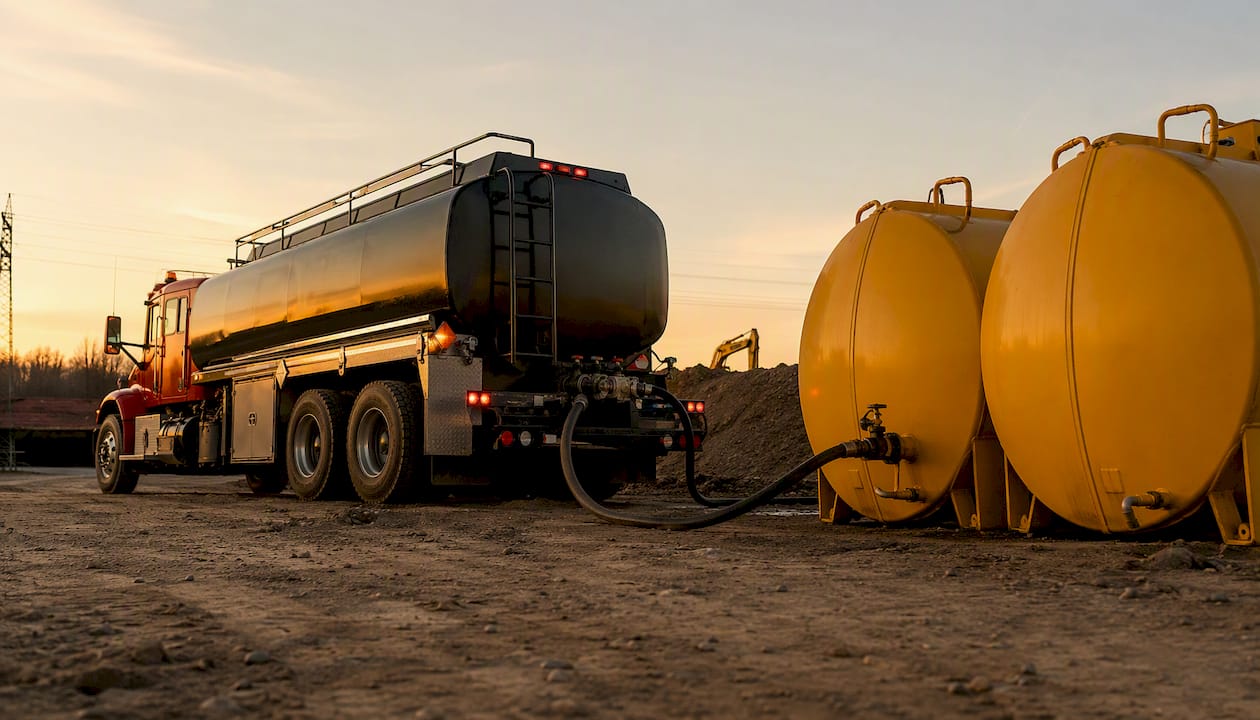
Coverage spans Texas and Utah as primary markets, with nationwide delivery through a partner network that gives operators a single point of contact across multi-state projects. Invoicing is itemized and audit-ready, which matters when you are managing government contracts or preparing for an IRS review of dyed fuel usage.
Account setup typically takes 24–48 hours for new commercial customers. First delivery can often be scheduled within the same week. To check availability in your area or request a quote, visit the bulk fuel delivery and storage page or contact Anytimefuelpros directly to schedule your first delivery.
Sources
Use these authoritative references to confirm regulatory details, check tax rates, and locate suppliers in your area.
Regulatory and tax guidance:
- EIA — Diesel fuel explained
- IRS — Publication P4941 (dyed fuels guidance)
- EPA — Standards: fuel sulfur
- eCFR — Section 48.4082-1 (federal excise tax provisions related to dyed fuel)
State tax rate references:
State motor fuel excise taxes vary and change periodically. For price comparison and compliance planning, check your state’s Department of Revenue or Department of Transportation directly. Washington State’s fuel tax rate page and Oregon’s fuel tax rate page are examples of the state-level detail available. Your state’s equivalent page is the right source for current local rates.
Station locators:
Use these sources in combination: The IRS publication answers the compliance question. The EIA and EPA pages answer the fuel specification question. The state DOR pages answer the price-savings question. The station locators answer the “where do I go today” question.
For operators who want a single reference on dyed diesel use cases and procurement, the understanding off-road diesel page covers the topic from a commercial operations perspective.
Recent Comments