
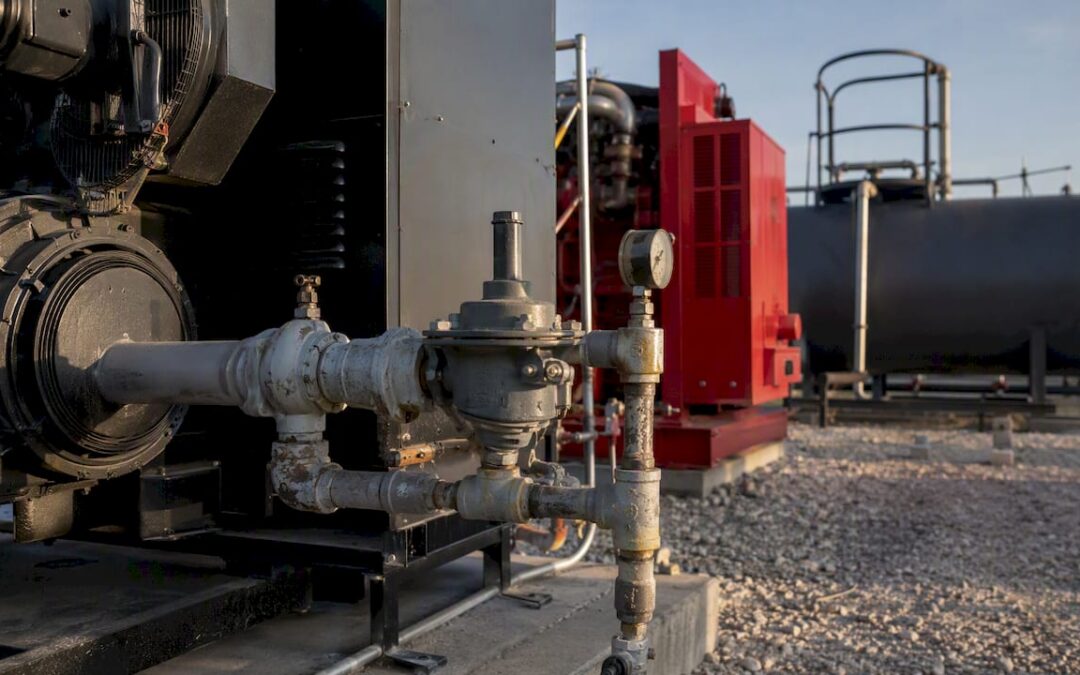
For most standby and emergency applications, diesel remains the default choice. For continuous baseload or demand-response operations where a reliable pipeline exists, natural gas often delivers lower long-term costs and simpler permitting. The right answer depends on three variables every facilities manager must resolve before signing a purchase order: load profile, fuel logistics, and regulatory exposure.
- Diesel strengths: Rapid transient response, high torque for spiking loads, complete independence from utility infrastructure, and proven NFPA 110 compliance pathways for emergency standby.
- Natural gas strengths: Continuous runtime without refueling logistics, lower NOx and near-zero particulate matter emissions, simpler permitting in non-attainment zones, and potential demand-response revenue.
Three standards shape this decision above all others. NFPA 110 governs stored-fuel testing and operational readiness for emergency systems. EPA Tier 4 sets the emissions bar for diesel engines and drives aftertreatment costs. Fuel-storage logistics, specifically whether your site has pipeline access or must maintain on-site tanks, determines which fuel is even operationally viable.
Key Takeaways
Diesel wins for standby independence and spike loads; natural gas wins for continuous runtime, emissions compliance, and long-run TCO when pipeline access is firm and runtime hours are high.
| Point | Details |
|---|---|
| Match fuel to load profile | Diesel suits high-spike standby; natural gas suits steady baseload and continuous runtime. |
| NFPA 110 adds diesel OPEX | Annual fuel testing and polishing are mandatory for stored emergency diesel under NFPA 110 Chapter 8. |
| Tier 4 shifts the capex math | Tier 4 diesel aftertreatment can increase initial system cost by 50% or more, narrowing diesel’s capex advantage. |
| Pipeline risk is real | Confirm utility curtailment provisions before committing to natural gas; regional emergencies can interrupt gas supply. |
| Model TCO before deciding | Include fuel testing, polishing, Tier 4 hardware, demand-response revenue, and fuel price volatility in your 15-year model. |
Table of Contents
- How do diesel vs. natural gas generators actually compare?
- What is a natural gas generator and how does it work?
- Natural gas generator pros and cons for operations teams
- What is a diesel generator and how does it work?
- Diesel generator pros and cons for operations teams
- Side-by-side: how diesel and natural gas compare across key dimensions
- Fuel logistics, NFPA 110 readiness, and practical reliability planning
- How emissions profiles and EPA rules affect your permitting
- Maintenance cadence, failure modes, and what to include in your RFPs
- What does total cost of ownership actually look like?
- How your load profile changes which fuel is the right answer
- How to choose diesel or natural gas at your facility: a step-by-step checklist
- What the research says about NFPA 110, emissions costs, and long-run TCO
- Keep your diesel generator ready with Anytimefuelpros
- Sources
How do diesel vs. natural gas generators actually compare?
The comparison of fuel types starts with how each machine converts fuel into electricity. Natural gas generators use spark-ignition engines, similar in principle to large industrial gasoline engines, fed by a continuous pipeline supply. Diesel generators use compression-ignition engines that fire on the heat of compressed air alone, drawing from on-site stored fuel. Both can power the same loads, but they get there differently, and those differences carry real operational weight.
What is a natural gas generator and how does it work?
A natural gas generator connects directly to a utility gas main or a dedicated high-pressure service line. The engine draws fuel on demand, which means there is no tank to size, no delivery schedule to manage, and no degradation clock ticking on stored fuel. Most installations include a pressure regulator, a gas train with safety shutoffs, and a three-way catalytic converter for emissions control. Larger units may require a dedicated meter and utility interconnection agreement, which adds lead time to commissioning.
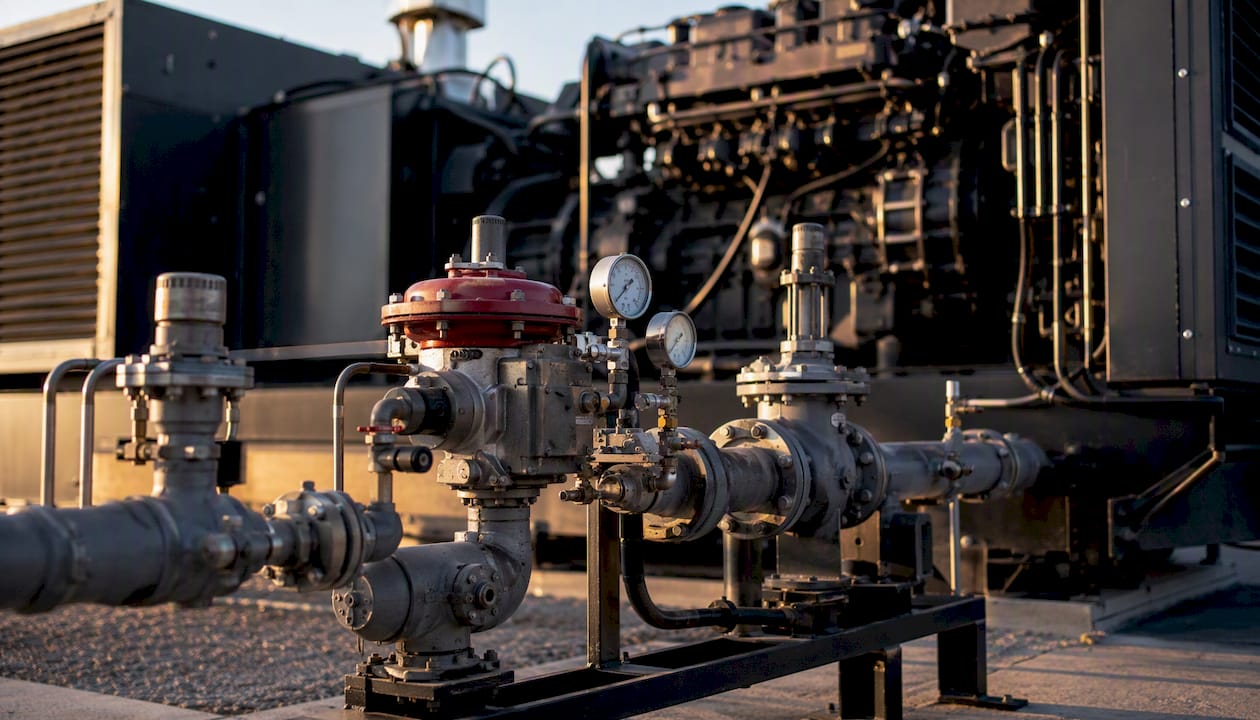
Where natural gas excels operationally is in scenarios that demand extended runtime. A hospital running a natural gas generator during a multi-day grid outage never faces the question of when the next fuel truck arrives. Continuous runtime is essentially unlimited as long as the pipeline stays pressurized. That same characteristic makes natural gas the preferred fuel for demand-response programs, where a generator must run for hours at a time to earn grid-services revenue.
Before committing to natural gas, verify three things during site assessment. First, confirm the available gas pressure at the meter point and whether it meets the engine manufacturer’s minimum inlet pressure under full load. Second, check whether the local utility has curtailment provisions that could interrupt supply during peak demand periods, which is a real risk in some markets. Third, confirm that the utility interconnection process, including metering and any required protection relays, fits your project timeline.
Natural gas generator pros and cons for operations teams
Natural gas is the operationally superior choice when your site has firm pipeline access, your load profile is steady, and your air permit situation is constrained. The tradeoffs are real, but manageable when the site conditions are right.
Operational advantages:
- No on-site fuel storage, which eliminates tank permitting, spill containment requirements, and NFPA 30 compliance overhead.
- Continuous runtime without scheduled deliveries or refueling interruptions.
- Lower NOx and near-zero particulate matter emissions, which simplifies permitting in non-attainment areas where diesel Tier 4 aftertreatment would otherwise be required.
- Eligibility for demand-response programs when the engine is certified for non-emergency operation, creating a revenue stream that can offset higher initial capital costs.
- No fuel degradation, no polishing schedule, and no NFPA 110 annual fuel-quality testing requirement.
Operational disadvantages:
- Pipeline dependence is the single largest risk. A utility curtailment event or a gas main break during a grid outage removes your backup power entirely.
- Step-load acceptance is generally slower than diesel. Natural gas spark-ignition engines can struggle with large block loads applied suddenly, which matters for facilities with high-inrush motors or UPS bypass scenarios.
- Utility interconnection and metering add weeks or months to project timelines compared with a diesel drop-in installation.
- Gas pressure must be verified under full-load conditions; low-pressure events can cause engine derating or shutdown.
The curtailment risk deserves particular attention. In Texas, for example, the February 2021 winter storm exposed how gas supply and electric generation can fail simultaneously. If your facility’s risk model requires independence from utility infrastructure during a regional emergency, diesel is the more defensible choice regardless of normal operating economics.
What is a diesel generator and how does it work?
A diesel generator uses compression-ignition to fire on distillate fuel oil stored in an on-site sub-base or day tank, fed from a larger bulk storage tank. The engine starts on its own fuel supply, independent of any utility connection, and reaches full load faster than virtually any other generator technology. That combination of self-contained fuel and rapid transient response is why diesel has been the default for data centers, hospitals, and emergency standby applications for decades.
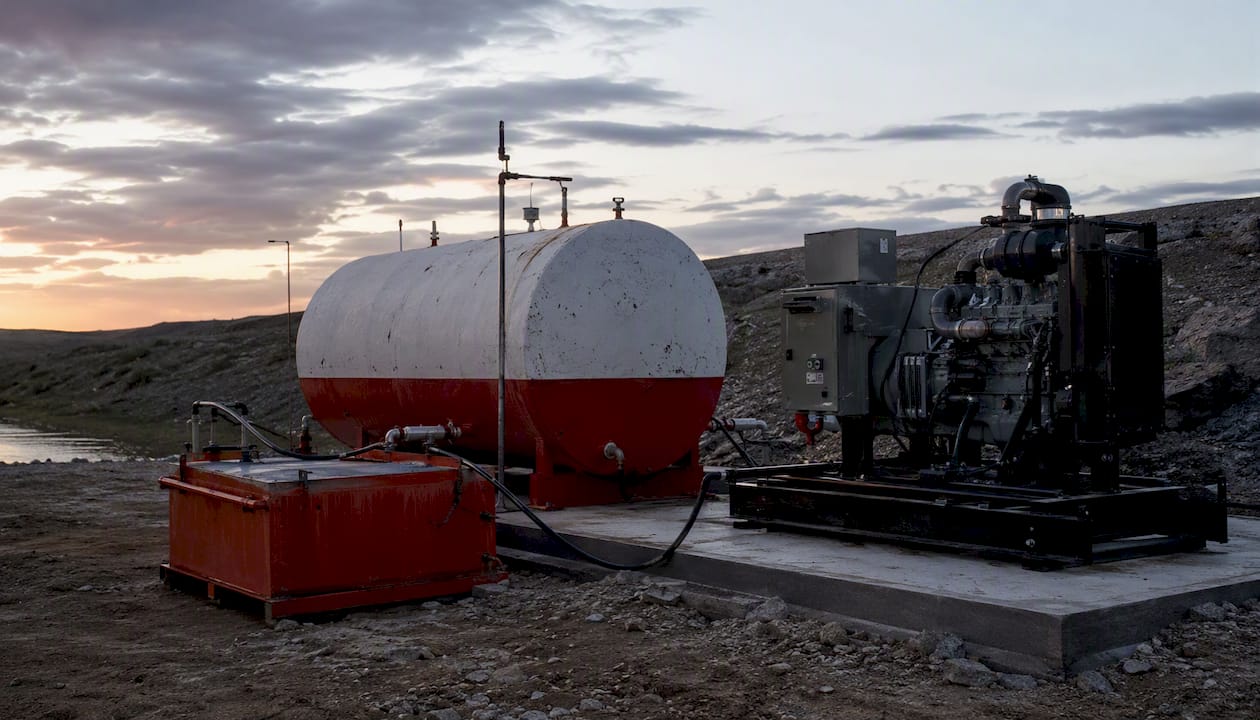
On-site storage introduces its own set of obligations. Tank sizing must match your runtime target, typically 8 hours at full load for NFPA 110 Level 1 systems, though many facilities carry 24–72 hours of capacity for extended outage scenarios. Fuel polishing and NFPA 110 fuel testing are recurring maintenance tasks: Chapter 8 of NFPA 110 requires stored diesel to be tested at least annually for water, sediment, and microbial contamination. Fuel that sits in a tank for more than 12 months without treatment is a reliability risk, not a theoretical one.
When EPA Tier 4 emissions standards apply, diesel installations require diesel particulate filters (DPF) and selective catalytic reduction (SCR) systems. These add capital cost, require DEF (diesel exhaust fluid) supply, and introduce additional maintenance intervals. In some markets, adding Tier 4 aftertreatment can increase the initial system cost by 50% or more compared with a basic emergency diesel set, according to Generac’s environmental regulatory white paper. That cost premium is worth modeling carefully before assuming diesel is the cheaper option.
Diesel generator pros and cons for operations teams
Diesel is the right call when your facility needs fast, independent, high-torque power and cannot accept the pipeline-dependence risk of natural gas. The maintenance and permitting overhead is real, but it is manageable with the right service contracts in place.
Operational advantages:
- Fastest transient response of any generator fuel type. Diesel engines reach full rated load in seconds, which is critical for facilities with UPS handoff windows measured in milliseconds.
- Complete independence from utility infrastructure. No pipeline, no curtailment risk, no utility interconnection process.
- Higher energy density than natural gas on a volume basis, which contributes to better fuel-to-power ratios for short-duration, high-load events.
- Proven NFPA 110 compliance pathways for Level 1 and Level 2 emergency systems.
- Widely available service infrastructure, parts, and technician expertise across the United States.
Operational disadvantages:
- Fuel degradation is a real operational risk. Diesel stored beyond 12 months without treatment develops water contamination, microbial growth, and sediment that can clog injectors and cause startup failures.
- Tier 4 aftertreatment (DPF/SCR) adds capital cost, DEF logistics, and maintenance complexity.
- On-site storage requires tank permitting, spill containment, and NFPA 30 compliance.
- Fuel price volatility exposes operating budgets to distillate market swings, which EIA historical data shows can be significant over multi-year periods.
- Refueling logistics require a reliable delivery partner, especially during regional emergencies when demand spikes and delivery lead times extend.
Pro Tip: Build a fuel-polishing and testing schedule into your generator maintenance contract before the unit goes live, not after the first failed load test. A scheduled fuel polishing program removes water and microbial contamination before it reaches your injectors, and it satisfies the documentation trail NFPA inspectors expect to see.
Side-by-side: how diesel and natural gas compare across key dimensions
| Dimension | Diesel | Natural Gas |
|---|---|---|
| Initial capital cost | Lower base unit cost; Tier 4 aftertreatment can add 50%+ | Higher base unit cost; no aftertreatment hardware required |
| Fuel cost and price volatility | Higher volatility; distillate prices track crude oil markets | Greater price stability; pipeline rates less volatile than distillate |
| Maintenance cadence | Fuel testing/polishing annually (NFPA 110); DPF/SCR service; oil/filter intervals | No fuel storage maintenance; ignition system and valve train checks; cleaner combustion reduces oil fouling |
| Load profile fit | Excellent for high-spike, step loads, and fast transient response | Better for steady baseload and continuous runtime |
| Fuel logistics | On-site tank sizing, delivery scheduling, spill containment | Pipeline connection, utility metering, pressure verification |
| Emissions and permitting | Higher NOx and PM; Tier 4 DPF/SCR required in many jurisdictions | Lower NOx, near-zero PM; three-way catalyst often sufficient |
| Reliability and startup | Fastest startup; independent of utility infrastructure | Reliable when pipeline is firm; curtailment risk during regional emergencies |
| Refueling/resupply risk | Dependent on delivery logistics; high demand during regional outages | No delivery needed; risk is pipeline curtailment |
| Noise and footprint | Comparable; diesel tends to run slightly louder at high load | Comparable; gas units may require larger footprint for gas train components |
Diesel wins for standby independence and spike loads; natural gas wins for continuous runtime, emissions compliance, and long-run TCO when pipeline access is firm.
Fuel logistics, NFPA 110 readiness, and practical reliability planning
Before you commit to either fuel, get three operational confirmations in writing. For natural gas: a pressure guarantee from the utility at your meter point under full-load conditions, a written statement on curtailment provisions, and a timeline for interconnection and metering. For diesel: a tank capacity calculation tied to your runtime target, a delivery contract with a guaranteed response time during declared emergencies, and a fuel-testing baseline from your first fill.
For diesel installations, the logistics checklist looks like this:
- Tank sizing: Calculate runtime at 100% load, then add a buffer. A 500 kW diesel generator consumes roughly 35 gallons per hour at full load. A 72-hour runtime target at that load requires approximately 2,520 gallons of usable capacity.
- Fuel polishing: Schedule polishing whenever contamination is detected or when fuel has been stored for 12 months without turnover. Use a certified fuel polishing service that provides a post-service report.
- Delivery scheduling: Establish a recurring delivery cadence tied to tank level, not calendar date. Use a fuel consumption calculator to model drawdown rates against your expected test and exercise schedule.
- Emergency response contacts: Confirm your fuel supplier’s after-hours response capability before an outage occurs, not during one.
- Transfer and interlock testing: Test the automatic transfer switch (ATS) and generator under load at least monthly per NFPA 110 requirements. Document every test.
Pro Tip: NFPA 110 requires monthly exercise of Level 1 systems for at least 30 minutes under load. Keep a log that includes fuel level before and after each test. That log is your first line of defense during an Authority Having Jurisdiction (AHJ) inspection, and it gives you the consumption data to right-size your delivery schedule.
Statistic callout: NFPA 110 Chapter 8 (Section 8.3.7) mandates that stored diesel fuel for emergency systems be tested regularly for quality, with remediation required when contamination is found. Facilities that skip this step risk both compliance violations and startup failures during actual emergencies.
How emissions profiles and EPA rules affect your permitting
Natural gas typically emits less NOx and near-zero particulate matter compared with diesel, which is the single most consequential difference when you are operating in or near a non-attainment area. A natural gas generator can often meet local air district limits with a three-way catalytic converter, while a comparable diesel unit may require a DPF, an SCR system, and a DEF supply chain. That difference in aftertreatment complexity translates directly into permit timeline, capital cost, and ongoing maintenance burden.
The EPA’s Tier 4 Final standards, which apply to new diesel engines above 750 hp, require near-zero PM and significant NOx reductions. For facilities in non-attainment areas under the National Ambient Air Quality Standards (NAAQS), local air districts often impose permit conditions that go beyond federal Tier 4 minimums, including annual emission testing, operational hour limits, and visible emissions checks. Generac’s environmental regulatory white paper documents that natural gas units can reduce particulate matter to near-zero levels and often meet stricter local standards without the same aftertreatment complexity diesel requires.
A practical permitting checklist for either fuel type:
- Identify whether your facility is in a NAAQS non-attainment area for ozone or PM2.5 before specifying equipment.
- Confirm whether the generator will be classified as emergency-only or non-emergency (demand-response or prime power). Non-emergency classification triggers stricter emission limits and may require continuous emissions monitoring.
- For diesel: confirm Tier 4 applicability based on engine size and installation date, and budget for DPF/SCR hardware and DEF storage.
- For natural gas: confirm that a three-way catalyst meets local district limits, and verify whether the district requires source testing at commissioning.
- For demand-response participation: the engine must be certified for non-emergency operation and meet the applicable emission limits for the hours it will run.
Statistic callout: In some markets, Tier 4 diesel aftertreatment hardware can significantly increase the initial system cost compared with a basic emergency diesel set, per Generac’s emissions analysis. That premium shifts the capex comparison significantly toward natural gas in jurisdictions where Tier 4 compliance is mandatory.
Maintenance cadence, failure modes, and what to include in your RFPs
The maintenance burden between the two fuel types is genuinely different, and it shows up in both labor hours and parts cost over a generator’s service life.
Diesel maintenance priorities:
- Annual fuel testing and polishing per NFPA 110 (water, sediment, microbial contamination).
- DPF cleaning or replacement on Tier 4 units, typically every 3,000–4,000 hours of operation depending on load factor.
- SCR catalyst inspection and DEF system checks at each major service interval.
- Oil and filter changes at manufacturer-specified intervals, typically every 250–500 hours under load.
- Load-bank testing at least annually to exercise the engine under full rated load and burn off carbon deposits.
- Coolant system inspection and battery replacement on a scheduled basis.
Natural gas maintenance priorities:
- Spark plug replacement at manufacturer-specified intervals (typically every 1,000–2,000 hours for industrial gas engines).
- Ignition system and ignition coil inspection.
- Valve lash adjustment, which is more frequent on gas engines than diesel due to combustion characteristics.
- Three-way catalyst inspection and replacement when efficiency drops below specification.
- Gas train component inspection: pressure regulators, solenoid valves, and safety shutoffs.
- Oil and filter changes, though gas engines often run cleaner and may have longer intervals than diesel.
Pro Tip: When writing an RFP for generator maintenance, require the service contractor to specify response time to site (4 hours or less for Level 1 systems is a reasonable benchmark), spare-parts retention for critical components, and documented fuel-handling expertise if diesel is involved. A contractor who cannot demonstrate familiarity with DPF regeneration cycles or fuel polishing protocols is a liability, not an asset.
What does total cost of ownership actually look like?
Natural gas tends to carry lower TCO over a 10–20 year service life when the generator runs more than a few hundred hours per year and pipeline access is firm. Diesel may be the more economical choice for infrequent standby applications where the generator runs fewer than 100 hours annually, because the capital premium for natural gas is harder to recover on low runtime.
The Generac economic white paper supports this framing: natural gas generators often carry higher initial capital costs but deliver lower long-term TCO through more stable fuel prices, elimination of on-site storage costs, and reduced maintenance from cleaner combustion.
TCO line items to model for both fuels:
- Capital purchase price plus emissions hardware (Tier 4 DPF/SCR for diesel, three-way catalyst for gas).
- Fuel cost per kWh, modeled at current prices and stress-tested against historical price volatility. EIA data shows pipeline natural gas has historically been less volatile than distillate fuel oil.
- On-site storage costs for diesel: tank purchase or rental, spill containment, NFPA 30 compliance, and annual inspection fees.
- Fuel testing and polishing for diesel: at minimum one annual test per NFPA 110, plus polishing when contamination is found.
- Scheduled maintenance labor and parts over the expected service life (typically 20–30 years for a well-maintained industrial generator).
- Permitting fees and air district compliance costs, including any required source testing.
- Demand-response revenue potential for natural gas units certified for non-emergency operation. This line item can materially change the TCO calculation, because continuous pipeline fuel and emissions certification enable revenue generation that offsets higher capex.
- DEF supply and storage for Tier 4 diesel units.
- End-of-life disposal costs, including tank decommissioning for diesel.
Statistic callout: Pipeline-delivered natural gas has historically shown greater price stability than distillate fuel oil, according to EIA market data. For facilities modeling a 15-year TCO, that stability reduces budget exposure to fuel price swings that can significantly affect diesel operating costs.
Assumptions to test in your model:
- Annual runtime hours (standby only vs. demand-response participation).
- Local fuel prices at the time of modeling, with a sensitivity range of ±30% for diesel.
- Expected service life and major overhaul schedule.
- Whether Tier 4 aftertreatment is required in your jurisdiction.
- Pipeline curtailment probability and the cost of a backup contingency plan.
How your load profile changes which fuel is the right answer
PowerSecure’s analysis puts it plainly: diesel generally provides stronger transient response and better fuel-to-power ratios for high, spiking loads, while natural gas performs well for steady baseloads and continuous runtime when pipeline access is reliable. That distinction is the core of the load-profile decision.
A data center with a 2N UPS architecture and a 10-millisecond transfer window needs a generator that accepts a large block load instantly. Diesel compression-ignition engines do this reliably. A natural gas spark-ignition engine can handle block loads, but the governor response and fuel-air mixture adjustment take slightly longer, which can cause a momentary voltage or frequency dip that some sensitive loads will not tolerate. Manufacturers are closing this gap: some large natural gas engines now carry Type-10 NFPA 110 certification for fast starts and high block-load acceptance, but verifying this with the specific model you are specifying is essential.
For a manufacturing facility running a natural gas generator as a prime power source at relatively steady load, the calculus flips. The engine operates in its efficiency band most of the time, fuel arrives continuously, and the load profile rarely demands the kind of instantaneous torque spike that favors diesel.
Load-profile checks to run before specifying:
- Anticipated peak kW demand and the duration of that peak.
- Number of motor starts per hour and the inrush current of the largest motor.
- Minimum load band where the generator will operate most of the time (diesel engines run poorly below 30% of rated load for extended periods).
- Start frequency: how many times per day or week the generator is expected to start and accept load.
- Transfer switch type: open transition, closed transition, or soft-load transfer, each of which places different demands on the generator’s transient response.
Vendor questions to ask on load performance:
- What is the block-load acceptance rating at 0.8 power factor, and what voltage and frequency dip should we expect?
- What is the time-to-full-load from a cold start?
- What governor control system is standard, and is isochronous control available?
- What is the recommended sizing multiplier for motor-heavy loads?
How to choose diesel or natural gas at your facility: a step-by-step checklist
The decision follows a logical sequence. Work through these steps before issuing an RFP or requesting a quote.
- Conduct a site survey. Confirm whether a firm gas pipeline connection is available at adequate pressure. If not, diesel is your fuel. Document the available gas pressure at the meter point under full-load conditions.
- Map your load profile. Identify peak kW, load type (resistive, motor, UPS), transfer switch type, and start frequency. High-spike or fast-transfer applications favor diesel.
- Run a permitting check. Determine whether your facility is in a NAAQS non-attainment area. Identify whether Tier 4 diesel aftertreatment is required. Confirm whether a three-way catalyst is sufficient for natural gas in your air district.
- Assess fuel-logistics risk. For diesel: confirm delivery partner response time during regional emergencies and model tank capacity against runtime targets. For natural gas: confirm utility curtailment provisions and whether a backup fuel supply (propane or diesel) is needed for resilience.
- Run a TCO model. Use the line items listed in the cost section above. Test diesel at ±30% fuel price sensitivity. Include NFPA 110 testing and polishing costs for diesel. Include demand-response revenue potential for natural gas if applicable.
- Finalize procurement. Issue an RFP that specifies load acceptance requirements, emissions certifications, maintenance SLA terms, and fuel-delivery response time.
Red flags that push the decision to diesel:
- No pipeline access or inadequate gas pressure at the meter.
- Load profile includes large motor starts or UPS bypass scenarios requiring sub-second transient response.
- Facility risk model requires complete independence from utility infrastructure during regional emergencies.
- Site is temporary or mobile (construction, events, disaster response).
Red flags that push the decision to natural gas:
- Facility is in a non-attainment area where Tier 4 diesel permitting is prohibitively complex or costly.
- Generator will run more than 500 hours per year, making fuel cost and storage overhead a significant TCO driver.
- Demand-response participation is part of the business case.
- On-site fuel storage is restricted by zoning, lease terms, or site constraints.
RFP line items for fuel and generator services:
- Emission certification documentation (EPA Tier 4 or equivalent for diesel; three-way catalyst efficiency for gas).
- Block-load acceptance test results at rated kW.
- Maintenance response time SLA (4 hours or less for Level 1 systems).
- Fuel delivery response time during declared regional emergencies.
- Spare-parts inventory commitment for critical components.
- NFPA 110 compliance documentation package.
What the research says about NFPA 110, emissions costs, and long-run TCO
The TCO case for natural gas is strongest when you factor in three recurring OPEX items that diesel owners often underestimate: annual NFPA 110 fuel testing and polishing, Tier 4 aftertreatment maintenance, and fuel price volatility exposure.
NFPA 110 Chapter 8 mandates regular fuel-quality testing for stored emergency diesel, with remediation required when contamination is found. That is a floor, not a ceiling. Facilities in humid climates or with high fuel turnover may need quarterly testing to stay ahead of microbial growth. Each test, polishing event, and remediation cycle adds to diesel’s OPEX. Natural gas avoids this category of cost entirely because there is no stored fuel to degrade.
The Generac economic white paper makes the TCO case directly: long-term operating costs for natural gas are frequently lower than diesel when pipeline access exists and runtime hours are meaningful, driven by stable fuel pricing, no storage overhead, and cleaner combustion that reduces maintenance frequency. The emissions side reinforces this: Generac’s environmental regulatory analysis shows that natural gas units can meet stricter local air-quality standards without the DPF/SCR hardware that adds both capital cost and ongoing service complexity to diesel installations.
For managers modeling TCO, three research-backed actions follow from this evidence:
- Include NFPA 110 testing and polishing costs in your diesel OPEX model. Budget at minimum one annual test and one polishing event every 18–24 months, with contingency for remediation.
- Model pipeline-curtailment risk explicitly. Assign a probability and a cost to a curtailment event, including the cost of a backup contingency (a portable diesel unit, for example). If that risk-adjusted cost is low, natural gas TCO looks stronger. If curtailment is a credible scenario in your market, the calculus shifts.
- Include demand-response revenue in your natural gas TCO model where applicable. A generator certified for non-emergency operation and running 200–400 hours per year in demand-response programs can generate revenue that meaningfully offsets the higher initial capital cost.
Statistic callout: EIA data on natural gas supply and pricing consistently shows pipeline natural gas prices are less volatile than distillate fuel oil over multi-year periods, which reduces long-term budget exposure for facilities that choose gas as their primary generator fuel.
Keep your diesel generator ready with Anytimefuelpros
If your facility runs diesel generators, fuel logistics are not a background task. They are a readiness variable. A generator that fails to start because of contaminated fuel or an empty tank during a regional outage is not a backup power system. It is a liability.
Anytimefuelpros delivers on-site diesel directly to your generator tanks across Texas, Utah, and nationwide through our partner network, with 24/7 emergency response for outage scenarios and scheduled recurring deliveries for day-to-day readiness. We also provide fuel polishing services that satisfy NFPA 110 documentation requirements and protect your injectors from the contamination that builds in stored diesel over time. Whether you manage a single data center in Dallas or a multi-site portfolio across multiple states, Anytimefuelpros gives you a single point of contact for fuel delivery, polishing, and emergency response. Learn more about on-site fuel delivery benefits and how scheduled service keeps your generators ready when it counts.
Sources
The following sources were used in preparing this article and are recommended for deeper review:
- Environmental regulatory advantages of natural gas generators
- Natural Gas vs. Diesel Generator Efficiency | PowerSecure
Recent Comments