

Construction Site Fueling Workflow: Cut Downtime Fast
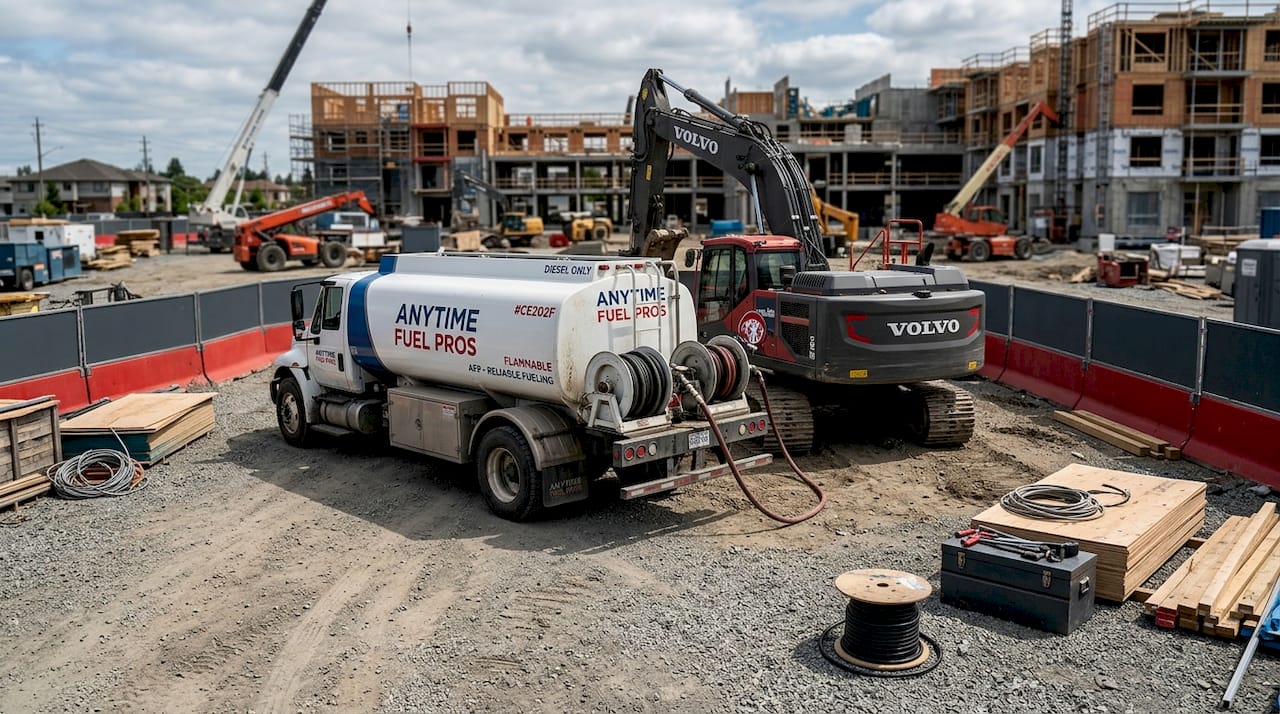
A construction site fueling workflow is the systematic process by which equipment receives fuel safely, accurately, and with minimal disruption to active site operations. Industry professionals also call this “on-site fuel management,” a term that better captures the full scope of scheduling, safety compliance, inventory tracking, and vendor coordination involved. When this process breaks down, the consequences multiply fast. An excavator sitting idle while a crew member drives to a retail station costs you labor, machine time, and project momentum simultaneously. The good news is that a structured workflow, backed by the right tools and procedures, converts fueling from a recurring headache into a passive operational function.
What are the essential tools for a construction site fueling workflow?
The physical and digital infrastructure you deploy determines how much control you actually have over fuel on your job site. On the hardware side, the core assets are fuel bowsers, above-ground storage tanks, calibrated flow meters, dry-break nozzles, and spill containment berms. Each piece serves a specific function. Flow meters measure dispensed volume to the gallon, while dry-break nozzles prevent drips during hose disconnection, which matters both for safety and for accurate inventory reconciliation.
Digital tools are where modern sites separate themselves from sites still running on paper logs. Wetstock management platforms like ClearView™ by Dover Fueling Solutions provide tank level accuracy to 1/1000th of an inch, enabling real-time detection of theft, leaks, or short deliveries. That level of precision means a 50-gallon discrepancy does not go unnoticed for weeks. Fleet management integrations connect fuel dispensing data directly to equipment records, so you know exactly which machine consumed what volume on which shift.
Key digital and physical assets for site fueling:
- Above-ground diesel storage tanks with secondary containment
- Calibrated flow meters and dry-break nozzles for accurate dispensing
- Wetstock management software (ClearView™ or equivalent platforms)
- Fleet management integrations for per-machine fuel tracking
- Leak detection sensors tied to real-time alert systems
- Digital fueling logs accessible to site managers and fuel vendors
The combination of precise hardware and connected software closes the gap between fuel ordered and fuel accounted for. Sites that rely on manual dip-stick readings and paper logs routinely discover discrepancies they cannot explain. Sites running integrated systems catch those same discrepancies within hours.
| Asset Type | Primary Function |
|---|---|
| Fuel bowser / storage tank | On-site diesel storage with secondary containment |
| Calibrated flow meter | Measures dispensed volume per fill event |
| Wetstock management software | Real-time tank charting and anomaly detection |
| Fleet management integration | Links fuel data to individual equipment records |
| Leak detection sensors | Triggers alerts for unplanned inventory loss |
How to implement a construction site fueling checklist
A standardized 40-plus point fueling checklist covering safety, spill prevention, and data accuracy is the single most effective tool for managing fuel costs and environmental risk on a job site. Most sites skip this formalization entirely, which is exactly why fuel loss and environmental liabilities remain common. The checklist is not bureaucracy. It is the difference between a defensible audit trail and a regulatory fine.
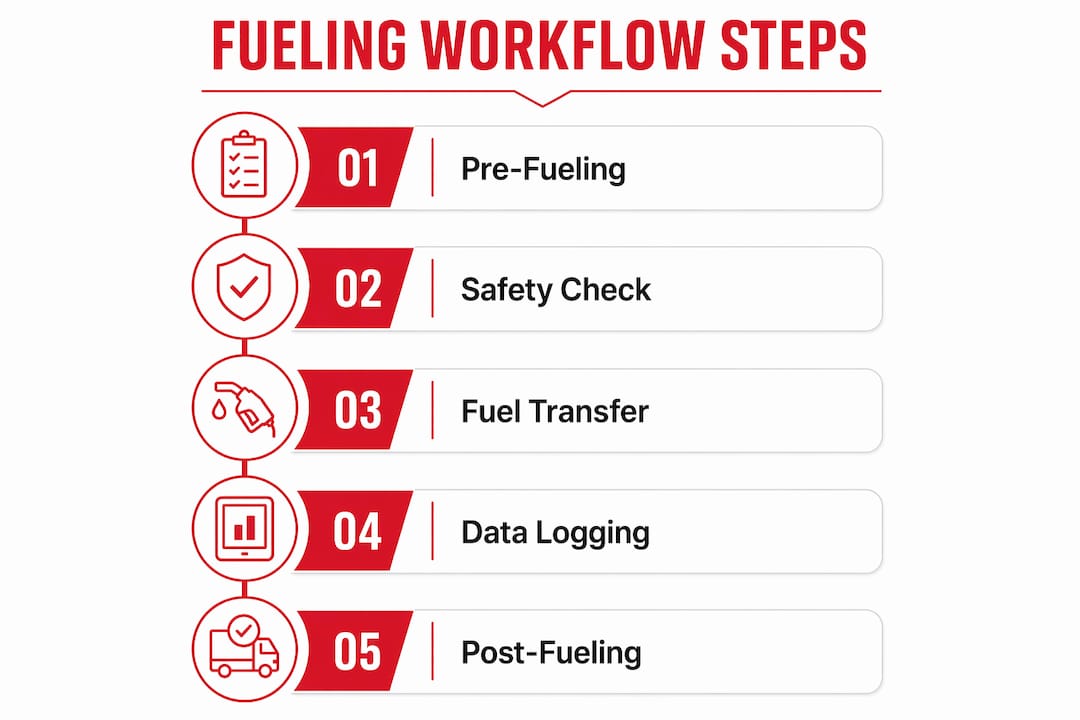
A well-structured checklist moves through five phases:
- Pre-fill safety check. Confirm the equipment engine is off, parking brake is set, and the machine is on stable ground. Verify the correct fuel type matches the equipment specification. Check that fire extinguisher and spill kit are within reach.
- Equipment positioning. Position the fuel bowser or delivery truck on level ground, downhill from any water source. Confirm secondary containment is deployed beneath the fill point.
- Fill execution. Insert the nozzle fully before opening the valve. Monitor the flow meter reading continuously. Never leave the nozzle unattended during dispensing.
- Spill prevention and PPE. The operator wears nitrile gloves and safety glasses throughout the fill. A drip tray catches any residual fuel during nozzle removal. Any spill, regardless of volume, triggers immediate containment and documentation.
- Post-fill data verification. Record the meter reading, equipment ID, operator name, date, and time in the digital log. Cross-reference against the previous fill to flag unusual consumption.
Automated safety inspection software improves compliance and reduces fuel transfer incidents through photo capture and fault escalation built into the checklist workflow. This means a missed step does not just go unrecorded. It triggers a notification to the site supervisor before the next fill event occurs.
Pro Tip: Assign checklist completion to the equipment operator, not the fuel delivery driver. Operators know their machines, spot abnormal fuel consumption faster, and take greater ownership of the data when their name is attached to the record.
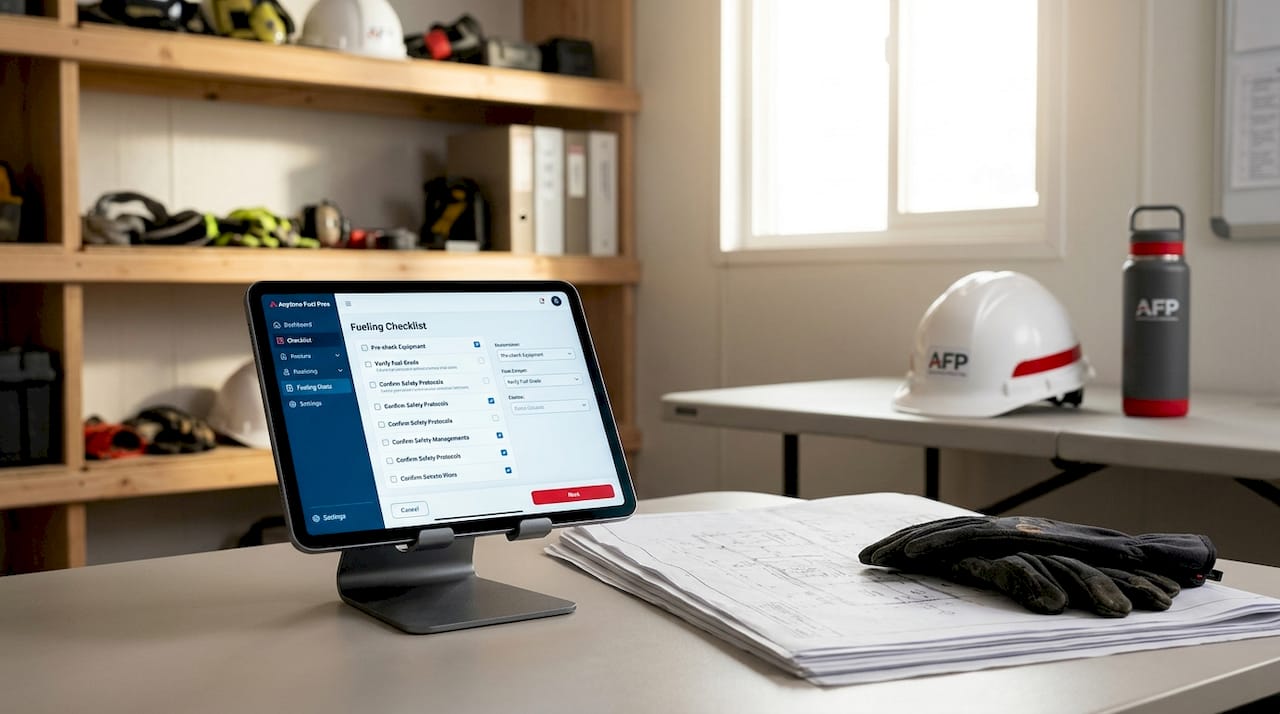
Recorded metrics serve a second purpose beyond safety. When consumption data is logged per machine per shift, theft and unauthorized use become visible within days rather than months.
What are the best practices for scheduling fueling operations?
Timing is the variable most site managers underestimate. Scheduling refueling during off-peak hours or via mobile fueling services significantly reduces equipment downtime by eliminating the overlap between active machine operation and the fueling process. A dozer sitting at the fuel point during peak grading hours costs you far more than the fuel itself.
The most effective scheduling approach follows three principles:
- Fuel at shift transitions. The window between shifts is dead time for equipment anyway. Scheduling fills during this period means machines are ready at full capacity when the next operator climbs in.
- Use mobile fleet fueling for large equipment. Excavators, dozers, and telehandlers lose significant time traveling to a central fuel point. Mobile fleet fueling brings the fuel to the machine, eliminating that travel entirely.
- Coordinate with subcontractors weekly. Fuel demand spikes when multiple subcontractor crews are on site simultaneously. A weekly coordination call between the site superintendent, equipment operators, and the fuel vendor prevents the scenario where three machines queue at the same tank during peak hours.
Pro Tip: Build a 48-hour fuel forecast into your weekly site planning meeting. Track which machines are scheduled for heavy operation and pre-position fuel accordingly. This single habit eliminates most emergency fuel calls.
On-site fueling converts fuel management into a passive, reliable process rather than a reactive one. When a professional fuel delivery partner handles scheduled top-offs, your crew stops thinking about fuel and starts focusing on production. That shift in attention has a measurable effect on daily output.
How can digital workflows improve fueling management?
Real-time monitoring transforms fuel management from a reporting function into a prevention function. When tank sensors feed live data into a wetstock management platform, anomalies appear as they happen rather than during the next monthly reconciliation. A sudden drop in tank level that does not correspond to a logged fill event is a theft or leak signal, not a mystery to investigate later.
“Fleets that adopt globally optimized fuel planning algorithms see significant cost reductions compared to traditional fuel management methods reliant on basic price visibility.” — WorkTruckOnline reporting on OptiMile Pro
Fuel consumption optimization algorithms that incorporate tank size, contracted rates, and machine MPG data reduce fleet fueling costs compared to manual planning. The practical implication for a site manager is straightforward. Instead of ordering fuel based on gut feel or last week’s usage, you order based on a data model that accounts for scheduled machine hours, equipment efficiency ratings, and current contract pricing.
ALEC Construction recorded a 73% time savings by implementing a foreman-led digital workflow that coordinated multi-trade operations on site. While that result came from layout coordination software, the principle applies directly to fueling. Digitizing the workflow removes the communication gaps that cause delays, missed fills, and undocumented consumption.
| Digital Tool | Operational Benefit |
|---|---|
| Real-time tank charting | Detects theft and leaks within hours, not weeks |
| Flow meter alerts | Flags over-dispensing or equipment malfunction immediately |
| Consumption analysis software | Identifies machines with abnormal fuel burn rates |
| Fuel planning algorithms | Reduces order costs by matching demand to contracted pricing |
What are common fueling workflow challenges and how do you fix them?
Fuel discrepancies, safety lapses, and coordination failures are the three categories that account for most fueling problems on active construction sites. Each has a specific cause and a specific fix.
Fuel discrepancies and theft. A fuel discrepancy as low as 1% between inventory and measured stock can trigger formal investigations and operational shutdowns. Regular reconciliation against flow meter data, combined with wetstock software alerts, catches discrepancies before they reach that threshold. Locking fuel access to authorized personnel with key-card or PIN-controlled dispensing systems removes the opportunity for unauthorized draws.
Safety lapses during transfer. The most common safety failures are skipped PPE, unattended nozzles, and missing spill containment. Digital fueling inspection checklists with mandatory photo capture at each phase make it impossible to mark a step complete without physical evidence. This is not about distrust. It is about creating a system that protects both the worker and the company from liability.
Coordination breakdowns between teams and vendors. When the fuel delivery truck arrives and the site is mid-pour on a concrete section, nobody wins. Establishing a designated fueling window in the daily site schedule, communicated to the fuel vendor in advance, prevents this conflict. A shared digital calendar between the site superintendent and the fuel delivery coordinator costs nothing and eliminates most scheduling conflicts.
Audit readiness and documentation gaps. Operators must proactively maintain fuel inventory logs and monitor equipment to prevent regulatory issues tied to documentation gaps rather than the physical condition of fueling assets. Store digital logs in a cloud-accessible system so records are available immediately during an inspection, not buried in a paper binder on a job trailer.
Key takeaways
A structured construction site fueling workflow, built on digital checklists, real-time monitoring, and scheduled mobile delivery, is the most direct path to eliminating fuel-related downtime on active job sites.
| Point | Details |
|---|---|
| Standardize with a checklist | A 40-plus point checklist covering pre-fill through post-fill documentation prevents fuel loss and liability. |
| Deploy wetstock management tools | Platforms like ClearView™ detect theft and leaks in real time, not during monthly reconciliation. |
| Schedule fueling at shift transitions | Fueling during shift changes keeps machines productive during peak operating hours. |
| Use mobile fueling for heavy equipment | Bringing fuel to excavators and dozers eliminates travel time and reduces idle hours. |
| Digitize all fuel records | Cloud-accessible logs protect against regulatory fines and make audits manageable. |
Why most sites are still solving this problem the hard way
I have talked with enough site superintendents to know the pattern. The fueling process gets treated as a background task until something goes wrong. A machine runs dry mid-shift. A spill triggers an environmental report. A monthly fuel bill comes in 15% higher than projected with no clear explanation. At that point, everyone scrambles to build a process that should have been in place from day one.
The sites that get this right share one habit. They treat fueling as a scheduled operational event, not a reactive task. They assign ownership, whether that is a foreman, an equipment operator, or a fuel coordinator, and they hold that person accountable to a documented process. The checklist is not optional on those sites. Neither is the post-fill data entry.
The technology piece matters, but it is not the starting point. I have seen sites with expensive wetstock software still losing fuel because nobody trained the operators to read the alerts. The process has to come before the platform. Build the checklist, assign the roles, establish the schedule, and then layer in the digital tools to enforce and improve what you have already built.
The other thing I would push back on is the assumption that on-site fueling delivery is a luxury for large projects. A single crew running two excavators and a dozer can justify a scheduled delivery arrangement. The math on idle equipment costs almost always favors professional delivery over self-managed fueling once you account for the labor hours spent driving to a retail station.
— Justin
How Anytimefuelpros supports your site fueling operations
Anytimefuelpros delivers diesel and DEF directly to construction sites across Texas, Utah, and nationwide through a trusted partner network, so your excavators, dozers, and loaders stay fueled without pulling a single crew member off productive work. Scheduled deliveries arrive during your designated fueling windows, and 24/7 emergency response covers the gaps when project demands shift unexpectedly. Whether you need a bulk fuel delivery arrangement for a large-scale project or on-demand diesel delivery for a smaller crew, Anytimefuelpros builds the service around your site schedule. Explore the full benefits of fuel delivery and see how professional fueling transforms your workflow from reactive to reliable.
FAQ
What should a construction site fueling checklist include?
A complete construction site fueling checklist covers at least 40 points across five phases: pre-fill safety, equipment positioning, fill execution, spill prevention, and post-fill data recording. Each phase should require operator sign-off and, where possible, photo documentation.
How does a fuel management system reduce site downtime?
A fuel management system tracks tank levels, dispensed volumes, and consumption per machine in real time, so shortages are predicted and scheduled before equipment runs dry. Platforms like ClearView™ also detect leaks and unauthorized draws automatically, preventing the unplanned stops that kill site productivity.
When is the best time to schedule construction equipment refueling?
The most efficient time for construction equipment refueling is during shift transitions, when machines are already idle. Scheduling fills at these windows keeps equipment at full capacity during active production hours and eliminates queuing conflicts with working crews.
How do you prevent fuel theft on a job site?
Combine PIN-controlled or key-card dispensing systems with real-time wetstock monitoring to prevent unauthorized fuel draws. A discrepancy as small as 1% between inventory and measured stock warrants investigation, so daily reconciliation against flow meter data is the standard practice for high-accountability sites.
What is mobile fleet fueling and when does it make sense?
Mobile fleet fueling is a service where a fuel delivery truck travels directly to each piece of equipment on site rather than requiring machines to travel to a central fuel point. It makes the most sense for large, slow-moving equipment like excavators, dozers, and telehandlers where travel to a fuel station creates significant idle time and wear.
Recommended
- Maximizing Efficiency: How On-Site Fuel Delivery and Fuel Tanks Can Boost Your Construction Project’s Productivity – Anytime Fuel Pros
- Job-Site Downtime: The Quiet Profit Killer No One Calculates Correctly – Anytime Fuel Pros
- Why More Job Sites Are Choosing On-Site Fuel Delivery (And Why Yours Should Too) – Anytime Fuel Pros
- Bulk Fuel Delivery & Storage on Job Sites – Anytime Fuel Pros
Recent Comments