
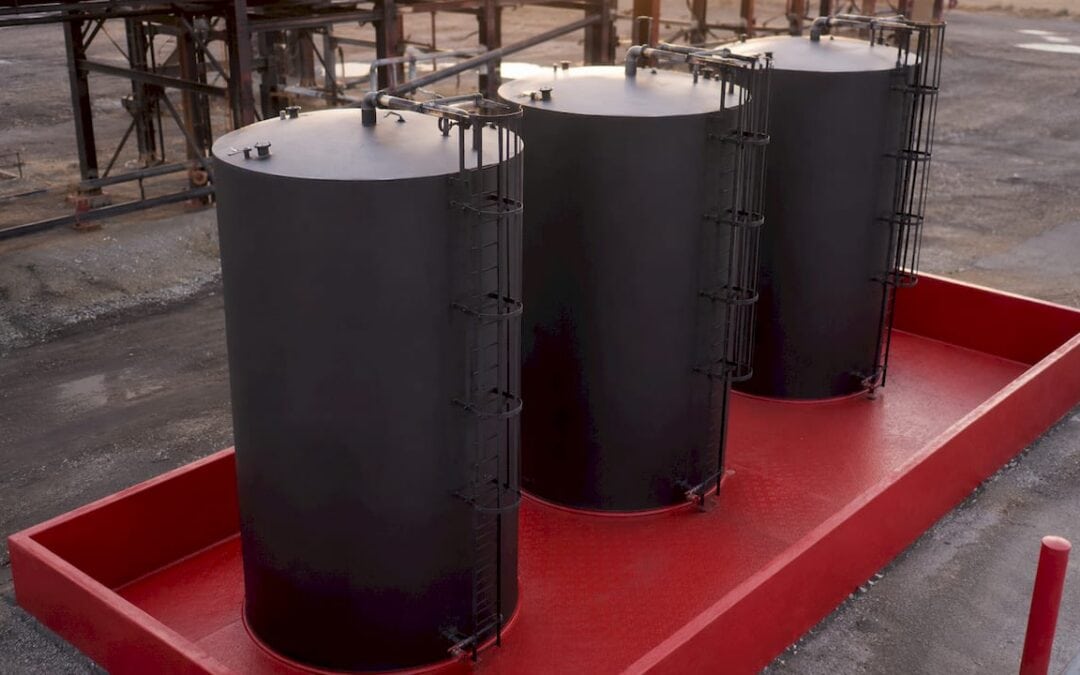
Bulk diesel storage compliance in the United States is governed by a layered system of federal regulations, industry standards, and state programs that together determine how facilities must store, contain, inspect, and document their fuel. If your site holds more than 1,320 gallons of oil in containers of 55 gallons or larger, EPA’s SPCC rule under 40 CFR Part 112 applies to you. That threshold is the primary compliance trigger, and missing it carries real enforcement risk.
Here is what compliance actually requires at a working facility:
- Regulatory applicability: Any site exceeding 1,320 gallons aggregate aboveground oil capacity must have a written Spill Prevention, Control, and Countermeasure (SPCC) plan.
- Aggregate capacity calculation: Every container of 55 gallons or more counts, including day tanks, emergency generators, and portable totes.
- Secondary containment: Engineered containment must hold the full volume of the largest single tank plus precipitation from a 24-hour, 25-year storm event.
- Inspection and testing: Routine visual inspections, periodic integrity testing using methods such as ultrasonic shell thickness testing, and documented maintenance logs are all required.
- Recordkeeping: Inspection results, test records, and spill response documentation must be accessible to regulators on short notice.
- Personnel training: Employees who handle or work near bulk diesel storage must receive documented safety and spill response training.
- Spill response planning: A written contingency plan defining roles, response procedures, and reporting obligations is mandatory under SPCC.
The regulations do not operate in isolation. OSHA workplace safety rules, NFPA 30 fire codes, and state-level programs layer on top of the federal baseline, creating a compliance picture that varies by location and facility size.
What regulations actually govern bulk diesel storage in the US?
Four federal frameworks form the backbone of bulk diesel storage regulations, and each addresses a different risk category.
EPA’s SPCC Rule (40 CFR Part 112) is the primary driver for most facilities. It targets oil spill prevention and environmental protection, requiring written plans, secondary containment, inspections, and training. Facilities with aggregate capacity over 10,000 gallons must have their SPCC plan certified by a licensed professional engineer (PE), a process that typically costs between $5,000 and $25,000 depending on site complexity. Smaller facilities between 1,320 and 10,000 gallons may self-certify using EPA’s Tier I or Tier II templates.
OSHA 29 CFR 1910.106 covers flammable and combustible liquid storage in the workplace. For diesel, which is classified as a combustible liquid, OSHA sets requirements around tank construction, ventilation, ignition source separation, and employee safety procedures. Non-compliance here can trigger workplace safety citations independent of any EPA action.
NFPA 30 (Flammable and Combustible Liquids Code) sets the fire safety baseline for tank design, installation, and site layout. Most state fire marshals and local building departments reference NFPA 30 directly when reviewing permit applications for new or expanded storage installations.
40 CFR Part 280 (Underground Storage Tank Rule) applies to any buried components at a mixed aboveground/underground site, including piping and sumps. Underground tanks require cathodic corrosion protection, secondary containment on new installations, and interstitial monitoring.
State programs add another layer. Texas and Louisiana, for example, require facilities to carry federal SPCC compliance, state aboveground storage tank (AST) registration, and local fire marshal clearance simultaneously. Other states adopt SPCC by reference with minor additions. Before finalizing any compliance plan, facility managers should confirm requirements with their state environmental agency, since state thresholds and fee structures differ meaningfully from the federal baseline.
- Federal SPCC applies at 1,320 gallons aggregate aboveground capacity.
- PE-certified plans are required above 10,000 gallons aggregate.
- OSHA 1910.106 governs workplace safety for combustible liquid handling.
- NFPA 30 sets fire safety standards for tank design and site layout.
- API 650 covers welded steel tank construction; API 653 governs in-service inspection and repair.
- State programs vary widely and may require separate registration, permits, and fees.
What types of bulk diesel storage systems meet compliance requirements?
Tank selection and containment design are where compliance becomes physical. The regulatory framework does not mandate a single tank type, but it does set performance standards that certain designs meet more easily than others.
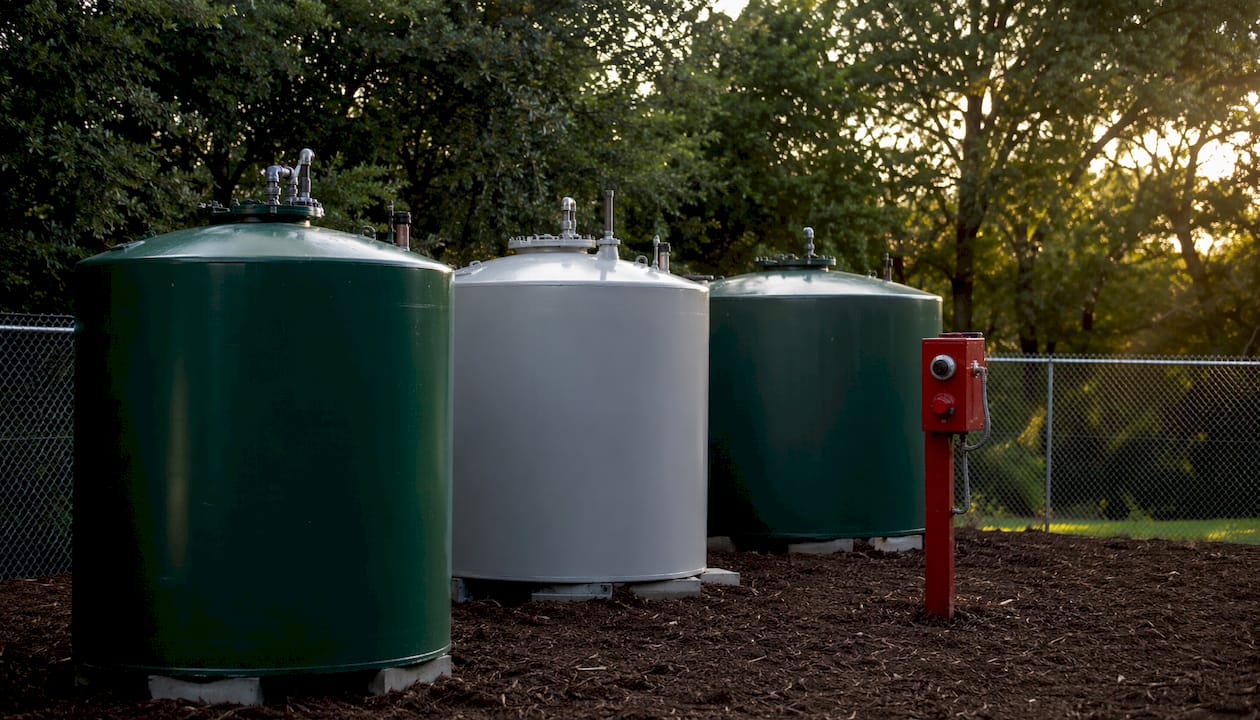
Aboveground storage tanks (ASTs) are the most common choice for bulk diesel at commercial and industrial sites. They are visible, accessible for inspection, and easier to retrofit with secondary containment than underground systems. New AST installations must comply with API 650 for construction and NFPA 30 for fire safety setbacks and venting.
Underground storage tanks (USTs) fall under 40 CFR Part 280 and carry stricter construction requirements, including secondary containment with interstitial monitoring on all tanks and piping installed after April 11, 2016. USTs are generally more expensive to install and inspect, and they require cathodic protection systems tested within six months of installation and at least every three years thereafter.
Self-bunded tanks (also called double-wall tanks) integrate the primary tank and secondary containment into a single unit. The inner tank holds the fuel; the outer wall provides the containment volume. For sites where constructing a separate diked area is impractical, self-bunded tanks offer a compliant solution without additional civil work.
Diked containment areas are the traditional approach for large AST farms. A reinforced earthen or concrete berm surrounds one or more tanks, sized to hold the full volume of the largest container plus precipitation from a 24-hour, 25-year storm event per 40 CFR 112.7©. Drainage valves within diked areas must be kept closed and locked when not in use, and any draining of accumulated rainwater must be observed and documented.
Catchment basins and spill mats handle smaller-scale spill risks at loading racks, fill points, and dispensing areas. These are not substitutes for sized secondary containment but are required as part of a layered spill prevention approach.
Additional safety features required or strongly recommended under SPCC and NFPA 30 include:
- High-level alarms and liquid-level sensing devices to prevent overfills.
- Venting systems sized to prevent pressure buildup during filling operations.
- Leak detection equipment, particularly for underground piping and sumps.
- Impervious containment materials that resist diesel permeation over time.
- Corrosion protection for any steel components in contact with soil or water.
Pro Tip: If your site is near the 10,000-gallon aggregate threshold, evaluate whether consolidating storage into fewer, larger tanks makes financial sense before triggering the PE-certification requirement. A single engineered plan for a well-designed system is almost always cheaper than retrofitting a fragmented tank arrangement.
How to build a step-by-step compliance pathway for your facility
Achieving diesel storage compliance is not a single event. It follows a defined sequence, and skipping steps early creates expensive problems later.

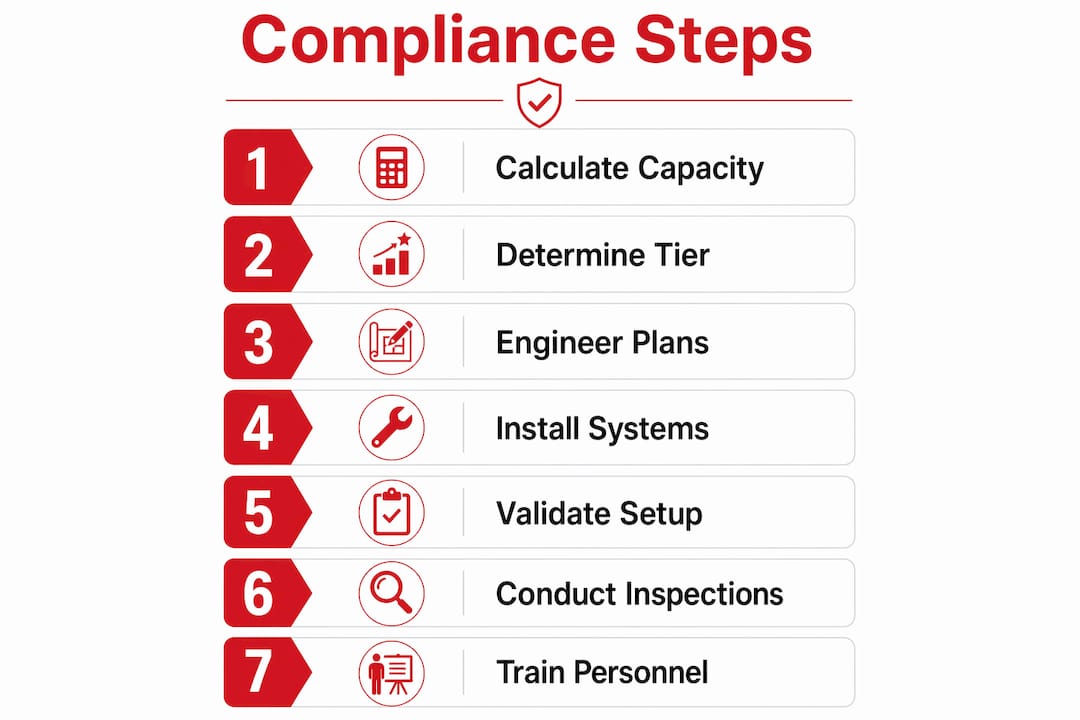
1. Calculate your aggregate storage capacity accurately.
Pull every container of 55 gallons or more into the count, including day tanks, backup generator fuel tanks, and portable totes. The EPA’s definition of bulk storage containers is broad and explicitly includes oil-filled equipment like emergency generators. Operators who exclude these peripheral containers often discover mid-inspection that they crossed the 1,320-gallon SPCC threshold without realizing it.
2. Determine your facility tier and plan requirements.
Sites between 1,320 and 10,000 gallons can self-certify using EPA’s Tier I or Tier II SPCC templates. Sites above 10,000 gallons need a PE-stamped plan. Confirm your state’s registration and permitting requirements at the same time, since state deadlines sometimes run ahead of federal ones.
3. Engage a licensed professional engineer for larger sites.
For PE-certified plans, the engineer must evaluate tank design, containment sizing, drainage controls, inspection protocols, and emergency response procedures. Budget $5,000–$25,000 for this work, and factor in time for state review if your jurisdiction requires plan approval before installation.
4. Install compliant storage and containment systems.
Tank construction must follow API 650 for welded steel ASTs. Containment must be sized correctly and built with impervious materials. All drainage valves, vents, fill connections, and level alarms must be installed per the approved plan before the facility accepts fuel.
5. Conduct pre-operational validation.
Before the first delivery, verify that containment integrity is intact, all valves are functional and properly labeled, level alarms are tested, and the SPCC plan accurately reflects the as-built installation. Any deviation from the plan requires a plan amendment.
6. Schedule and document routine inspections.
Monthly visual inspections of tank shells, foundations, containment walls, valves, and piping are the minimum standard for most SPCC-regulated sites. Periodic integrity testing using hydrostatic, ultrasonic, or acoustic emission methods per API 653 is required for aboveground tanks, with internal inspections typically every 10–20 years depending on corrosion rate data.
7. Train personnel and finalize spill response planning.
Every employee who operates, maintains, or works near bulk diesel storage must receive documented training. The spill response plan must define who does what, where response equipment is located, and how to notify regulators. For sites with off-road diesel compliance requirements, training records are often the first documents an inspector requests.
Pro Tip: Pair your monthly SPCC inspection walk with a weekly loading rack check. Catching a small valve drip or a cracked containment wall joint during a routine walk costs almost nothing to fix. Finding it during an EPA facility visit is a different story.
Ongoing obligations and common compliance pitfalls to avoid
Compliance does not end at installation. Failure to maintain and document routine inspections is one of the leading causes of SPCC enforcement actions, even at facilities that have never had a spill. Regulators treat an undocumented inspection the same as an inspection that never happened.
The most common pitfalls facility managers encounter:
- Underestimating aggregate capacity. Excluding day tanks, generator tanks, or portable containers from the total is a frequent mistake. Each container of 55 gallons or more counts toward the SPCC threshold, regardless of whether it is permanently installed or temporary.
- Incomplete inspection logs. Logs must record what was checked, whether it was acceptable, and what corrective action was taken. A log that simply says “inspected, OK” does not meet the regulatory standard.
- Inaccessible records. Leak detection monitoring results must be immediately available at the time of a regulatory request. Other operational records must be accessible within three business days. Storing records off-site or in unsearchable formats creates unnecessary enforcement exposure.
- Outdated SPCC plans. Any material change to storage capacity, tank configuration, or site layout requires a plan amendment. Facilities that expand without updating their SPCC plan are operating out of compliance from the day the change is made.
- Undertrained operators. Personnel who handle fuel transfers, operate valves, or respond to spills must have documented, current training. A gap in training records is a compliance gap, full stop.
Pro Tip: Designate a single compliance owner at your facility, not a committee. One person responsible for inspection logs, plan amendments, and training records produces far fewer gaps than a shared responsibility that everyone assumes someone else is handling.
Audit preparation is its own discipline. Keep your SPCC plan, inspection logs, training records, and integrity test results organized and accessible in one location, whether physical or digital. When a regulator arrives, the ability to produce records quickly signals operational maturity and typically shortens the inspection.
Environmental protection and safety best practices for bulk diesel storage sites
Site layout decisions made during the design phase determine how well a facility can contain a spill before it reaches surface water. The goal of the SPCC rule is explicitly to prevent oil discharges into navigable waters, and the physical design of a site is the first line of defense.
Key environmental and safety practices for bulk diesel storage:
- Position tanks away from drainage pathways. Stormwater runoff from a containment breach should not have a direct path to a storm drain, creek, or any surface water body. Site grading and drainage design should direct any spill toward the containment system, not away from it.
- Use impervious containment materials. Earthen berms alone are not sufficient unless they are lined with an impervious material. Concrete, HDPE liners, or clay-based systems are common choices, depending on site conditions and soil type.
- Control drainage valve operations. Per 40 CFR 112 requirements, drainage valves in diked areas must be closed and locked when not in use. Every draining event must be observed and documented. Flapper valves are not acceptable substitutes for manually operated valves.
- Maintain spill response kits at dispensing points. Absorbent booms, pads, and containment plugs should be staged at every transfer point, not stored in a distant equipment shed.
- Implement stormwater management. Rainwater that accumulates in a containment area must be inspected for contamination before discharge. Document every draining event with date, time, inspector name, and visual assessment result.
- Fire prevention and emergency access. NFPA 30 setback distances from ignition sources and property lines must be maintained. Emergency access routes to tank areas should remain clear and unobstructed at all times.
- Environmental monitoring. For sites near sensitive receptors or with a history of releases, groundwater monitoring wells provide early warning of subsurface contamination. Some state programs require monitoring as a condition of registration.
Employee safety training should cover fire prevention, proper transfer procedures, emergency shutdown sequences, and spill response steps. Training tied to bulk diesel delivery operations and site-specific hazards produces better retention than generic safety modules.
How Anytimefuelpros supports bulk diesel compliance at your facility
Managing bulk diesel storage compliance is operationally demanding. Anytimefuelpros works alongside facility managers, site supervisors, and compliance officers to keep fuel flowing and documentation current, without adding complexity to an already demanding workload.
Anytimefuelpros delivers bulk diesel and DEF directly to job sites, equipment yards, data centers, mining operations, and municipal facilities across Texas, Utah, and nationwide through its partner network. The service model is built around the realities of regulated storage sites.
- Scheduled and emergency delivery: Recurring top-offs keep tanks within safe operating levels, reducing the risk of overfill events. The 24/7 emergency response capability covers unplanned demand spikes, generator fueling during outages, and disaster response scenarios.
- Compliance-aware delivery practices: Drivers trained in proper transfer procedures, spill prevention, and documentation support the recordkeeping obligations that SPCC-regulated facilities carry. Every delivery generates a clear, auditable invoice.
- Nationwide coverage: Through the AFP partner network, multi-site operators get a single point of contact for fuel delivery across state lines, eliminating the coordination burden of managing multiple regional vendors with different documentation formats.
- Industry-specific expertise: AFP serves data centers, mining operations, construction fleets, agricultural operations, and municipal agencies. Each sector carries its own compliance nuances, and AFP’s operational experience reflects that range.
- Transparent invoicing: Every transaction is documented with delivery volume, time, and location, giving compliance officers the records they need for SPCC plan support and regulatory review.
Whether your facility runs a 5,000-gallon AST serving a construction fleet or a multi-tank installation powering a data center, Anytimefuelpros delivers the fuel and the operational support to keep your site running and your compliance posture intact. Get answers to your specific fueling situation at Anytimefuelpros fuel delivery questions, or schedule on-demand diesel delivery for your site today.
Pro Tip: Ask your fuel delivery provider for delivery receipts that include tank identification, delivered volume, and driver certification. Those records slot directly into your SPCC inspection log and reduce the documentation burden on your compliance team.
Key Takeaways
Bulk diesel storage compliance in the US requires a written SPCC plan, engineered secondary containment, documented inspections, and trained personnel at any facility holding more than 1,320 gallons of aggregate oil capacity.
| Point | Details |
|---|---|
| SPCC threshold triggers compliance | Any site with over 1,320 gallons aggregate oil capacity in 55-gallon-or-larger containers must comply with EPA’s SPCC rule. |
| PE certification above 10,000 gallons | Facilities exceeding 10,000 gallons aggregate capacity need a licensed professional engineer to certify the SPCC plan, typically costing $5,000–$25,000. |
| Aggregate capacity includes peripheral tanks | Day tanks, backup generator tanks, and portable totes of 55 gallons or more all count toward the SPCC threshold. |
| Inspection logs drive enforcement outcomes | Failure to document routine inspections is a leading cause of SPCC enforcement, even at sites with no spill history. |
| Records must be immediately accessible | Leak detection monitoring results must be available on the spot during a regulatory visit; other records within three business days. |
Recent Comments