
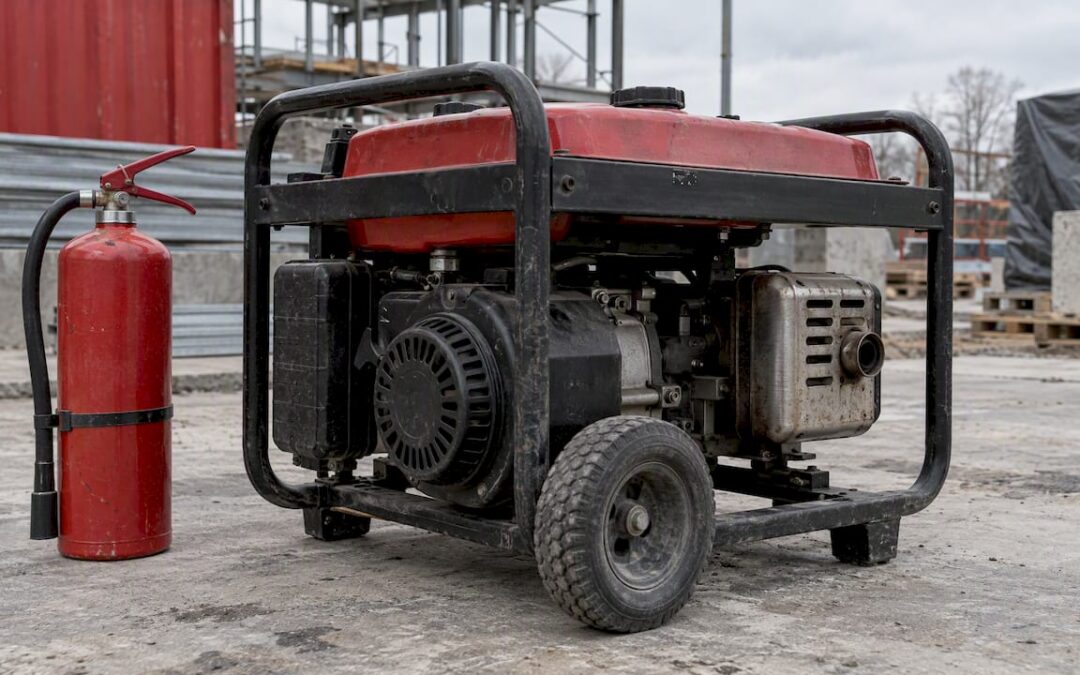
Shut the generator off, let it cool, refuel outdoors with an approved container or a trained delivery driver, clean up any spill before restarting, and keep a rated extinguisher nearby. Those five steps prevent most refueling fires. Standby generators with their own tanks, and the fuel logistics around them, add a few more rules.
This guide is for facilities managers, site superintendents, event production managers and fleet coordinators who fuel generators on the job. It covers portable units, mobile refueling of larger sets, and the compliance details that often get skipped.
TL;DR
- Never refuel a portable generator while it is running or hot. Turn it off and let the engine parts cool first, because gasoline spilled on hot parts is a primary ignition hazard.
- Refuel outdoors in a ventilated area, away from structures, doors and vents. Fuel vapors travel along the ground and can reach remote ignition sources.
- Use designated, trained people, approved containers, and a 20-B or higher extinguisher within 25 to 75 feet of the fuel area.
- On standby diesel systems, spill buckets, overfill prevention and twice-yearly fuel testing matter as much as the refueling act.
- For large or critical units, a professional delivery crew takes the handling risk off your staff.
Table of Contents
- Why refueling is where generator fires start
- The shutdown and cooldown rule
- A step-by-step refueling procedure
- Fuel storage and vapors
- Fire protection and who handles the fuel
- Mobile generator refueling by a delivery truck
- Standby generators: spill and overfill controls
- Fuel quality is a safety issue too
- When to hand refueling to a professional crew
- How Anytime Fuel Pros handles generator fueling
- Build a site refueling policy
- FAQ
- Sources
Why refueling is where generator fires start
OSHA’s guidance on portable generators lists fires from improper refueling or fuel storage alongside electrocution and carbon monoxide as the main hazards. The other two get more attention. Refueling fires are the ones crews cause themselves, in a hurry, at the worst moment.
The pattern is familiar. A generator runs through a long shift. Someone sees the fuel gauge drop and tops it off to avoid a restart, a load drop, or a call to the superintendent. A few ounces splash on the muffler, and the vapor ignites.
The cost of that shortcut is far higher than the minute or two a shutdown takes. This is the same logic we apply to downtime generally: the quiet profit killer is rarely the planned stop. It is the unplanned one that follows an incident.
The shutdown and cooldown rule
The rule is the same for every portable unit: turn it off and let it cool. OSHA’s guidance says to shut down the generator and let engine components cool before refueling. Manufacturers say the same. For example, Honda’s safety page warns that parts of a generator stay hot for a while after the engine stops, and that the muffler in particular should not be touched while hot.
No single cooldown time suits every unit, so check your operator’s manual. Your site rule should say that the unit must be cool to the touch at the engine, exhaust and muffler before the cap comes off.

Planning around the shutdown
The objection we hear most is that the load cannot drop. That is a planning problem, not a reason to refuel hot. Options include:
- Fuel at shift change, or during a scheduled break in the work.
- Run a second unit or a transfer arrangement so one set is always available.
- Size the fuel tank or use an auxiliary tank so refueling happens once per shift or less often.
- Schedule deliveries so refueling does not depend on someone noticing a low gauge.
A step-by-step refueling procedure
Use this for portable and light commercial generators. Post it at the fuel point.
- Shed the load. Switch off connected equipment so you are not restarting under load.
- Stop the engine and remove the key or disable the start.
- Wait for it to cool until engine and exhaust are cool to the touch.
- Move outdoors if needed. Refuel only in a well-ventilated outdoor area. OSHA’s guidance puts generators and fueling at least 3 to 10 feet from structures, doors and vents, so keep the area clear.
- Use an approved container. Gasoline and other fuels belong in approved containers. Leesburg, Florida’s emergency guidance adds that gasoline should be stored outside living areas in properly labeled, non-glass safety containers.
- Pour slowly, wear gloves and eye protection, and do not overfill. Leave room for expansion.
- Wipe up any spill and replace the cap before starting. For marine and port work, OSHA’s 1917.156 requires that filler caps be replaced and spillage disposed of before engines start. It is a sound rule on any site.
- Restart away from the fuel container, and put the container back in its storage location.
Fuel storage and vapors
Fuel storage is part of refueling safety. OSHA warns against storing fuel in living or enclosed work areas, because vapors can travel along the floor and be ignited by something as ordinary as a pilot light or an electrical switch.
On a site, that means:
- No fuel cans in trailers, offices, or equipment cabs.
- Storage away from the generator and any fuel-burning appliance.
- Labeled containers, with dyed and clear diesel clearly separated.
- A fuel area that is not in a traffic path.
Carbon monoxide belongs on the same checklist. Generator exhaust is odorless, and FEMA warns that it can kill. Position units outdoors and away from openings, which also helps with vapor dispersal.
Fire protection and who handles the fuel
Two rules from OSHA’s standards are worth building into your site plan. Both apply by regulation to specific industries, but the practices are sound across all of them.
Designated personnel. Under 1917.156, which covers marine terminals, only designated persons conduct fueling operations. Construction has parallel rules. Name who is trained and authorized on your site, and write it into the site safety plan. Visitors and subcontractor crews should not fuel on their own.
Extinguisher placement. For construction, 1926.152 calls for at least one portable extinguisher rated 20-B or higher, located 25 to 75 feet from an outdoor flammable liquid storage area. It also requires approved containers or safety cans for handling flammable liquids in quantities of 5 gallons or less. If you work under general industry, marine or other rules, confirm the exact standard with your safety officer.
A useful shorthand for the fuel point:
| Item | What to check |
|---|---|
| Extinguisher | 20-B or higher, charged, tagged, 25 to 75 feet from fuel storage |
| Containers | Approved safety cans, labeled, closed |
| Spill kit | Absorbent, pads, bags, within reach |
| Personnel | Named, trained, wearing gloves and eye protection |
| Ignition control | No smoking, no hot work, engines off nearby |
Mobile generator refueling by a delivery truck
Larger generators on construction sites, at events and at remote work areas are often fueled by a delivery truck, not by hand. That moves the hazard from pouring cans to hose handling, and the controls change.
Before the truck arrives:
- Mark the generator location and the approach path so the driver does not guess.
- Confirm whether the unit has to shut down or has a separate tank designed for filling in service. Follow the manufacturer’s manual and site rules, and do not assume a running refuel is allowed.
- Clear the area of pedestrians, ignition sources and parked vehicles.
- Keep the extinguisher in place and spill materials ready.
During delivery, the driver stays with the hose, the site contact confirms the fuel type, and everyone knows the stop procedure. When the hose disconnects, a small drip is normal and a spill kit should catch it. For more on how professional crews handle this, see our on-site fuel delivery safety protocols and how safe mobile fuel delivery is.
One mistake is costly: delivering the wrong fuel. Dyed (off-road) and clear diesel are different products with different tax and compliance rules. Label every tank and tell the driver which is which.
Standby generators: spill and overfill controls
If your generator draws from a permanent tank, refueling safety also means spill and overfill prevention. EPA’s guidance on emergency power generator UST systems says that, as of May 2022, regulated systems need spill prevention equipment and overfill prevention, both tested at least every three years, with spill prevention walk-through inspections every 30 days.
The same document notes that a spill bucket of at least 5 gallons is standard recommended practice for mission-critical generators, because it catches fuel released when the hose disconnects. That is a common, overlooked point of non-compliance. It also says overfill prevention applies to regulated tanks even when they are not filled by a delivery hose.

These rules apply to regulated underground systems. Aboveground tanks fall under other rules, including SPCC planning when your total oil storage passes the federal threshold. Our SPCC checklist for facility managers walks through that.
Practical checks for standby sites
- Walk the fill point monthly. Look for water in the spill bucket, cracks, missing caps and stains.
- Keep records of tests and inspections where an inspector can see them.
- Confirm the driver knows the tank capacity and the current level before filling.
- Never fill past the level your overfill device or tank gauge allows.
Fuel quality is a safety issue too
A clean refueling that puts bad fuel in the tank still fails you in an outage. NFPA’s technical committee treats diesel as a single point of failure in emergency power systems, and its language calls for diesel to be tested for degradation no less than twice a year. Testing catches microbial growth and water before they stop the engine.
Exercising matters as well. NFPA 110’s text calls for generator sets in service to be exercised at least monthly for a minimum of 30 minutes, using either a load that maintains minimum exhaust temperature or at least 30% of the nameplate rating. Running too light a load risks wet stacking, which is unburned fuel and carbon buildup. Read the standard’s current text with your engineer before setting your own schedule.
For related planning, see our guides on generator fuel maintenance programs and how long diesel stays usable.
When to hand refueling to a professional crew
Some situations are too risky or too time-consuming for in-house refueling:
- Generators that need frequent fills across a multi-day event or a long job.
- Remote sites where crews would haul cans over rough ground.
- Data centers and other mission-critical facilities where a fuel gap means an outage.
- Multi-site operations that need consistent procedures in several states.
- Storm and outage response, when staff are stretched and fuel supply is tight.
Our power outage fuel logistics guidance covers planning for that last case.
How Anytime Fuel Pros handles generator fueling
We deliver diesel and gasoline on site to generators at job sites, equipment yards, data centers, events and remote locations. Our generator fuel delivery service covers scheduled top-offs and emergency calls, with 24/7 availability and a 3-hour emergency response in covered areas. We serve San Antonio, Austin, Dallas-Fort Worth and Salt Lake City directly, and the rest of the continental U.S. through our partner network.
If you need fuel brought to a unit, you can see our full fuel services, review emergency fuel delivery, or place an order. Itemized invoicing gives you a delivery record for your files.
Build a site refueling policy
Turn the guidance above into a one-page policy and review it with every new crew.
- Name the people allowed to refuel, and record their training.
- State the shutdown and cooldown rule, with no exceptions for deadlines.
- Set fuel storage locations and container standards.
- Specify extinguisher type and placement.
- Define the spill response steps and who gets called.
- Set a delivery procedure for truck refueling, including fuel type confirmation.
- Schedule fuel testing and generator exercising for standby units.
- Audit it monthly, and after any near miss.
FAQ
Is it safe to refuel a generator while it is running?
No, not for portable generators. Fuel spilled on a hot engine or muffler can ignite, so shut the unit off and let it cool first. Some stationary standby units have separate tanks filled in service, but only follow that practice if the manufacturer’s manual and your site rules allow it.
How far should a generator be from structures when refueling?
OSHA’s portable generator guidance describes keeping generators outdoors, in ventilated areas, at least 3 to 10 feet from structures, doors and vents. Store the fuel itself away from the generator and from living or enclosed work areas. Your manufacturer’s manual and local fire code may set stricter distances.
Do you need to turn off a generator to refuel?
For portable and light commercial units, yes. Shut it down, let it cool, refuel, wipe up any spill, replace the cap, then restart. If the load cannot go down, plan a second unit or a larger tank so you do not need to refuel under pressure.
What fire extinguisher should be near generator fuel?
OSHA’s construction standard calls for an extinguisher rated at least 20-B located 25 to 75 feet from outdoor flammable liquid storage. Keep it charged, visible and inspected. Your safety officer can confirm which standard applies to your industry.
Sources
- OSHA: Using Portable Generators Safely
- OSHA 1917.156: Fuel handling and storage
- OSHA 1926.152: Flammable liquids
- EPA: Federal UST Requirements for Emergency Power Generator UST Systems
- NFPA 110 Technical Committee report on diesel fuel testing
- NFPA 110 report on generator exercising
- FEMA: Generator carbon monoxide safety
- Honda Power Equipment: Generator Safety Tips
- City of Leesburg: Generator Safety
Recent Comments