
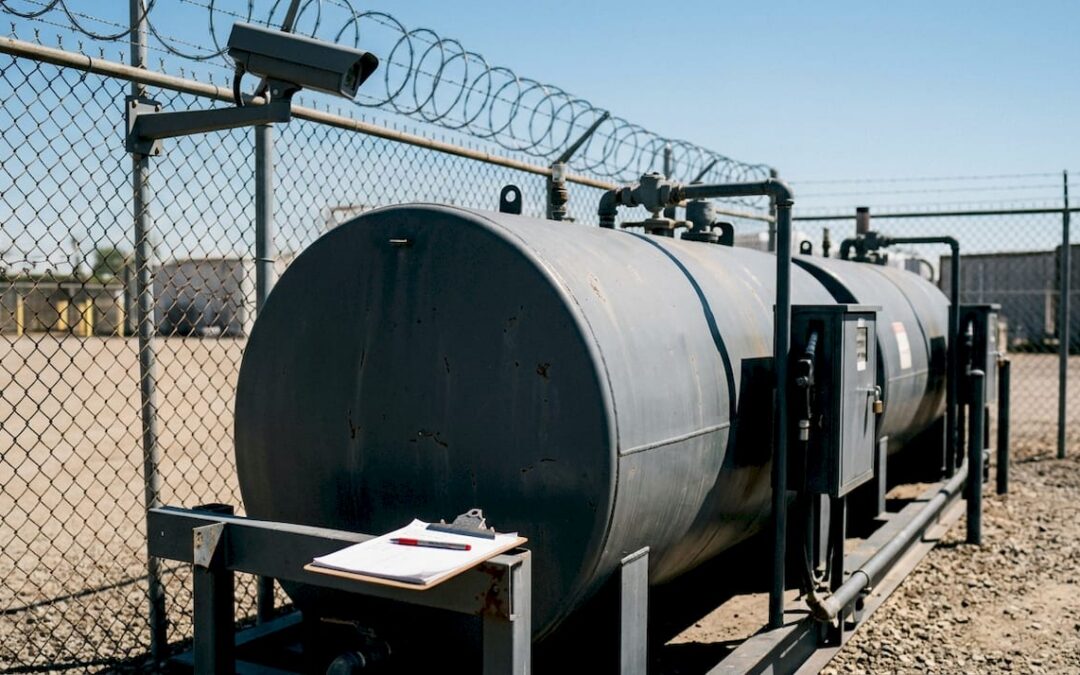
On-site fuel security is the practice of ensuring continuous, protected access to fuel by combining adequate storage, physical safeguards, monitoring technology, and accountability controls at your facility or job site. The industry term for this discipline is fuel supply security, though operations teams more commonly call it on-site fuel security in day-to-day practice. For facilities managers, logistics coordinators, and operations directors, getting this right is not optional. A single fuel shortage can halt excavators, shut down backup generators, or strand an entire fleet, turning a manageable supply gap into a costly operational failure.
What is on-site fuel security and why does it matter?
On-site fuel security is defined as designing and operating your site’s fuel supply arrangements so you can reliably access fuel when needed. It combines on-site storage with physical protection, monitoring, and accountability. The goal is not simply to prevent theft. It is to maintain control of supply so your operation keeps running when market conditions tighten, deliveries are delayed, or demand spikes unexpectedly.
The importance of fuel security comes down to one principle: operators who control their own fuel supply are far less exposed to external disruptions than those who depend entirely on just-in-time delivery. A data center in Dallas running backup generators, a mining operation in Utah fueling heavy equipment fleets, or a municipal fleet in San Antonio all share the same vulnerability. When fuel runs out, work stops. The financial and reputational cost of that stoppage almost always exceeds the cost of a proper fuel security program.
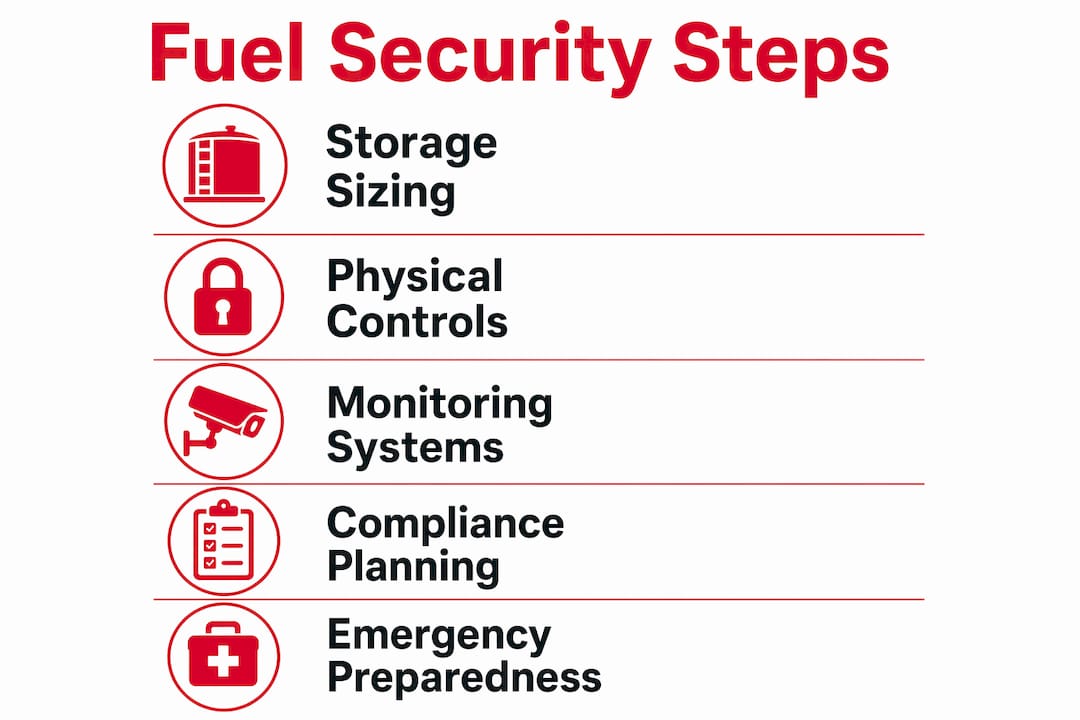
Four components define a complete fuel security program. First, storage sizing that matches your operational demand. Second, physical protection of tanks and dispensing equipment. Third, real-time monitoring and transaction tracking. Fourth, regulatory compliance and emergency preparedness. Each component reinforces the others. Weakness in one area creates a gap the others cannot cover.
How does on-site fuel storage contribute to fuel security?
Storage is the foundation of fuel supply security. Without adequate on-site capacity, every other security measure becomes secondary to the risk of simply running dry. Sizing tanks for about one month’s supply based on typical usage is a widely recommended benchmark, with a minimum of two weeks for sites where space or cash flow limits larger investments.
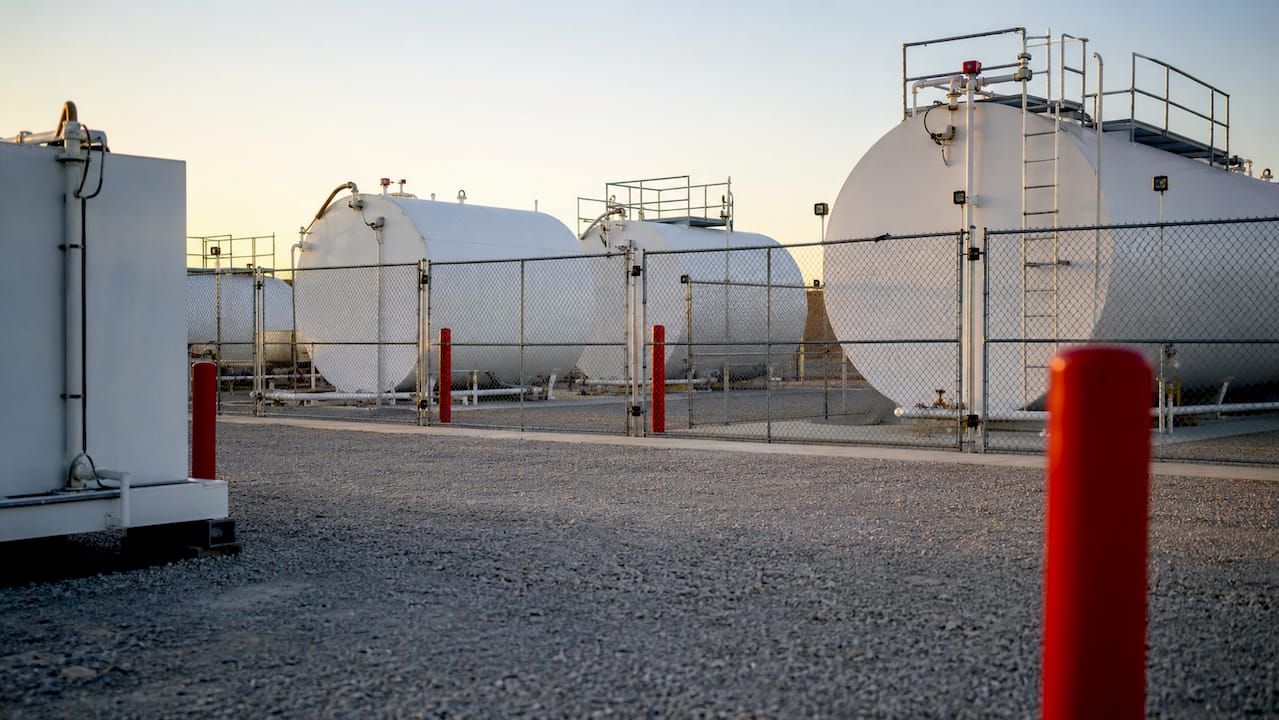
Getting storage sizing right requires honest accounting of your actual consumption patterns. A construction site running multiple dozers and loaders burns fuel at a very different rate than a logistics yard idling a fleet overnight. Operations directors should calculate average daily consumption across all equipment, then multiply by their target coverage period. That number drives tank selection, not the other way around.
Bulk storage delivers three concrete advantages beyond just having fuel on hand:
- Buying flexibility. Larger tanks let you purchase fuel when prices are favorable rather than when you are forced to. This is a direct cost control lever that smaller storage denies you.
- Supply continuity. On-site storage gives operators protection against supply interruptions caused by regional shortages, extreme weather, or carrier delays.
- Reduced delivery frequency. Fewer deliveries mean lower per-gallon delivery costs and less operational disruption from tanker traffic on site.
Common storage infrastructure includes above-ground steel tanks, double-walled tanks for environmental compliance, and skid-mounted portable units for temporary or remote sites. Steel tanks with lockable equipment cabinets and concealed hinges add a physical security layer that deters opportunistic theft before any digital system is even activated.
Pro Tip: Set a service-level target before you size your tank. Define how many days of demand you need to cover without a delivery, then work backward to the required capacity. This number also becomes your reorder trigger point.
What are fuel management systems and how do they enhance on-site fuel security?
A fuel management system is a technology platform that controls who can access fuel, tracks every transaction, and monitors tank levels in real time. These systems are the digital backbone of any serious fuel security program. Western Global describes the core architecture as three integrated layers: authorization, monitoring, and alerting.
Here is how each layer works in practice:
- Authorization via PIN or RFID. Every fuel draw requires a valid credential. A driver enters a PIN or swipes an RFID card before the pump activates. This creates an auditable record of who took fuel, when, and how much. It eliminates the gray area where fuel disappears between deliveries and end-of-day reconciliation.
- Real-time fuel-level dashboards. Continuous monitoring shows current tank levels, consumption rates, and projected run-out times. Facilities managers can view this data remotely, which is critical for multi-site operations managing tanks across several locations simultaneously.
- Alarm systems for abnormal activity. Alerts trigger when fuel levels drop faster than expected, when access attempts occur outside authorized hours, or when a single transaction exceeds a set volume threshold. These alarms catch both external theft and internal misuse before the loss compounds.
- Integration with operational systems. The best implementations connect fuel data to fleet management platforms or maintenance software. This creates a single operational picture where fuel consumption, equipment hours, and service schedules align.
- Inventory reconciliation. Automated transaction logs make end-of-period reconciliation fast and accurate. Discrepancies between dispensed volume and tank-level readings surface immediately rather than weeks later during a manual audit.
Fuel security failures usually arise from missing integration between inventory monitoring, user authorization, and alarms, rather than from a single broken component. A site with RFID authorization but no real-time monitoring can still lose significant fuel to slow, repeated small draws that never trigger an alert. All three layers must work together.
Pro Tip: Pair your fuel management system with a generator fuel maintenance program to track backup generator consumption separately from fleet usage. Mixing these two data streams obscures both.
Why are regulatory compliance and emergency preparedness critical to on-site fuel security?
Regulatory compliance is not a bureaucratic checkbox. It is a structural requirement that protects your site from environmental liability, operational shutdown, and legal exposure. Storage tank regulations in the United States and Canada set minimum standards for tank construction, secondary containment, leak detection, and emergency planning. Meeting these standards is the baseline, not the ceiling.
Emergency preparedness is where compliance becomes operational. Regulations require emergency plans for storage tank systems to be prepared before the first product transfer, kept updated, and readily available on site. These plans must cover:
- Preventive measures to reduce the likelihood of a fuel release
- Defined emergency response roles for site personnel
- Equipment locations, including spill containment and fire suppression resources
- Training requirements for all personnel who handle or work near fuel storage
- Public notification procedures if a release affects surrounding areas
Emergency plans are operational assets, not filing-cabinet documents. A plan that cannot be found and acted on within minutes of an incident is functionally useless. Keep current copies accessible to every shift supervisor, and review them whenever personnel, equipment, or site layout changes.
The practical payoff of strong compliance is reduced downtime. A site that experiences a fuel spill without a tested response plan faces regulatory investigation, potential shutdown orders, and cleanup costs that dwarf the original incident. A site with a current, practiced plan contains the incident, notifies the right parties, and resumes operations faster. Emergency plans must be living documents, kept up to date and accessible, supporting swift action without interrupting normal operations.
What are practical strategies to implement and maintain on-site fuel security?
Fuel storage security works best when physical controls, technology, and process discipline reinforce each other. The table below compares a reactive approach, which most sites default to, against a proactive fuel security program.
| Factor | Reactive approach | Proactive fuel security program |
|---|---|---|
| Storage sizing | Ordered when nearly empty | Sized to cover a defined service-level target |
| Access control | Unlocked pump, honor system | PIN or RFID authorization on every draw |
| Monitoring | Manual dip stick checks | Real-time dashboard with automated alerts |
| Emergency plan | No written plan | Current plan, trained staff, accessible on site |
| Delivery scheduling | Called when fuel runs low | Triggered by tank-level thresholds, not emergencies |
| Reconciliation | Monthly manual audit | Automated daily transaction matching |
Scheduling regular monitoring and aligning fuel deliveries to precise tank levels saves money and prevents shortages. Predictive logistics enabled by real-time monitoring avoids short-drops, which are partial deliveries caused by inaccurate level reporting, and the associated fees that come with them.
Three common pitfalls undermine otherwise solid fuel security programs. First, operations teams set a storage target but never update it as equipment fleets grow. Second, authorization systems are installed but alarm thresholds are never configured, leaving the monitoring layer blind to abnormal draws. Third, emergency plans are written once and never reviewed, so they reference personnel who have left and equipment that has been replaced.
The fix for all three is a scheduled review cycle. Quarterly reviews of storage adequacy, alarm thresholds, and emergency plan accuracy take less than an hour and close the gaps that fuel theft and supply failures exploit. Pairing these reviews with a reliable on-site fuel delivery partner ensures that when your monitoring system signals a reorder, the fuel arrives on schedule rather than days later.
For logistics yards and multi-site operations, consolidating fuel delivery under a single vendor with real-time delivery confirmation also eliminates the invoice reconciliation problem that plagues operations using multiple regional suppliers.
Anytimefuelpros: on-site fuel delivery built for operational continuity
Anytimefuelpros delivers bulk diesel, gasoline, and DEF directly to job sites, equipment yards, data centers, and logistics operations across Texas, Utah, and nationwide through a trusted partner network. Whether you need scheduled top-offs to maintain your service-level target or emergency fuel delivery when supply gaps threaten uptime, Anytimefuelpros operates 24/7 with transparent invoicing and real-time delivery confirmation.

Facilities managers and operations directors who want to move from a reactive fueling model to a proactive one can start with Anytimefuelpros’s bulk fuel delivery and storage services, designed specifically for sites that need reliable supply without the overhead of managing multiple vendors. From a single construction site in San Antonio to a multi-state enterprise contract, Anytimefuelpros provides the delivery reliability that a complete fuel security program requires.
Key takeaways
On-site fuel security requires integrating adequate storage, access controls, real-time monitoring, and a current emergency plan to maintain operational continuity and prevent supply failures.
| Point | Details |
|---|---|
| Storage sizing drives security | Size tanks to cover a defined service-level target, with a minimum of two weeks of supply. |
| Authorization stops theft at the source | PIN or RFID controls on every fuel draw create auditable records and eliminate gray-area losses. |
| Monitoring and alarms must integrate | Real-time dashboards and threshold alerts only work when connected to authorization data, not run separately. |
| Emergency plans must stay current | Review plans whenever personnel, equipment, or site layout changes to keep response times fast. |
| Delivery scheduling reduces cost and risk | Aligning deliveries to tank-level triggers prevents short-drops, shortages, and emergency delivery fees. |
FAQ
What is on-site fuel security in simple terms?
On-site fuel security is the combination of storage, physical protection, monitoring technology, and emergency planning that ensures your site always has reliable access to fuel. It covers both theft prevention and supply continuity.
How much fuel storage do I need for adequate fuel security?
A one-month supply based on typical usage is the recommended benchmark, with a minimum of two weeks for sites with space or budget constraints. Your actual target depends on equipment count, daily consumption, and acceptable risk of a supply gap.
What does a fuel management system actually do?
A fuel management system controls access via PIN or RFID, tracks every transaction in real time, monitors tank levels continuously, and triggers alarms when activity falls outside normal parameters. It creates the auditable record that reconciliation and theft detection depend on.
Are emergency fuel plans legally required?
Regulations in the United States and Canada require emergency plans for petroleum storage tank systems to be prepared before first use, kept updated, and available on site. Requirements cover response roles, equipment, training, and public notification procedures.
How does a fuel delivery partner improve on-site fuel security?
A reliable delivery partner with real-time scheduling and 24/7 emergency response closes the gap between your monitoring system signaling a reorder and fuel actually arriving on site. This is the final link in a complete fuel security program.
Recent Comments